She spent six years hiding her autism diagnosis from everyone — peers, friends, even herself. Then she built a neuroscience-backed video game that's changing how neurodivergent students understand who they are.
Vanessa Castañeda Gill is the founder of Social Cipher, an SEL video game platform designed by and for neurodivergent people, developed in partnership with the LEGO Foundation. Her work sits at the intersection of neuroscience research and lived autistic experience — and she's one of the few people in edtech who has both. She was diagnosed autistic at 14, went on to become a published neuroscience researcher, and turned her personal story into a scalable tool now reaching classrooms across the country.
80% of school avoidance students are neurodivergent. That single stat reframes every conversation you've been having about "disengaged" kids in your building. Your neurodivergent students aren't checking out because they don't care — they're burning out from performing normalcy in a system that was never designed for how their brains actually work. This episode is a practical roadmap for principals who want to close the gap between their inclusion vision and what neurodivergent students are actually experiencing every single day.
🤩 What You'll Learn
- Why calm corners and flexible seating aren't enough — and what neurodivergent students actually need to feel safe and stay enrolled.
- How Social Cipher uses video game mechanics to build a shared emotional vocabulary between students and teachers.
- What it looks like to lead a majority neurodivergent team — and why that's a strength, not a challenge.
- Three low-cost, high-impact classroom moves any teacher can make this week to support neurodivergent learners.
- The principle of "diagnosing a need over needing a diagnosis" — and why it matters for the undiagnosed kids already in your building.
🧠 Key Insight #1: Neurodivergent Students Aren't Disengaged — They're Exhausted from Masking
- What's broken: Schools interpret quiet compliance as success, missing that neurodivergent students spend the entire school day suppressing their natural responses to fit in — and completely collapse when they get home.
- The shift: Recognizing masking as a coping mechanism, not good behavior, and designing school environments where self-regulation is taught explicitly and practiced safely before students hit their limit.
- Impact: When schools build in structured regulation opportunities for all students — not just flagged kids — neurodivergent students stop burning out by dismissal and school avoidance rates drop.
🧰 Key Insight #2: SEL Programs Built for Neurotypical Kids Are Leaving Neurodivergent Kids Behind
- What's broken: Most SEL programs were designed with neurotypical students in mind — and when a neurodivergent student's natural coping tools (stimming, special interests, movement) aren't built into the framework, those tools get labeled as problems instead of recognized as regulation strategies.
- The shift: SEL curriculum designed by neurodivergent people, grounded in neuroscience, that treats stimming and special interests as assets and builds a shared emotional vocabulary students can actually use in the moment.
- Impact: Teachers report students using in-game language to communicate their needs in real time — "I feel like Ava right now, I need to go to my quiet space" — which means fewer outbursts, fewer evacuations, and a classroom that's actually safer for everyone.
🧰 Key Insight #3: Diagnose the Need Before You Wait for the Label
- What's broken: Schools gatekeep neurodivergent supports behind official diagnoses, leaving a massive population of undiagnosed students — disproportionately students of color, girls, and late-identified learners — without the tools they need.
- The shift: Design your building to meet underlying needs regardless of whether a formal diagnosis exists, because the underlying needs are real whether or not the paperwork has arrived.
- Impact: Every student who needs movement breaks, predictable routines, or permission to engage through special interests gets those things — and the students who were flying under the radar stop disappearing.
🎙️ VANESSA CASTAÑEDA GILL QUOTES FROM THE RUCKUSCAST
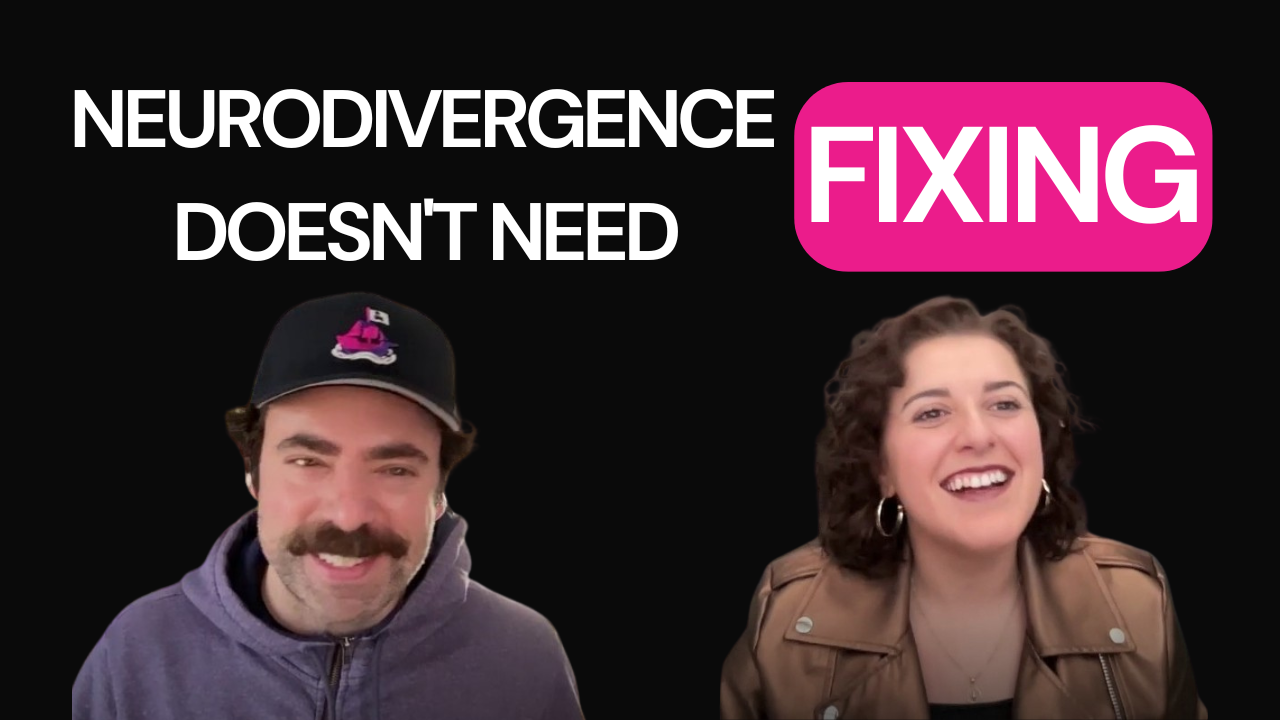
"Neurodivergence doesn't need fixing. Your approach does."
– Vanessa Castaneda Gill
"The world won't work without all kinds of minds."
– Vanessa Castaneda Gill
"It is part of my identity and part of who I am. It is not all of who I am, and it's not something that needs to be fixed."
– Vanessa Castaneda Gill
"If you are in a position of leadership, model that vulnerability. It will just allow for so much more vulnerability between your employees or your students and you."
– Vanessa Castaneda Gill
"It's really hard to tell nuanced and rich and resonant stories that kids can actually root for and feel represented by if it wasn't led by neurodivergent experience."
– Vanessa Castaneda Gill
"You can give kids all of the tools in the world to be able to learn their best with their neurodivergence. But if representation and vulnerability in sharing those experiences is not part of that, then a lot of those tools kind of go out the window."
– Vanessa Castaneda Gill
"Instead of playing it safe, we make it safe to play."
– Vanessa Castaneda Gill
🤔 Your Do School Different Challenge
Ready to implement these ideas? Start here:
- Tomorrow: Identify one student in your building who is frequently labeled "disruptive" and ask a teacher who works with them to describe what happens immediately before the behavior — look for the sensory or regulation trigger underneath it.
- This Month: Pilot a 5-minute movement or sensory break built into the schedule for one class or grade level, regardless of neurotype, and gather teacher observations on how it shifts the afternoon.
- This Semester: Audit your SEL program to determine whether neurodivergent students are represented in its design — and if Social Cipher's free pilot program is a fit for your building, start one.
⌚️ Episode Timestamps
- 00:00 - The school avoidance crisis and neurodivergent students
- 00:58 - Who is Vanessa Castaneda Gill and Social Cipher
- 04:09 - What it's like to receive an autism diagnosis at 14
- 08:18 - Six years of masking and the mental health cost
- 13:34 - How Social Cipher was born in a college dorm
- 15:44 - What the Social Cipher games do for neurodivergent students
- 18:35 - The shutdown sequence and quiet space explained
- 20:42 - How schools partner with Social Cipher
- 31:45 - Leading a majority neurodivergent team
- 34:57 - Classroom strategies for neurodivergent inclusion
- 37:07 - Insights from partnering with the LEGO Foundation
- 39:32 - Marquee messages and dream campus principles
- 42:58 - The one thing every Ruckus Maker should remember
00:03
Speaker 1
You built a culture your staff believes in. Your teachers are trying, but your neurodivergent students are still the ones getting left behind, not because of bad intentions, but because the tools your building relies on were never designed for how their brains actually work. You've invested in SEL programs, flexible seating, maybe even sensory spaces, and for your neurotypical kids, it's working. But the students with the most complex needs are still masking through the day, burning out by dismissal, and showing up less and less. The gap between your vision for inclusion and what neurodivergent kids are actually experiencing is wider than you think. That gap has a cost. 80% Of school avoidance students are neurodivergent. The kids disappearing from your building aren't disengaged. They're exhausted from performing normalcy in a system that was never built for them.
00:58
Speaker 1
Every year you don't close that gap is another cohort that never gets to show you what they're capable of. Today my guest is Vanessa Castaneda Gill, and she was diagnosed autistically at 14. She hid it from everyone for six years, but eventually she built Social Cipher, an SEL video game grounded in neuroscience and designed by and for neurodivergent people. It's already transforming how students understand themselves and communicate what they need. The question isn't whether your school cares about these kids, it's whether caring is enough. I'm Danny Bauer and this is Better Leaders, Better Schools, the original Ruckus cast for visionary leaders who want to do school different even within a traditional system, so that we create campus experiences worth showing up for. Thanks to Ruckus makers just like you, this show ranks in the top 1% of over 4 million worldwide podcasts.
02:00
Speaker 1
So once again, thanks for listening and we'll be right back after a quick message from our show sponsors. For over 30 years, ODP business Solutions has helped schools transform from whiteboards to smart boards. Why? Because when you get the right tools, everyone wins. Visit ODP business.com education to revolutionize your school's learning spaces. That's ODP business.com education staffing stability isn't just about filling positions. It's about what makes educators stay frontline. Education's 2026 K12 lens report highlights what districts are doing differently to strengthen retention and long term support. You can download the full [email protected] leaders that's frontlineducation.com leaders over 1 million teachers rely on IXL because it's empowering, it helps them make better decisions with reliable and it adapts instruction based on student performance. You can get started [email protected] leaders. That's ixl.com leaders.
03:32
Speaker 1
A principal I work with walked into her staff meeting last week with one clear next move on the culture problems she'd been circling for months. She didn't get there alone. She got there with Digital Danny. He's always there, never forgets, and he evolves with you. Get started with Digital [email protected] Ruckus that's my principalcoach.com Ruckus. All right. And Vanessa, welcome to the show.
04:06
Speaker 2
Thank you so much. I'm super happy to be here.
04:09
Speaker 1
I'm happy that you're wearing your Ruckus Maker leather jacket. I've got my Ruckus Maker hoodie. So we're all set for today. I wanna, I wanna start with just like what it's like, right, when a psychologist sort of labels you and what does that do, you know, to a person?
04:27
Speaker 2
Yeah, I think it definitely depends on kind of where you are with your own self perception, your self esteem. Because for a lot of folks who are diagnosed with different forms of neurodivergence, sometimes it can be a relief. It can be answer to, you know, why you've done certain things the way you have or processed them a certain way. But for others, like for me, when I was in my journey, I was at, you know, a really low point in my own self esteem. I was young, I was 14 years old. And when it also depends on, you know, the psychiatrist themselves and how they understand different stigmas and stereotypes of neurodivergence. So in my experience it was kind of difficult because the way that my psychiatrist told me about this was not ideal for a 14 year old girl to hear.
05:23
Speaker 2
It was very much like this idea of I am a girl with the brain of a boy, which has a bunch of other gender stuff just in there as well. And I think that many of the examples and representation that were pulled in to explain this were very limited examples of what autism looked like and was, it was very much like this, you know, type of solitary genius savant person that can't connect with people properly. And I thought for a while I had to fit into that mold. So for me, the diagnosis was a source of shame for a while because I wasn't equipped with the right representation, the right sort of like stigmas that were broken and the right tools.
06:09
Speaker 1
Yeah, I had a post on LinkedIn that I was writing and it was just about all the Things that schools do, sometimes intentionally, sometimes unintentionally, but just labeling students for better or worse. Right. And then what that does, you know, what that does to. To a student. So thank you know, for sharing a bit of your. Your story. You mentioned there in your answer. Right. In our conversation, breaking out of the mold. So what. What helped? Like, what worked for you after that moment? And then you were thinking, like, all right, well, I don't know, maybe that's right. Like, breaking out of the mold. What did you do?
06:49
Speaker 2
Yeah. So I would say that moment took like, six years, to be honest.
06:53
Speaker 1
Yeah, yeah.
06:54
Speaker 2
And sometimes it's. It's. I mean, I think neurodivergence also is this ongoing journey. It's never something big. I think that especially for a lot of overachievers, it's like, oh, I can. I can win this. I can map this out. I can figure out a way to solve any, like, difficult or awkward situation so that I am never hurt again, or so that I am not put at a disadvantage because of the way that folks see neurodivergence again. And the reality is that, like, it's just a lifelong thing. But those first six years were definitely difficult. After diagnosis, I was very much in this mindset of, yeah, oh, I have to fit into this mold. I am not someone that fits into that mold.
07:36
Speaker 2
And I think that for me, I was so scared of failure, and I didn't think that connection was worth any type of risk. So I really just cut myself off from people and convince myself that if I keep my head down, if I just stick to being the best student I can without connecting with anyone else, without worrying about friendships or anything, then, yeah, I'd be fine. And very much I was not fine because I didn't have. I didn't have, you know, the actual, like, relationships with my friends in school that I could depend on. I didn't have much of a community. And so for me, I fell into a lot of mental health difficulties and issues. I had depression, anxiety, just, like, plummeted self esteem.
08:18
Speaker 2
And I hid my diagnosis from the ages of 14 to almost 21 years old because I was just so scared that people would treat me differently. Yeah.
08:28
Speaker 1
What do you mean by hid, like, from you, from peers and from friends or.
08:32
Speaker 2
Yeah, it was. It was from everyone. It was really. Yeah, from peers, from friends. I would, like. A lot of kids just thought I was weird, and I, like, just kind of let them have that label because it was better than being autistic. At the time, I was just so scared that. And I, I masked very heavily, like, I was constantly masking, you know, and what that resulted in, and a lot of students still suffer from this, is they try to mask in order to please people, in order to be accepted, to fit in. And then as soon as they get home, they are just like a pile of stress and anxiety and just, like, frustration. And I would be lashing out at my poor mom every time I got home because I was just, I had suppressed so much.
09:20
Speaker 2
And I think what really helped me turn a corner was a couple of things I think that I didn't expect for my perception of, like, I need to be fixed, to change. But when I, I, I developed this, like, love for neuroscience and just learning about the brain, and originally I was like, yeah, I'm going to go into neuroscience. I love it. But also, maybe I can fix my brain like this, and then I don't have to feel pain again. I will be, quote, unquote, normal, even though that doesn't exist. And so when I went into neuroscience, I became a researcher, I got published. And throughout that time, I realized that, you know, my quirks, my, the things that people would label as weird were actually things that my colleagues and my friends that I formed at the time really enjoyed about me.
10:08
Speaker 2
And I felt more vulnerable. I felt like, oh, I can connect with people. It's just in a very different way. So I started doing that work. And then because my interests were accepted, I started sharing them. My friends started sharing them with me. And that's how I really got into fandom. Like, I got into things like Doctor who and Star wars and all these things that I thought I had to keep hidden because they were signifiers, being weird. And then through that, I was starting to find, like, pieces of my identity in the media that I loved. And I think that what was so effective about this media was that I could find autistic traits in these characters without autism being their whole story. And, like, the only thing they're identified by.
10:54
Speaker 2
And I think that being autistic and adhd, it's so important to develop this mindset of, like, it is part of my identity and part of who I am. It is not all of who I am, and it's not something that needs to be fixed. And I think that's what I really learned by finding my people and finding identity through representation.
11:13
Speaker 1
Right on. And we're going to talk about, you know, some of those characters and the social cipher games, and in a minute, I want to go back. So 14, I want to go back a few more years to seventh grade and then we'll get to social cipher. But in the pre interview, I know you talked about like you had this moment in seventh grade and you were asked like, who do you think you are? Right. So what was going on there?
11:38
Speaker 2
Yeah, it was real interesting. I. Yeah, so in seventh grade, I was in an algebra class and it was just a very like, loud time in the classroom. We must have had like some sort of free time or something. And so all the students were, you know, chatting away. And I, I didn't know this at the time, but I was definitely overstimulated. And so, you know, I, I needed to regulate in some way. And as many of us know, like a lot of students, when they can't regulate or don't feel safe or don't have the tools to self regulate, then it's going to result in outbursts. And that's what happened to me. So I was just so overstimulated that I just started yelling in class and I had an outburst.
12:19
Speaker 2
And then things started to quiet down and as soon as they did, my teacher stared right at me and was like, why did you do that? Like, who do you think you are? And it was at that point where I also decided I hadn't had any of the tools yet and I hadn't even had my diagnosis yet. So I was like, oh, okay. This is a signifier to me that I should never participate or speak in class again because I am terrified of saying the wrong thing at the wrong time and being judged for it. And so I think throughout, you know, throughout especially my academic life, I was constantly that who do you think you are? Was ringing in my.
12:58
Speaker 2
Anytime I had an interesting point for a book I was reading in literature class or anytime that I might have had the answer to one of my, like, physics problems, I would just kind of sit back and stay quiet because I was so scared of getting it wrong and be. And saying something that wasn't fit for the situation. And that continued until my senior year of college.
13:24
Speaker 1
Yeah, that's tough. Well, let's turn the page. Let's talk about some fun stuff. Let's talk about your social cipher games. What are, what are those all about?
13:34
Speaker 2
Yeah, so in my senior year of college, which, you know, much coincidentally, I guess not so coincidentally, which is when I started gaining that confidence, started raising my hand and everything. That's when I found it, social Safer. So classic adhd. I was in my dorm lounge and I was working on an assignment and my mind started drifting and I thought about you know, how much I had grown since being 14 and feeling like I was alone in the world and like I, I was just some alien that didn't deserve friendship or community or acceptance. And I was like, matt, I have found a way to help people through the things I love. I've found people that I love and love me in return.
14:26
Speaker 2
And I've really brought together, like my personal experience, my professional experience, and I've come so far and I think there's a way that I can use what I love and what I've experienced to create something for other kids so they don't have to go through what I did. And so I just whipped out a little notebook and I started just like my brain does. I just started writing down like random words and connecting arrows to all of them. And it was just this beautifully tangled web that I still have like under my bed somewhere. Like all these people and places and things that I was starting to connect in my own little neural network that I had written down.
15:07
Speaker 2
And you know, that at first I was like, well, I want to pursue my PhD in neuroscience or I'm going to use this as like a paper for grad school or something. But we started winning pitch competitions, we started, you know, talking to folks and realized that we might have something that we'd be able to, you know, actually bring to schools and classrooms all over the place. And so what it is today is social safer. We build social, emotional learning, video games, curriculum and progress tools for neurodivergent youth, especially in like the middle and high school years, as well as the professionals who work with them.
15:44
Speaker 2
And we use a diverse cast of neurodiverse characters that are based on, you know, real people in our actual community to really bring across ways for students to safely practice social interactions on their own terms and build self confidence, self advocacy skills and just a better understanding overall of who they are and their place in the world.
16:09
Speaker 1
Yeah, I know. You're telling me the students love your characters. I'm sure they love the representation, but what else, you know, what do they love about the characters?
16:18
Speaker 2
Yeah, good question. They really love that our main character, Ava, who's an autistic 12 year old star mapper, they love that she has pink hair. So that's just. I've gotten a lot of teacher texts about that one. They're like, they just love the pink hair. But I Think they. They just love that. Like, I mean, I think it. It makes such a difference when they're based off of actual neurodivergent kids. And you know, like, the original character of Ava is based off of, you know, a young girl, the same name. I've been play testing with her since she was six and a half. She's 14 now, and she is actually her man. She is a neurodivergent advocate in. In its own right. She's doing amazing.
17:01
Speaker 2
And I think for like, for example, for Ava, we took things that she really enjoyed, like she loves Super Mario Brothers. She just like, has extensive knowledge of very specific niches. Like, for her, it's definitely like historical figures in literature and it's great. But for. So we really brought that into Ava, right? Like, we wanted her to be a star mapper and have just this like, bath knowledge of Earth cartography and this interest in it. And we wanted to kind of defy the stereotype of like, autistic people, you know, always, like, not like, not wanting connection or not having empathy. Because a lot of the time, like many neurodivergent folks do crave connection. They do have actually, like an excess of empathy a lot of the time. And so I think that.
17:47
Speaker 2
And I think another really cool thing that students resonate with is what we call her shutdown sequence. So in. In a typical video game, maybe you'll. You'll see like little hearts in the corner and when the character like, falls or something, like they have a number of lives, right? And so in our video games, Ava has these little orbs, and they're called her mental fortitude, which is basically her ability to deal with like, sensory stimuli and different things around her. And so when she gets to zero, she goes through what is called a shutdown sequence. So she gets really overwhelmed. And then she goes into this little other space where the student has to help her understand what she needs to get back to being regulated and feeling safe again.
18:35
Speaker 2
And then along with that, a lot of games will have things called like, respawn points where they, you know, a character can kind of. Yeah. Get their life. Life force filled back up and come back. And so for Ava, that's what we call quiet space. And so she like, jumps into this cute little bubble with her space Courtney sidekick mukbang. And she, you know, engages in her special interest, writes a little maps, and there's little meditative music in a timer. And what we've seen from our classrooms is that it. It has been modeling this behavior for students. So there's this shared language that is being developed with students where when they're starting to feel overwhelmed, they'll say, I think I feel like Ava right now. I need to go to my quiet space. Or. Yeah.
19:21
Speaker 2
And so that has been one of the coolest things. And sometimes we get pictures of teachers sending us like their own little quiet spaces that they've created in their classrooms, which is just the coolest thing.
19:32
Speaker 1
Yeah, brilliant. I. You took the words out of my mouth. I was going to say, I bet this is modeling behaviors that many of the students play in the game. Right. You want to see in real life. And yeah, I don't know if you caught this in the video. I don't know if it was shown, but you know, shout out Mario, we got him here. I was with my sister, my mom, one of my nephews in New York City around the holidays last Christmas and we got to go to the Nintendo store in New York City. Oh my gosh. I wanted to sneak in and live there. Right. Like, there's so much fun stuff. I got a lot of great pictures and shout out to pink hair. I think I've been playing Pokemon Popia and my hair has been pink.
20:16
Speaker 1
It's been blue and purple. And that reminds me of my days in college where my hair changed every color under the rainbow. So super fun. Yeah, thanks for sharing that. Yeah. Social Cipher sounds absolutely awesome. You know, what does it look like for schools to partner with your organization and the games that you offer?
20:42
Speaker 2
Great question. Yeah, so usually we, especially in the school funded climate, it's really important that, you know, teachers are equipped. Teachers and building admin are equipped with like the data. They need to make sure that this product is actually going to make a difference for them and it's actually going to create outcomes and that, you know, it's something that can be implemented in a way that really sticks. So. So for us, those pilots, we always do month long pilots with our schools, they're very important to just establish, you know, a relationship with us. Where I have a ton of teachers and admins where I'm like, we're texting all the time. And I think that's like one of the first steps is just figuring that out in terms of partnering.
21:28
Speaker 2
Really we focus on like what are their, what are folks biggest problems when it comes to supporting neurodivergent students. And a lot of the time that's going to come down to stuff. Like I am like one teacher that has all of these different IEPs and they are. They might have different conflicting needs and accommodations, or I have to be collecting data constantly on a student's social emotional learning. And I am one person. It can also be problems like, you know, with Megan, one of our users, who's been one of our users for like two, three years now, and she's like, my students are just dysregulated and having these outbursts and these violent behavior incidents all the time where there's chairs and desks getting thrown and classes are being evacuated and kids are feeling unsafe.
22:14
Speaker 2
So those are like a couple of things people are coming to us with. We also have folks that are like, you know, I think we have seen a lot of social emotional learning programs that, you know, might work for neurotypical kids, but I can totally see that my neurodivergent kids are being left behind or things that they do to help themselves, like stimming or just, you know, being able to engage in special interests is othering them rather than making it like an acceptable tool for regulation. So what we do is we really figure out those problems, we pinpoint them. And the cool thing is we have so much social emotional content now that I can point them exactly to like the type of curriculum and game modules that they should start with. Right?
22:59
Speaker 2
Like, so if we have, you know, kids that are getting overwhelmed because there are frequent changes in the classroom, we're going to give them the Trying New things and Coping with Change module, which is all about Ava being on a planet where everything's changing all the time and she has to figure out what coping mechanisms to use at what time, or if students are having a really hard time with motivation and we're saying like, what is the point of what we're doing right now? Then I'm going to give them our new executive functioning mini games and the curriculum around that, which is all about helping one of our other characters, Seb, go basically like jump into his little brain domain and defeat these different challenge critters that represent different emotional barriers to task initiation. So that's usually how it looks.
23:48
Speaker 2
We're typically, we're very flexible. So we are played from anywhere to like a school where they have 10 minutes a day, five days a week to practice over to folks that'll have like an hour and a half, twice each week to practice social emotional learning. We pride ourselves in just how flexible we can work with folks.
24:08
Speaker 1
Yeah, it's awesome. I mean, that's just great education, right? Meeting people where they are and personalizing the experience and the solution to them. So, yeah. What a tremendous just opportunity, you know, Want Ruckus Makers to consider that my nephew is autistic and he had a horrible experience in public schools. Just the worst. I want to name the school like, because I, I don't like them. Right. But his brother is still involved in that school system. So I'm not going to name it because I want to protect Silas's experience. But yeah, I just feel so bad for him because they made it seem like he was the problem all the time.
24:51
Speaker 2
Yeah.
24:51
Speaker 1
And it got to a point where a kid who just loves learning all the time is all he wants to do is learn stuff. He would be so nervous to go to school the next day. Like the fight. Right. And trying to get him to go to sleep and all that, it really harmed his quality of life. Thankfully, they found a school that is for kids like him and he's thriving like crazy. Right?
25:17
Speaker 2
Sure. Yeah.
25:17
Speaker 1
And he hasn't changed. He has. He's the same guy. Right. With all his superpowers and all his flaws, but the setting has changed and that's been all the difference. So I just, I'm trying to double click on why Ruckus Makers should really think about partnering with Social Cipher because you're just doing such fantastic work and it's meaningful. So, yeah, thank you for that. ODP Business Solutions, formerly Office Depot Business Solutions division, has been a trusted partner for schools for 30 years. And ODP business solutions, we're by your side to meet your evolving education needs. Here's the thing about creating remarkable learning spaces. You need a partner who gets it. Someone who understands that transforming education isn't just about swapping whiteboards for smart boards. It's about reimagining what's possible. That's why innovative school leaders trust ODP Business Solutions. We don't just deliver supplies.
26:25
Speaker 1
We help you design dynamic learning environments that make students actually excited to show up. From tech integrations that bring lessons to life, to flexible furniture that transforms any space into a collaboration zone, to sustainable solutions that teach by example. We've got everything you need to do school different. And the best part, you can get it all from a single supplier that helps you simplify ordering and streamline budgeting, while staying compliant with easy access to cooperative contracts. However you want to advance. ODP Business Solutions has 30 years of experience helping districts like yours get ahead. Visit ODPbusiness.comeducation to learn more. That's ODPbusiness.com education principals and school Leaders know the hardest part isn't the hiring. It's keeping great people from burning out. Frontline Education's 2026 K12 lens survey report found that while recruiting and hiring has eased, gaps still remain.
27:35
Speaker 1
Districts that provide structured and sustained professional development are more likely to report better hiring outcomes. In fact, nearly half of districts that use software to automate professional growth report hiring has become easier compared to only 30% of districts who don't. If you're trying to build a campus where people feel supported, connected, and proud to stay, Download the full K12 lens report and see what's working for districts right now. Go to frontlineducation.com leaders that's frontlineducation.com leaders to get the full report. Something that drove me nuts as a ruckus maker was hearing teachers say things like, I taught it, they should have learned it. But really, some teachers just don't know how to teach, or reteach for that matter, so that all kids get it. That's where IXL comes in.
28:35
Speaker 1
IXL's diagnostic automatically identifies knowledge gaps for teachers and provides them with a personalized growth plan for each individual student. Teachers can step into the classroom every day knowing what their students know and what they don't know. IXL's adaptive platform makes differentiating instruction easy. As students learn, IXL adjusts to the right level of difficulty for each student. Close knowledge gaps and accelerate learning with IXL. Get started [email protected] leadership that's ixl.com leaders I was talking with the principal last month who'd been wrestling with the same staff problem for six weeks. Every Monday it was on her list. Every Friday it was still there. She kept telling me she needed more information before she could make the call. Here's what she actually needed. She needed someone to ask her if you already knew the answer, what would the answer be?
29:43
Speaker 1
That question cut six weeks of circling down to about four minutes. She made the move that afternoon. And that's the conversation Digital Danny is built for. He's your AI coach, trained on a decade of how I actually work with principals, and he's available the second you need him to think through something. You can get started with Digital [email protected] Rukus. Cool. How do people find out more? And then I got some questions just about kind of like leading your team, right? And some practical stuff that teachers can do, you know, in their classrooms and that kind of thing. But what's the best way to sort of learn more about social cipher yeah, definitely.
30:31
Speaker 2
I was also gonna just add a stat to what you said just to like. Yeah, totally validate it. I'm sure y', all, you totally, like, know this anecdotally already, but we actually know of a survey that was taken for schools in the UK and they found that 80% of school avoidance students are neurodivergent. And I think, yeah, that is a clear example of like, why that's happening. Kids are feeling so unsafe when there's underlying needs aren't being met, but. Yeah, and when they're treated like they're the problem. But in terms of how you can learn more about us, you can find us at our [email protected] and that's social Cipher, that's Cypher with an I, by the way.
31:15
Speaker 2
And that's where you can access our free inclusive resource library, where you're going to find free lesson plans, different, like blogs that'll teach you different strategies on being more inclusive to neurodiverse students. That is also where you can actually just create a free account on our platform, try it out for yourself. And if you have more than 10 students, you'll actually be eligible for our free pilot program, which is what I talked about before. And we would love to have you and, you know, explore, fit and be able to just support your kids.
31:45
Speaker 1
Really cool. Awesome. So you've intentionally built a neurodivergent team and just talk to me like, what's it like, you know, leading this group and. Yeah, how do you manage that?
31:57
Speaker 2
Yeah, so, yeah, we are very proudly majority neurodivergent and I think a lot of it is just listening to neurodivergent people, number one and number two, making it safe for them to come to you and talk to you about that. This goes for whether it's students or employees. Like, one of the number one things I can express is like, model. If you are in a position of leadership, model that vulnerability. I think it has made such a difference when I tell my team, like, hey, I don't have the spoons or the energy to be able to do this right now. I am going to like, you know, step away to regulate for a little bit or like, you know, I actually, it's really hard for me to process this in writing right now.
32:43
Speaker 2
Can we just, you know, hop on a call real quick and we can do this? I think that just those little glimmers of like, being able to express the ways that you work best and how you needed accommodations, whether you're neurodivergent or not all of us do. That will just allow for so much more vulnerability between your employees or your students and you. And I think that, yeah, with our team there, I mean, then being neurodivergent, I think that's our strength. There have been so many like failed lab experiments or things like this. Like, I am not the first person to have this idea. I think there have been so many different laboratory experiments that have used things like eye tracking or simulations and they have gotten stuck in the lab.
33:32
Speaker 2
And I think the reason that they've never been able to really scale is because it wasn't led by neurodivergent experience. Or even if it did have one or two consultants involved, it wasn't created by like a diversity of neurodivergent people. And when you don't have that, you don't. And you can't fully put yourself in the position of the students at, you know, that are using it. At the end of the day, it's really hard to be able to tell nuanced and rich and resonant stories that kids can actually root for and feel represented by and, you know, feel motivation through. So I think that our team, even though, yeah, of course it's going to require us to work differently in some ways or look different than a lot of teams, man, that is our biggest strength.
34:22
Speaker 2
And it will just serve your students who learn differently a whole lot better if you listen to those teachers that learn differently as well.
34:30
Speaker 1
One thread we've pulled on already in our conversation is that idea, right, of not seeing students behavior as like these deficits, right. But something better, an additive, you know, to the classroom. So do you just. Do you have any feedback or advice, right. For the ruckus maker listening, you know, what they can do at a classroom level, right, to kind of switch that mindset?
34:57
Speaker 2
Definitely, yeah. There are a lot of things, I would say that, you know, one of the easiest things you can do is like build in little movement or sensory breaks. And that allows, you know, any kid, regardless of neurotype, a time to be able to regulate. And it allows, you know, the kids that do that really need it, that might be neurodivergent to just have that time without being like, you know, singled out for it. I think that's great. You can also do something pretty like you can always have a desk in the back of the classroom that allows students that just like need to walk around or just need a different change of scenery to be able to like quietly go back there. And that kind of helps. Serve that purpose for them.
35:39
Speaker 2
And then I think one of the biggest things you can do is just like engage in kids interests. Like I think that neurodivergent, many neurodivergent kids have these like encyclopedic, almost knowledges of knowledge. I don't. Knowledges or knowledge, whatever is plural. They have this encyclopedic understanding of anything from like penguins to Guinness World Records, which is mine. I like bring that out. I had a, I had a forensic science teacher in one of my electives in high school. And one of my fondest and like most confidence building academic memories was when he was like, wow, you are really into like DNA identification. Do you want to like teach a little segment to the class? Do you want to like guide them through like a case study? And I was over the moon.
36:35
Speaker 2
Like I did all the prep, I was in my element and like giving kids the ability to like teach others and build that through the things that, you know, maybe people bully them for or maybe they're too scared to talk about because I think it'll be weird. That is like one of the biggest unlocks and most impactful things you can do for neurodivergent kids.
36:57
Speaker 1
Brilliant. You've worked with the LEGO foundation for a while. What's maybe been one or two of the biggest insights, you know, you've had and partnering with them?
37:07
Speaker 2
Definitely. Yeah. So first of all, the LEGO foundation is fantastic. And I think that a lot of people just think the LEGO foundation is like, you know, LEGO bricks which are super cool. There are, is so much science and research that goes into that little brick. They have done some of the most like robust research that I know of in the process, like step by step of how students play, of how like learning happens in the play process and the different types of play. So for us, you know, were, we came in meeting a lot of their principles of learning through play pretty well. Like, you know, our game is very iterative. It's very engaging and joyful and meaningful. But I think one place where we really built things out with the LEGO foundation was through like creative expression.
38:01
Speaker 2
So with lego, we worked very closely with their play specialists to create our character creator and our world builder which do the exact things that, you know, the names say. And we really worked with them to figure out like, how can we create, you know, we've already created social emotional learning through like role playing and through like story driven learning. But how do we do it? How do we help students like learn through building? Especially when they're like middle and high school age. Right. And so for us, like, with the world building character creator, it's more than kids just, you know, building things with blocks and building, you know, space pirates. It is prompting kids, you know, let's build your safe space. What does that look like? What elements does it have in it? And, like, why did you put those in there?
38:49
Speaker 2
Or when it comes to building the characters, it's like, all right, so you built your character. We've seen all of these different characters in our games that have these backstories. What's your backstory and your motivation? And, like, who is your space pirate crew? What traits do they have? And how can you bring those traits? How can you, like, surround yourself with those traits when it comes to people in real life? So that's really what we have worked deeply with the LEGO foundation on. And, yeah, they're just great.
39:16
Speaker 1
They're great. Awesome. Well, we're at the point of the show where I asked the guests the same three questions. And so the first one being, if you could put one message, Vanessa, on every school marquee around the world for a single day, what would your message be?
39:32
Speaker 2
Yeah, okay. I, I. In preparation for this question, I actually created two, and I couldn't decide. So we're just gonna pretend there's two marquees everywhere suddenly.
39:42
Speaker 1
Right on.
39:43
Speaker 2
So the first one, front and back,.
39:45
Speaker 1
You know, or left and right. So it's all good?
39:47
Speaker 2
Yeah, perfect. I've cheated the system here. Okay, so the first one I would say is, like, on the marquee, the world won't work without all kinds of mice. And on the back, neurodivergent doesn't need fixing. And if we're extra spicy, neurodivergence doesn't need fixing. Your approach does.
40:11
Speaker 1
Mm, that's right. How about building your dream campus? If you weren't limited by resources, your only constraint was your ability to imagine what would be the three guiding principles. Building Vanessa's dream campus.
40:25
Speaker 2
Yeah, so my. I have a firm belief that, like, self awareness is everything. Like, everything stems from you knowing yourself. It's everything from, like, what you need to how you react to others to how you, like, approach challenges and can have a growth mindset. So I would say, like, one of the guiding principles is how are we developing students self awareness from day one? The second guiding principle is the idea of diagnosing a need over needing a diagnosis. That's something that I've stolen from the folks at the LEGO foundation and at Nason, which is the UK's special education national organization.
41:05
Speaker 2
And what I mean by that is, like, there is such a vast number, even though diagnoses are increasing, especially among communities of color where historically, like, they have not been able to get those resources and for like, girls and women, there are still going to be a heck of a lot of undiagnosed, neurodivergent kids in these classrooms. Or, you know, there might just be neurotypical kids who just need different things. So for us, it's really important to diagnose needs rather than needing a diagnosis or a label to proceed. It's about meeting kids underlying needs, like, you know, whether or not that diagnosis is present so that everyone's feeling safe, feeling supported, and feeling like they belong. And the third principle is instead of playing it safe, we make it safe to play.
41:56
Speaker 2
And I think this is especially important for like, those middle and high school kids who are getting to that age where in the real world a lot of the time this play is discouraged. And it's, you know, it's labeling kids as like, it's labeling people as unserious. But if we're being real, like, play is at the root of like, the greatest innovations of all time and it's at the root of, like, how we connect and learn with each other. So, you know, infusing play into everything you can instead of just playing it safe and valuing like, conformity over confidence.
42:36
Speaker 1
Right on. Yeah. I think play is infused in everything I'm trying to do. So, yeah, really appreciate you know, sharing that. Otherwise way too boring. And it feels, it feels like work, you know. Exactly. Great. So we covered a lot of ground today in our conversation of everything we discussed. What do you think's the one thing you want a ruckus maker to remember?
42:58
Speaker 2
Yeah, I would say, like, the best thing you can do is listen to your students who learn differently and to make it easier, safe for them to do so. I think that it is amazing that we see more and more like, we see more and more educators creating things like calm corners and flexible seating and different, like, stim toys for students to be using in class. But you can give kids all of the tools in the world to be able to learn their best with their neurodivergence. But if representation and vulnerability in sharing those experiences is not part of that, then a lot of those tools kind of go out the window.
43:41
Speaker 2
So I think that it's really important that you as ruckus makers are like, finding your own representation of neurodivergent people that are on really cool paths that students can look up to and you know, bringing that neuro, bringing that representation into the classroom so that students can, yeah. Understand like all the places that they can go and that, you know, their neurodivergence isn't something to be fixed. It's. It's an asset and it's a piece of who they are.
44:14
Speaker 1
Hey, Ruckus Maker, thanks again for pressing play. I hope you enjoyed today's episode as much as I enjoyed creating it for you. And before you go, if today's show shifted something in your mind or sparked an idea about how you could do school different, then I think you'd be a great fit for what we call the Ruckus Maker Mastermind. The Mastermind is a private community of innovative school leaders who meet weekly to grow, reflect and disrupt the status quo. You can create the campus experience your staff and students deserve. Applications are now open and go to betterleadersbetterschools.com apply to put your application in. Sam.
Transcribed by https://fireflies.ai/
👩🏻💻 Connect With Vanessa Castañeda Gill
- Vanessa Castañeda Gill Website: socialcipher.com
- Link to create a free account on our platform: https://dashboard.socialcipher.com/signup
- Free month-long pilot program: https://www.socialcipher.com/pilot-program
- Free inclusive SEL resource library: https://www.socialcipher.com/sel-resources
- Linkedin: https://www.linkedin.com/in/vanessacastanedagill/
🎧 Listen & Subscribe
Listen to Better Leaders Better Schools on Apple Podcasts, Spotify, Youtube or wherever you get your podcasts. If today's episode moved you, leave a review — it helps more Ruckus Makers find the show.
🧔🏻♂️ Your Self-Mentorship Guide
Meet Digital Danny — your self-mentorship guide. Always available, never forgets, and evolves with you. Think through your next leadership move at myprincipalcoach.com.
🤝 Today's Ruckuscast Partners
ODP Business Solutions®
ODP Business Solutions has been a trusted partner for schools for 30 years — and they're not just filling supply orders. They help you design dynamic learning environments with tech integrations that bring lessons to life, flexible furniture that transforms any space into a collaboration zone, and sustainable solutions that teach by example. One supplier, everything you need, cooperative contract compliant.
🔍 Visit odpbusiness.com/education
Frontline Education
Frontline Education's 2026 K12 Lens Report is the data every principal trying to retain great staff needs right now. Districts that use software to automate professional growth are nearly twice as likely to report improved hiring outcomes compared to those that don't — and the report breaks down exactly what's working.
🔍 Download the full report at frontlineeducation.com/leaders
IXL
IXL's diagnostic automatically identifies knowledge gaps and gives every teacher a personalized growth plan for each student — so nobody walks into class guessing what their kids know. As students learn, IXL adapts to the right level of difficulty for each individual. Close the knowledge gaps that are holding your building.
🔍 Get started at ixl.com/leaders.
Twelve Practices LLC © 2026 | If Education Ain't a Bit Disruptive, Then What Are Your Students Learning?


