Jenny Curtin partners with schools and districts across New England on behalf of the Barr Foundation, where she helps build and scale Transformative Learning Experiences — rigorous, project-based units developed with partner Springpoint that pull students out of the classroom and into courtrooms, communities, and real business ventures.
Her work runs on a philanthropic value most funders don't practice: taking the long view, and staying with schools through the slow, unglamorous work of actual change.
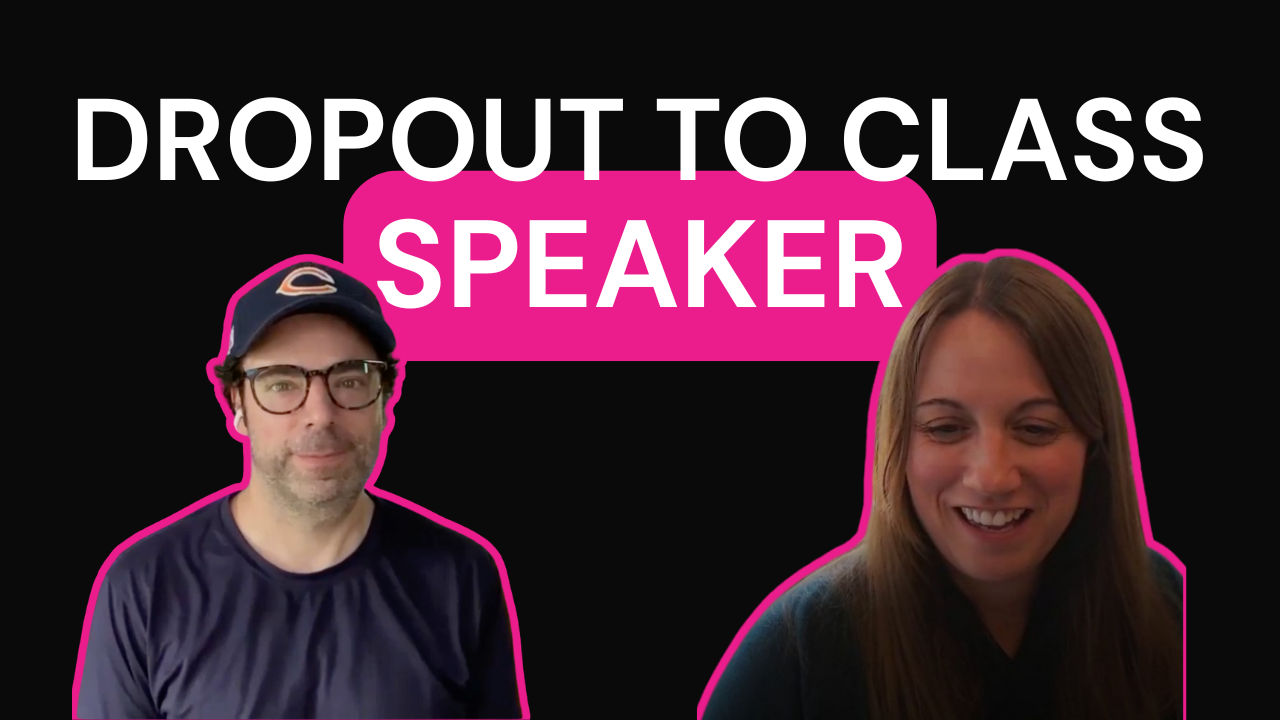
A student named Buddha dropped out of high school after years of disconnected, irrelevant coursework — and became his graduation class speaker after enrolling somewhere that taught differently. Jenny Curtin of the Barr Foundation joins the show to explain the model behind that turnaround, and why most school transformation efforts stall before they ever reach a kid like him.
🫶 What You'll Learn
- Why "taking the long view" beats chasing the next quick fix in school reform
- How to design school changes around your most marginalized students first
- What a Transformative Learning Experience unit actually looks like in practice
- Why community with other school leaders is what sustains multi-year change efforts
🧠 Key Insight #1: Why School Transformation Requires Slowing Down First
- What's broken: Schools chase quick fixes and bolt-on programs instead of questioning their actual purpose and vision.
- The shift: Leaders take the long view — slowing down to investigate vision, gather empathy interviews, and study other school models before acting.
- Impact: Change becomes sustainable enough to survive leadership turnover instead of collapsing the moment its champion leaves.
🧠 Key Insight #2: Why Centering Marginalized Students Redesigns the Whole School
- What's broken: Most school redesign starts from the average student and treats the most marginalized students as an afterthought.
- The shift: Design at the margins first — build for the students least served by the current system, then let that design benefit everyone.
- Impact: A school that centred a disconnected, disengaged dropout re-enrolled him — and he graduated as class speaker.
🧠 Key Insight #3: Why Project-Based Learning Beats Traditional Coursework
- What's broken: Traditional coursework asks students to check a box for a diploma without connecting it to their real lives.
- The shift: Transformative Learning Experiences put students in real courtrooms for moot trials, real neighbourhoods for gentrification photography projects, and real business plans built with math skills.
- Impact: Students report a deeper sense of their own potential, and even early-adopter teachers say the model shifted what they believe is possible for kids.
🎧 JENNY CURTIN QUOTES FROM THE RUCKUSCAST
"The silver bullets that are always coming on the scene for education are a trap."
— Jenny Curtin
"We're not interested in people just adding more decorations onto an existing cake."
— Jenny Curtin
"If we aren't ever designing at those margins of who isn't being served well, we're never going to get to those young people."
— Jenny Curtin
"There's like many different, beautiful high school models that can exist that do not have to look all the same."
— Jenny Curtin
"We're not interested in making marginal changes to make things marginally better for young people."
— Jenny Curtin
✍️ Your Do School Different Challenge
Ready to implement these ideas? Start here:
- Tomorrow: Pull up your school's current improvement plan and circle every initiative that's a bolt-on program rather than a rebuilt foundation.
- This Month: Shadow three students who are least served by your current model and document what they actually need.
- This Semester: Pilot one project-based, community-connected unit — like a moot court trial or a local-issue investigation — with a single grade or department.
🚀 Episode Timestamps
- 00:00 - Why there are no quick fixes in education
- 03:28 - Buddha's story: from dropout to class speaker
- 8:18 - Why the system wasn't built to serve every student
- 10:38 - Centering the most marginalized students first
- 12:10 - The cake analogy: stop decorating, start re-baking
- 14:35 - What taking the long view actually means
- 19:33 - Why school leaders need community, not isolation
- 26:09 - Inside Transformative Learning Experiences: Students in the Law
- 28:31 - Taking learning beyond the school walls
- 30:40 - How project-based learning shifts staff mindset
- 33:26 - How high-impact leaders sustain change over years
- 37:23 - Jenny's marquee message and three principles for a dream school
00:03
Speaker 1
There are no quick fixes in education. No one's gonna be surprised. I may say that, you know, the silver bullets that are always coming on the scene for education are a trap, right? There's no way to, like, to fix things in a way that really gets again, at the root of what most needs to be changed and certainly not in a sustainable way that can persist, you know, throughout changes in leadership or other disruptions that may come. And so taking the long view means that there is a slowing down of like, reconsideration of like, what is the purpose? What is the vision of this school?
00:46
Speaker 1
How do we plan thoughtfully to do, to have empathy, interviews to shadow students, to really go deep into our quantitative data, to, like, take it all in and triangulate it to learn about what else is out there for school models that we can learn from and be inspired by. That doesn't happen in typical practice on a regular basis. And so there's like a slowing down to go faster and deeper.
01:19
Speaker 2
For over 30 years, ODP Business Solutions has helped schools transform from whiteboards to smart boards. Why? Because when you get the right tools, everyone wins. Visit ODP business.com education to revolutionize your school's learning spaces. It's ODP business.com education if you're making decisions about staffing, student support or operations this year, having the right context matters. Frontline Education's 2026 K12 Lens report shows where pressures are easing, where they're not, and how districts are responding. It's based on insights from 1000 school leaders across the country. Visit FrontLineEducation.com leaders to uncover insights from over 1000 school leaders across the country. Over 1 million teachers rely on IXL because it's empowering. It helps them make better decisions with reliable data, and it adapts instruction based on student performance. You can get started [email protected] leaders. That's ixl.com leaders.
02:46
Speaker 2
A principal I work with walked into her staff meeting last week with one clear next move on the culture problems she'd been circling for months. She didn't get there alone. She got there with Digital Danny. He's always there, never forgets, and he evolves with you. Get started with Digital [email protected] Ruckus. That's my principalcoach.com RuckUS. All right. And hey, Jenny, welcome to the show.
03:21
Speaker 1
Hi. Thanks for having me.
03:22
Speaker 2
Absolutely. So let's start with Buddha's story. What's that all about?
03:28
Speaker 1
Yeah, Buddha is one of the many young people that we've had the privilege of getting to know over the course of doing work with lots of different schools and districts in New England. And he came our way. We became introduced to him because he was a student with a really interesting story, but not a fully unusual one and not unique to him, but is a good example of the power of education and in both harmful ways and also full ways. Buddha was a high school student who had dreams of becoming financially stable in his adult life and through the course of high school found that the high school experience really was not working for him. He didn't find classwork interesting or relevant to his life. He didn't have the right support systems available to him.
04:26
Speaker 1
And he felt like he was just going through the motions of what it meant to be a high school student and earn a diploma and just felt very disconnected from his goals for his own future and where his life was at the time. And he felt super disconnected. It ended up dropping out of high school after sort of a period of disconnection and through skipping school and becoming increasingly unmotivated, eventually did drop out of high school and. But that's not where his story ends. Thankfully.
04:59
Speaker 1
He became connected with a school that was working hard to think about and implement coursework that which was much more relevant, rigorous, really thinking about not only what it takes to graduate students and check that box, but more about what does it take to really prepare young people for the lives that they want to live and so that they have choice filled lives that doors are open to them and how do you do that in a way that also supports them to thrive when they're in high school. And so he had the opportunity to re enroll in school in this school that was implementing project based coursework called transformative learning experiences that were deep projects, very rigorous, had lots of connections to community outside of the school walls. And he really found his own voice, his own power that was already there.
05:59
Speaker 1
Sort of had these reflections of like, oh, I always knew beat down that I was smart and then I had something to offer. But this school helped to shine a light back on that part of me. And so he ended up graduating from high school. He was the class speaker for the graduation for that high school. And he has now shared his story with a number of including those of us at Barr and just really proud of where he is today and really gives most of that credit to that having the right school experience that it was, you know, that he became disconnected and was able to move through that based on the opportunities that were provided for him from A new. From a new school experience. So just speaks to the.
06:56
Speaker 1
The incredible power of a school, like I said, both in sort of the negative potential power of like, if things aren't going well, how much that can impact a young person. And then on the flip side, if things are singing in a way that feels both purposeful and challenging and that there, it's leading to other opportunities in life, it can be incredibly, positively powerful. And that's what happened to Buddha in the end of the story.
07:24
Speaker 2
Yeah, really powerful. And you might see over my shoulder there, it says there's two sides of every coin. Right. I think that's what Buddhist story sort of represents. And here you have a. A student who drops out, right. And I don't know, maybe the school had written Buddha off, maybe. I don't know. And then finds himself on a campus that's like you said, relevant and rigorous, and he thrives. Right. Because there's some like, connection there with the student and that kind of thing. Yeah. I don't know if you have any insights like what. What it is about like, campuses or the system or. Or some schools, you know, like why they do write off students potentially, you know, and they find themselves, like, not in the right place, but they could thrive somewhere else. You know, he said he always thought he was smart.
08:14
Speaker 2
Right. And here he is, you know, thriving. So. Yeah. Do you have any thoughts on that? You want to share?
08:18
Speaker 1
Yeah, I mean, I think. I mean, this goes, I think much deeper to the sort of the purpose of education, how the American education system was built. And it was never. It was never designed to serve every student incredibly well. And so we. There's been a lot of inertia around, like, what's. What school could be for young people. And I don't blame any sort of. Any one individual adult in this. I think we are all operating in the systems that we haven't inherited and. But that we do have an opportunity to disrupt those. Those systems. And so, but that doesn't happen naturally. Most people aren't taught in their educator preparation programs or in their leadership preparation programs or in ongoing professional learning opportunities. How to really disrupt the sort of the status quo and think about what a change effort looks like.
09:23
Speaker 1
And for young people like Buddha, really centering those experiences as like the design challenge to center students who are at the most, at the margin, oftentimes students of color, oftentimes students who have been historically marginalized represent historically marginalized groups. And that is a skill that we work with a lot of partners On. But part of what makes it so hard is that they haven't been supported in that to do that sort of type of change effort before and to really center and design at the margins of their students. And so I think that is part of what is both needed and necessary to really. Yeah. To disrupt what is what the experience was for Buddha.
10:09
Speaker 2
Yeah. You know, I call that creating a campus experience we're showing up for. Right. And I love that idea of reimagining what's possible. I mean, this. This is why people listen to the show. We want to reject the premise. We want to challenge the status quo. Right. That's the whole thing about RuckUS makers. Do school different in our point of view. So, Jenny, how do you think about reimagining the high school experience so that both excellent and equitable.
10:38
Speaker 1
Yeah, so I don't have. I don't think there's one right way to do high school. I think there's like many different, beautiful high school models that can exist that do not have to look all the same. But it comes back to, I think, partially what were just talking about, which is had the students who have been most marginalized, who are the least well served by current systems and structures, have their experiences, have their perspectives, have their outcomes been centered in thinking through what's next for the school. Because if we aren't ever designing at those margins of who isn't being served well, we're never going to get to those young people.
11:17
Speaker 1
So if we start with them and really focus on their needs, their strengths, their hopes and dreams, then it's going to benefit the entire student population, including those that have been least well served. So I think that's part of it is like really sort of reorientation of who is the focus of decisions and then thinking about having the clarity of what the purpose of that particular school is. Again, so much of what happens in high schools today has been inherited from prior generations and not necessarily reconsidered in a way that, with intentionality of, oh, this is what I want the vision for this school to be. This is what our instructional vision is. This is what it means to be a young person today. It's what the school is offering them.
12:10
Speaker 1
We often see that happen, like, as a tinkering around the edges, like, oh, we're going to add a program on, and you might get a nice boost from that program, but it really hasn't touched the rest of the school. We use analogy on our team that with many of our partners around, we're not interested in people just adding more decorations onto an existing cake. So if you bake the cake and the recipe is staying the same, but you're adding additional pieces on. Right. Different flour icing, decoration, but it's more about re baking the reimagining what the recipe is, retinkering the recipe for that. For that cake to begin with. So it's very foundational, getting at the root of, like, what is actually happening.
12:56
Speaker 1
And are we being intentional about the choices that we're making for school and not just doing school the way that we experience it ourselves, or we're taught that this is the way the school is. So there's like a slowing down to really question and be purposeful around vision and intention that really, again, gets at the core of who's not being served well and why.
13:21
Speaker 2
Yeah, I love that idea of slowing down. I think we're talking about curiosity and empathy. I know I've said probably for a decade on this show, right. That the way your school structured it served a kid at one point, but does it still serve the kids in front of you today? Right. And this is something we have to investigate. And that's what I mean that, you know, when. When I say RuckUS makers do school different again, like, yeah, we have. We might have different kids in a different community in front of us. And so what is it that they need from us to have this excellent and equitable, you know, high school experience? So that's cool. I appreciate you sharing that in and the idea of slowing down and that there's no one way.
14:06
Speaker 2
And let's not just keep baking the cake the way we've made it and add decoration. Like, let's maybe think about a different cake. Or maybe we don't even make cake. Maybe we start making something else. Imagine that we're gonna make a kale salad instead of cake. How about that? Healthy and nutritious. All right. We won't make this into food. So values wise, I know you like talking about taking the long view and then thinking big. So what does taking the long view mean to you?
14:35
Speaker 1
Yeah, it's one of Barr's core values as a foundation that we take the long view. It's not always a common practice in philanthropy to take a long view and really stay with something and see it through. And so it's a significant and incredibly meaningful core value for me and for our team. There are no quick fixes in education. No one's going to be surprised. I may say that, you know, the silver bullets that are Always coming on the scene for education are a trap. Right. There's no way to like to fix things in a way that really gets again at the root of what most needs to be changed and certainly not in a sustainable way that can persist, you know, throughout changes in leadership or other disruptions that may come.
15:34
Speaker 1
And so taking the long view means that there is a slowing down of like, reconsideration of like, what is the purpose, what is the vision of this school? How do we plan thoughtfully to do, to have empathy, interviews to shadow students, to really go deep into our quantitative data, to like take it all in and triangulate it to learn about what else is out there for school models that we can learn from and be inspired by. That doesn't happen in typical practice on a regular basis. And so there's like a slowing down to go faster and deeper. And even once that sort of planning and exploration period is sort of has taken place there's also no flipping of the switch of the new, of a new idea, of a new way of doing school.
16:33
Speaker 1
And so the implementation is something that takes a long time. And we often think about the continuous improvement cycles that are needed, the learning orientation that leaders and others in the school have to continue to embrace that there's not a one and done decision, but it's really about how are we continuing to learn and iterate and evolve along the way. And so for BAR as a philanthropic organization, really think about like, what does it mean to see a school or an organization through a course of change, not because we're going to be with them in to perpetuity, but more of like, what does it need to be a thoughtful partner along the way and that we're not going to expect anyone to immediately change overnight because these are complex systems and we have to treat them as such when we're partnering.
17:32
Speaker 1
So taking the long view is really about the slowing down, being thoughtful, really having sort of bigger ambitions about what's possible and how to do that well in mind along the way.
17:45
Speaker 2
Yeah, how you approach stuff changes, right. If you think you're going to accomplish it in 90 days or a year, 3 years, 5 years, 10 years, 100 years. So I appreciate that perspective. Is thinking big also one of the core values or just something that you're very interested in?
18:00
Speaker 1
Yeah, it's not a core value in and of itself, but we do have a core value around striving for impact and holding humility and investing in leaders and centering racial equity. And I think those all relate to the idea of what does it need to really think big? That again, we're not, you know, we're not interested in making marginal changes to make things marginally better for young people and that the resulting benefits for our overall society, but really about, yeah, the most deep change that's possible that people can take on. And so that could mean thinking innovatively about the way preparation programs happen and all the way through what are the actual practices that are happening in schools and districts. And that sort of exploration of trying something on, learning from others, being in community with others along the way so that it's.
19:03
Speaker 1
That you're not limited by your own sort of local sphere, which often happens, of course, in education. People get stuck in their own school district environment and don't always have the opportunity to sort of have the worldview opened up in new ways, both to be supportive but also to be, to learn from and with. So I think that's all connected to how do you think, what's the opportunity to think big and how do you do that?
19:33
Speaker 2
Well, what's interesting about that, you know, if I can interject here, and some of the work we do with school leaders, we've got these groups that we call the mastermind, right? We've had it since 2016 and we've been connecting school leaders on zoom prior to the pandemic. You know that. So it's really interesting, right, how that all happened. But were weekly conversations, right, about like, what works, what doesn't, you know, what are you all seeing? And here's something I want to accomplish, like how might you approach it? Then we have something that's called the hot seat. So you just bring your number one challenge and we help solve it. Now the interesting thing about that though is that you think it's.
20:14
Speaker 2
It is obviously valuable to get your number one challenge solved, but it's almost more valuable just to hear the other challenges school leaders are going through. You know, it kind of makes it feel a little more normal, maybe even a little less heavy or something like that. But you also get an inside look on like how they're processing the problems, right? So not to make it about us, but to this idea, connecting to thinking big, right? Connect with Barr foundation, right? Maybe you connect with us. There's other groups too, but don't do the work in isolation, you know, because that fishbowl does exist, right? And you might be in an excellent, blue ribbon, award winning sort of system, whatever, but everybody kind of like, you know, does things in similar ways. I would argue they might even dress the same.
21:08
Speaker 2
So it's great to like zoom out and just like see. Oh, maybe there's not just one way to do it here. You know, I've lived around the world five different states, five, four or five different countries. That's been the biggest gift of moving is like, huh, that's interesting. It's totally different way of doing it. And I kind of like this. So I'm going to take it and bring it back, you know, to my family or my life.
21:30
Speaker 1
So yeah, and yeah, that's exactly right.
21:33
Speaker 2
Yeah, right on. ODP Business Solutions, formerly Office Depot Business Solutions Division, has been a trusted partner for schools for 30 years and ODP Business Solutions we're by your side to meet your evolving education needs here's the thing about creating remarkable learning spaces. You need a partner who gets it. Someone who understands that transforming education isn't just about swapping whiteboards for smart boards. It's about reimagining what's possible. That's why innovative school leaders trust ODP Business Solutions. We don't just deliver supplies, we help you design dynamic learning environments that make students actually excited to show up. From tech integrations that bring lessons to life, to flexible furniture that transforms any space into a collaboration zone, to sustainable solutions that teach by example. We've got everything you need to do school different. And the best part?
22:38
Speaker 2
You can get it all from a single supplier that helps you simplify ordering and streamline budgeting while staying compliant with easy access to cooperative contracts, however you want to advance. ODP Business Solutions has 30 years of experience helping districts like yours get ahead. Visit ODP business.comeducation to learn more. That's ODPbusiness.com education with so much changing across K12, it's not just about reacting. It's about making decisions that hold over time. Frontline Education's 2026 K12 Lens report brings together insights from over 1,000 school leaders to show what's shifting across staffing, operations and student support. Learn where momentum is building and where districts are feeling the pressure. By visiting FrontLineEducation.com leaders, you can get your full report at FrontLineEducation.com leadership something that drove me nuts as a RuckUS maker was hearing teachers say things like I taught it, they should have learned it.
23:56
Speaker 2
But really, some teachers just don't know how to teach. Or reteach for that matter, so that all kids get it. That's where IXL comes in. IXL's diagnostic automatically identifies knowledge gaps for teachers and provides them with a personalized growth plan for each individual student. Teachers can step into the classroom every day knowing what their students know and what they don't know. IXL's adaptive platform makes differentiating instruction easy. As students learn, IXL adjusts to the right level of difficulty for each student. Close knowledge gaps and accelerate learning with IXL. Get started [email protected] leaders. That's ixl.com leaders. I was talking with a principal last month who'd been wrestling with the same staff problem for six weeks. Every Monday it was on her list. Every Friday it was still there. She kept telling me she needed more information before she could make the call.
25:05
Speaker 2
Here's what she actually needed. She needed someone to ask her, if you already knew the answer, what would the answer be? That question cut six weeks of circling down to about four minutes. She made the move that afternoon. And that's the conversation Digital Danny is built for. He's your AI coach, trained on a decade of how I actually work with principals. And he's available the second you need him to think through something. You could get started with Digital [email protected] Rukus. So. So earlier in Buddhist Story, I want to double click on something that you said that was really interesting. You were talking about project based, you know, experiences, and then you said transformative learning experiences.
25:59
Speaker 2
You know, do you have any specific examples of like what those could look like if it was a course or a project or what the students are getting involved in?
26:09
Speaker 1
Yeah. So when we refer to transformative learning experience, it's both descriptive, but it's also sort of a formal name of an investment that we made in our partner Springpoint, to develop these project based, rigorous and purposeful units that now a number of our school partners and beyond, not just our partners, that are using at the high school level to really help make connections between what they're learning in the world beyond school, to deepen their content knowledge, to develop transferable and durable skill, you know, all of it. And this started as a small project for a small group of grantees who are realizing that they didn't have the right curricular resources to really reach their students in new and more meaningful ways, and has really grown into this really much larger project because it was so impactful for that small group of schools.
27:06
Speaker 1
And so in Buddhist Story, one of the units that he really speaks to that he found most impactful was called Students in the Law. And that is a class where students learn about their constitutional rights and they have an opportunity to try on different roles in a moot court experience oftentimes not happening at their school, but actually in an actual courtroom. And everyone has to participate and develop opinions and perspectives and build their own arguments based on real deep case study. And so that is one example of a transformative learning experience unit. But the school that he went to after re engaging in school was one of the schools that has been taking these units on to really think about reimagining the student experience and using these as part of the tools to get. To get to that deeper opportunities for students to engage.
28:12
Speaker 2
Did I hear you right or did I miss here? Like part of that experience was actually at the courthouse or.
28:18
Speaker 1
Yes. Yeah.
28:19
Speaker 2
Okay, so is that a key component of the. Maybe it is. I don't know. But like, where can we do stuff within the community outside of the traditional campus walls, so to speak?
28:31
Speaker 1
Yeah, most. Most of that transformative learning experience units have connections beyond school walls where there are opportunities for students to go into the community in different ways. Students in the law happens to be courtroom. I know that some of some schools have worked with local law students as part of the course and brought them in to support students as mentors throughout that coursework in that particular unit. But then there are other courses in the transformative learning experiences. Thinking about, there's ones that. Where students look at to do their own photography projects and really look at gentrification in their local community and understand what gentrification is, how it's impacted their local community and document a deeper understanding of it through a photography and do like an exposition of that at the end of the unit.
29:32
Speaker 1
There are units where students that are more focused on entrepreneurial skills that combine those with math skill development, where students think about like a potential business that they might want to develop and create that and think about what the trade offs are both in sort of from a business model, but also from a math perspective of what it would take to really have a successfully profitable business. So many different types of units. All of them connect either with a real topic that's important to the student or topic in their community and have opportunities to show their learning and show their work along the way.
30:13
Speaker 2
I can see how impactful this is for. For kids and students. I'm curious, like how that works on the mindsets of staff.
30:21
Speaker 1
Yeah.
30:22
Speaker 2
And I don't know, you know, if it's. If it's like a more traditional teacher and then it's okay, we're doing this and then they figure it out or if it just attracts the kind of teacher who would, who sort of bent toward that, you know, that exploration anyway. Well, yeah. What are you, what are you seeing with the staff?
30:40
Speaker 1
Yeah, that's a really great question. And it's the mindset piece of this is something that we talk about a lot. There's both like the skill of being able to do something amongst adults, but then there's also the mindset, the will and understanding of why a change or doing something differently is important. What we found with the transformer learning experiences is naturally people that are most interested or inclined to be thinking about what might be next for their practice are the ones that are often the most eager. But we've also seen where even amongst those early adopters that it has changed their own mindset of what's possible for young people. So some of the data that's been collected for these has shown both a deeper understanding of what's possible for young people themselves.
31:29
Speaker 1
Like they have a deeper appreciation of what they can accomplish and what they their own expectations for themselves raised. And for adults this a similar opportunity even for those that are already potentially more inclined or curious. We've also had some schools over the years that have purposefully chosen teachers that may not be like fully not interested, but are more sort of in the middle and not necessarily early adopters as thinking through like how do. What does it mean to use this as a tool to bring people along in a journey of where the school wants to go next and to do some of that mindset shifting.
32:08
Speaker 1
And so I think that is certainly something that not only is it beneficial to the students in and of themselves to develop the knowledge and skills, but it also changes minds or has the potential to students and adults alike. We have a project right now that is going deeper with a few schools in partnership with that organization, Spring Point that I mentioned and where that looking to. To bring transformative learning experiences more to like a full school experiences versus kind of dipping into a few classes and think about like what does it mean to grow it sort of from the ground up in a way that then has implications for a school. Wide vision.
32:50
Speaker 2
Yeah. You know, quality questions lead to quality answers. And so I love that idea of what, you know, from the ground up. What does it take? That's a good question to ask. You know, long game doing, deep work, transformative learning experiences like one dot that connects this is that, you know, it's going to take time. And I'm curious what you've seen from sort of like high Impact leaders doing this? How. How do they stay sort of committed, steadfast? Right. How do they. How do they sustain it? Because it's hard.
33:26
Speaker 1
It is really hard. And I think it's important not to sugarcoat that leaders doing transformational change work have to be attentive to not only like the content, the vision and change management processes and bringing people along and garnering the buy in both within their. That school building, but in the broader community as well. And so there's just a lot to be attentive to, and there's more to be attentive to. The bolder the vision and the aspirations are. One thing that were speaking about earlier is around how important being in community with others are. I was just meeting with a group of school leaders just yesterday for an initiative that's coming to a close. And so they've been together, working together in different districts, in some cases not even in the same state for a number of years now.
34:28
Speaker 1
And one of the school leaders was reflecting on how important the community across them has become and that they were, you know, yes, they've received incredible technical assistance along the way and support and financial resources and. And exposure to other schools. And what I think will probably most be sustained when Barr is no longer a formal partner in the way that we have been supporting them is the community they built with each other to sort of check their understanding of how to potentially approach a tricky issue within their own buildings to be inspired from each other's schools. They have all visited each other and seeing each other's school communities. So I think that connection among school leaders is. Is really important. We also run up an optional community of practice for our school leaders.
35:27
Speaker 1
Again, same idea of, like, how do you connect people to each other? I think it's also really important to think about what are the sort of the vertical opportunities. So that's more of a sort of lateral across peers. But how to think about for schools that are in a traditional district system, what's the opportunities to align around vision and aspirations and goals across a central office and up through the state? I believe it's possible. It's just not. We don't have many examples of where that has all kind of flowed in a way that people can feel super supported to stay steadfast and be sustained in the work. So the more that we can all be thinking about, like, how do we connect to all these leaders, to each other in ways that both are vertical and lateral will be incredibly important.
36:21
Speaker 1
And the last thing I'll say about this is how important it is to celebrate the wins along the way in sort of both holding like where you want to go, the big picture, the big aspiration, the vision and never losing sight of that North Star and celebrating those bright spots and wins both for yourself as a leader, but also communicating that with the rest of your community and team to keep people excited and motivated and feel like change is possible. And we're in this for the long haul.
36:53
Speaker 2
So for Ruckus Maker listens interested in maybe partnering with Bar foundation? What's the best way to reach out?
37:00
Speaker 1
Yeah, so we have a way you can reach us through an inquiry type of opportunity that educationarfoundation.org is email address and then we review every inquiry that comes in and consider other good matches. And so we always welcome people to reach out and connect.
37:23
Speaker 2
So Jenny, if you could put one message on all school marquees around the world for a single day, what's your message?
37:29
Speaker 1
I thought we would do something directed at students that also spoke to adult values and beliefs that I hope are true around that every student has incredible potential and gifts. And it's our job to ensure those come to fruition both in high school and as they explore the world after high school itself.
37:56
Speaker 2
And if you're building your dream campus, you have access to unlimited resources. Your only constraint is your ability to imagine what's the three guiding principles constructing this dream school?
38:09
Speaker 1
I think number one, it has to be about the people, the talent, that education is a human endeavor and talent and the humans involved, the adult humans matter a lot. And so I would probably start absolutely with that as the number one consideration is having both again, mindset, skill learner stance around the people. And that goes for every single human that touches students all different roles. And then beyond that, I think I have less. I have less. I think the rest of it, not that it doesn't matter. There's so many complexities that matter in education, but the rest feel less significant in some way than that huge rock of having the right talent.
39:02
Speaker 2
You got to get the people right.
39:04
Speaker 1
You have to get the people right or support if you could start from the unlimited resources from the ground up, or if you have an existing school, develop them and think about where to go next. But I also think about if I had to choose additional things about the opportunities to connect students to opportunities beyond school walls, how you create the infrastructure for that in a way that not just a few students can take advantage of, but for all students to really have opportunities to explore their world and what's possible. And so that's not an insignificant ask and oftentimes requires resources to be able to pull off, especially at scale and in a deep and rigorous way.
39:47
Speaker 2
Well, we covered a lot of ground in today's conversation, Jenny. Of everything we discussed, what's the one thing you want a Ruckus Maker to remember?
39:56
Speaker 1
How important their work is? That this is life changing for young people. It's life changing for young people like Buddha, and that we all the collectively need them to stay in the work and keep at it. And thank you.
40:15
Speaker 2
Hey Ruckus Makers, thanks again for pressing play. I hope you enjoyed the show as much as I enjoyed creating it for you. And before you go, if today's episode shifted something in you so that you want to do school different, or maybe you have a new idea about how to reimagine education on your campus, then check out my Principal Coach. It's your AI powered leadership mentor. It's trained on 10 years of mastermind and private coaching experience that I've had. It's like having a world class Ruckus Maker mentor in your pocket 24. 7. You can start your free 7 day [email protected].
Transcribed by https://fireflies.ai/
💌 Connect With Jenny Curtin
- Website: https://www.barrfoundation.org/
- LinkedIn: https://www.linkedin.com/in/jennycurtin
🎙️ Listen & Subscribe
Listen to Better Leaders Better Schools on Apple Podcasts, Spotify, Youtube or wherever you get your podcasts. If today's episode moved you, leave a review — it helps more Ruckus Makers find the show.
🧔🏻♂️ Your Self-Mentorship Guide
Meet Digital Danny — your self-mentorship guide. Always available, never forgets, and evolves with you. Think through your next leadership move at myprincipalcoach.com.
🫶 Today's Ruckuscast Partners
ODP Business Solutions®
ODP Business Solutions has been the behind-the-scenes partner for schools for three decades — not just competitive pricing, but negotiated cooperative contracts that stretch every dollar. They helped Baldwin School District overhaul its entire campus without blowing the budget, combining smart design with smarter purchasing. From essential supplies to cutting-edge tech to flexible furniture, it's one supplier instead of ten separate headaches.
🔎 Visit odpbusiness.com/education to see what they can do for your district.
Frontline Education
Frontline Education's 2026 K12 Lens Report makes one thing clear: retention, not just hiring, is what determines staffing stability. Districts running structured, automated professional growth software report easier hiring nearly half the time — compared to just 30% of districts without it. If you're building a campus where great educators actually want to stay, this report is your blueprint.
🔎 Get it freeat frontlineeducation.com/leaders
IXL
IXL kills the guesswork in lesson planning — teachers get ready-made, standards-aligned lessons built for exactly what their textbooks already cover. Add daily insight into student performance and teachers can adjust instruction before a gap becomes a pattern. Your teachers get the tool, your students get the growth.
🔎 Start at ixl.com/leaders.
KIDS FIRST EDUCATION
Founded by career educators, Kids First partners with PreK–12 schools and districts to deliver instructional coaching, leadership development, and curriculum support that put students first. Real educators. Real results.
🔎 Learn more at kidsfirst.llc.
Twelve Practices LLC © 2026 | If Education Ain't a Bit Disruptive, Then What Are Your Students Learning?


