A principal and coach based in Prince George, British Columbia, Canada, this episode's guest flips the usual format and turns the mic on Danny Bauer instead of the other way around. He brings the same coaching lens to the conversation that he uses inside the Better Leaders Better Schools Mastermind, where he works alongside other school leaders on the exact challenges this episode covers.
His questions push Danny past the usual talking points and into the mechanics of building a leadership vision that doesn't depend on him.
Most principals think the answer to burnout is working harder. Danny Bauer argues the opposite — that in an AI-accelerated world, grinding is the least effective thing a school leader can do, and the real work is learning to fire yourself from the things you love most.
🧠 What You'll Learn
- Why treating leadership like a grind is now the least effective strategy in an AI-accelerated world
- How to test whether your storytelling actually lands — instead of assuming it does
- Why Danny deliberately fired himself from the mastermind he built
- The reason narrowing an AI tool's focus makes it more useful, not less
- How to think about your leadership across a 50-year or 200-year timeline
✅ Key Insight #1: Why Most Principals Are Bad at Storytelling and Don't Know It
- What's broken: Principals assume they're strong communicators because staff nod, laugh, and lean in — but that's compliance to the boss, not honest feedback.
- The shift: Test the story on people with zero reason to fake interest — strangers or students — and if they don't smile and lean in, the story isn't working yet.
- Impact: Deliberately practiced storytelling turns abstract goals like "student engagement" into a moment staff actually remember, repeat, and act on.
💚 Key Insight #2: Sustainable School Leadership Means Firing Yourself From What You Love
- What's broken: Most leaders equate their own importance with holding onto every program, room, and decision they built.
- The shift: Danny intentionally handed away the mastermind he built to other coaches to run it, testing whether what he'd built was real or was always just about him.
- Impact: The mastermind got better and more sustainable once more people owned it — proof that a vision built to outlast its founder is stronger than one that depends on him.
✅ Key Insight #3: The Best Leadership Tools Get Narrower, Not Broader
- What's broken: Most AI tools, and most PD, try to be everything to everyone — trading depth for a wider audience.
- The shift: Danny narrowed Digital Danny's training down to his core frameworks — entry plans, automatic school tools, coaching conversations — instead of everything he's ever written.
- Impact: A narrower, specialist tool outperforms general-purpose AI for a principal working a specific problem, the same way a specialist coach outperforms a generalist consultant.
🎧 DANNY BAUER & DAN WATT QUOTES FROM THE RUCKUSCAST
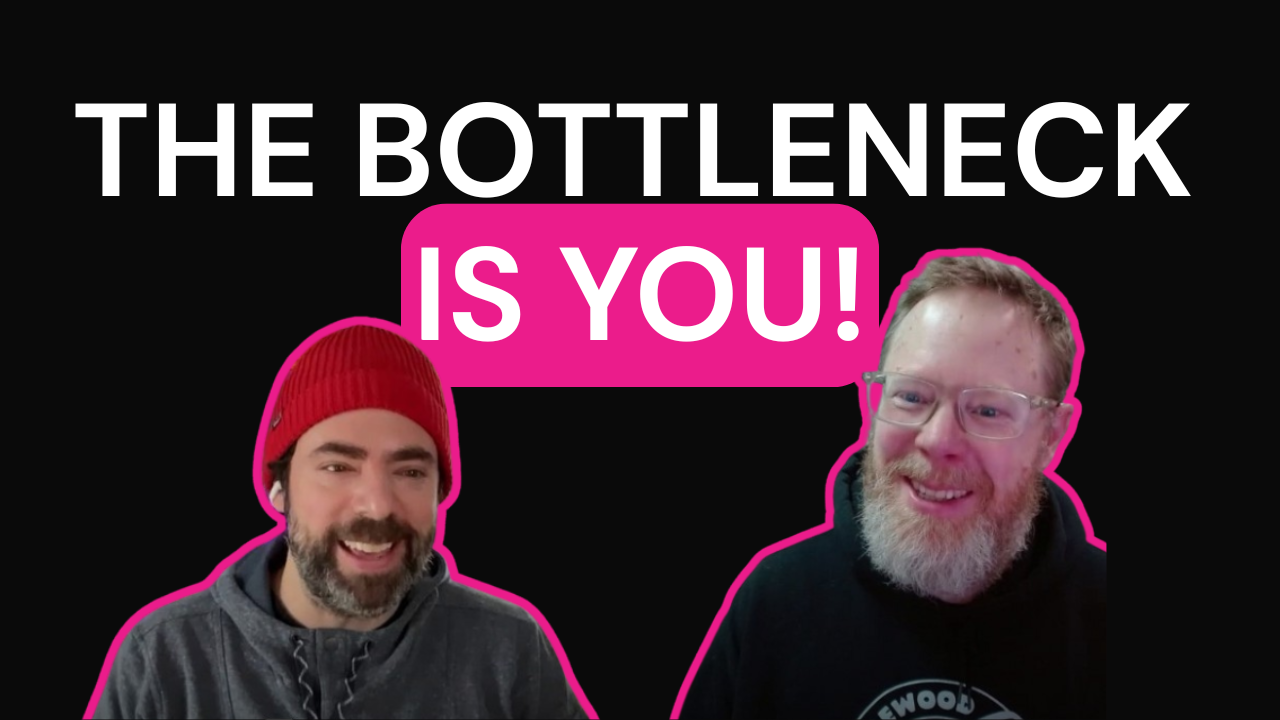
"You might be the biggest bottleneck in your organization, not because you're incompetent, but because you're holding on to everything you're really good at."
— Danny Bauer
"What would happen if you disappeared tomorrow? Would your vision sustain, or would it collapse because it was always about you, not the system you built?"
— Danny Bauer
"Do you realize that most of what you're doing is all made up?"
— Danny Bauer
"If you don't like the game, change the rules, make up a new game."
— Danny Bauer
"The leader is the chief opportunity and bottleneck to every organization."
— Danny Bauer
"Tell it to strangers, and if they don't smile and lean in, you suck at storytelling."
— Danny Bauer
"Think of the context of a school leader that hopes their vision is a collective one and not solely theirs."
— Dan Watt
🚵♀️ Your Do School Different Challenge
Ready to implement these ideas? Start here:
- Tomorrow: Tell your best "leadership story" to someone with zero context — a stranger, a student, anyone with no reason to fake interest — and watch whether they actually lean in.
- This Month: Pick one responsibility you're gripping tightly and hand it fully to someone else on your team, then watch what happens without you in the loop.
- This Semester: Map out what your school, program, or team would need to survive and thrive if you left tomorrow — then start building toward that, on purpose, before you're forced to.
⌚️ Episode Timestamps
- 00:00 - Why grinding harder is now a dead model
- 04:40 - The sleeping teacher story that changed everything
- 09:40 - Why most leaders are garbage storytellers
- 14:02 - Inside the rebuilt Digital Danny and automatic school tools
- 18:50 - Why narrowing the niche beats ChatGPT and Claude
- 21:14 - Trading the grind for play and creative rediscovery
- 24:24 - The false belief that grinding is the only choice
- 25:44 - Reframing leadership as a game with rules you can change
- 30:42 - The empty cup metaphor for overflowing leaders
- 32:00 - How improv unlocks fearlessness in leadership
- 34:48 - Firing himself from the mastermind he built
- 38:17 - Building toward a 50-year or 200-year legacy
00:04
Speaker 1
Most school leaders think that the answer is working harder. More hours, more hustle, more grind. But that old model of work is dead. In an AI accelerated world where efficiency is a commodity, what actually sets you apart isn't effort. It's original thinking, creative play, and the courage to let go the uncomfortable reality. You might be the biggest bottleneck in your organization, not because you're incompetent, but because you're holding on to everything you're really good at. And while you're clinging to control, you're limiting what's possible. What would happen if you disappeared tomorrow? Would your vision sustain, or would it collapse because it was always about you, not the system you built? It's not a morbid thought. It's a leadership litmus test. Today, Dan Watt and I have a conversation about sustainable leadership.
01:00
Speaker 1
It's about testing what happens when you work less, think deeper, and dare to fire yourself from the things you love most. Because the leaders who transform education, they aren't the ones grinding the hardest. They're the ones brave enough to play a different game entirely. Hey, I'm Dan Bauer. This is Better Leaders, Better Schools, the original Ruckus cast for visionary leaders who want to do school different. That means we're reimagining the project of education. Yes, within a traditional system so that we create campus experiences worth showing up for. Thanks to Ruckus makers just like you, this show ranks in the top 1% of nearly4.4 million worldwide podcasts. So thanks for pressing play. We'll be right back with the main content after some messages from our show sponsors. Want to know how top schools create collaborative learning environments that actually work?
02:05
Speaker 1
ODP Business Solutions has equipped innovative educators for over three decades. Visit ODP business.com education and let's make a ruckus together. That's ODP business.com education strong school culture doesn't happen by accident. It's built through meaningful support and opportunities to grow. Frontline Education's 2026 K12 Lens report explores how districts are connecting professional growth to stronger staffing outcomes. Visit frontlineducation.com leaders to see the full report. That's frontlineducation.com Leaders to see the full report. IXL takes the guesswork out of lesson planning for teachers. IXL's ready made lesson plans are aligned to your textbooks and state standards so teachers can turn to IXL for the exact content they need to help their students. You can get started [email protected] leaders. That's ixl.com leaders. There's a framework that Built called the ideal week, it saves principals about 10 hours a month once they implement the system.
03:35
Speaker 1
Digital Dan can walk you through your version of the ideal week. Tonight, create your ideal week and [email protected] ruckus that's my principalcoach.com ruckus.
03:54
Speaker 2
Good morning.
03:56
Speaker 1
Good morning.
03:57
Speaker 2
Good day.
03:58
Speaker 1
Good. Good afternoon. Yeah, wherever. Good evening. And whatever time it is, if people are watching us, yeah, it might be like 3am somewhere. Who knows exactly who.
04:07
Speaker 2
What time is it in Hong Kong?
04:09
Speaker 1
Yeah, absolutely.
04:11
Speaker 2
Nice to see you. For folks that are just tuning in, my name is Dan Watt, and I'm a principal and coach in Prince George, British Columbia, Canada.
04:21
Speaker 1
Prince George.
04:22
Speaker 2
Yeah. Dan and I are experimenting with podcasts over the last little bit where we're flipping the script and I'm interviewing Dan. So you all know Dan, but you want to take a minute to introduce yourself.
04:35
Speaker 1
You know, I'm working on a new story. Did you see it on WhatsApp?
04:38
Speaker 2
I did, actually. I meant to ask you about that. What's that about?
04:40
Speaker 1
Well, why not? I'll just. I'll share it. You know, this. This is. This is new, but we'll see how it goes. So our students are bright, right? Absolutely bright. Their potential is limitless. But at times, I've realized that student potential and performance doesn't always match up, and this is a problem. So I'm in the library of Brooks College Prep on the far south side of Chicago, and about 10 minutes into a staff meeting, which is the topic is student engagement, right? And achievement. My colleague, the band teacher, I don't want to reveal his name. He just straight up falls asleep right at his table, head down, like, snoozing, okay? And to me, I'm thinking this is like 11th grade kid in an English class, totally disconnected from Shakespeare and that old version of English.
05:32
Speaker 1
So I look at the principal who's leading this meeting, and, you know, either he doesn't see it, he's ignoring it, doesn't feel comfortable, I don't know. But he continues his talk and he's not addressing my colleague who's asleep. And I look into the staff, right? Because I'm just wondering, like, how are people processing this? And some of the folks are still looking at the principal, but if I'm honest, most are looking at their colleagues who's, like, asleep, and they're in disbelief. Like, how is this guy just sleeping in a staff meeting? And at that moment, I'm imagining all the conversations and inappropriate things that are going through their head, right? I won't say what I think they're thinking on this podcast. So I look back at my principal. Still nothing. And at this moment, the band teacher is snoring, right?
06:23
Speaker 1
So not only is he visibly asleep and just he's. He is knocked out. He's in dreamland. And I realized I've got to step in. If the principal is not going to address this guy, it's up to me to wrestle this dude. Like, wake up, right? Get up. So I realized when I was in high school, my mom had this really strange way of waking me up if I overslept, and she would spray me with a water bottle. Effective, right? It was very effective. It shocked me awake every time. And I think about that, but I don't see any water bottle and hands distance away. And we have a very strong union, you know, at this school. And I think, you know, that wouldn't go over very well.
07:10
Speaker 1
So instead of using the water bottle, then I decide to use the oldest tool in every teacher's tool belt. I use proximity. And I just grab his shoulder and gently, you know, nudge him to. To wakefulness, to consciousness. And I say, are you okay, Mr. So and so. And this guy, in shocking candor, responds to me, I'm sorry, Mr. Bauer. I was up late last night playing Call of Duty. Right? The military video game. As. And listen, I love video games, right? But I'm shocked in this moment because how is this guy playing games, not able to regulate, like, who he is? And. And maybe regulate's not the right word, but, you know, having some boundaries that his video game playing is impacting his performance on campus. And he's asleep. Unbelievable, I think, right?
08:08
Speaker 1
And here we are in the staff meeting discussing student achievement, student engagement, and we've got my sleeping colleague. And I think, how can we expect students to be engaged in campus experiences when the leaders, the educators are disengaged themselves, you know? And since then, that was, like, a pivotal moment for me. Since then, I've been really thinking about, how do we do school different? Which, you know, that means reimagining the project of education within traditional settings so that we create campus experiences worth showing up for. And we've been doing that ever since. So that's. That's the story. Yeah, I love it.
08:49
Speaker 2
I was curious when you sent that to me. I was like, this happened to me, not me. Yeah, but, like, I bet that's happened in a lot of places.
08:59
Speaker 1
Yeah, it's happened in a lot of places. And that was. That was coffee this morning at Salt City Market, you know, shout out. Salt City Market. Shout out to coffee. I know you're a coffee connoisseur, and. And there's a couple things going on. Like, one, I want to share that with you because, you know, you're a great storyteller in your own right. And we've been through the storytelling program that we had for leaders to. You know, it's important to know kind of like the roots, you know, the roots of better leaders, better schools. Like, how did it all start? Sometimes I tell the story about being late, you know, and people have probably heard that one. I won't cover it again, but this is a new one that I can tell when people ask, oh, what do you do?
09:40
Speaker 1
You know, what's the origin story? And so the third point that I want to just model for the Ruckus Maker, engage with our content today, is that hopefully you see that what I just did is more effective than saying, yeah, I had leadership gaps. And, you know, I thought it would be cool to, like, coach and mentor school leaders. Like, which one's more interesting. Right. And more relatable, and which one brought you into the moment? And, like, your response, Dan, was literally. That happened to me. Identification. That's the power, right. Of learning how to tell a great story and to communicate is you bring people into it. They feel it as well. And. And they probably have a colleague like that. Maybe it wasn't call of duty, but it was something, you know, and so, yeah, we'll just stop there. I'll stop there.
10:27
Speaker 2
It's a great reminder, though, of the power of storytelling and how that can be. And I would suggest is often an overlooked skill.
10:36
Speaker 1
Yeah. You know, and I don't even know if it's overlooked. I think. I think there's just a total lack of awareness of, like, oh, this is something I should work on. Right. As a. As a school leader. I mean, I think generally most human beings don't think about very much. How do. How can I become a better storyteller or communicator? You know, they just talk. You know, here's the thing. I'm gonna hurt some people's feelings. Not yours, I hope, but I'm gonna hurt some things. Dan, do you realize that when people, like, you're laughing right now, I can't wait for it.
11:07
Speaker 2
Here it comes.
11:08
Speaker 1
When your staff, you know, they're laughing, they're nodding their heads, maybe even your family, like, that's not because you know how to tell a good story. It's because either a You're the boss. Right. And so the staff says, oh, this is. This is really good stuff. And it's not. Or you're within the system of your family and they just don't want to hurt your feelings. Right. And so people go through their lives thinking, oh, I'm a great storyteller or a great communicator. And you're not. You're garbage because you haven't worked on it. You don't know the steps, you don't know what works. So go tell that story that you think is good, that you tell your family and staff. Tell it to strangers, and if they don't smile and lean in, you suck at storytelling.
11:55
Speaker 2
Or tell it to 12 year olds.
11:59
Speaker 1
Yeah, or tell it to 12 year olds. Right? Yeah, yeah, sure. And they'll tell you to your face you suck. I think I was telling you the.
12:06
Speaker 2
Other day how I walked into a grade seven classroom and started telling the story about the great Barcelona ham caper.
12:14
Speaker 1
Yeah, yeah, you were saying that.
12:15
Speaker 2
I had no intention of telling the story, but I just needed to keep them on the hook for a couple of minutes till a teacher came back in the room and. And just sharing that kind of. Kind of bizarre title. I had them on the hook. Everybody was looking at me. I could tell that they were paying attention and they weren't fiddling with something in their desk or.
12:33
Speaker 1
Neat.
12:34
Speaker 2
Yeah, yeah. So I think you're right. Sometimes the audience is glazed over, but you also know when you have them on the hook that engagement.
12:45
Speaker 1
Absolutely. That engagement piece is important.
12:49
Speaker 2
Well, thanks for sharing that story with us this morning because I've actually been thinking about that the last couple episodes that we've been recording. It would be great to share a story and sort of riff on those ideas. You talked about student engagement and a campus experience. I had a great hot seat with a Mastermind member last night about staff engagement, and he was super curious. We ended up using Digital Dan, my man. We put the question into Digital Dan and got some great outputs. But it was really interesting too, to be iterative about the process. And what was great was that fella on the hot seat was super engaged in that moment. And I could see that there would then be a trickle out from that application.
13:35
Speaker 1
Yeah, cool. Do you remember what kind of feedback he gave?
13:39
Speaker 2
Oh, I'd have to go back and have a look. But it was definitely about engagement, honestly. Like for him to show up and be present in the building and to be visible doing things like walkthroughs, giving teachers feedback Having a system for feedback, being strategic about his presence as a leader was a really important takeaway, I would say.
14:02
Speaker 1
Yeah, well, I'd love to show you if I can. Really quick couple things, please. We'll like metacognitively talk about this because some people might be listening instead of watching, which is fine. If you want to watch along, by the way, you know, go to YouTube or I think we're putting the videos on Spotify too, which are super cool. You haven't even seen this yet. This is, this is a new website redesign. So it's not, it's going to be live probably by the time this show is live. Sanaya has been working on it, but that's kind of cool. You know, there's some things to clean up here or whatever, but overall, you know, it looks a lot more modern.
14:40
Speaker 1
But since we're talking about digital Dan, all I want to say when people go to betterleadersbearsschools.com and I think under Engage, there's on demand learning, there'll be coaching and mentorship and speaking. Under coaching and mentorship, it'll say digital Dan will be right here. Okay. By the time people log in. And anyways, yeah, you click there and if you decide right there's going to be an option for a seven day free trial, right, to chat and see if you get value there. And I assume you will. And then you could keep on discussing stuff with him because the thing with Dan and I want to talk about that in a second. But you know, he's available 247 and he's accessible. Right. So as you can see here inside the Ruckus Maker Club, you could literally ask the my digital clone any kind of question.
15:33
Speaker 1
He'll answer and provide resources and jam with you on the niche topic of school leadership and specifically too, right, like how to do school different. Well, just the last thing I want to say, the two takeaways, I want for the Ruckus Maker to understand. You know, we have great programs, right? There's this free content and there's people that have loved the show and thank you for being a faithful listener forever and I hope that serves you. And if that serves you well and you're growing, great. And if you'd like just a little bit more, this is to date the most accessible way to get a little bit more that could be creating exponential results in your school leadership.
16:14
Speaker 1
Because, right, you and I, we've been doing this for over a decade, this better leaders, better schools thing and everything we've been Doing Digital Danny's trained on. Right. So the five books I've written, they're all in there, right? The automatic school tools, which, you know, we don't talk about enough, but these are tools that help create a campus that can basically run itself, right. That'll never fully happen, but that's sort of like a dream to work towards. And there's three layers. It always starts with the internal, starts with your second, your team building their capacity, and then thirdly, systems level leadership. Right. And you know, I've. We've mapped out 36 tools. I think we've published probably 36 minus nine. So what is that? 27. We have 27 full done. And by the end of the year, there'll be 36 tools. Right.
17:06
Speaker 1
So Danny's trained on that. Coaching, conversations, masterminds. Right. Like all the ways we've helped leaders behind the scenes. Danny's trained on. And that could be yours at any time, at any moment, right? So I think this is really great. You know, people should do that. The second thing, because I said there was two. The second thing I wanted to point out with Digital Dan. When he was launched, he was trained on everything. I plugged him into my website, the podcast books, and that gave him a lot, a lot of stuff. And people are getting great value from that behind the scenes. The way I'm improving him a lot is actually by narrowing the focus. Right. And I want to share that because for the Ruckus maker engaging with us today, you know, I often critique schools.
17:54
Speaker 1
They're trying to do too much, right, and be everything to everyone. And by getting great at just a handful of things, you know, you produce legendary outcomes. So, for example, right, the books, the entry plan framework, the automatic school tools, and the coaching conversations versus everything I've ever written, he's going to be even more effective, you know, so I'm. I'm just so stoked to see the second version of him and how people interact. So anyways, there you go. Invest in Digital Dan.
18:28
Speaker 2
He's a great tool and I would absolutely echo that. I can't remember if I said it already, but using it last night in the hot seat was super helpful. Yeah, so what I hear you saying is that you're narrowing the niche, and that is one of the things that makes digital dummy stand out and be separate from all those other AI tools, Right?
18:50
Speaker 1
Because all the other AI tools have, you know, they could search the web and have a big. The thing that makes AI and LLMs work is something called a context window. I don't know if you've ever heard that or know that, but basically, you know, if there's a lot, a lot of context, you're going to get a lot of general information. You know, it's the, it's a specialist versus the generalist. Right. And so if we keep the confines, the constraints are a beautiful thing on our frameworks to help school leaders ruckus makers do school different. You know, that's what it specializes in, you know, and so if that's something that excites, you know, a school leader paying attention to what we're doing here, it's going to be going to outperform ChatGPT Claude, all the stuff at all times. Also kind of weird.
19:39
Speaker 1
I mean you can make it talk to you and people are like, oh, it s. It sounds like you, Dan. Well, yeah, I mean I, I recorded my voice. Right. It's cloned my voice as well. But that's kind of interesting. And, and you know, I mentioned accessibility. Right. People work with us one one. People are in your resilient leader program. People join the mastermind. They should do all these things, you know. But sometimes folks are like, well, that's just a bit out of reach. I don't have either the time or the money. This solves both problems. It's affordable and it's available literally 247 as long as you have an Internet connection. So yeah. So do you really want to change? Do you really want to grow now? Oh, no, don't talk about that, Daddy. Don't say that. Don't push me there.
20:24
Speaker 2
Well, and don't get me started on.
20:25
Speaker 1
I don't have enough time. Yeah, it's funny.
20:31
Speaker 2
One of the questions that I wanted to ask you about today is it's kind of bridges off of that, like not having enough time, being stuck in the daily chaos. Yeah, it's that soul sucking that we sometimes feel or hear expressed.
20:44
Speaker 1
Okay.
20:46
Speaker 2
Hearing you talk about developing digital, Dan, and maybe not rebranding, but relaunching the website with a modern look. It sounds like you're having fun playing right now.
20:58
Speaker 1
Yes. Yeah.
20:59
Speaker 2
Well, I love that. Like that to me is a shift. Maybe it's how you operate, but it sounds like a way of being that you have become maybe and that it's a play, not a grind. How did you discover that the play.
21:14
Speaker 1
Piece and like having fun. Well, you've heard the rule number six story and I don't think I'll reshare it here. But you know, that's a. That's a core component of what we do is like, the work is serious, but you don't have to take yourself seriously. Right. So that's important. I've told a story to. The 10 second version is the way I wrote my first bestsellers. I stopped riding and I started walking. Right. And let my mind wander out in nature with Alba on these hikes. And the idea is can. So also I had a business coach and he was. He was right. He said, if you work less, you'll make more money. What. You know, so what all those things are pointing towards like the wisdom and truth there is that. I mean, you can be.
21:57
Speaker 1
If you want the person who's like, I'm gonna put in more hours and more effort and whatever that. That is an old model that. That used to work. Today it's radically less effective, especially since AI has supercharged, you know, people's efficiency and productivity. So now it really sets you apart. Is like original ideas, you know, and creativity. And it's not necessarily that you just work hard. That's. That's like, that's nothing. AI can do that, you know. Plus, I've. I've just realized, right. Like when I'm talking to my therapist and that kind of thing, you know, he's always asking me, well, how does that feel in your body? Right. Because it's really easy to live up here a lot. But so much between, you know, your sort of your belly and your heart, that's like where maybe a lot of decisions should be made.
22:49
Speaker 1
And I just feel better having fun and playing. Like, I don't know, is that a radically crazy idea? Like, I would think that most people would say, yeah, I like having fun and not taking stuff. So, you know what I mean? So seriously and playing around. So that's part of it as well. You know, I've told stories like. I mean, I've worked with Matthew Dix on storytelling. That's fun. I'm doing improv. Right. I told that story to you too. Was in the confident principal or something else. Maybe it was a storytelling thing. But the gist of that one was like, oh, I realized, oh my. I have hobbies, but they've kind of been deprioritized. So let me bump them back up.
23:29
Speaker 2
Yeah.
23:30
Speaker 1
You know, so that happens. You just get busy in life, you know, as a school leader, maybe you have kids. Like, it's really easy to just be like doing like that stuff, but nothing for yourself. And so Improv, guitar lessons, you know, writing, all this stuff, and it unleashes creativity that benefits people in my work.
23:54
Speaker 2
Work.
23:54
Speaker 1
You know, I had a fire coaching session with a principal out in Delaware yesterday, and I think part of that, too, is because I'm refreshed. I could come to her, like, filled up. And I'm constantly reflecting on how to make the process even better, you know, and changing parts of it, so always getting, you know, a little bit of improvement. So, yeah, I think that answers a lot of what you're asking there with play and. And that kind of thing.
24:22
Speaker 2
What I'm taking away from that is work less.
24:24
Speaker 1
Yeah, probably. I mean, you know, I recorded a podcast with this guy, Will Campbell. What a lucky dude.
24:33
Speaker 2
He.
24:33
Speaker 1
He runs this school called Franklin out in Jersey City. It's independent, you know, people. There's a cost to attendance. You know, there's tuition, and so they don't have all of the constraints a public school would have. And they're able to really dream big, but they grind out there a lot, too, and get a lot of work done. Why am I even bringing him up? I don't even know. What did you say right before this?
24:58
Speaker 2
Well, work less.
25:03
Speaker 1
And it was just like. Yeah, it was within that conversation with him. We were, you know, talking about the. The. Yeah, I guess the false sort of like, belief that if you just grind it's a choice. You know, we had a program that we called it play your game. Right. And I intentionally. I don't know from. From how we talk about education. That's like a good title, right, In. In the world, that it's a kind of ambiguous. So maybe not such a good title. But when I'm coaching school leaders, like, or just leaders in general, that's a big idea. I try to teach right or leave people with. It's a gift. Do you realize that most of what you're doing is all made up?
25:44
Speaker 1
You know, there are some rules and some things that you need to, you know, deliver on, and most of what you're trying to, like, oh, I got to get this done. This kind of stuff, you've made that up. It's a game. What are the rules? Do you know the rules you're playing by? And if you don't like the game, change the rules, make up a new game.
26:06
Speaker 2
That fella in Jersey City maybe isn't lucky, but he's chosen to work differently.
26:10
Speaker 1
Yeah, yeah, for sure. And they're doing a lot of really neat stuff out there. So. ODP Business Solutions, formerly Office Depot Business Solutions Division has been a trusted partner for schools for 30 years. At ODP Business Solutions, we're by your side to meet your evolving education needs. Remember that feeling when you wanted to upgrade your learning spaces but the budget said maybe next year? Here's what most people don't know. ODP Business Solutions doesn't just offer competitive pricing. We give you access to negotiated cooperative contracts and that maximize every dollar. Want proof? We helped the Baldwin school district transform their entire campus while staying under budget. How? By combining smart design with smarter purchasing. From essential supplies to cutting edge tech, from sustainable cleaning solutions to flexible furniture, we're your one stop shop to do school different. And the best part?
27:14
Speaker 1
You can get it all from a single supplier that helps you simplify ordering and streamlining budgeting while staying compliant with easy access to cooperative contracts. However you want to advance, ODP Business Solutions has 30 years of experience helping districts like yours get ahead. Visit ODPbusiness.comeducation to learn more. That's ODPbusiness.com education your school's culture shows up in the little moments how supported people feel, how connected they are, and whether they believe they can grow. Frontline Education's 2026 K12 Lens survey report found that retention, not just hiring, determines staffing stability. And districts with easier hiring are more likely to have professional growth that is structured and automated. Nearly half of districts that manage professional growth with software report easier hiring versus 30% that don't. If you're building a campus where great educators want to stay, Download the full K12 lens report.
28:30
Speaker 1
You can get it at FrontlineEducation.com leaders Get that full K12 lens report at FrontlineEducation.com/leaders what makes an assessment effective? I would argue giving teachers access to quick, reliable and useful results that inform the next best steps for teaching. And that's where IXL really stands out. Teachers get powerful insights into student performance on a daily basis so they can address issues the moment they arrives. Imagine that. Adjusting instruction in real time before it's too late. Your teachers have a tool that helps them be even more effective. And your students? They grow and they grow. Check it out for [email protected] leaders that's ixl.com leaders one of my favorite moments in coaching is one of principal realizes they don't have a problem. They just have a problem someone else has already solved. Meaning there's an automatic school tool that I've built for it.
29:46
Speaker 1
They just didn't know which one to grab. Reactive Calendar Then use the ideal Week New Principle trying to figure out the first 90 days. Then you go to the entry plan bottleneck happening in your own office. That's a lead domino conversation. I've built 36 tools across the automatic school framework. Most leaders don't need more strategy. They need the right tool applied in their exact situation. Tonight, Digital Dan does the diagnosis. He knows every tool I've ever built, when to use it, and how to walk you through it for your campus. You get started with Digital [email protected] Ruckus that's my principalcoach.com Ruckus.
30:42
Speaker 2
I took you up on a book suggestion and I've been reading Seth Godin's.
30:46
Speaker 1
Oh, this is strategy.
30:47
Speaker 2
This is strategy. And I came across a quote last night, which I'll garble, but it made me think of you because you often say you can't pour from an empty cup. He had something that sort of extended that metaphor that if your cup is overflowing, you're of no use to anyone as a school leader. So we're constantly having all these inputs, making a thousand decisions a day, and always on the run. Our cups are overflowing. We may not be of the best service. And so I really like that the change up of that metaphor can't. Yeah, an empty cup and my cup can be overflowing at the same time.
31:23
Speaker 1
Interesting. Yeah, I've never heard that. But he's always definitely taking a new perspective on stuff.
31:29
Speaker 2
So he's got a million of them.
31:32
Speaker 1
Yeah, for sure.
31:33
Speaker 2
This is something that I'd like to bridge on. You mentioned this fella in Jersey City and how lucky he is. And that reminds me, like this idea of you can't pour for a minute decup. What's filling your cup? You are a joyful fella. You got some great hobbies on the go.
31:50
Speaker 1
You're.
31:51
Speaker 2
You're building a life that's evident through our interactions. And I'm curious, what's fueling your bigger vision for the next decade?
32:00
Speaker 1
Well, yeah, I mean, all the creative stuff. Right. Definitely helps. And that's sort of like just especially improv has lit a new fire. Every school leader should do it. Honestly, even just one class. You know, there's another school leader, chief academic officer of this micro school network. You know, she's totally awesome too. And, and I'm like, you know, her husband said, you need to do improv. And so I was been pushing her, you need to do improv too. So like a Little bit nervous about it, but it unlocks so much of stuff.
32:34
Speaker 2
Right.
32:34
Speaker 1
Like, you know, if you learn the ideas of playing and. Yes.
32:38
Speaker 2
And.
32:38
Speaker 1
And that everything is a gift. Right. And you sort of lose your, like, fear of failure, you know, improv. Like you're going to be goofy at. Well, you should, you know, I think at times. And when you. When you sort of, like, lose that, you know, maybe a better way to describe it. I forget the dude's name, but that guy that just climbed that big building in Taipei, is that where it was? I didn't hear that. Oh, you didn't hear that one? Well, he also scaled. What was that mountain? El Capitan, I think.
33:10
Speaker 2
Oh, in Yosemite.
33:12
Speaker 1
Yeah. You know, and he did it freeze. He didn't documentaries called Free Solo, you know, so he did it without ropes and all that kind of stuff. He just caught. Yeah. Insane. That would. I'd be very scared of that. Right. And supposedly they've done a brain scan. His amygdala is, like, smaller. Right. So his. His ability to be afraid is. Is hampered. So I. I have that for improv. I don't have the fear of failure, you know, but fear of climbing, right. Would. Would be something and dangerous. So I don't recommend. I don't recommend the Free Solo stuff, but imagine like, how much more. How much more you could be. Right. In all the spaces if you didn't have that, like, that fear, you know, and it just is going to unlock something for you. So hopefully that metaphor sort of worked out.
33:55
Speaker 1
But yeah, that's something I think about. I don't know anything else in terms of. Oh, you said the next decade. I mean, I love having you on the show.
34:02
Speaker 2
Right.
34:03
Speaker 1
So was it in Nashville? We did the Sustainable School Leadership Summit. We had this. We had. We drew a little picture. Right. I don't know if you remember. It was in the intro talk, the welcome talk that kicked off the event. But basically it was like, create something cool. Give it away, you know, train others. Give it away. Fire yourself and then create something cool. So there's some stuff I want to be working on in the next 10 years, but I'm currently thinking about, like, how. How can I fire myself from this show? Right. You know, and you're a part of that, and we'll see if there's others. But I'm thinking deeply about that, you know, not because I don't like it or it's a grind or whatever. When.
34:48
Speaker 1
When I fired myself from the mastermind, my fear was, everybody will leave you Know, but I also wanted to know, is what we built here something real, or was it about me? And whatever I brought to the table, and I. I didn't want it to be the latter. I didn't want. I was afraid of that. And what I found was by giving away the mastermind to you, all the coaches, right, it's sustained and it's become better because now there's more people with your own ideas on how to run it and improve it, and you share talk and whatever. And the leadership lesson there for the ruckus maker, if you're still with us. Right. The leader is the chief opportunity and bottleneck, you know, to every organization.
35:32
Speaker 1
So if you stay holding on to everything, even stuff you feel like you're really good at, you know, it limits what's possible. So I guess the question I'm asking is what's possible with the podcast, if maybe I let that go, right. At least for a season, I want to test it out, you know, and see what happens. So.
35:50
Speaker 2
Well, and.
35:50
Speaker 1
Yeah, we'll do that.
35:51
Speaker 2
Think of the context of a school leader that hopes that their vision is a collective one and not solely theirs. And when they move on to their next assignment, that the staff continues to work in the direction that they have collectively come to choose together where I.
36:07
Speaker 1
Where what I'd add to that. The. Yes. And in improv. Right? Yes, Dan. And start testing that before you move on to the next assignment. Right. So how do you get out of the way and empower people and give stuff away while you're still there? I haven't left Better leaders, better schools. Right. The.
36:26
Speaker 2
The.
36:26
Speaker 1
The show, like, here we are, I'm here. But you know what I mean? Like, I could get hit by a truck tomorrow. Oh, that's why I want to talk about Will getting hit by a truck tomorrow. But you know what I mean, like, you don't know everybody has expiration date. You don't know where. Where, when it's going to happen and. Or if you're moving, you know, if you don't want to be morbid, okay, you're going to move school positions or whatever, like, give stuff away before that, before you're forced to, you know, so that's something I'm thinking about. But anyways, that. That had to do with Will and why I brought him up is because that. That context of understanding the finite to.
37:02
Speaker 1
To our leadership or to our life or whatever, that gives good perspective as well and at least allows me to play more and have more fun. Because, you know, you could be the guy or the gal, like grinding and putting in more effort and it's like, was that the best use of your time? You know, And I told Will, you know, and same thing I'll tell you right now, you know, Anybody going to be listening to this in 50 years, right? 100 Years? I don't know, maybe 200 years. Probably not maybe if something really crazy happened, but you know what I mean? Like thousand years. If somebody's listening to this show in a thousand years, like, hey, like cool, I'm glad we made it like that. That's a surprise to me. But in all respects, probably not.
37:55
Speaker 1
So just have fun with the time you got.
37:58
Speaker 2
Yes.
37:58
Speaker 1
Like, and have fun and be full in all the places you exist. Because it's precious. Don't you realize that? It's really precious.
38:09
Speaker 2
Yeah.
38:10
Speaker 1
So you don't think we're talking about school leadership? We're talking about like philosophy of life.
38:15
Speaker 2
Absolutely.
38:16
Speaker 1
Well, and you got me thinking.
38:17
Speaker 2
I started reading the Long Game last night, the next book that we're reading in the Mastermind. And she actually talks in her introduction about a coaching consultant who works with a royal family. And that royal family was talking with their leadership consultant and coach and financial planner essentially all wrapped up in one. And they're not thinking about quarterly results or annual results. Success for them is generational results. And so when you say anybody be listening in 50 years, I don't know. But that is a long game to think about.
38:54
Speaker 1
Yeah. You know, actually I love that challenge because I guess the perspective I bring is still valid. But what I'm hearing. Yeah, that's really interesting. Something to noodle on. Not that needs to be the goal, but if were going to build whatever this is. Right. And however we help schools, school leaders, if were going to build that for a 200 year result or a thousand year result, what do we need to change today? Know, and that's interesting, that's an interesting question to.
39:30
Speaker 2
Because this is a, a ten year celebration, this experiment. Ten.
39:34
Speaker 1
Yeah.
39:35
Speaker 2
Of better leaders, better schools and this podcast being in the top 5% globally. Hey, that's something. It has me thinking.
39:45
Speaker 1
We did. All right.
39:46
Speaker 2
Where, where going in the next 10 years or 50 years, what's the audacious outcome that you're building towards? Or maybe the scary exciting one.
39:57
Speaker 1
Yeah, yeah. No, that's, yeah, that's what we're thinking about, right?
40:01
Speaker 2
Totally. Huh. Loving it. Well, we've talked about a couple different things. I wanted to just loop back to. I really like your idea about you said work less, but I think you're also indicating think more, feel more, be present. You talked about creativity and how that can unlock potential. And also I really like the words you used, what's possible and connecting that to the idea of go and test it.
40:31
Speaker 1
Yeah, absolutely. Everything's an experiment.
40:33
Speaker 2
It is. Well, thank you for joining me on this experiment today. Dan, thanks for My pleasure.
40:41
Speaker 1
Thank you for leading a great conversation. Hey, Ruckus Maker, thanks again for pressing play. I hope you enjoyed this show as much as I enjoyed recording it. And before you go, if today's episode shifted something for you where you want to do school different or you have a new idea about education, then I want to invite you to subscribe to Ruckusmakers News. That's our newsletter, and you get three new opportunities to do school different every week sent to your inbox. It's trusted by over 5,000 school leaders. And if you want to reimagine education within a traditional setting so that you could create a campus experience worth showing up for, subscribe for free at Ruckusmakers News.
🔗 Connect With Dan Watt & Mitch Weathers
👩🏻💻 Mitch Weathers
- Website: organizedbinder.com
- LinkedIn: linkedin.com/in/mitchweathers
👩🏻💻 Dan Watt:
- Website: https://www.danwattcoaching.ca/
- LinkedIn: linkedin.com/in/danwatt57
🧔🏻♂️ Your Self-Mentorship Guide
Meet Digital Danny — your self-mentorship guide. Always available, never forgets, and evolves with you. Think through your next leadership move at myprincipalcoach.com.
🎧 Listen & Subscribe
Listen to Better Leaders Better Schools on Apple Podcasts, Spotify, Youtube or wherever you get your podcasts. If today's episode moved you, leave a review — it helps more Ruckus Makers find the show.
🫶 Today's Ruckuscast Partners
ODP Business Solutions®
ODP Business Solutions has been the behind-the-scenes partner for schools for three decades — not just competitive pricing, but negotiated cooperative contracts that stretch every dollar. They helped Baldwin School District overhaul its entire campus without blowing the budget, combining smart design with smarter purchasing. From essential supplies to cutting-edge tech to flexible furniture, it's one supplier instead of ten separate headaches.
⚡️ Visit odpbusiness.com/education to see what they can do for your district.
Frontline Education
Frontline Education's 2026 K12 Lens Report makes one thing clear: retention, not just hiring, is what determines staffing stability. Districts running structured, automated professional growth software report easier hiring nearly half the time — compared to just 30% of districts without it. If you're building a campus where great educators actually want to stay, this report is your blueprint.
⚡️ Get it free at frontlineeducation.com/leaders
IXL
IXL kills the guesswork in lesson planning — teachers get ready-made, standards-aligned lessons built for exactly what their textbooks already cover. Add daily insight into student performance and teachers can adjust instruction before a gap becomes a pattern. Your teachers get the tool, your students get the growth.
⚡️ Start at ixl.com/leaders.
Twelve Practices LLC © 2026 | If Education Ain't a Bit Disruptive, Then What Are Your Students Learning?


