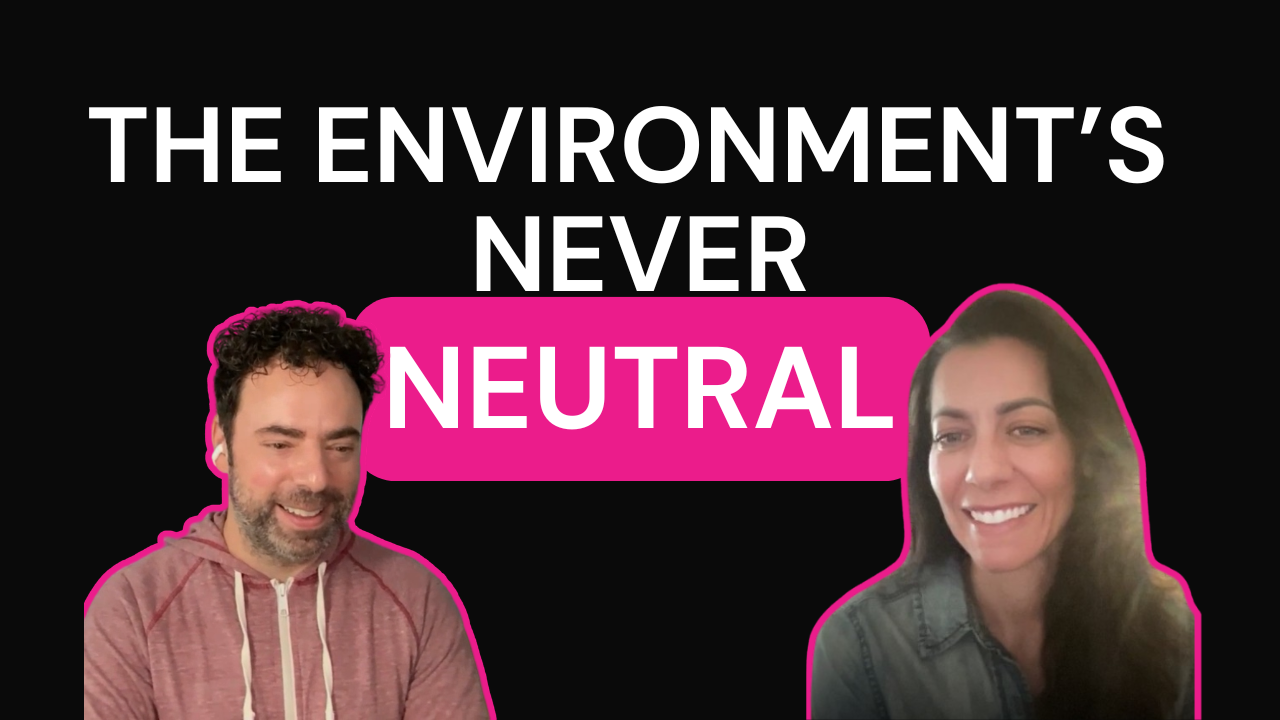
An educator for two decades and an EdMarket Certified Learning Place Specialist, Victoria Veneziano designs learning environments that make students feel welcomed instead of walled off.
At MeTEOR Education, she works with school districts, architects and designers to build spaces around how kids actually feel, and she runs immersive workshops for the architecture and design community and for districts across the country.
She won EdMarket’s NexGen in Education award and is also a certified Executive Leadership Coach and yoga teacher who has trained educators worldwide in mindful movement. Find her at https://www.meteoreducation.com.
Most school learning environments were designed to fit as many desks as possible, not to help kids belong. The hallway, the identical rooms and the forward-facing rows all shape behaviour, regulation and trust, whether you notice them or not. For a principal, the question isn’t whether your environment affects learning. It’s whether you’re designing it on purpose.
🫶 What You'll Learn
- Why traditional classroom design builds a power dynamic that works against student belonging.
- How to give students choice and movement in the learning environment without a furniture budget.
- Which biophilic design moves (daylight, natural colors, nature sounds, less wall clutter) help students regulate.
- How to use a five-senses audit to find what’s overloading a classroom.
- Why forced play with staff builds mistrust, and how small steps plus permission to pass build trust instead.
📚 Key Insight #1: Classroom Design for Student Belonging, Not Headcount
- What's broken: - Classrooms were laid out around how many desks fit in a room, with students facing the back of someone’s head and an adult standing over kids who can’t move.
- The shift: Design the learning environment around the feeling you want to create, such as belonging, inclusivity or spaciousness, and give students choice in where and how they work.
- Impact: Students move, choose their spots, talk face to face, and even help decide how the room is set up.
📚 Key Insight #2: Biophilic Design and Reducing Sensory Overload in the Classroom
- What's broken: - Walls covered in bright colors, posters and student work, under fluorescent light with HVAC noise, keep every brain in the room in a state of cognitive chaos.
- The shift: Use less clutter, natural colors, soft sounds, nature sounds in the background and as much daylight as possible, and check all five senses for overload.
- Impact: All students, not only neurodivergent kids, settle into the softer state where the brain learns and connects best.
📚 Key Insight #3: Intentional Play That Builds Staff Trus
- What's broken: - Staff icebreakers that start with the most vulnerable activity feel forced, and forced play breeds mistrust.
- The shift: Build play in small steps, starting low-risk, and always give permission to pass.
- Impact: Victoria’s workshops, which build this way from beginning to end, have had 100% participation.
💬 VICTORIA VENEZIANO QUOTES FROM THE RUCKUSCAST
“Every decision is either going to help or hinder the learning. The environment’s never neutral.”
— Victoria Veneziano
“We want to have fun and we want to feel safe... Those two things are actually one in the same, that you can’t really have one without the other.”
— Victoria Veneziano
“Intentional is not intuitive, especially as leaders.”
— Victoria Veneziano
“Not very inviting to conversation when you’re looking at the back of someone’s head.”
— Victoria Veneziano
“Less is more as far as students ability to regulate.”
— Victoria Veneziano
“If you can do it inside, you can do it outside.”
— Victoria Veneziano
🚵♀️ Your Do School Different Challenge
Ready to implement? Start here:
- Tomorrow: - Walk one classroom and run a five-senses check on light, sound, smell and wall clutter, and write down the one thing most on overload.
- This Month: Ask students in three classrooms where and how they like to learn, then add one seating or movement choice in each room based on what they say.
- This Semester: Rebuild your staff meeting openers into a step-by-step play sequence that starts low-risk and always offers permission to pass, so trust is built before you ask for vulnerability.
⌚️ Episode Timestamps
- 00:00 - - Why schools were built like prisons
- 05:08 - The classroom factor teachers never get taught
- 07:36 - What improv teaches about welcoming spaces
- 10:53 - Rows, seats, and the power dynamic
- 12:37 - A campus experience worth showing up for
- 14:26 - Why fun and safety are the same need
- 15:45 - Student choice without a furniture budget
- 25:47 - Biophilic design and cognitive chaos
- 28:02 - Audit all five senses for overload
- 29:36 - Bringing nature into the classroom
- 31:08 - Cafeterias as loud as a passing train
- 33:37 - Why always-serious leaders feel unsafe
- 36:55 - How forced play creates mistrust
- 40:21 - Permission to pass builds full participation
00:03
Speaker 1
Back in the 50s, and I could be getting this wrong on the dates, but generally the same people who were constructing prisons were constructing schools. The big. And if you think about it, the main hallway and then you have the cells, if you will, the classrooms off of the hallway. I know, yeah, right. They're all the same size, they're all uniform. And we think about that watch entirely too much true crime tv, which I'm trying not to do so much of because it's, you know. But you watch them in the interrogation rooms and those are set up to create chaos and the feeling that you want to leave, that you're being, you know, blocked off, not welcoming at all. And that's the point, right? They're small, they're cold, there's no natural light. There's probably some noise.
00:49
Speaker 1
You're close proximity that you don't feel that you have safe space based on your own. And those things are intentional. I am not at all saying that was the intention of classrooms being designed, but there wasn't a lot of intention about how you're going to feel. It was more of how many kids can we get in this room?
01:09
Speaker 2
Your counselors are heroes. They're also stretched almost 400 students to one. That's insane. Orchard helps every kid build a career plan without adding to your counselor's plate. That's leverage. That's real support. Check it out for yourself at betterleaders orchard careers. That's betterleaders orchard careers. Still scrambling for supplies like it's 1999. ODP business solutions streamlines everything from pencils to projectors so you can focus on what matters, making an impact. Visit ODP business.comeducation to learn more. That's ODP business.com education. If you could differentiate instruction in 20 minutes or less, would you do it for all your students? Well, you can with IXL. Over 1 million teachers use IXL because it empowers them to use effective data informed instruction. And you can get started [email protected] leaders. That's ixl.com leaders. Most professional development is forgotten by lunch, unfortunately.
02:33
Speaker 2
And that's because it's built for everyone and no one at the same time. Kids First Education prepares PD in a different way. They design every session around what your district or campus needs, what your priorities are. This episode is brought to you by Kids First Education. You can see how it works at Kids First LLC leaders. That's KidsFirst LLC leaders. The best leadership coaches, they don't hand you answer. They help you discover the insight yourself through Curiosity and inquiry. Questions that help you see your situation differently. That's exactly what digital Danny does. And you can get started with [email protected] RUCKUS that's my principalcoach.com RUCKUS all right. And Victoria, welcome to the show.
03:37
Speaker 1
Thank you so much for having me, Danny, and counting down the days to be here.
03:41
Speaker 2
Me, too. This has been a conversation long, you know, on the schedule and the plans. And shout out to Mitch, who I think Mitch Weathers connected us.
03:51
Speaker 1
Definitely.
03:52
Speaker 2
Shout out to Mitch.
03:53
Speaker 1
Great guy. We thank you, Mitch.
03:55
Speaker 2
Yeah, absolutely. And I'm happy you're in my orbit now. So I know you're basically like, well, you're expert in many things, but you're here today to talk a lot about sort of environment and. Yeah, can't wait to explore that, because I think that's. That's one of those things. It's really weird. It reminds me of that story. Oh, man, I'm blanking on the author's name. But he told the story about being fish, right? And basically, they don't realize they're in water. You know, that's the punchline of the story. I'm not going to retell it right now, but the fish are like, what's water? And that. That makes me think of, like, ruckus makers, because they're operating all the time in an environment, right, that is influencing everything that's happening on campus, especially the learning. And they might be like, oh, what's an environment? Right?
04:43
Speaker 2
Like, we just get to school, it comes, and there's not much we can do about it, but, oh, yes, there is. So, anyway, that'll be my setup. And I'm curious, you know, just, like, how you think of spaces and environments, especially when it comes to, like, those that produce welcoming and those that sort of create even more walls and keep us sort of at arm's distance, you know, away.
05:08
Speaker 1
Definitely. Well, I'll start by saying this. When I was in the classroom, so I've been out of the classroom for 10 years. I was in the classroom for 10 years as well. I never thought of the environment, Danny. Like, it wasn't something were taught in school. It wasn't something that was even brought to our attention. So I didn't think much about what chairs or desk or lighting. I didn't think much about it. I did think about how I was connecting the kiddos and what activities I had them doing. I worked in some schools where we had really rigid expectations about what was allowed on the Walls and what wasn't. And that's when I kind of started beginning to understand, like, huh, what's the why behind this? It wasn't until I shifted into the mental health space for a bit.
05:55
Speaker 1
I did some work in teen mental health when I stepped out of the classroom that I began to understand the intention of the effect. Right? And then I'm sure you've experienced this. Once you see and know something, it's really hard to unknow. It's really hard to notice the effect the environment's having on you. So now when I walk into spaces, I'm constantly calculating how the sun feels. Do I have fluorescent light? And is that affecting me? Oh, my gosh, is that H vac sound driving me nuts? And it's not just in school spaces, right? It's. It's everywhere I'm going. I'm all of a sudden hyper alert of, wow, it feels amazing to be in a space that's open and brick or natural wood. How calming it is. And your question was, you know, what's welcoming? And we talk about this question when we're.
06:54
Speaker 1
We're with schools and we're designing. That's what meteor education does. We design with school districts and architects and designers to create learning environments that meet their. Their desires and their needs. But one of the questions we ask is, what is the feeling, right? You want to provoke. Is it inclusivity? Is it belonging? Is it spaciousness? What are your words? Because everybody's intention is a little bit different. So welcoming versus walls. What. What is welcoming? I'm gonna ask you what, you know, when you think of a time that you felt really welcomed into a space, what comes to your mind?
07:36
Speaker 2
Yeah, I'm thinking about. Did I tell you I'm doing improv comedy? Right?
07:40
Speaker 1
You did tell me.
07:41
Speaker 2
I wonder if that, you know, in 20. What was it, 2025, like Riverside that we're recording on. It'll tell you, like, what was the number one thing you were always talking about on the podcast? And it was AI And I think improv is going to be up there. You know, I. I don't. I think AI will probably still win, but I'm probably like that annoying friend that has found their passion. And now it's all I talk about is, like, improv. But so many of the principles that they teach is all about welcoming, right? Like the very simple. And I've. I read about this for decades before ever performing. But the. The. Yes and right. So that's not necessarily anything. Maybe with the building but it's how all the people show up, right? And instead of. Instead of shutting down ideas, you know, you just.
08:32
Speaker 2
You. You go with it. And that was a note I got from the director. Even last practice this past week, my. My. My colleague was playing a little kid who got the part of Annie or whatever. And were in a mall, and I was the mom, right? And I think the first time we did the scene, I wasn't trying to shut him down, but I was trying to be more of a difficult mom and make that funny. And he's like, no, he's like, just. Just match, you know, Chris's energy and be as excited about Annie as he is. And so I did that, and everybody was laughing, and it felt good and it felt easy. So sort of like, yeah, big picture. It's kind of like meeting people where they are and just going with the direction they want to go in. Right?
09:19
Speaker 1
Yeah. Welcoming.
09:21
Speaker 2
Does that count, or do you want more of an environmental answer?
09:23
Speaker 1
I mean, to be honest, like, that's what I'm working on in my manifestation. Like, I'm welcoming what the world has for me. Right? Welcoming the invitation, what other people's energy is for you. So welcoming this, you know, different feeling for different people. But what we do know is environments can make you feel welcomed or make you feel excluded. And one of the things I remember learning about school design that was surprising and yet not surprising at all, is that back in the 50s, and I could be getting this wrong on the dates, but generally the same people who were constructing prisons were constructing schools. And if you think about it, main hallway, and then you have the cells, if you will, the classrooms off of the hallway.
10:11
Speaker 2
I know, yeah, right.
10:12
Speaker 1
They're all the same size. They're all uniform. And we think about that watch entirely too much True Crime tv, which I'm trying not to do so much of because it's, you know. But you watch them in the interrogation rooms, and those are set up to create chaos. And the feeling that you want to leave, that you're being, you know, blocked off, not welcoming at all. And that's the point, right? They're small, they're cold. There's no natural light. There's probably some noise. You're close proximity that you don't feel that you have safe space on your own. And those things are intentional. I am not at all saying that was the intention of classrooms being designed, but there wasn't a lot of intention about how you're going to feel. It was more of a.
10:53
Speaker 1
How many kids can we get in this room, how many desk can we fit in here? And, you know, turn and face forward. Not very inviting to conversation when you're looking at the back of someone's head. Because even us looking at each other through a screen, we're eye to eye, right? Yeah. So that. That's what I think about with welcoming versus the walls, the physical walls, the. The actual. Not just mental but emotional walls that we're putting up with kids when we set up a power dynamic of I'm standing and you're sitting and you can't move. Right. You are to stay in your seat. I will tell you and give you permission.
11:34
Speaker 1
So belonging can be helped by allowing the environment to allow students to have choice and to move and to have agency and to ask questions and to be together and to be a part of. So there are a lot of things to consider when we're setting up a space.
11:51
Speaker 2
Yeah, you know, I don't know the dates either. It makes a lot of sense what you're saying. You know, construction companies putting up jails, and then schools, same sort of time period. What I do know is that schools often remind me of institutions, you know, so institutions like a. Like a jail or a hospital, too, but it is, like, you know, sanitized. It's really bland. You know, you already mentioned the fluorescent lighting and that kind of stuff. And it doesn't, you know, it doesn't spark creativity, you know, the connection, all the stuff that we want. I'm kind of curious though, too. Like, you know, if you're a ruckus maker, listening to this and maybe even getting a little fire in your belly about the environment and. And our. Our whole point of view over here. Right.
12:37
Speaker 2
We're about, like, how do we create a campus experience that's worth showing up for, you know, you don't take for granted that education's compulsory. Like, you have a neighborhood public school, let's say, and kids should be showing up. I mean, yeah, they should come. Education is great. It opens many doors. But, you know, what are you intentionally doing to make that experience, like, worth showing up for? Yeah, I think that takes, like, a radical ownership, you know, over the whole system of school. And you can think about that from the teacher, adult, staff member level, parents too, and kids. Right. Because if you have that experience that is worth showing up for everybody involved, then I think everything will take care of itself. The scores, the attendance, the discipline and environment's a piece of that. Yeah.
13:30
Speaker 2
But for that ruckus maker who's engaging with us Right. Now, you know, how does Meteor come along and help, I guess those environments come to reality in sort of like a sub question there. What is within the ruckus makers control? Right. Because not everybody's going to be as lucky to work with you for whatever reason. But I still want people to be able to take action after engaging with us here, you know.
13:59
Speaker 1
Well, I'll back up a little and I'll give you an idea of who we are at Meteor. So Meteor, ultimately, to keep it super simple, we're a furniture dealer and we want furniture to make a difference. So we call the furniture tools, right? Because they are the same way you would use. I don't know, what are some of the tools you remember from using in your classroom? Calculators, pencils.
14:22
Speaker 2
But I'm just looking at my computer right now that's facilitating this conversation, right?
14:26
Speaker 1
Yeah, definitely. So we, we think about it as tools. And the next thing that we're going to work with you all is actually looking at your, what you just said, like, how do you want to make this a place that people want to be? And different schools have different ruckus makers, right. Have different ideas of that. Ultimately, I think if I would take all the hundreds of schools that we've worked with, what it really comes down to is the fundamental needs of a, a kiddo, but also the fundamental need of all of us, Danny. Even as we're full grown adults, we want to have fun and we want to feel safe, right? Ultimately, we want to have fun. Like that's a way better place to be. I want to go to the trampoline house with my nephews.
15:10
Speaker 1
I want to, you know, I want to go to the art studio. Think about how many kids love going to art class. We want to have fun and we want to feel safe. And those two things are not intention, right? Those two things are actually one in the same, that you can't really have one without the other. Because how can I let go and feel free and, you know, be embodied and let loose if I don't feel safe? Not going to. So through a very distinct process of what we call design discovery, we're asking a lot of questions and we're throwing a lot of possibilities your way.
15:45
Speaker 1
Now, the second thing you asked, you know, if you don't have the opportunity to work with Meteor and many schools don't, and we still want to spread the knowledge of what we can do in environments to make kids feel welcomed and safe and also fun, some of the things are simple, like asking yourself, can the kids get up and move. Where do the kids have choice? I mean, I always put it back on you when you go to read a book. Do you like to read a book? Do you still hold books? Do people read books?
16:19
Speaker 2
Well, I mean, you're asking me as. I've got this.
16:24
Speaker 1
Okay. I'm a library girl too. No, no, no.
16:27
Speaker 2
But wait, there's more.
16:31
Speaker 1
I just got the new Brown book. Got this. Right, so. Right. I have stats and slots books. You and I are like book readers. I like to read in my bed. Where do you like to read?
16:42
Speaker 2
Yeah, there. I bought a really nice, I don't know the name. Maybe I'll just show you. Yeah, I think whatever that kind of chair is called. I got that. Right. Like.
16:54
Speaker 1
Yeah, yeah, it's very, I feel like it's very sophisticated. But other people like to read on the floor, like laying on their belly. But I use this example because if you told me to sit in a desk and that's where you're going to read. I no longer enjoying something that I love so much. Other people. My sister, she devours books, Danny, but she listens. She listens to them while she's driving. I put one chapter in the sleep when I'm driving. So. Point being, there's so many ways to learn and take information and have fun and play and also feel safe, but it's really not being digested or even enjoyed if it's not some kind of choice in there.
17:40
Speaker 1
So having a lot of choices and working with the routines with our kids to learn those choices and be even contributors to what those choices might be like. How do you think we should set up the classroom? Or where do you think this should live so that we can all access it safely? Engaging even our youngest kiddos all the way up through high school and beyond in making choices is something that everyone has access to. Right? And choices about the environment.
18:12
Speaker 2
Yeah, that makes sense.
18:13
Speaker 1
Yeah.
18:14
Speaker 2
Yeah. As long as I, I like reading, I think with just my feet up. Right. However that can happen. So with the ottoman couch, you know that's me. I need to be at like a 90 degree sort of type of deal in my body.
18:28
Speaker 1
So were you one of the kids who was in school when I was, when it was deer time, Drop everything and read. And it was like, you can go anywhere in the classroom. It was like, what, I can sit in a beanbag right now, love?
18:39
Speaker 2
Let's do it. Yeah, I, I, I, I, I remember that a bit. I also remember getting free pizza from Pizza Hut for like doing homework and reading books over the summer. And that was just a legendary incentive. For sure.
18:53
Speaker 1
Definitely. That was that and the book fair. Oh, I could go on. Times were good. Times worth it.
18:58
Speaker 2
Times were good for sure. Does your school operate on conveyor belt mode? Does it push the kid to the next grade, the next test? Drop them off at graduation and hope they figure it out? We all feel that model in its cracking orchard helps you do school different students explore real careers, some they've never even heard of, and it builds a step by step plan tied to their grade and their goals. It connects what they're learning today to where they actually want to go. That's the work and you can check it out at BetterLeaders Orchard Careers that's Better Leaders Orchard Careers ODP Business Solutions, formerly Office Depot Business Solutions Division, has been a trusted partner for schools for 30 years. At ODP Business Solutions, we're by your side to meet your evolving education needs.
20:02
Speaker 2
Let's talk about what keeps Ruckus makers up at night creating engaging learning spaces while juggling budget safety protocols and those endless supply lists. Here's the game changer ODP Business Solutions helps you tackle it all. We're not just another vendor. We're your strategic partner in transformation. Want to turn a tired computer lab into a steam innovation center? We'll help design it. Need to keep eight schools stocked and spotless? We've got sustainable solutions that scale. Looking to upgrade from whiteboards to interactive displays will guide you through the entire process. And the best part? You can get it all from a single supplier that helps you simplify ordering and streamline budgeting while staying compliant with easy access to cooperative contracts. However you want to advance, ODP Business Solutions has 30 years of experience helping districts like yours get ahead. Visit odpbusiness.comeducation to learn more.
21:07
Speaker 2
That's odpbusiness.com education Teachers love the support that IXL provides in the classroom. And Ruckus makers love it all as well because IXL also gives school leaders meaningful insights on every level. Put your finger on the pulse of student performance with IXL and its dashboard to drill down to see progress and growth for individual students. You can even customize reports to hone in on the information that matters most to you. IXL helps Ruckus makers make data informed decisions that will benefit their students growth goals. Get started [email protected] leaders that's ixl.com leaders think about the last 10 district wide training your team sat through. Was it built for your schools or pulled off a shelf and dropped into your calendar. Kids First Education starts the other way around. They begin with your priorities, your data, your classrooms.
22:18
Speaker 2
Then they build professional learning around that, using the C3 approach. Collaborate, create a real plan, and commit to seeing it through. That's why nearly all educators they work with told them that sessions were connected directly to district priorities. And 98% left ready to put it to work that week. Principals and district leaders. You could build something that actually fits. And you can learn more at Kids First LLC Leaders. That's Kids First LLC Leaders. Here's something I tell all principals I work with. There's two sides to every coin. The story you've been telling yourself about your campus. Our parents don't engage our teachers. They just change. This is just how it is here. That's not necessarily reality. It's just one side of the coin. That's a story you decided to be true.
23:22
Speaker 2
But there's another side to that story and to that coin that is equally valid, one that probably positions everything you're saying in a much more generous light. The language and the story you're telling yourself, it really matters. It's the same situation, but depending on the lens and the perspective you take, you are a completely different leader. That's one move that Digital Danny is built for to make with you. He's not going to agree with your comfortable story. He's going to push on you right in the way that I would with the same questions drawn from 10 plus years of experience coaching school leaders just like you. That reframes the entire game. It can be a game changer for you. Get started with Digital Danny and reframe the story you've been telling [email protected] Ruckus get started at myprincipalcoach.com ruckus.
24:28
Speaker 2
Yeah, so that, that helps me out thinking, you know, what's possible. And a lot of times the answer right on your nose, you know, you just ask kids, right? Ask adults, you know, ask the people there, you know, what they're thinking about. And I think that's one reason too. The live events I've put on have always landed really well with people too. We choose interesting spaces, right? So the last one we had in Nashville, it looked kind of like your background, right? So there was tons of exposed brick. There was a lot of light, you know, that was coming in. It was in a sort of like arts collective space. So there were just artists, you know, in their studios all over there was a tattoo spot, bunch of food options. Yeah, it was just great. It was, it was really wonderful.
25:23
Speaker 2
And we designed the events too. Like you would think that there's, you know, a lot of events try to pack in way too much into the agenda.
25:31
Speaker 1
Agreed.
25:32
Speaker 2
And we only have a few talks in like an abundance of time for other people to connect with each other, ask questions, like, collaborate on stuff. And so they're totally different. But the space piece is so, so important. So.
25:47
Speaker 1
Yeah. And I want to point out something that you mentioned. You pointed out some architectural and design things in here, like the exposed brick, the bright light, the tall ceilings. Those are the things, it's called biophilic design. Right. That mimic nature.
26:02
Speaker 2
Oh, yeah.
26:03
Speaker 1
And yeah. And what we know is we are all humans products in nature. Right. We actually most of time evolving was outside in nature. So it's actually quite natural that we would have a peaceful, calming response to elements that are of nature because that's hardwired in our bodies as home. And the more that we can create learning spaces that are less cognitively chaotic. And that's, you know, jargon, but what I mean by that is not plastered with the walls with tons of vibrant colors. Not every piece of the wall covered with information and student work and posters and inspiring words. While all of those things are nice, less is more as far as students ability to regulate. And that's just not just the neurodivergent kiddos.
26:58
Speaker 1
All of us actually are able to be in this softer state, which is the best state for our brains to learn and connect when we are in spaces that have less clutter, less vibrant colors, less sharp edges, and more natural daylight, which is the number one indicator of a student progress. Like how much daylight effective. Some things are beyond your control, especially when you're in a space that's been around for a long time. But you can take the responsibility as a teacher to have natural colored soft spaces using, you know, even things you put on the wall that are really intentional framed and clean. Soft sounds. I know scents can be a little bit disturbing if you have kids who are super sensitive. But smells are major disturbing.
27:54
Speaker 2
I know.
27:55
Speaker 1
I taught middle school and high school. I had a lot of smells.
27:59
Speaker 2
Watch out.
28:02
Speaker 1
Disturbing, right? So think all five senses is where I always lead teachers. Whether you're redesigning with us and actually getting new furniture or just being really intentional about what are the five senses and are any of them on overload at any time?
28:19
Speaker 2
Right on.
28:20
Speaker 1
Yeah.
28:21
Speaker 2
And you know, I, I Used to bring my classes outside as often as I could too.
28:25
Speaker 1
Yeah.
28:26
Speaker 2
You know, it was frightening and exciting. Right. Because it's like, oh, now we're not in the little container of the classroom. Right. And there aren't the seats and there are things going on outside of my control animal, you know, birds, whatever, like, you know, distractions. But kids were happy. I was happy, you know, when went out there too.
28:48
Speaker 1
So like that liberation feeling. And actually it's interesting. One of the things that I love most about my job, sometimes I just, honestly, I can't believe this is my job in real life.
29:00
Speaker 2
Yeah.
29:01
Speaker 1
One of the things I get to do is train architects and teachers even and school districts. Whoever's interested in hearing for CEUs around things like how to more effectively use the outdoor space and how to more effectively bring nature inside. We have a ton of different CEUs, but that's one of my favorite is about, okay, why are we hesitant to take kids outside? What can we do outside when we have the built environment that supports it or not? Just like in nature.
29:33
Speaker 2
Yeah.
29:33
Speaker 1
As our classroom. It's a fun one.
29:36
Speaker 2
Can you share some of that then in terms of like bringing the environment in. Nature inside?
29:41
Speaker 1
Yeah, I mean, we talked about it a little bit. Just as much as we can design that has natural daylight, that's gonna be the most important. The sound machines that just. Even in the background when kids are doing work instead of music. What, what are sounds of nature? Right.
29:57
Speaker 2
Yeah. Waves or.
29:59
Speaker 1
Yep, yep. Waves, water, rolling birds. Sounds of nature are soothing cognitively. Not just for like a calm down session. Just in the background. Right. And then I really like to encourage, like, bring them outside. There's pretty much nothing you can't do outside. Right. Even with the Prometheus board. Okay. We'll take a screen break. And when you're not using tech, and then there are some schools that have them on wheels or have outside projectors. Like, I argue and you could probably prove me wrong 10 times, but if you can do it inside, you can do it outside.
30:37
Speaker 2
Yeah, interesting. But that's a good, that's a good sort of concept or constraint to noodle on. Right. Like, what would need to be true to do school outside? Right. If we couldn't be inside, what would need to be true? And the goal isn't to make school 100% outside with a question like that. It's like, how do we just move it a little more toward that direction if we think there's value in a benefit there. Right. So I like playing with those kind of questions.
31:08
Speaker 1
Well, I like it because I recently was learned about the decibels that are mandated for sound in schools. And it's essentially. I'm not going to give you the math of the decibels, but I can give you comparisons. In real life, the classroom's meant to be at a whisper. That's what it's set up like, by the standards. The reality is you walk into a cafeteria when you're measuring decibels, it's usually equivalent of either a very loud and busy restaurant. Sometimes this, like, totally alarmed me. As loud as a train passing by. When you're in a cafeteria or, you know, a hallway or a. Anything about that. Like, that's. But going outside allows you to take the volume up. Right. And you're not in this container base that it's affecting you in this derogatory way.
32:03
Speaker 1
Like, what activities, to your question, like, could be outside done better, you could get messier. You can get louder, and you're not having the same, you know, negative impact of the noise.
32:19
Speaker 2
Yeah.
32:20
Speaker 1
In science or whatever. Right.
32:23
Speaker 2
Yeah. There's a principal I work with, Bill, who moved. He. Most of his whole career has been in elementary and he did a stint as a principal in a middle school. I was like, yeah, get ready for the. Get ready for the stinky. You know, like, those kids are gonna smell.
32:38
Speaker 1
This might be. But I was in my first year teaching and we had boys and girls were separated for math. And in my boys section, they would fart call me over to help them, like, as a joke. They thought this was the funniest thing. And it took me, like, a good week to catch on to what they were doing. And that's like, I am onto you. I'm not helping anymore. But they thought of, like, things that middle schoolers do. Right. Like, they think this is the most clever thing they ever came up with. And I'm like, okay, this is teaching middle school.
33:10
Speaker 2
This is what it is, teaching middle school boys. It doesn't get any more complicated than that.
33:16
Speaker 1
So pretty simple.
33:17
Speaker 2
Good fart joke. Yeah. I don't know that it changes that much. Right. As those boys age, at least until maybe their 40s and they. They finally grow up or something like that.
33:29
Speaker 1
We shouldn't push them to grow up so much. We need to do more pranks. Laughing and. Yeah. A little bit more joy is okay.
33:37
Speaker 2
Yeah. Well, let me ask you about that because I know play is really important to you as well. And often maybe like Pete I love. I love talking about how the work is serious, but we don't have to take ourselves so seriously. Right. And I think a mistake that some leaders make is that they're just. They're always serious. And back to your point about, like, is it fun? Do I feel safe this the leader who's always serious? I don't necessarily feel like I could relate. Right. Or safe around them because it's always just so, like, there's times when you need that intensity. Right. I'm not saying it's wrong. Don't throw it out. But if that's like the default 100% of the time, it could be working against you. You might not realize that. Right. So how do you think about play, even for adults?
34:26
Speaker 1
Think about play for adults all the time. In fact, I think we actually have to be intentional about play. We're going to Vegas next week, and one of the ceus we're doing is a day on imaginative play. Specifically, you know, around free form. Just improv, essentially. Your. Your favorite thing. Danny. We were. Yes, we're doing it.
34:52
Speaker 2
Yes.
34:52
Speaker 1
Let's go. Imaginative play.
34:54
Speaker 2
Right.
34:54
Speaker 1
And. And the idea is, where do you let your brain create from? And when did we stop? You know, I watch my nephew Angelo, and he's in this state of imagination all the time. He's, you know, head of the restaurant. And the next thing I turn around, he's dancing and on stage, and the next thing I turn around and, you know, he's taken on a new Persona, and he's just magical to watch because he's constantly playing and imagining. And then little by little, it gets stifled, it gets less appropriate. And then, like, we get to, you know, our working careers, and it has to either be planned or forced, and it's usually avoided. Like, okay, how many of us have gone to a staff meeting and they're like, oh, right, we're going to do an icebreaker and play.
35:42
Speaker 1
And a lot of people are like, oh, this? Let's just get to the point. Right? But science proves over and over, when we play together, oxytocin is released, and that creates connection.
35:57
Speaker 2
Feels good.
35:58
Speaker 1
It feels good. And we can trust each other. There's something that breaks down, and if you don't do these things together, right. If you don't have this natural play and even forced play, there is a mistrust. And I would be. I don't know any of the research, but I would be so intrigued to understand how relationships have changed in the workplace since we don't go in together anymore. And this natural flow play doesn't just, you know, spark up. That's why the tech places. I live in San Francisco, so you see all the places that have, like, random ping pong table or come play skee ball, and it's. People aren't doing that, but if it's not there, they're definitely not doing that. But if it is there, for sure, might. And that's again, like, how can the environment provoke. Provoke that?
36:49
Speaker 2
Yeah. Did you say something about force, play and mistrust? Did I hear that or am I making that up?
36:55
Speaker 1
Yeah, definitely. Like, when you're forcing it. When you're, when you're forced. For instance, think about if. If you walk in. I use this example when we do the workshop. You walk into a room, and I'm like, okay, and you've never met these people. You're here for a conference, and the first thing that they ask you to do is get on the dance floor and shake your booty and, like, throw your hands up like you're uncomfortable. Like, too much. I don't know. You. You're asking me to be super vulnerable, and this is uncomfortable. So now you've broken because, you know, you proposed on the first date. As my colleague always says, like. But if it's intentional and it's moving down a scale of vulnerability, that's incremental, like, hey, let's toss some beanbags around and learn each other's names. How vulnerable is that?
37:45
Speaker 1
Names that, you know, messing up names can be embarrassing, but not that big of a deal. Tossing bags not be someone's, you know, most favorite thing. If they're not athletic, they could be nervous. But it's a beanbag. It's not going to break. So these incremental, intentional plays so that you can build trust, it's important. And, and you know, you're. You're talking to ruckus leaders and people who are listening to your podcast are these leaders. And you mentioned about the, you know, being playful and being serious. It's also about being playful in a intentional way that builds. Because if we've known each other for a long time and then we go to. I ask you to go to a dance party. You know, by the end of the workshop, we're playing charades and doing improv. But if we start there, we're going to lose people.
38:34
Speaker 1
And I think that's important for leaders to understand is, are you starting in the right place? What is your relationship already so that you can ask for deeper trust? Because if you as again, Gina Labert, My colleague uses this analogy of love bombing. If you show up and throw up, like, people are running away.
38:56
Speaker 2
Yeah, thanks for that. Because I. I was trying to reconcile in my mind. I see often on social media, large groups of teachers talking about how they hate the getting to know you, like, the activities and the games. And I'm like, oh, those are so fun. These teachers suck. Like, why. Why are they. You know, why. Why are they. Why are they also so serious? You know what I mean? And then I. Then I'm thinking, oh, you're not. These guys, they probably do nothing fun with their kids. Like, this is a terrible thing. You know, the piece you just named is the. You know, if it's forced, if it's too early, maybe these teachers are finding themselves in situations where, yeah, they don't trust the leader, the relationship's not there, or not relationships, you know, with their peers.
39:41
Speaker 2
And that's also really sad and a tragedy, too, that needs to be figured out and solved. But because in my mind, I know that play in these games. Like, because we do it in the mastermind. We've been doing it for years, right? We always have something to bring us together in. And I. And I tell our members, like, hey, you could. You could use this with your staff. It'll work, right? It worked for me, but I didn't have the. I didn't have the language or the understanding of why it works for me and not for others. And that forced piece and the lack of relationship that you just named is like, is the why. So that. That connected some dots for me. So there's a lot.
40:21
Speaker 1
And I mean, none of us like to be uncomfortable. And it's interesting. What makes you uncomfortable is different than what makes me uncomfortable. We were talking about this earlier, and I just got back from this really intense out. It's called comfort zone retreat. And you're meant to get outside it and do things. And for some people, popping on a surfboard is their most miraculous fun and joy. And for me, I'm thinking, where is the shark? Right? So, yeah, beanbag might seem comfortable to an eye, and it could be horrifying for someone else. And so to your point, incremental and always giving permission to pass and say, you know, join and play when you're. When you. When and if you're ready and know you always have permission to pass. Not gonna lie. I always start off with that.
41:12
Speaker 1
And because the workshops are very intentionally designed to be incremental, I am proud.
41:18
Speaker 2
Now I'm gonna.
41:19
Speaker 1
I'm gonna jinx this Now, But I am proud that we've had 100% participation rate through the end, from beginning to end. People who are really hesitant, but it is intentional, and it is. It's not intuitive. That is different. Intentional is not intuitive, especially as leaders. Because if we're leaders, which we are, We're. We're comfortable doing bold things and being uncomfortable and saying the hard thing and being embarrassed and being vulnerable. We wouldn't be leaders if weren't able to do those things. So it's important thing to remember, like, this is new for everyone. You know, this is the first time they're doing it well, that.
42:00
Speaker 2
That you just. You just also, like, highlighted something we do naturally in the mastermind that maybe, you know, I forgot to unpack. Like, it becomes so natural. But that idea that you can pass. Right. Does provide safety for people and, you know, if they want to engage, great. Most people do. And, yeah, if it's not your day or whatever, you can pass and it's all good and nobody thinks anything different of you. That's a huge. That's a huge piece that's often missing.
42:29
Speaker 1
So.
42:30
Speaker 2
Awesome. Well, Victoria, I'd love to ask you know, the last three questions I asked all my guests. So starting with the marquee question, if you could put one message on all school marquees around the world for a single day, what would your message be?
42:47
Speaker 1
So this is gonna seem ridiculously simple and redundant, but I think it is the message we cannot get enough of. It's just super simple, two words, Be kind. Like Addison. I think if everyone actually embodied just be kind.
43:07
Speaker 2
It's so simple but profound. Yeah, Be kind.
43:10
Speaker 1
Love it.
43:11
Speaker 2
And if you, Victoria, were building your dream school, you had unlimited resources. Your only constraint was your ability to dream big and imagine what would be the three guiding principles of your dream school?
43:25
Speaker 1
Yes. Well, we touched on some of these, which is great. First, show up as you are. Right. So the guiding principle that you can show up and be who you are, that can look like a lot of things, but I think in the environment, that means a lot of choices. Right. For me, who is extroverted and outgoing, I want to be able to be everywhere and talk to everyone and collaborate. For someone who's softer and more introverted, they might want to have a little nook that they can go in. So the principle of be who you are, the second one would be movement and play. Everything needs to be moved. Shaken energy, ideas. Right. So everything. In my school, the second concept would be everything's movable. Everything's flexible every. You are invited to move as your body needs. And there'd be a lot of.
44:18
Speaker 1
Of playing right. That's invited in. So everyone show up as you are. Movement is really important. And I think the last one, you know, ties into the kindness piece is we are a community. And so how we, you know, exemplify that in the environment can be the round tables, can be gathering areas, can be the outside structure of. Oh, Lord. Now I'm blanking at what are those called that they used in Greece that were the big outside gathering areas. Regardless, we are maybe right. Like, you know that simple saying of if you want to go fast, go alone. If you want to go far, go together. And schools are meant to be communities and not just. Not just the students and the kids, but the parents and the grandparents and the people who live and work there. How can we set this up?
45:12
Speaker 1
So this is the gathering space. This is the hub of where things are happening.
45:17
Speaker 2
Brilliant. And we covered a lot of ground today in our conversation. So what's the one thing you want a Ruckus Maker to remember?
45:25
Speaker 1
Be intentional. Right. I think that's how they're. They're operating. And in regards to the environment at Meteor Education, it's really strongly embedded that every decision is either going to help or hinder the learning. The environment's never neutral. So being incredibly intentional, every choice matters.
45:52
Speaker 2
Hey, Ruckus Maker, thanks again for pressing play. I hope you enjoyed today's episode as much as I enjoyed creating it for you. And before you go, if today's show shifted something in your mind or sparked an idea about how you could do school different, then I think you'd be a great fit for what we call the Ruckus Maker Mastermind. The Mastermind is a private community of innovative school leaders who meet weekly to grow, reflect, and disrupt the status quo. You can create the campus experience your staff and students deserve. Applications are now open and go to betterleadersbetterschools.com apply to put your application in SA.
Transcribed by https://fireflies.ai/
🔗 Connect With Victoria Veneziano
👩🏻💻 LinkedIn: https://www.linkedin.com/in/victoria-veneziano/
🌎 Websites: www.Meteoreducation.com, www.mindfulmovementwithvictoria.com
🎧 Listen & Subscribe
Listen to Better Leaders Better Schools on Apple Podcasts, Spotify, Youtube or wherever you get your podcasts. If today's episode moved you, leave a review — it helps more Ruckus Makers find the show.
🧔🏻♂️ Your SelfMentorship Guide
Meet Digital Danny — your Self Mentorship guide. Always available, never forgets, and evolves with you. Think through your next leadership move at myprincipalcoach.com
🫶 Today's Ruckuscast Partners
IXL
IXL's adaptive platform finds every student's knowledge gaps, adjusts difficulty as they learn, and gives you a dashboard showing exactly where growth is happening.
🔎 Over 1 million teachers use it — get started at https://ixl.com/leaders
ODP Business Solutions®
ODP Business Solutions has supplied schools for 30 years — converting dead computer labs into STEAM centers, stocking multiple campuses, upgrading whiteboards to interactive displays — all from a single supplier through cooperative contracts.
🔎 Learn more at https://odpbusiness.com/education
Orchard
Orchard gives every student a personalized career action plan and scores readiness across 8 dimensions — a number you can take to your board.
🔎 See how it works at https://betterleaders.orchard.careers
Kids First Education
Kids First Education builds professional learning around your district's priorities, your data, and your classrooms — not pulled off a shelf — and 98% of educators walk out ready to use what they learned.
🔎 Partner with them at https://kidsfirst.llc/leaders
Twelve Practices LLC © 2026 | If Education Ain't a Bit Disruptive, Then What Are Your Students Learning?


