Coach, author, and Founder of Better Leaders Better Schools, the Ruckuscast ranked in the top 1% of podcasts worldwide. Danny Bauer started the show as an assistant principal with real leadership gaps and no coach or mentor, then spent more than ten years closing those gaps one conversation at a time.
Today he leads the Ruckus Maker Community, the Mastermind, and Digital Danny, an AI Coach trained on a decade of his work with principals. In this episode, co-host Dan Watt turns the tables and interviews him.
SelfMentorship is the leadership skill most principals were never taught. You can attend every conference and sit through every PD day and still feel behind, because nobody showed you how to turn your own experience into growth. Here's how school leaders close their own gaps instead of waiting for someone to develop them.
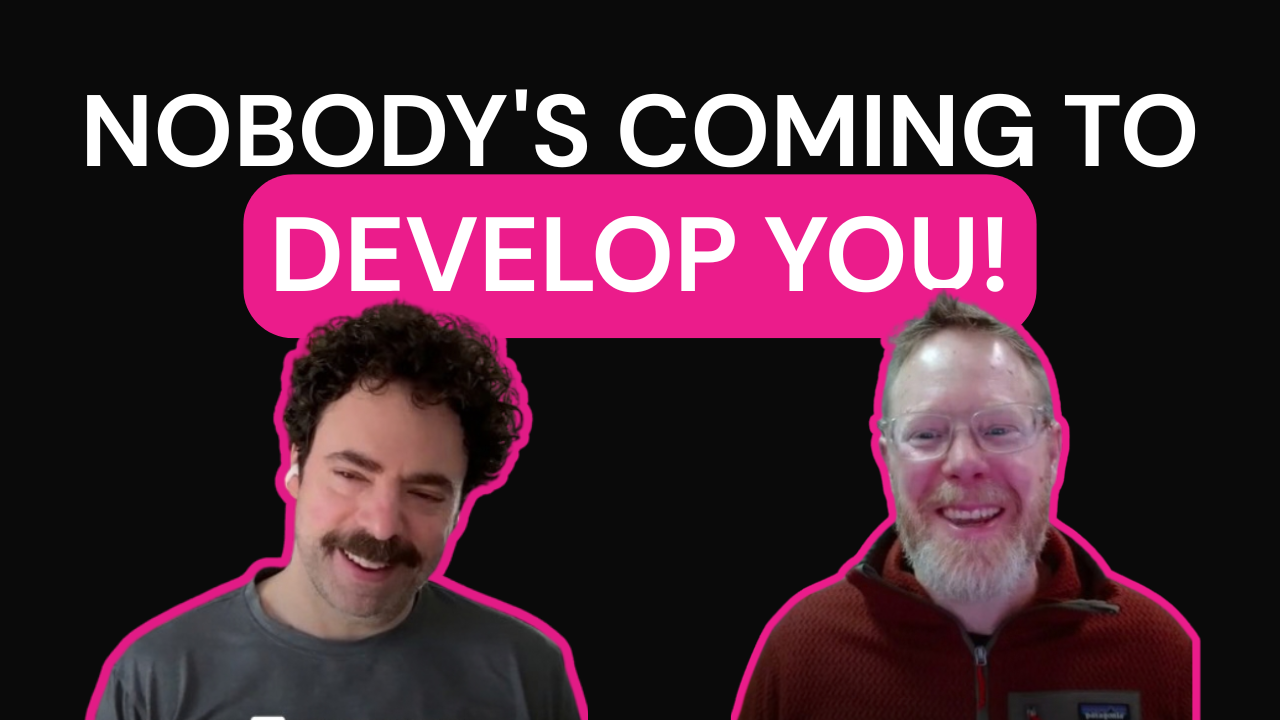
🫶 What You'll Learn
- Why SelfMentorship, not more PD, is the skill that separates leaders who grow from leaders who wait.
- How the Harada method works as "Sudoku for goals" and why OKRs beat SMART goals for campus planning.
- The Create-it, Give-it-away, Fire-yourself Cycle that stops you from being your school's bottleneck.
- How to find the super users on your campus and use their words to sell your initiatives.
- The five fundamentals Danny checks first when a principal on a coaching call feels off-balance.
🧰 Key Insight #1: SelfMentorship for Principals Beats Waiting for a Mentor
- What's broken: Principals wait for a Coach, a Program, or District PD to close their leadership gaps — and in education, that help rarely shows up.
- The shift: SelfMentorship treats your own questions, conversations, and experience as the development plan.
- Impact: Gaps close on your timeline, the way Danny went from an AP with no mentor to leading a national community of school leaders.
🧰 Key Insight #2: Stop Being the Bottleneck — Create, Coach, Then Fire Yourself
- What's broken: School leaders hold onto every initiative they build, so progress on campus waits on them.
- The shift: Create something, give it to your team with coaching and feedback, then fire yourself and go build the next thing.
- Impact: When Danny removed himself from the Mastermind, it didn't implode — it got better and added more cohorts.
🧰 Key Insight #3: How to Get Staff Buy-In — Describe Initiatives in Your Super Users' Words
- What's broken: Principals describe their initiatives in their own language and wonder why staff don't connect.
- The shift: Find the super users on your campus, ask what works and what's broken, and borrow the words they use to describe it.
- Impact: The term "SelfMentorship" came from a Digital Danny user with 910 conversations — and it now directs everything the Ruckus Maker community does.
💬 DANNY BAUER QUOTES FROM THE RUCKUSCAST
"If you haven't built the internal habit of turning your own experience into growth, you'll keep waiting for someone else to develop you. And in education, that someone else rarely shows up."
— Danny Bauer
"The leaders who actually transform their campuses aren't the ones who waited for the perfect coach or the right program to find them."
— Danny Bauer
"You create something cool. You give it away to your team and sort of coach them up, develop them, give them feedback, and then you fire yourself, and then you go create some more stuff."
— Danny Bauer
"Every community is going to have a sort of a bell curve of people that believe in the vision or the initiative or the project or whatever you're trying to do on campus."
— Danny Bauer
"Use their words, not yours, to describe the experience because that's going to attract and land right and resonate with more of the people in, you know, your audience or your staff that you want."
— Danny Bauer
"You kind of suck at getting the stuff done if you ignore what I just talked about."
— Danny Bauer
🚵♀️ Your Do School Different Challenge
Ready to implement? Start here:
- Tomorrow: Run Danny's fundamentals check — eating, sleeping, moving, unplugging, breathing — and pick the one you're neglecting to fix this week.
- This Month: Sit down with the biggest believer in your top campus initiative, ask what works, what's broken, and how they'd describe it to a superintendent, then rewrite your pitch in their words.
- This Semester: Choose one initiative you built, coach a team member to own it, and fire yourself from it so it no longer waits on you.
⌚️ Episode Timestamps
- 00:00 - Why nobody teaches self-mentorship
- 05:34 - Danny's North Star for 2026
- 08:01 - The Harada method as Sudoku for goals
- 10:12 - Why OKRs beat SMART goals
- 13:05 - Infinite networking for school leaders
- 17:22 - Create it, give it away, fire yourself
- 22:27 - What Do School Different really means
- 24:20 - Why Ruckus Maker events break the PD mold
- 31:48 - The category nobody else teaches
- 33:48 - Find the super user on your campus
- 35:09 - Use their words, not yours
- 38:29 - Clarity in under 10 minutes
- 41:08 - The fundamentals behind peak performance
00:00
Speaker 1
Foreign.
00:04
Speaker 2
You know what's weird? When you have access to an abundance of professional development and it still feels like you're missing out, it's not because the content's bad, but because nobody ever taught you how to mentor yourself. Think about this. You can attend every leadership conference on the calendar. You could read every book. You could sit through every PD day. But if you haven't built the internal habit of turning your own experience into growth, you'll keep waiting for someone else to develop you. And in education, that someone else rarely shows up. The leaders who actually transform their campuses aren't the ones who waited for the perfect coach or the right program to find them. They figured out how to close their own gaps, how to ask better questions, sit with hard problems, and build clarity when everything around them felt chaotic.
01:04
Speaker 2
This is what I call self mentorship. And it might be the most important leadership skill that nobody is teaching except me. Today's episode's a little different. Dan Watt is turning the table. He's putting me on the hot seat. And we get into what the next decade of Ruckus Maker work actually looks like. What I've learned over the last 10 years, building this community, and why self mentorship might be the category that changes everything. For school leaders, I'm Danny Bauer. This is Better Leaders, Better Schools, the original Ruckus cast for visionary leaders who want to do school different, even in a traditional system, so that we create campus experiences worth showing up for. Thanks to Ruckus makers just like you, this show ranks in the top 1% of all podcasts in the world. It's nearly 4 million shows.
02:02
Speaker 2
So thank you, thank you for pressing play. And we'll get into the main content right after our show. Sponsors. My friend Corey built something I wish I had as a principal. It's called Orchard. It gives every student a real career plan, not just a quiz result. The motto says it all. Don't fall into your culture. Climb to it. Check it out at BetterLeaders Orchard Careers. That's BetterLeaders Orchard Careers. For over 30 years, ODP Business Solutions has helped schools transform from whiteboards to smart boards. Why? Because when you get the right tools, everyone wins. Visit ODPbusiness.com education to revolutionize your school's learning spaces. That's ODP business.com education. Over 1 million teachers rely on IXL because it's empowering. It helps them make better decisions with reliable data, and it adapts instruction based on student performance. You can get started [email protected] leaders.
03:26
Speaker 2
That's ixl.com leaders 98% of educators told us they left a kids first session ready to use what they learned. It's not a fluke. It's the standard. This episode is brought to you by Kids First Education professional learning that's built for the way schools actually work. See the proof at KidsFirst LLC leaders. That's KidsFirst LLC leaders. A principal I work with walked into her staff meeting last week with one clear next move on the culture problems she'd been circling for months. She didn't get there alone. She got there with Digital Danny. He's always there, never forgets and he evolves with you. Get started with digital [email protected] ruckus that's myprincipalcoach.com Ruckus.
04:33
Speaker 1
Well, good morning.
04:35
Speaker 2
All right, in.
04:36
Speaker 1
Nice to see you as well. We were just having a chat before we got started about a few different things and I wish we'd hit record 10 minutes ago.
04:44
Speaker 2
That's all right.
04:45
Speaker 1
But I, I guess we could jump right into it. I actually had a question that I've been meaning to ask you for a while now about North Stars, which will be preparatory to my. I have a follow up. Yeah, I mean everybody talks about North Stars and yeah, I often hear the same old tired things. I shouldn't say in a pejorative sense, like it's tired. But like I often say, yeah, I work so that I can spend more time with my family. My family is one of the things that's most important to me. And then I wonder, like, do I really live that? Would my family say the same thing? But it's got me thinking and I wondered what you might consider to be your North Star. Even if it is just right now. Like maybe it's shifted over time,.
05:34
Speaker 2
You know, on that Harada. You can see the Harada chart back there. Right. So, you know, one of those boxes had to do with like, be the kind of person that others want to support, you know. And I think there's a lot, you know, within that where if you're being generous and serving and helping others get results, you know, you're present, you're not selfish, you're adding value everywhere you go. You're not a jerk. There's, there's other words that I could use to describe that kind of person, but I won't because sometimes kids watch. But anyways, yeah, I mean that. I think that's something that's really important to me. I'm in the middle of the Harada chart for 2026, I put, you know, be the best version of myself. It was interesting because my therapist said like that's a squishy goal.
06:24
Speaker 2
Like, you know, I was like, no,.
06:26
Speaker 1
What does that mean?
06:27
Speaker 2
Watch, watch. Well, to me, like, right, like he wanted more well defined and like, what are you gonna do? And then as I started to show him the pillars that were around what is the best version of Danny and things that I wanted to accomplish, it was very clear that it was pretty detailed, you know, in terms of what I wanted to be able to do this year. Some of the things I think is a bit of an overextension creatively. So I got to dial some of that back in. And that's okay. I mean that's a part of like plans never roll out the way that you think. And with everything I do, I mean I try to hold it lightly and you know, if you cut some stuff and revise, like cool. Like that's good, right?
07:09
Speaker 2
Like I really have learned over the last 10 years doing this. 10 Years plus at this point, trust my intuition, trust my passionate interests and sort of follow the energy. Now you got to be smart about that because sometimes it's like, oh, I want to do this thing that seems fun over here because all this stuff that, you know, I really need to do, you're hiding and ignoring it. But if, if you have good awareness around that and still, you know, follow, what's the interest then the other things you wanted to do? It's maybe it's not that big of a deal. Right. Right now.
07:46
Speaker 1
So. Well, I guess still circling back to your Harada goal and your pillars and I wonder, for folks that are maybe just tuning in for the first time, can you give us a little bit of context on what you mean, what that is?
08:01
Speaker 2
Yeah, it's, I think, you know what, the way I describe it I think makes a lot of sense. It's really sort of self help Sudoku, you know, or, or Sudoku goals. That's all it is because it's a, it's a grid, right? It's a nine by nine grid like in it. And it's kind of like those Russian nesting dolls where you have the, what I think hurrah called the super goal that goes in the middle and then the boxes around that all are the pillars that support it in. Each pillar then gets its own nine box grid. And that pillar is now in the middle and what supports that pillar. Right.
08:41
Speaker 1
So.
08:41
Speaker 2
So it's just, it's math. Right. You know, it's Sudoku is what it is with for goals. So I wonder if anybody else describes it that way because it's right, like that's how you should describe it. I saw you write it down.
08:54
Speaker 1
South Sudoku is going down in history.
08:57
Speaker 2
Yeah. Right on. You heard it here first on the Ruckus cast.
09:00
Speaker 1
Right on. Well, and one thing that struck me when I read yours, because you generously shared it with us when you did that free retraining back in December 2025, was how personal yours is. That's something that struck me as I was surprised. Yeah. Yeah. So I think when you talk about your being the kind of person that you want to be and that your pillars will support that over time. I get that you'll have some more personalized components that are centered around being the best you.
09:33
Speaker 2
Yeah, listen, life's short. You know what I mean? And you're gonna always have work goals, you know, and if you're, if you're a listener to this show, most likely you're serving on a campus and you have a degree of autonomy and agency and you get to set some goals for the campus. But then there's also sort of district, state, national, maybe province related goals for you, but you know what I mean, like some of the stuff is going to be handed to you too. So that, that stuff already happens. And so for me, I wanted to model not neglecting the inner world and, and the personal side of things, you know, that really matters.
10:12
Speaker 2
And I have goals for the business as well, you know, and I just, you know, maybe I could have done them as OKR or excuse me, as a Harada method. That might be fun to do one just for the business that way. But honestly, yeah, maybe I will do that. But I, I did it as okrs, you know, and those have been working for us forever. We read that book Measure what Matters in the Mastermind. Is that pre. You joining or. Oh my gosh. So that's like, then that's forever ago because you've been in the Mastermind a while. But Measure what Matters is by John Dore and it tells the story of what objectives and key results are. And it's just, to me, I like them way better than smart goals. And everybody I've taught these to, that's a ruckus maker.
10:56
Speaker 2
And leaving a campus, they've switched to okrs. They just like them better. Right. So objectives are sort of like what you want to accomplish and the key results are how you're going to get there. And they're really nice and tightly defined because you really only want like three to five objectives and then no more than three to five key results that get you to each objective. And it's just like, this is what we're doing, we're not doing it all. And it works really well. Well.
11:23
Speaker 1
And the thing that I like about the Harada method is that there are a few more objectives, but that they all feed into the main one, the super goal, as you mentioned. Right. So like, for example, one of the things that I borrowed from your template that I'm adopting for myself is planning micro adventures. And micro adventures feed into my super goal.
11:47
Speaker 2
Some of that was doing. Doing basically improv camp for adults, you know, because I'm in the. I'm in the classes. But they have this thing called improv Utopia. So during the summers it's like three days right, at a campground and they have like world class. The best teachers come in and people who take it seriously all get to go and just play around for a few days. And so I've actually scheduled myself for two of those. By the time this airs, I've done them and I'm probably thrilled with the experience. But right now we're recording and it's way before the summer. Yeah. So I'll be going out to somewhere in New York for the first one in August and then out to Yosemite in September.
12:26
Speaker 1
Amazing.
12:28
Speaker 2
Super cool. Yeah. I cannot wait. It's going to be great.
12:30
Speaker 1
It's a nice time of year to go there too.
12:33
Speaker 2
Hope so. Yeah, I'm sure.
12:35
Speaker 1
Well, and maybe you can hook up with our friend Mitch.
12:37
Speaker 2
Oh yeah. It's not too far. He knows. He knows. Yeah.
12:41
Speaker 1
Right on. Something else that is sort of keyed on is when you talk about being the kind of person that you want to being present and being selfless. I was just reading a couple chapters last night in the Long Game, a book that we're reading in the Mastermind. And that person talked about. I'm going to mangle it.
13:03
Speaker 2
Who's that? Dorie Clark. Is it? Yep.
13:05
Speaker 1
They use the term infinite networking.
13:09
Speaker 2
And 1. Tell me more about it.
13:11
Speaker 1
So one of the things that they're getting into in that chapter is sort of short term networking, that is selfish. And then longer term networking, that is for a purpose. And infinite networking, that is more like just to get to know somebody. Right. Not tied to an outcome or not with a motivation other than to build a relationship and get to know somebody. And they use several examples in the chapter about how Infinite networking, just inadvertently or by happenstance leads them six or eight connections down the path to an opportunity. But it is super cool. But there's this underlying theme of being of service to others, just being generous and through that, putting themselves out into the world in a giving way, they. That's attractive and people want to hang with them and then make introductions for them and it builds their network.
14:06
Speaker 1
Not really by happenstance. You know what I mean though, right? In service oriented and generous builds opportunity for them.
14:13
Speaker 2
I wonder if infinite network.com is taken as a URL.
14:18
Speaker 1
Well, and again, I'm not 100% sure I've got that. That wording exactly right. But it's something like that. It might be Horizon Networking. Anywho, you get the point, right?
14:28
Speaker 2
Yes. Somebody has it. It's a $9,000 transfer fee if you want Infinite Network.
14:34
Speaker 1
I actually like Infinite better than Horizon.
14:36
Speaker 2
Yeah. You could Also though do infinitenet.work, which is really just smart and creative way of doing it. And that's on the eight bucks a year. So that's a pretty good discount. But I need to do better at that. I think I get really focused on what I'm trying to do and accomplish and it's like tunnel vision. Working in the laboratory to serve ruckus makers and then just thinking about, you know, connecting with people more is probably better. But honestly, the one thing that I want to do, and I should. So by the time I do my Q2 goals, since I've removed myself from the Mastermind, that kind of thing, I'd love to set up, you know, just calls with all our members just to catch up. Right. And no strings attached there and see how they're doing. If I could offer any value.
15:26
Speaker 2
So I think that would be my version of Infinite networking within our community. So I'll write that down for Q2 right now.
15:34
Speaker 1
And what else? Because I was going to ask you, how do you do that in an online world where so much of our Mastermind connections are through zoom? So calls to members. But what else?
15:50
Speaker 2
Like, what else could I do?
15:51
Speaker 1
How do you. How do you get out of the lab and into the world?
15:54
Speaker 2
Well, improv has helped, you know, because that's every Tuesday now and being at the gym helps that kind of thing. So, you know, we moved here during COVID we didn't know anybody. Right. So we still didn't have a ton. Yeah. So we still didn't have a ton of relationships and that kind of thing. And that's really. That was pretty hard. So by getting involved in stuff right, like that was one way to sort of build that. That network a bit. I don't know. I mean, I guess in some respects, I'm selling myself short with all the conversations, the podcast, like, that's all networking, right. And. And pretty much of being a value and of service because you're. You're platforming people and helping them share their message to a really awesome audience. So, yeah, you know, keep doing. Keep doing stuff like that.
16:38
Speaker 2
And honestly, by the time this airs, you know, I've already talked to you, and people kind of know that we're nurturing or developing. You like to. To do some more of these shows. You know, I've reached out to Demetrius, so that's two members of the team. And let me give context to the audience. But in Nashville was the Sustainable School Leadership Summit, and were thinking deeply about, like, how do school leaders stay in the long haul? Because something that I think about a lot is like, well, if Ruckus makers aren't sticking around, who's going to be there leading schools? And I didn't like the idea of, like, oh, my. You know what I mean? Like, no, if it's play it safe principles, we're in big trouble. Like, big trouble.
17:22
Speaker 2
But anyways, I. I think Ruckus makers are naturally inclined to figure it out and take care of themselves. It doesn't mean that. That it's ever easy or that they've fully figured out balance, but I think they're a lot more aware of what they need versus the. The average school leader, I would say. But this was just some reminders of, like, what could work, you know, and there was one slide that I've talked about a lot. There's only three parts. You create something cool. You. You give it away to your team and sort of coach them up, develop them, give them feedback, and then you fire yourself, and then you go create some more stuff. So I do want to fire myself from the podcast and at least run that as an experiment and see what happens.
18:07
Speaker 2
What was interesting, the mastermind, when I fired myself from there, it. The worry was, it's gonna implode. You know, people are all gonna quit. Etc. That was the fear. In reality, it got better. Right. And there were more cohorts because I removed myself as the bottleneck. Right? Chief Opportunity, Chief Bottleneck. As a leader of a business, of a Campus, it's the same thing. So everything I'm saying right now relates to a school leader. Where are you slowing down progress on campus? Now, I know I bring some to the table on the show and that I got some insights that people really value, which is great. And I wonder if by building a team that has different experiences than me and different perspectives, different networks, all sorts of stuff, if that could add value to this show if I get out of the way.
19:00
Speaker 2
Imagine that.
19:01
Speaker 1
Right?
19:01
Speaker 2
Like, and in a world too, where, you know, I think it's often taught, at least online, by quote, unquote, gurus that really don't know what they're talking about, you know, like, it's a personal brand, right. And it's all about you. Not really for anything. Sort of legendary. Right. And I would rather play a game that is about the audience that Ruckus Makers do School different versus the Danny Bauer show. So we're going to test that, you know, and see what happens. And I think it's going to be awesome. It doesn't mean that I'm gone for good. Right? And you don't even know this, but for sure, I'm going to be on quarterly because I want to meet with the co hosts and you guys interview me like you're doing now.
19:49
Speaker 2
Secondly, I'm creating a new fun version episode of the show where we're going to get another panel together and we're just going to talk about, like, wouldn't it be great if we did this in education? And then the team's going to debate that idea and award points, right? Like, yes, I vote for that. We should do it, or, no, that's a stupid idea and it's going to be fun and probably funny and hopefully the audience participates, too. So we have some to discuss other than just our ideas. So those are two versions of the show's state connected.
20:23
Speaker 2
But I think if I remove myself from interviewing authors, principals of campuses, that kind of thing, back in the day, we had the School Leadership series where I could just know, teach stuff that people found valuable and that'll free up me to do that kind of content because I don't have to worry about, you know, schedules and all this kind of stuff. It'll be a new creative challenge, and then it'll also sort of free me up to evangelize our point of view. I realize there's other Ruckus makers out there, but they might not know that we exist or there's some that have been listening and they've been Waiting for that invitation, you know, to take the next step. And if I can focus more on that and less on the podcast. Right. And that kind of thing, our community will grow.
21:14
Speaker 2
And as a result. Right. Students will be served better, staffs will be served better. I think education will be served better as well. So, you know, I'm excited about that.
21:26
Speaker 1
Tell me more about that invitation, that point of view and how things are shifting as you transition into your second decade.
21:34
Speaker 2
Yeah, that's what's. That's wild too. Well, by the time this comes out, we're going to have a book that'll be out. I'm a little hesitant to talk about the topic because it hasn't been fully approved by my mentor yet. But I'm really excited about it. And I was talking with his digital clone and the digital clone said, I nailed it, the idea. Right. And prior to that, when I've fed other ideas in there, it doesn't say that. It doesn't say stop. Like it literally said stop. That's it. You know, which was really exciting to me because my mentor is like, right. Obviously somebody that I, I really look up to. So I've been thinking so over 10 years, right. Better leaders, better schools. We started talking about how the audience is ruckus makers. Like, this is the evolution. What does that mean?
22:27
Speaker 2
Moving from old, broken, traditional ways, educating to new, different and creative ways. Right? So we got that started talking about do school different. What does that mean? Reimagining education within a traditional setting. Because that's not going anywhere. The bureaucracy exists, right? So it's an institution. But most importantly, listen to the words to create a campus experience worth showing up for. Most many campuses struggle with that. Kids not showing up, staff not showing up, administrators not showing up. Right? Like, well, why? Well, probably because the place is boring or it sucks to work there. Like, so let's create the opposite of that. That's what two school different is. And then forever, for 10 years I have not figured out, like, how do we talk about what it is that we offer, right? It's not just coaching and mentorship. There's coaching and mentorship programs, right.
23:23
Speaker 2
It's not professional development because that's offered as well. And it's usually delivered in a way that everybody expects, right? In the worst case examples, it's too little too late. It's unhelpful, it's disconnected, it's top down. Here's how to do it, right? We know better than you. You're not so smart. We're smart and Maybe one day you could be smart like us. You know, in the best case scenario, you do get a little bit inspired and that kind of thing. But it's still developed, you know, by the district and that kind of thing. Usually they're one off. It's not very continuous, you know, so that's something as well. Yeah, so there's a range there, but that's professional development and I, I think overall pretty traditional. Okay, you've been to our live events. Our live events are super weird and different. Right.
24:20
Speaker 2
They are not like what you get at the National Principal association events. Right. Doesn't make it right or wrong. I'm just saying they're different. Right. You go to one of those big conferences, you know, there's going to be a variety, a multitude of tracks. You're going to sit down, you're going to drink from the fire hose, get inspired, hear quality ideas and maybe emphasis on, maybe implement something you learn. Right. Our events were slower. Right. Deep, small emphasis on taking action in the event. Right. So that you're leaving with momentum, asking the questions that aren't normally asked. Right. In, in professional spaces. Radically caring about the individual, too. So it's interesting because it's really about that individual. And, and then how do you build that up to influence education? Because all our frameworks do that. It's person first, individual first and team.
25:22
Speaker 2
And the school. That's always the order.
25:24
Speaker 1
Yeah, well, it, like there's a couple little side points, like also feeding the individual, like really good food and adventure, relationship building. Those are almost all like, extras that just come along for the ride.
25:39
Speaker 2
Yeah, we sort of forced that. Right. Like the networking piece, like. So in a big conference, it's easy to get lost. Like you're not going to get lost in ours, like, because there's only 30 people, 40 people. And you know, people are going to talk to you and they want to get to know you. They want you to win and they care about that after the event ends. Right. I want to tell you about Corey. Corey is the founder of Orchard, and he's been a guest on the show. Growing up, Corey watched his dad hate his job. He'd worked just long enough to pay the bills, then stop, then panic when the money ran out. It's over and over. This was happening. And Corey decided early on that's not going to be his life. It shouldn't be anyone's life, to be honest.
26:29
Speaker 2
And that's why Orchard exists It helps students explore careers, understand their real options, and build an actual plan so they climb toward a future they want to be a part of instead of falling into whatever comes next in their life. Every student deserves that. I think you agree, so go see what Corey built at orchard by visiting BetterLeaders Orchard Careers. That's BetterLeaders Orchard Careers. ODP Business Solutions, formerly Office Depot Business Solutions Division, has been a trusted partner for schools for 30 years and ODP Business Solutions we're by your side to meet your evolving education needs here's the thing about creating remarkable learning spaces. You need a partner who gets it. Someone who understands that transforming education isn't just about swapping whiteboards for smart boards. It's about reimagining what's possible. That's why innovative school leaders trust ODP Business Solutions. We don't just deliver supplies.
27:39
Speaker 2
We help you design dynamic learning environments that make students actually excited to show up. From tech integrations that bring lessons to life to flexible furniture that transforms any space into a collaboration zone, to sustainable solutions that teach by example, we've got everything you need to do school different. And the best part? You can get it all from a single supplier that helps you simplify ordering and streamline budgeting while staying compliant with easy access to cooperative contracts. However you want to advance. ODP Business Solutions has 30 years of experience helping districts like yours get ahead. Visit ODPbusiness.comeducation to learn more. That's ODPbusiness.com education something that drove me nuts as a ruckus maker was hearing teachers say things like taught it. They should have learned it.
28:38
Speaker 2
But really, some teachers just don't know how to teach, or reteach for that matter, so that all kids get it. That's where IXL comes in. IXL's diagnostic automatically identifies knowledge gaps for teachers and provides them with a personalized growth plan for each individual student. Teachers can step into the classroom every day, knowing what their students know and what they don't know. IXL's adaptive platform makes differentiating instruction easy. As students learn, IXL adjusts to the right level of difficulty for each student. Close knowledge gaps and accelerate learning with IXL. Get started [email protected] leaders. That's IXL.com leadership when you bring in professional development, you're making a bet with your team's time and attention. And let's be honest, often it doesn't pay off. Kids First Education is an exception to this.
29:44
Speaker 2
Nearly all educators that they work with have told them that their session directly connected to the district priorities in 98% walked out, ready to use what they learned right away. That's because every kid's first session is built around your goals, led by coaches who have done the work and grounded in how adults actually learn. Principals, admin, District leaders. If you're done gambling with pd, that fades by Friday. Check out what Kids first offers. You can learn more at Kids First LLC Leaders. That's Kids First LLC Leaders. I was talking with a principal last month who'd been wrestling with the same staff problem for six weeks. Every Monday it was on her list. Every Friday it was still there. She kept telling me she needed more information before she could make the call. Here's what she actually needed.
30:49
Speaker 2
She needed someone to ask her, if you already knew the answer, what would the answer be? That question cut six weeks of circling down to about four minutes. She made the move that afternoon. And that's the conversation Digital Danny is built for. He's your AI coach, trained on a decade of how I actually work with principals. And he's available the second you need him to think through something. You can get started with Digital [email protected] Ruckus. Okay, so for 10 years, what do we do that is not, like, how do we talk about it? It's not professional development, really. And I figured it out, Dan. And at this point, like, people have probably heard it, but this is the first time you're hearing it because we'll have books on this now, and it's gonna. It's gonna direct everything we do.
31:48
Speaker 2
I think the category, Dan, of what we do is what I'm calling self mentorship.
31:54
Speaker 1
Tell me more.
31:56
Speaker 2
I love it when people join our programs. That's great. From, like, a business outcome, right? My family has to eat, so does yours, right? And everything else. And it's fun to make money. But at the end of the day, let me put it this way. So we have a tool for a year. At this point, the audience, like, you should be using Digital Danny. If you're not, like, what is the deal? Right? It's. It's priced in a way that makes it incredibly accessible. And you can have support 24, 7 from the 10 years we've been building this stuff with tools and frameworks and coaching, you know, school leaders, all this stuff. Why wouldn't you want access to that? So it's available. And for the first year Digital Danny existed, there were 29 users. Very modest, right?
32:44
Speaker 2
So that was about 58%, I think, of the mastermind community. And there was A there was one super user of Digital Danny. Have I told you how many times you chatted with Digital Danny?
32:56
Speaker 1
It's my new Google.
32:56
Speaker 2
All right. It's your new goal. All right, but, and again, like hopefully for the Ruckus Maker, listening or watching, yes, we're talking about our internal stuff. And what you should be thinking is, who's my super user on campus? Right? You should be connecting these dots because every community is going to have a sort of a bell curve of people that believe in the vision or the initiative or the project or whatever you're trying to do on campus. So that's how you should be hearing this story. So 29 users. There's the number one user who's far and above everybody else. And he used in the year Digital Danny. He had 910 conversations, which just blew me away. The next highest user was like 170. Then there was like 151 20. A few of those and then it really, you know, dropped down from there.
33:48
Speaker 2
But you go to that super user and you find out like, well, what works, what's broken, right? Like, how can I make it better for you? Because if I can really develop something for somebody who already loves the experience, it's only going to make it better for everybody else and I hopefully will attract more people like that super user. Right. To, to Digital Dan. Now the other thing that I, I really want to impress on you is that I had a conversation with this guy, like, you know, tell me about how you use it. Da, da. What's what works, what's broken? And then I also said if you were talking to a superintendent, like, what are the words you would describe it as?
34:29
Speaker 2
So that they would, you know, potentially fund it for you, even though to me it's priced like you could afford this out of your pocket as well. And he goes, well, it's kind of like a tool that's for go getters and innovators and people who just don't take no as answer, right. They want to scratch their own itch. They want to figure it out. And it's almost like a guide that helps you with your self mentoring. And so the best part of this story is self mentorship, which I'm sure is going to be the category. I didn't, you know, I put the word together and called it mentorship. Self mentorship. He said self mentoring. But the idea came from the super user.
35:09
Speaker 2
So the aha for the Ruckus Maker, listening or watching, go to the people who are most body in listen to how they describe the stuff you're doing on campus and then use their words, not yours, to describe the experience because that's going to attract and land right and resonate with more of the people in, you know, your audience or your staff that you want. Hopefully this is making sense, right? So I think it's it. And the cool thing is at the end of the day, Corey described, he described me. I didn't realize it. Right. For this 10 year project has been a project of self mentorship. Think about it. I was an assistant principal. I knew I had leadership gaps. I had no coach or mentor and I figured it out. I have always told this story. I had two paths.
36:07
Speaker 2
Woe is me, the administrator that had it the worst. Nobody's developing me or figure something out to develop myself and close the gaps. And what was it? I started the podcast. I talked to the Dan Watt and all the people out there in the world for 10 years. And over time those leadership gaps closed and it was a project of self mentorship. Corey gave me the gift of like, oh, this is what you've been doing for a decade, Danny. And I'm so thrilled about this because there's no other education group that teaches the art and science of self mentorship. That's what we do. So our content does it. Our books, our courses, all that kind of stuff. If you really want to supercharge it, you join the mastermind. And if you want to keep your skills sharp, you chat with digital Danny regularly. Right?
37:02
Speaker 2
Because all the stuff we've taught over the decade is in there. So you don't have to sit and watch eight hours of content. You could just have a quick chat with him and get the answer right. The most, well, not the most interesting. Here's one more fact. The average amount of coaching sessions with Digital Danny was 13 for all of our people. Right? So nine, 10 to whatever. And I want the person who's listening or watching to think like, how many coaching sessions have you had this year?
37:35
Speaker 1
Or do you even have a coach?
37:37
Speaker 2
You're gonna for sure. So you're gonna have at least 13. And Dan guess the amount of time that usually people got a solution to the problem they were trying to sort out.
37:49
Speaker 1
Oh, I would hope most of the time.
37:51
Speaker 2
Well, no. Yes. But if that is the case, in over a year, digital Danny's only been stumped twice. So you know, that may be, that may change or whatever, but I mean in times of seconds and minutes or hours like I book calls, right? And people can invest and they should if they want to, they think I'm the right fit. We do one one coaching, right? Usually those calls are about 45 minutes to an hour. You know, so how long in a conversation does somebody say, all right, I got my answer and now they're asking.
38:22
Speaker 1
An example right now I just put a question into digital Danny as you were talking and I got answer back in about three seconds.
38:29
Speaker 2
Okay, so for you it's three seconds. So what my data shows is that people get the answer that they want in less than 10 minutes. So imagine that you have at least 13 coaching calls a year and whatever you're trying to sort out, you feel confident, stoked, energized that you have the right plan in 10 minutes or less.
38:50
Speaker 1
And that's a great comment because I, I feel like sometimes it's about asking the right question and the coaches like yourself know how to do that and sort of to narrow the focus for the participant so they are getting to the answer that they need through questioning, right?
39:07
Speaker 2
Absolutely. I'm thrilled, I'm thrilled with like the direction of where we're going and what the next 10 years can look like and how we're going to serve. And I asked Corey, who was a super user, like, why do you turn a digital Danny instead of other tools that are out there? And he said, well, I tried the same questions in ChatGPT and it just gave me, you know, gave me generic answers. Right. And I was looking for something that was very hyper focused on school leadership, you know, that's what I needed. And so that's why I keep coming back and back, you know, so if you want a generalist, there's other tools out there, but if you want, you know, a specialist, there's only one tool and there's literally only one tool that teaches you how to self mentor yourself. Right.
39:57
Speaker 2
I'm just there to facilitate your learning and mastermind coaches are just there to facilitate the members learning. We teach self mentorship like this is it. And the other thing I'll say too, like, yeah, I'm sure districts invest in ChatGPT. Gemini Claude, great tools, but digital Danny comes with not only the tool, but you get access to the Ruckus lounge. So there's a community aspect to that as well. Right. So you can get answers 10 minutes or less or whatever. Then you could throw it in the Ruckus lounge and say, you know, here's what I'm also noodling on in real human Beings, including me and you and other Ruckus makers could give you feedback. There's no other tool that does that. So it's self mentorship. The tool and the community and specifically for school leaders. Specifically for school leaders, that's right.
40:47
Speaker 1
So I love your big audacious hairy goal, that sort of 10 year vision. And I'm curious, what's one practice or routine for first timers or people who are just hearing you for the first time that you might recommend? What's the next step that could change the game for a new listener?
41:08
Speaker 2
Well, sign up for digital Danny. I mean obviously that's what you should do if you want a free step. You know, we always talk about the fundamentals. I mean literally, that's every, not every, but often on coaching calls when people feel like they're off kilter, you know, and they're just unbalanced and all that kind of stuff. Well, I say, well, how's your eating? How's your sleeping? Are you moving your body right? Are you taking breaks from work and unplugging? Are you focusing on your breath and like maybe meditating and that kind of stuff? And the answer is usually no to at least one and often multiple components. So that's totally in your control. And today you can start, you know, focusing on that. You're going to be, feel you're feeling great. And it seems silly, right?
41:52
Speaker 2
Like these are, this is the most fundamental, most basic advice ever. But if you're taking care of that, right, Eating, sleeping, moving, meditating, unplugging, you're gonna move closer to peak performance than people who are not doing that.
42:06
Speaker 1
Right.
42:06
Speaker 2
I was, this is common sense. I don't, hopefully I don't have to come.
42:11
Speaker 1
We don't always pay attention to how we're feeling.
42:13
Speaker 2
Right. Yeah. And it's very easy and seductive to get pulled into the to do list and all the stuff that needs to get done. But you kind of suck at getting the stuff done if you ignore what I just talked about. And that kind of suck. Like, let's be honest, you suck at it. No, like it's just that, it's just it typically like people who take care of that stuff, they're just, they're thrive, they're thriving. Right. And they're doing well. So that's where I want people to be. That, that's where my heart is.
42:42
Speaker 1
Cool. Well, I love that essentially what you just described, Ruckus Maker Mindset. And I'm pretty sure that tool exists out there on the Internet for free and all.
42:53
Speaker 2
Yeah, yeah. Go to betterleadersbetterschools.com resources and one of those resources that's free to download is on there, right? So that's the Ruckus Maker mindset tool. And if you're wondering like how to get connected to Digital Danny, that kind of thing, just get on the newsletter. So either download that tool or go to ruckusmakers News and just subscribe. If you're not subscribed, we talk about it, invite people to join fairly frequently. And you know, I guess one way I'd describe it is, you know, imagine you could accomplish everything you want to accomplish. Get those answers, you know, like I said, 10 minutes or less. Have clarity of thought, have confidence in the decisions you're making. And all you had to do was look at this jar on your desk in your office, right? And it and the jar said Digital Danny.
43:49
Speaker 2
And all you had to do is walk over to your desk and just drop in a dollar to access all that knowledge, to access all those results for you and for your campus. That's all it takes. Is it worth dropping a dollar in today to get that kind of support? I think it is.
44:07
Speaker 1
Or a buck 37 for Canada.
44:10
Speaker 2
But I'll tell you, that's my one.
44:12
Speaker 1
Practice that I jokingly said, like, I want to be the next super user. But the practice is opening Digital Danny every morning when I get to the school or when I'm at home, you.
44:23
Speaker 2
Know, I was talking to a few other people that were onboarding, you know, to that. And best case scenario, like in my life, I open up Claude and I open up my mentor Eddie Bot every day, like, and I'm running things through there for different reasons, right. And I think school leaders, if they had like their favorite AI of choice and then their school leadership self mentorship guide, Digital Danny, they had those open and dropping stuff in on a daily basis. You'd be amazed at what you'd be able to accomplish. For sure.
44:55
Speaker 1
Awesome. Well, thanks, Danny. This has been a good conversation.
44:59
Speaker 2
Yeah, Cool. Thanks, Dan. Appreciate you hosting. Hey, Ruckus Maker, thanks again for pressing play. I hope you enjoyed this show as much as I enjoyed recording it. And before you go, if today's episode shifted something for you where you want to do school different or you have a new idea about education, then I want to invite you to subscribe to Ruckusmakers News, that's our newsletter. And you get three new opportunities to do school different every week sent to your inbox. It's trusted by over 5,000 school leaders. And if you want to reimagine education within a traditional setting so that you could create a campus experience worth showing up for, subscribe for free at Ruckusmakers News.
Transcribed by https://fireflies.ai/
🎧 Listen & Subscribe
Listen to Better Leaders Better Schools on Apple Podcasts, Spotify, Youtube or wherever you get your podcasts. If today's episode moved you, leave a review — it helps more Ruckus Makers find the show.
🧔🏻♂️ Your SelfMentorship Guide
Meet Digital Danny — your Self Mentorship guide. Always available, never forgets, and evolves with you. Think through your next leadership move at myprincipalcoach.com
🫶 Today's RuckusCast in Partnership With:
IXL
IXL's adaptive platform finds every student's knowledge gaps, adjusts difficulty as they learn, and gives you a dashboard showing exactly where growth is happening.
🔎 Over 1 million teachers use it — get started at https://ixl.com/leaders
ODP Business Solutions®
ODP Business Solutions has supplied schools for 30 years — converting dead computer labs into STEAM centers, stocking multiple campuses, upgrading whiteboards to interactive displays — all from a single supplier through cooperative contracts.
🔎 Learn more at https://odpbusiness.com/education
Orchard
Orchard gives every student a personalized career action plan and scores readiness across 8 dimensions — a number you can take to your board.
🔎 See how it works at https://betterleaders.orchard.careers
Kids First Education
Kids First Education builds professional learning around your district's priorities, your data, and your classrooms — not pulled off a shelf — and 98% of educators walk out ready to use what they learned.
🔎 Partner with them at https://kidsfirst.llc/leaders
Twelve Practices LLC © 2026 | If Education Ain't a Bit Disruptive, Then What Are Your Students Learning?


