A sitting superintendent and a former principal turned teacher educator, with more than 40 years in K-12 between them, have spent their careers having the conversations most school leaders put off. Erika Bare leads Oregon's South Umpqua School District; Tiffany Burns has served as a principal, instructional coach, and teacher, and now prepares pre-service teachers at the university level.
They met in principal school in 2011, role-played each other's hardest conversations for years, and turned what worked into A School Leader's Playbook for Tough Conversations. Find their free planning guides at connectingthroughconversation.com.
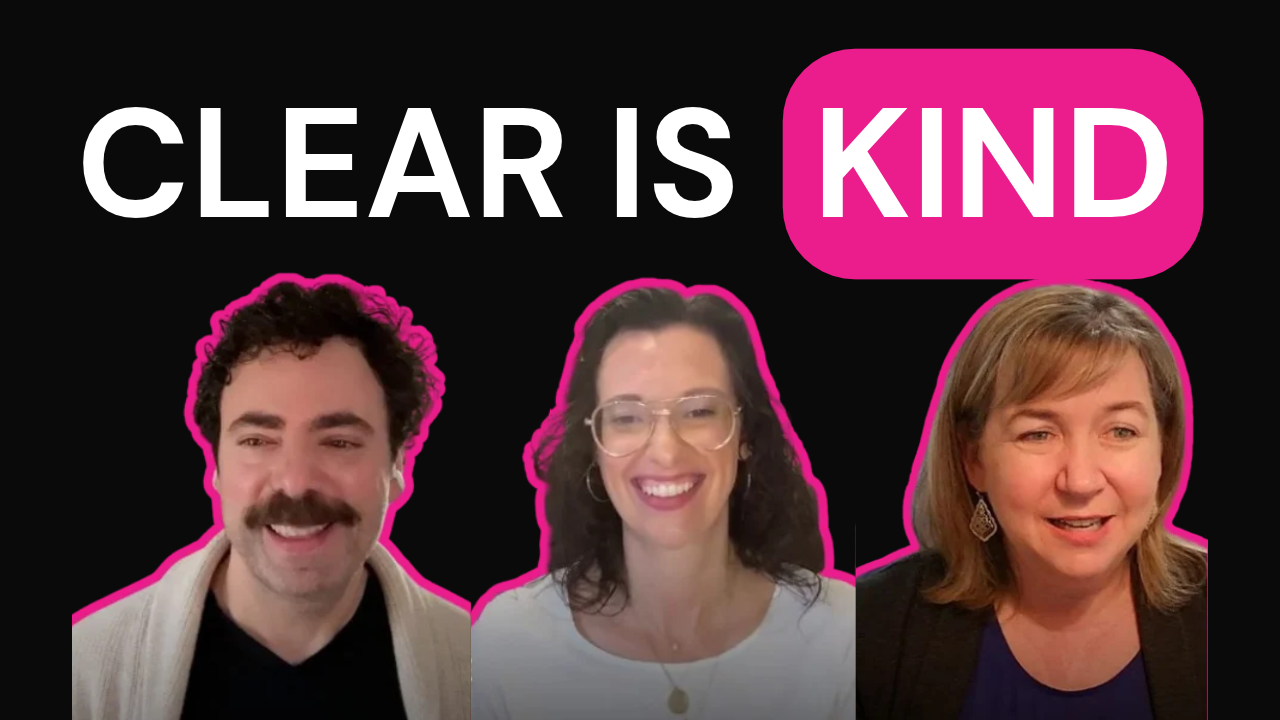
Tough conversations are the part of school leadership nobody trained you for, and the feedback sandwich is how most principals try to survive them. It buries the message so deeply that the teacher walks out thinking they're doing great. Here's how to prepare, deliver, and follow up on difficult conversations so they actually change what happens in classrooms.
🫶 What You'll Learn
- Why the feedback sandwich fails and what "clear is kind" looks like in a real tough conversation.
- The three questions to answer before any difficult conversation: what you want from it, for the other person, and for the relationship.
- A five-step sequence for delivering hard news to caregivers without losing their trust.
- How to coach up a teacher who isn't meeting expectations, and how to coach out with dignity when that doesn't work.
- How to use data and written follow-up to cut through excuses from staff who won't take feedback.
📚 Key Insight #1: Why the Feedback Sandwich Fails in Tough Conversations With Teachers
- What's broken: - Principals wrap hard feedback in praise until the teacher can't taste the problem in the middle and walks out with no idea what has to change.
- The shift: Clear is kind: name the specific behavior, the expectation, the support you'll provide, and the deadline, with no bread around it.
- Impact: The teacher can repeat back exactly what needs to change, and you have a clean record if progressive discipline becomes necessary.
📚 Key Insight #2: How to Prepare for Difficult Conversations Without Forgetting to Listen
- What's broken: Leaders script their own lines in detail, then forget the other person walked in with a story of their own.
- The shift: Before you walk in, decide what you want out of the conversation, for the other person, and for the relationship, then listen hard enough to change your mind.
- Impact: The conversation stays on the problem instead of the person, and the relationship survives even when the news is bad.
📚 Key Insight #3: Coaching Up vs. Coaching Out Teachers on Improvement Plans
- What's broken: Improvement plans renew year after year with no next step, or leaders skip coaching and jump straight to "wrong seat on the bus."
- The shift: Coach up with data, dated expectations, and written follow-up; when that doesn't work, reflect back what you see and resist the urge to rescue.
- Impact: Teachers either turn their practice around or decide for themselves to move on, with their dignity intact.
💬 ERIKA BARE & TIFFANY BURNS QUOTES FROM THE RUCKUSCAST
"Good communication doesn't happen by accident."
— Tiffany Burns
"When we soften our message to such a degree that it can't be heard, then we're really wasting everyone's time."
— Erika Bare
"We want to make sure that we are attacking a problem and not a person."
— Erika Bare
"There's nothing helpful about having just a continually renewing improvement plan."
— Erika Bare
"As educators, we're so empathetic and we're such helpers. We want to jump in and help people and save them. And we need to kind of resist that temptation."
— Tiffany Burns
"It's actually a really gracious, kind thing to do to help someone and agree with them. You're right, it's not a great fit for you."
— Tiffany Burns
"These conversations are not designed to get rid of people. They're really designed to help people improve."
— Erika Bare
📆 Your Do School Different Challenge
Ready to implement? Start here:
- Tomorrow: Before your next hard conversation, write down what you want out of it, what you want for the other person, and what you want for the relationship.
- This Month: Download the free conversation planning guide at connectingthroughconversation.com and role-play one upcoming tough conversation with a trusted colleague or coach.
- This Semester: Train your teachers to deliver hard news to caregivers using the care, facts, why, next steps, care sequence so you aren't the only person in the building who can have these conversations.
⌚️ Episode Timestamps
- 00:00 - The tough conversation Danny prepped for and blew
- 04:58 - Why preparation fails without deep listening
- 10:21 - Why principals avoid tough conversations
- 14:04 - Coaching up versus coaching out
- 17:32 - Why the feedback sandwich fails
- 21:13 - Learning hard conversations through practice and role play
- 25:04 - Building reflection into a principal's day
- 34:29 - The most common tough conversation mistakes
- 37:13 - Framing hard news for caregivers
- 41:18 - Coaching a veteran teacher who mails it in
- 45:11 - You seem miserable and the art of coaching out
- 48:20 - Lack of will versus lack of skill
- 52:31 - Using data to cut through excuses
- 55:57 - Naming toxic behavior and its impact
00:00
Speaker 1
Foreign.
00:03
Speaker 2
My colleague's classroom. We're there because we have to have a very difficult conversation. I've been preparing for this conversation for days. I've known I've had to have this conversation for months. You see, my colleague doesn't come to school. I am a quasi administrator, which means I do the hard work of administration, but I get paid like a teacher. And so I'm an instructional coach. I do a few English teaching, English classes, and then some administrative stuff as well as part of those quasi admin powers. I have keys. I have keys that unlock every single door in the building. And when my colleague doesn't show up to school, which is often two days a week, sometimes three days a week, I unlock her door. I unlock the door for a few reasons. One, because the substitute needs to get in the classroom to teach class.
01:02
Speaker 2
But I also unlock the door because inside her class, it's a terrible design. I don't know who ever thought this up, but inside her classroom is the English department's book room. And you might have guessed it. Yes, this person is the English department chair. And yes, she's also the union rep. So there's a lot of power in this classroom. And when she doesn't show up to school and the door is locked, her colleagues, all the members of the English department, are traumatizing and beating up their kids because they can't get the books to teach the lessons that they've planned. And it just causes chaos. This teacher thrives on chaos. So I'm there, I'm in her room to talk about the chaos that is caused when she's not there. She has gotten wind that I unlock the door when she's not on campus.
02:02
Speaker 2
She's got a big problem with it. So we start to have the conversation. And I'm feeling really pretty good because I've been preparing for days. I. I read the book Crucial Conversations not once, but twice. I've annotated the book, taken numerous notes. I've scripted out this difficult conversation exactly how it should play out. I've role played, I've practiced my part. The only problem is I never gave my colleague her part in the conversation and how it played out in my brain. So not even 30 seconds into the conversation, she goes off script. I continue to try to create safety, bring the conversation back to her inability to be present on campus, her absences when the door's locked, her colleagues can't get the books. That harms our students. Da da da da. And she only wants to talk about the union documents.
03:02
Speaker 2
Because, you see, my colleague doesn't trust me.
03:05
Speaker 1
She.
03:06
Speaker 2
She thinks I'm sneaking in to her room, clandestine, nefariously, as if I'm going to somehow just go through her files, grab the union documents and hand them to the administration so we can screw up the plans of the teachers union. But that's not the case. I'm a member of the union. I'm a proud supporter of the union. I pay my dues. I strike when it's time to strike, even in my quasi admin role. But she keeps bringing us back that you're there to steal the documents I keep talking about. I'm there because you're not here. And teachers don't have access to the books, which means students don't have access to the books. And then she tells me that I need to give back the key that unlocks all the doors on campus.
04:02
Speaker 2
And maybe five minutes, maybe 10 minutes into this conversation, I just can't take it. I see that we're going nowhere with this conversation. And my colleague tells me one more time, you need to give the key back. To which I reply, no, as I shove the key an inch from her nose and I say, I will never give this key back. Over my dead body. And the second I utter those words, I realize I am a complete jerk. What an idiot. You've handled this conversation that you've prepared so thoroughly for. You've blown it. A complete failure. And I go and I give the key back to the administrator because my colleagues write and I want to rebuild trust. And it just really bothers me that I destroyed that relationship. Yes, I prepared.
04:58
Speaker 2
And that's more than what many school leaders do when they know they have to have a crucial conversation. But where I went wrong was I forgot to listen deeply. I was so focused on the outcome. You need to show up. We're going to unlock the door when you're not here. I couldn't hear my colleague. I couldn't understand that she felt I was trespassing on her space. And if only I would have discussed that with her and negotiated that with her, probably the door would have unlocked itself. And maybe, probably not. But maybe she would have shown up a little more often on campus. Hey, I'm Danny. This is Better Leaders, Better Schools. Thanks for letting me tell that story. I hope you enjoyed it.
05:49
Speaker 2
And the reason I did is that today's conversation with my friends Erica and Tiffany, they're here to talk about difficult conversations, and they're way better at having them than I ever was. They're experts on this topic and they wrote a book on it and we're here to dive deeply into it. But this show Better Leaders, Better Schools is for you Ruckus Maker who wants to do school different even within the traditional confines of education, so that we create campus experiences that are worth showing up for. Thanks to Ruckus Makers like you, this show ranks in the top 1% of nearly 4 million podcasts worldwide.
06:27
Speaker 2
So thanks for pressing play, but we're going to get into that main content you need to hear and put into practice today because we all have difficult conversations that need to happen, whether it's on campus or within our families. You're going to love this episode, so check out the main content in just a sec. First, we're going to get in some messages from our show sponsors. Heads up Ruckus Makers. The jobs your students will have in 10 years. They probably don't exist yet, but Orchard helps them explore what's coming and how to build a plan for it with an AI career buddy that they call Orci. You can learn more about Orchard and Orci at BetterLeaders Orchard Careers. That's BetterLeaders Orchard Careers looking to create the kind of campus experience students never forget. ODP Business Solutions transforms ordinary spaces into extraordinary learning environments.
07:32
Speaker 2
Visit ODPbusiness.com education and let's do school different. That's ODPbusiness.com education. If you could differentiate instruction in 20 minutes or less, would you do it for all your students? Well you can with IXL. Over 1 million teachers use IXL because it empowers them to use effective data informed instruction. And you can get started [email protected] leaders. That's ixl.com leaders. You didn't take the principal's chair for the budget meetings and the paperwork. You took it to change kids lives. Kids First Education helps you get that back with coaching kids and with support that's built specifically for school leaders. This episode is brought to you by Kids First Education. Learn more at Kids First LLC Leaders. That's Kids First LLC Leaders.
08:42
Speaker 2
Corey talked to digital Danny910 times in just five months and when I asked him about why he hired Digital Danny, he said, well, the first job was to communicate things. Those high stake messages I needed to share, a non renewal of a teacher, a difficult parent situation and I needed those message to land. And Digital Danny helped. I had an idea of what I wanted to share, but Digital Danny gave me other ways of thinking about how to communicate based on the stakeholder. So if you have High stakes messages that you need to land as well. Maybe you should hire digital Danny for that job as well. Get started and try for yourself at myprincipalcoach.com Ruckus that's my principalcoach.com Ruckus. All right, Erica and Tiffany, welcome to the show.
09:39
Speaker 1
Thanks so much for having us. We're excited to be back.
09:42
Speaker 3
Thanks Danny.
09:44
Speaker 2
Good to see you too. We're having a laugh pre chat, you know, just about the first show we recorded together as a group. And you're back in and you're here to discuss a school leader's playbook for tough conversations. And I'm stoked to have this conversation because yeah, those difficult conversations we have to have as school leaders, I don't know, a lot of people want to avoid them, right? And maybe that's, maybe that's where to start is like why do you think most school principals avoid tough conversations even though that they know avoiding it just makes things worse?
10:21
Speaker 1
Well, I, I mean I think you say it in what we call it, right? They're tough conversations. They're not easy. No one looks forward to them. No one thinks, oh, I can't wait to go have this really hard conversation with a teacher or parent today. We all got into this because we love working with kids. Like a hundred percent of us went into it because we love kids. And yet as leaders, we spend so much time on the adult stuff. Like that's really what keeps us up at night. That's what we worry about and that's where we have so much angst. And so it's really easy to avoid because we're thinking I'm going to hurt the relationship or it's going to be really uncomfortable or I'm not sure how to have the conversation in a way that's going to be productive.
11:08
Speaker 1
And so the first and most important advice we give is do it. You have to have the conversation. Bad stuff doesn't get easier with time. And the most important thing is just diving in and bringing up the hard stuff so that we can move through it.
11:26
Speaker 3
Well, I really just want to normalize how hard it is and how much angst these conversations. Cause you know, and Erica said they're the things that keep us up at night. And it is like when you're waking up at 2 or 3 in the morning, I hope you're not. But I know school leaders sometimes are and often it's the dread of thinking, now I have to have this conversation. And the part that I think is so tricky is like you said, Danny, we know we have to have them. But nobody prepared me for these. You know, like I didn't learn this. And an administrator school, you know, like we're just. Then there wasn't a book for it, so Erica and I wrote it. But these were good con. Good communication doesn't happen by accident. It's through real intentionality right through.
12:15
Speaker 3
How am I going to show up in this conversation? How do I prepare for it? When do I set up this conversation? What type of conversation am I going to have? Is this going to be an email? Is this going to be a sit down? Where should I put myself in the meeting? What are things that I want to make sure to say? And I think, you know, our goal in doing this was to help people sleep better at night, you know, to give them. Here are ways that you can best prepared to have these conversations so they aren't as scary. They aren't as, you know, they're not something that creates so much angst and there's something that we then feel prepared to have and then we can have real strong outcomes afterward. We can most student achievement.
12:57
Speaker 3
We can build stronger relationships with our staff and with our caregivers. So when we do it well, it's really powerful and it really adds that building of connection within our school communities and we sleep better.
13:12
Speaker 2
Right. You know, I, I've, I have these business mentors called the category pirates. And they talk about this one CEO who's just legendary. His name's Clinton. But the interesting thing about Clint, he's very quick to fire people, right. If they're not performing. And often people come back and re interview and want to join his team because he's so good at communicating like what the expectations are, what he needs from people and is direct but also kind. Right. Like, and people come back even if they've been canned by him, which is, that's a paradox. Right. It's like, oh my gosh, this person fired me and I'm gonna want to join his team because he, that people also know he puts together these like really incredible teams too.
13:58
Speaker 2
But I don't know if you have any experience with that or any insight that you want to share there.
14:04
Speaker 1
Yeah. So, you know, one of the things we talk about in the book, when were early in our. Well when were at principal school, we had someone come in and talk about the importance of hiring well and firing well. And for both of us, I mean those things are both true. And it's not complete because for us, we really believe in coaching well and making sure that we are providing the supports and strategies and direct communication needed to get people where they need to go. And a part of that is really thinking about coaching up and coaching out. So. So really helping people if it's not a fit, helping them discover that for themselves and helping them find a pathway that's going to better suited for them. And I have had situations where, you know, we.
14:58
Speaker 1
We parted ways with an employee and maybe it was a resignation or maybe not, but we're. A year or two years later, I'll. I ran. Actually, I'm thinking of a specific situation. I ran into this person on the street. We live in a small town and. And she comes up to me. I was ready to just keep on walking because the last time we saw each other, she was. I was not her favorite person.
15:21
Speaker 2
Bob and weave, bob and weave.
15:23
Speaker 1
Okay. I mean, what are we gonna do? But she came right up to me and she said, you know what? I just wanna thank you. Because that conversation led me to where I am and it's a better place. And how that whole situation was handled, the level of dignity and care that we had in those conversations allowed us to part with, you know, her dignity intact, her ability to kind of take some next steps that really made sense for her and for us to part in a way that allowed us to have a really friendly conversation. And actually a thank you. I'm not going to say she gave me a big hug, but I got a real sincere thank you about how that was handled. And also just, we're doing people a favor.
16:10
Speaker 1
Folks don't want to be in a situation where they're not being successful, where they don't have the skill sets. No one wants to feel like they're not able to do the work in front of them. And so once we have done that really important work of making sure they have all the tools they need, all the resources they need, if it's just not a fit, they're going to be miserable too. And so we need to help them in the same way that we're. We're helping the students, that they're impacting and finding a better path, whatever that looks like.
16:42
Speaker 3
One, two. Like thinking, Danny, about what you're saying about this category, pirate friend who fires people and then maybe even rehires them. Well, like in public ed in K12, it's a little bit of a different scenario, right? And so we really. And. And it's really challenging to get all the way to that place of coaching out. We talk, just like Erica was saying, how exactly to do that in the book and do that while you're maintaining their dignity and you're feeling, you know, like where you're also maintaining your own humanity throughout the process because it's really stressful for both folks in that. But the coaching up part is also what we spend a lot of time talking about. Like, how exactly do you give feedback in a way that we can help people be coached up, that we can help them change?
17:32
Speaker 3
And like your friend that you're talking about this category prior to such a fun name. So I'm going to keep you split. But you're this gentleman whose, you know, folks are getting fired and then leaving. There's some coaching or some kind of growing that happens outside of that moment before they come back, I'm guessing. And so what we talk about with the coaching up is how do we give feedback so people can hear it and how, you know, we've always hear about, oh, this the kind of the feedback sandwich. Right. Where you start with something positive, you give the intense feedback and then you leave with something positive and the person leaves without having a clear idea of what exactly you were saying. They might leave thinking, gosh, I'm doing great, and that was not your intention at all.
18:15
Speaker 3
And so we really talk about, you know, it's important to be kind, but like Renee Brown says, clear is kind.
18:22
Speaker 2
And so clear is kind.
18:23
Speaker 3
Yeah, we want to make sure that we're giving feedback and that we're very specific and intentional about what needs to change, what support we can offer to help them change, how we can collaborate together, coach them into being able to do better and improve so we don't have to go all the way to this process of coaching out. And if we do. But ideally, we're coaching people up and we're really remembering that as leaders, we're still teachers, we're still teaching that coaching up piece.
18:54
Speaker 2
I want touch on that in the second principal school. But the feed, the feedback sandwich, it's so prevalent, you know, delicious. And they got mayo and mustard. And if you need a vegan meat, because you don't eat meat that, you know, we have that for you as well. But every communication expert that I speak to, they say feedback sandwiches are stupid and they don't work right. But we do it in school probably because we want to feel nice, you know, oh, good thing, bad thing, like, you're about to get fired. Oh, by the way your hair looks great, though. Nice job on the hair.
19:33
Speaker 1
Yeah.
19:34
Speaker 2
It just doesn't. It doesn't make any sense.
19:36
Speaker 1
It doesn't. And if you think about the sandwich piece, it's kind of like if you put so many condiments and so much bread around it, you can't taste the gross in the middle. It's fine for eating a sandwich, but if the whole point is to communicate what's hard, you walk away like you got ready for this really hard conversation. It probably was really hard. And there's no outcome. Like, there's no takeaway for the other person. And so when we soften our message to such a degree that it can't be heard, then we're really wasting everyone's time and spending a lot of unnecessary time and worry on something that isn't going to be effective.
20:15
Speaker 2
Right. Okay, well, I forget I said I wanted to take us in two directions. I only remember one, so that's what we'll do. You mentioned.
20:24
Speaker 3
Well, he said Principal School and backstab.
20:28
Speaker 2
Okay, well, Principal School is the one I. Yeah, remember, but let's go there. Like. Yeah, we're not necessarily prepared, you know, for these. And I think the way I'm going to introduce this episode, I'm going to tell a story outside of this recording about a difficult conversation that I prepared for and handled very poorly. Right. So I think that would be a perfect way to introduce this episode. But in my preparation, I went to a crucial conversations training. I'm sure if you're aware of that book and read that book, you know, cover to cover. But I'm just, I'm curious, like, how did you all learn this? Because it's not taught in principal school, so. And now you've learned it. I mean, you're writing a book about it too, so you have something to say.
21:11
Speaker 1
Well, I think we.
21:13
Speaker 3
I mean, a lot of it was trial and error. A lot of it was do it and exactly what you said. You know what you're talking about, Danny, that you prepare really well and then it goes poorly and afterwards you're going, what did I do wrong? Or what happened here? And so Eric and I were really lucky to. To meet in. In principal school back in 2011. And Erica was. And I don't know if I've said this before on your show, but Erica was the smartest person in the room. And so I made her be my friend and I made her do assignments with me. So we did all these writing assignments together and through that, we became really close. And then were lucky enough to be hired in the same district, and we put monthly meetings together on the calendar.
22:01
Speaker 3
We met every single month, I would say religiously. And then we also called each other outside of that as well. But Erica was my confidential work bestie person. And so when I had one of those conversations that would go really poorly, I call or we, you know, go to dinner or whatever and talk it out, and then. And then kind of talk about, okay, how could we. How could this have gone differently? What should I have done here? Oh, if I would have tried this? Or I know that one's coming up, and so I'm going to talk with her or talk with some other colleagues and go, how can I say this in a way that's really going to work? But so much of it, I genuinely think, was through trial and error and saying, hey, this really works.
22:40
Speaker 3
And here's what I did, and I'm going to remember this next time. And then we put all those together in a book.
22:45
Speaker 2
Yeah.
22:46
Speaker 1
And I think too, like Tiffany said, we practiced, like, you don't, like, walk into one of these conversations cold. You have to prepare. You have to make sure that you're writing down those key things that you must say no matter what, so that you actually say them. It helps to hold yourself accountable. But Tiffany and I would legit role play these conversations and talk through, like, actual sentence stems, actual approaches. How am I going to set up this invite? You have to be able to talk it through. And then, of course, like, did a bunch of reading for sure. Read Crucial Conversations and Radical Candor and a bunch of others, and just tried to pull the pieces, Renee Brown's work, all of that, and pull the pieces and try and tie how they work into education.
23:37
Speaker 1
And so, like, we practice those in our own. Because I, We. We have the opportunity for hard conversations all the time. Like, we're practitioners. We get to keep practicing. And I, I mean, I've been in leadership for a long time. I'm just gonna say a long minute. And I still have them all the time. It's part of my job. I'm a superintendent. I get to have hard conversations. And I still practice. I still write things out ahead of time. I still make sure that I'm fully prepared so that I have the greatest chance for success.
24:09
Speaker 2
And that practice piece is key. And, you know, probably, I don't know how many leaders, many, like, just going to walk into it sort of, like, cocky, like, oh, I could pull this off. Right. And then it doesn't necessarily go well. So that practice, that role play piece is so huge. I want to sort of pull on the thread of reflection because I heard you, Tiffany and Eric, I'm sure you have stuff to say on this too, but that closes a feedback loop. Right. So there's very few leaders maybe, that prepare the way they need to. Right. For the hard conversation. I would bet anything that there's even fewer leaders than that. Pause, slow down, reflect on what just happened, why did it work, what. Why it didn't work, or whatever, and then learn from it. Right. Because it solidifies that piece. But yeah.
25:00
Speaker 2
Can you talk a little bit about reflection on these difficult conversations?
25:04
Speaker 3
Yeah, absolutely, Danny. And, and you're right. I do think it's. It's hard to stop and reflect in the moment, especially as a school leader, especially as a principal, because you go from one minute, you're dealing with a big behavior with a student, and then you know there's somebody waiting for you in the office that's really upset about something, and then you finish that meeting and boom, you have a phone call to make to HR because you're hiring. There just isn't time often in the day to build in those moments to pause to. I mean, so often we don't even. As school leaders, we don't even get lunch breaks. You know, like we just. You just go and you're going through the day without pausing. So for me, I would try, if I could build time into the day, great.
25:50
Speaker 3
That was a luxury that I didn't often have. So I spent a lot of time just reflecting after work. I tried. I had sometimes a journal that I kept at work so I could just jot down some ideas or even in a. When I very first started, I forgot about this. When I very first started as a principal, I had a list of things that I would write down, like things that I need to think about later because I just didn't have time then. And then I'd carve out time to do it. So it wasn't at 3am because what I have learned is I do not do great problem solving while I'm lying down. That turns out, like when I'm lying in bed at 3am that is not my most productive problem solving time.
26:31
Speaker 3
So I actually ended up having a little notepad on the side of my bed to be like, I'm going to think about this tomorrow when I could be more, you know, in a better hand space for it. But I think journaling and then really spending time to think about how am I going to process my day and do I need someone to do that with? Do I do that on my own? And I think it was, for me, it was a mix of all that.
26:52
Speaker 1
Well, and I just. I want to add a couple of things to that. And much of this I learned from you, Danny. Way back, there was a course around the miracle morning and how you set up your day, and even some journal prompts that you can use every day that I learned through that. I think it was a course. This was many years ago, but yeah, yeah, I. And I still do that today. So I journal every morning, and there's some reflection questions that I answer, and one of them are, is around, like, you know, what is something that I would want to do differently tomorrow in comparison to how it went the day before? So that's one strategy. The journaling is really critical, but for me, it's built into my routine.
27:31
Speaker 1
It can't be like a, oh, I'm going to think about doing that. I also end every day in my planner, there's a space for listing both a win for the day and then something that I want to think about for future. So I do that really intentionally. And then I'm going to encourage everybody to consider having a coach, because I think having a coach that you can talk these things through, reflect on. And, Danny, you've been my coach and are my coach, and it's incredibly useful to be able to talk to someone who is not a part of the organization where you can really. It's in your calendar. You can step back and reflect during that time.
28:11
Speaker 1
And that's so critical to have that confidential person who maybe has a little bit of distance from the situation, to really be able to reflect back and help you think about how that went well, or maybe not so well.
28:27
Speaker 2
That's a distance. We're on different coasts. I thought I was getting fired with dignity when she said, you've been, you know.
28:33
Speaker 1
Right.
28:33
Speaker 2
And I was like, oh, no.
28:35
Speaker 3
All right.
28:36
Speaker 2
I found out on my podcast in front of everyone.
28:38
Speaker 1
No, no, no. Sorry, you harmed my character. I think we have an appointment next week.
28:42
Speaker 2
Yes, we do. Yeah. No, that's. I'm just making a joke. That's okay. Most career plans end with a checklist. Take the quiz, you grab the brochure, you name three careers, it's done. But checklists, they're not a. They're not a plan. Orchard's different students have an AI career buddy named Orchi to explore options, compare real plans. Compare colleges, trades, apprenticeships, military and it builds a personalized plan with steps they can take right now, not Sunday, this week. And it grows with them as their interests change. This is what career readiness should have looked like all along. Go see it for yourself at BetterLeaders Orchard Careers. That's BetterLeaders Orchard Careers. ODP Business Solutions, formerly Office Depot Business Solutions Division, has been a trusted partner for schools for 30 years. At ODP Business Solutions, we're by your side to meet your evolving education needs. Now picture this.
29:59
Speaker 2
A learning environment so engaging students forget to check their phones. Sounds impossible. That's exactly what we helped Belago Academy create. Their secret Working with ODP Business Solutions to build collaborative spaces that actually work. We didn't just deliver furniture. We delivered a completely new way of learning. From tech integration that makes lessons come alive, to flexible spaces that adapt to any teaching style, to sustainable solutions that reduce your carbon footprint. We're here to help you do school different. And the best part? You get it all from a single supplier. All to help you simplify ordering and streamline budgeting while staying compliant with easy access to cooperative contracts. However you want to advance. ODP Business Solutions has 30 years of experience helping districts like yours get ahead. Visit ODPbusiness.comeducation to learn more.
30:59
Speaker 2
That's ODPbusiness.com education as a school leader, time is your greatest resource, and there is a real sense of urgency when it comes to getting students what they need right now. That's why I love IXL's universal screener. In 20 minutes or less, you can identify students in need of intervention. And IXL's Learning Adaptive Platform makes differentiating instruction easy. As students learn, IXL adjusts to the right level of difficulty for each individual student. Get started [email protected] leaders. That's ixl.com leaders somewhere under the emails, the compliance and the crises, there's a reason you got into education. It was for the students. The kids. Kids first education exists to help school and district leaders put that reason back at center. It's led by educators who've done the work that have partnered with teams across the nation on coaching, leadership development and professional learning.
32:15
Speaker 2
And it's all built around what's best for your students. It's practical, it's personal, and it sticks. 98% Of educators that Kids first works with says they left ready to use what they learned that week. Principals Admin District Leaders let's put Kids first together. You can partner with Kids firstids LLC Leaders. That's Kids First LLC Leaders of all the principals who use Digital Danny, the one who uses him the most lost a teacher in the first week of school. It was an abrupt resignation and students and staff thought about quitting or leaving the school. In response, this principal had to address his staff Monday morning. The wrong tone in any direction would have made the situation worse. Too soft. And it sounds like nothing happened. Too hot. And it sounds like you're blaming the teacher who left. What he needed wasn't a rider.
33:24
Speaker 2
He needed someone who'd sat in that same exact seat for hundreds of reps to help him land the right move. Teaching as a calling connection over compliance and then crafting the right words. The principal followed up with his speech and a memoir to the staff that week. And it worked. If you also have high stakes messages that you need to land, digital Danny can help. He was built for this. And you can get started with him at myprincipalcoach.com Ruckus that's my principalcoach.com Ruckus. What do you think might be like a mistake that we talked about? Feedback, you know, feedback sandwiches. Those don't work. But do you see other common mistakes that school leaders make when navigating these tough conversations?
34:29
Speaker 3
I think there's a couple. And. Well, I think there can be a number of. Actually, I think especially when we know we're going in to have this hard conversation, we have set up what or we might have thought about, here's what I want to say. And then we sometimes forget that there's another person in the conversation that has another story. They have their own experience that is in that they're having. And we need to make sure that we're providing that time to really listen, to really hear what they're saying, to really make sure that we're able to respond not just with what I'm about to say next, but listen to what they're saying. So I can take that information in and perhaps change my mind and think about something differently. I think.
35:16
Speaker 3
Well, I think there's a lot and Erica, you go and then I'm sure I'll come back.
35:20
Speaker 1
Yeah, no, I mean, I think the first thing that came to my mind was also taking the time to really listen and be open to the other perspective. I will add though, it's something that we see a lot and this has happened to all of us is not being clear on your purpose going in. And if you're not clear on what you're hoping to get out of the conversation, that's really Easy to get sidetracked from the outcome that you're looking for. So we, the questions that we really think about are, what do I want out of this conversation? What are the outcomes that I'm looking for? What do I want for the other person? And what do I want for that relationship? How do I want us to be able to walk away from this conversation and feel about each other?
36:03
Speaker 1
So just taking 10 seconds to get really clear on what am I actually trying to accomplish in this conversation can make a really big difference. And I'm going to go back to, we said this already, but failure to prepare. Make sure you have all of the things that you need in advance. There's a free resource on our website that anyone can download that is a kind of a planning guide for these conversations. Go through the steps and don't stop, skip over any of them, because they all matter. And so it's important to do your homework, make sure you have all the facts. And then the other thing that I would say is make sure. And this can happen to everybody. And we want to make sure that we are attacking a problem and not a person.
36:49
Speaker 1
And so we get into a conversation and we're feeling a lot of anger or a lot of frustration, and maybe that's really justified, but that's probably not the time to have the conversation. So we also seen air, see errors where administrators will step into a conversation before they're emotionally ready to have that conversation in a productive way. So that's another caution.
37:13
Speaker 3
Well, I love that you talked about the emotionality of it, too, Erica, when what I'm thinking about as well is when, like thinking about having to share really hard information with caregivers. Right. And so again, not a conversation I'm looking forward to. I really don't want to have to call this caregiver, have them come in and let them know this thing that their kid did that they're going to be really upset about, and I'm going to have to tell them there's a consequence. So no part of this is something that I'm enjoying. Right. And so when we're just kind of moving through the day and thinking, here's what I don't want to do, sometimes we take that deep breath, like, 1, 2, 3, go, you know, without, like Erica was saying, taking that time to prepare.
37:49
Speaker 3
And I think something that is so easy to skip over that we must not skip over is remembering to show care. And so we actually have again, on our website, we have a free download that is, we call it framing it for caregivers. And it's how to have those conversations with caregivers. And so we talk about. You start with care, and you're being genuine and specific about your care for their child. And it has to be authentic or else they're going to know and there's something really cool about the kid that you want to share with the caregiver. Then we share what happened, and we're sharing just the facts. So we're not using adjectives. We're not being super descriptive. We're saying, here is the thing that happened.
38:30
Speaker 3
And I think the piece that's also easy to skip over is this idea of sharing why you think it happened. So your kid did this thing. And you know what I'm thinking is that they really were just acting really impulsively. He didn't stop to think. He didn't stop to really just take a minute and take a breath so he could make a good choice. He just reacted. And I get that. And, you know, I'm understanding why he would do that. So we're empathizing. We're guessing at the motivation. We're helping the caregiver see, I see your bed and I get why this happened.
39:05
Speaker 1
And now I'm going to let you.
39:06
Speaker 3
Know what the consequences or next steps will be. And then I'm showing care again at the end. And I think for lots of us, it's so easy to say, here's what happened, here's what happens next. And now we're done. And we've taken out all of those. Those care pieces, and we've taken out all of that. The understanding that we want to share and the. The part. I mean, part of the reason why we built this. Yes, it is absolutely for leaders. And when you are a leader who's really great at communication, you are the one who's doing the overwhelming majority of the communication. And that's just, you know, such a small part of your job. So what we want to do is help folks build capacity. How do we help create collective efficacy?
39:50
Speaker 3
How do we create a building or an organization where everyone is empowered to have these conversations where more folks are able to. The teacher ideally, is calling the caregiver, print out the form and say, okay, let's. I'm going to sit with you and fill this out together so you can have this conversation with the caregiver, or I might even sit next to the teacher while they have the conversation just so I can have that support with them. Because we don't want to be the only ones that are good at communication or building.
40:20
Speaker 1
Yeah. And I will say the final mistake that we see and this is not just not having the conversation, knowing that you have to have it and then putting it off, avoiding it, doing anything you can to not do it. So I would say the biggest mistake is avoiding the issue altogether. We talk about the idea of you have to go to the problem. And that's true. When there's a difficult conversation and then anyone that we're struggling with, we also need to make sure that we're reaching out to them for those things that we do with all staff, to just have those informal conversations to get to know them, to do, show care in all of those ways that you've built into your routine. But that's especially important when we have a staff member that we're struggling with.
41:01
Speaker 2
Right. Yeah. Can't stick your head in the sand. I think this is the right page. I'm on connecting through conversation.com resources. And here's the. Here's the planning guide that you were talking about.
41:12
Speaker 1
That's for students. So if you scroll.
41:14
Speaker 2
Oh, that's for students. Oh, yeah, I can't read. Sorry.
41:17
Speaker 1
There it is.
41:18
Speaker 2
Here it is. Conversation planning guide for adults. So it's at the bottom on my screen, bottom left. Yeah. So lots of great resources, you know, ruckus makers go there. And I think these are all free, so check those out for sure. So I love not necessarily to role play. I had a coaching call, school administrator. He's an ap, and I've talked to his principal too. And both of them have brought up a teacher on their staff. Right. The teacher is seasoned. Right. Has been around a long time. I think if they finish this year out, they've got their vested interest in the pension and that kind of thing. So that's probably meaningful. I'm just giving you all the context. I don't want to tell you the class in case, you know, just try to keep as ambiguous as I can.
42:03
Speaker 2
But the teacher base basically mails it in, you know, every day. He's not doing right by kids. And they're just like passively doing stuff on the screen. Right. Not really learning and not really even doing the thing they're supposed to be doing on the screen. So the AP says this has been a pattern for time. Right. This isn't like a new thing. And I'm asking questions about, well, how have you adjusted? Da, da. You know, this is the only teacher in the building on an improvement plan. Right. And I'm curious. I'M like, well, it doesn't sound like this teacher's improving, so what's the next step? Right? And progressive discipline, blah, blah, blah. And so at the end of the day, you know, I was like, two things that I shared and then would love to see what you see that I don't see.
42:52
Speaker 2
But one, you need to be talking to HR more to have clarity on your process, because it's. It sounds like he's been on a plan. He hasn't improved, so why is he still around? Like, I don't understand that, but I'm also not in the system. And then two, is there a way, tactfully to say, you know, it's. You've, you've had a good run, right? And we're at a path where you can go this route, collect your pension, God bless you. But, like, turn in your I'm retiring this year paperwork or things are going to get even more uncomfortable and difficult. And I don't know if that, I don't know if he can even do that or if there's a tactful way of doing that. So that's kind of where my gut and my intuition was with this AP I was coaching.
43:42
Speaker 2
So what would you tell this person?
43:44
Speaker 1
Well, the first thing you said was, work more closely with your hr. And I'm going to advise every single building administrators to make besties with the HR person. Reach out to them. They have great advice. They know the process, they know what to do. And when we enter into an improvement plan, the goal is always for the teacher to improve. Like, that's why we do it. It's the whole purpose. And also if improvement doesn't occur, then these are important steps to go through so that we can take the next step. There's nothing helpful about having just a continually renewing improvement plan. And so my first piece of advice would be exactly what you said. There has to be a next step here. And there is.
44:32
Speaker 1
If we, if went through an improvement plan, there should be clear dates, it should be realistic, but not like six months. Right. And oftentimes there's union rules and different things and different contracts, but you want to give a reasonable amount of time. But if it's not happening, then we need to take the next step. And then if for some reason that isn't possible, having that conversation that helps them see that really they need to make a different decision for next year is absolutely something you can do. We do talk about that. Tiffany, you are an Expert at helping people see what the next steps are. I don't know if you want to talk about that. And some of those question stems.
45:10
Speaker 3
What?
45:10
Speaker 2
Yes, please do.
45:11
Speaker 3
Yeah, absolutely. Well, I mean there's a whole, there's actually an entire section of the book on coaching and how do you leverage the evaluation process and what do we do to coach up? What do we do when we've done everything we can and it is time to coach out? And I will say that when we point out to people what they're doing that isn't meeting expectation and then we ask and think about and have some real pointed questions, you know, it seems like you're really unhappy. Seems like there's a lot of things and a lot of support that I've done really specifically or that we've done to provide, you know, you an opportunity to make changes. And we're not seeing those changes. This was supposed to be done by this deadline and we're still not seeing that.
45:59
Speaker 3
And so at times, and it doesn't work for everybody, but you'd be surprised by the amount of people it does work for, really laying out for them. Here's the situation, here's what we're looking at. Here's the expectation of where you need to change and what needs to happen. And I'm noticing that you're looking pretty upset. I mean, I said to someone at one point, you seem miserable. You just seem miserable in this job. And I'm, and I, I meant it. I wasn't being unkind, I just was really reflecting back. You seem miserable and I'm curious how you're feeling. And they said, I am miserable. And they said, I can tell. And I think kids can tell too. And I, I don't think you want to be miserable in your job. And they said, no, I really don't.
46:42
Speaker 3
And they said, well, so what do we think's the path forward? You know, like, here's what we can do to make changes and I am here to support you and we can make changes together and are you up for that? And you know, it was a heart to heart conversation where we had enough time planned for it and the person ended up saying, you know, I really want to think about it. What you're saying I need to do is really significant and I don't know if I'm up for it. And I said, I hear that. Well, I really respect that and I want you to think about it. And I, that was toward the end of the week. They thought about it over the weekend and I Got a letter of resignation that Monday.
47:17
Speaker 3
So really, I think a huge part is reflecting what we see and then not jumping in to save them. When they say things like I'm not doing well, or I don't think I can do this, or I, you know, that was a total bomb, or, you know, whatever it is. As educators, we're so empathetic and we're such helpers. We want to jump in and help people and save them. And we need to kind of resist that temptation and let them just sit in what they just said and don't save them from those feelings because what they're a lot of times recognizing and this isn't a fit for me, and it's actually a really gracious, kind thing to do to help someone and agree with them. You're right, it's not a great fit for you.
48:04
Speaker 3
And actually, the person that I was just talking about, they went and worked somewhere else in education, but in a different place. Every time I see them, they are so happy.
48:15
Speaker 2
So it's possible.
48:16
Speaker 3
Yes, it really is. It absolutely is.
48:20
Speaker 1
Well, and I think we talk about the difference between lack of will and lack of skill. Right. And I think sometimes when we have someone, and I work with some teachers now who've been teaching for 35 years and are still amazing every single day. Right. So I'm not trying to say a broad statement about folks who are getting close to retirement. And sometimes when we have been in education for a really long time and we are really struggling with our performance, it's not because we don't know how to do it. And I'm going to guess in this case, because they have had lots of opportunities and lots of coaching and lots of support, that they're maybe making some choices not to do it the way they're being asked to do it.
48:59
Speaker 1
And so in those situations, it's important to point out what it's going to look like if they were to come back. So, you know, given that we're not seeing X, Y and Z, I'm going to have to be in your classroom, you know, twice a week. We're going to have to sit down and do this and be sending the coach in. This is the professional development I'm going to need you to engage in and you really lay out all of the things that they're going to have to do in order to meet the goals that are in front of them. And especially when you have someone who does have the option to retire. Just looking at, we don't want to. I mean, it's kind of like we want them to feel a little uncomfortable.
49:45
Speaker 1
We want them to really think about what that's going to look like and feel like, and is that really worth it for one more year? So painting a really clear picture about the path forward from your perspective, I think is really important when you're trying to help someone make a choice in a situation like that. But you want them to kind of see, and that takes a lot of clarity. You have to be really clear, like, we're going to do this and we're going to do this. And you have to actually know that if they choose to sing, you're going to have to do those things. So.
50:18
Speaker 2
Right.
50:19
Speaker 1
Yeah.
50:19
Speaker 3
But it's not necessarily making them feel uncomfortable. It's pointing out, here's what has to be done. And oftentimes that's very uncomfortable. And it's us being clear enough and not sugarcoating it and not giving them a little feedback sandwich of us saying, like, here's the actual expectation. Are you up for it? Just point blank, are you up for that?
50:42
Speaker 2
And it's back to clear as kind, I think. And you know, you were talking about not jumping in to save, which is something. Yeah, the empathy with educators, they already like to fix things and be helpful, but you know, if we're honest too, like, yeah, it feels good to be needed almost. So it's like, know you got to be really cognizant of that. But silence is. Is very powerful, you know, when speaking or coaching or what, you know, asking the question, Shut up. Like, just get out of the way, you know, so that was really great advice there. Now, part of the challenge, I'm not looking for more feedback. Just want to give you a little more context. Part of the challenge. This teacher thinks he's doing really good. Right. So he's not miserable. He's not.
51:25
Speaker 1
He's.
51:26
Speaker 2
He's in. And I was talking to AP and he's like, he's the only teacher also that I give tough feedback to and he doesn't receive it right. So that's really interesting. And I said, have you ever thought about telling him that, you know, it's strange, like, hey, so. And so helped me figure out, like, I'm giving you this really difficult feedback from my point of view, and it just seems to like, go right off your shoulders and you have a. You have an explanation for everything. Right. And it's like we're operating in two different worlds. So I found that interesting. And last thing I just want to say about that conversation was that I really applauded the AP for having the courage to have hard conversations because he was doing that.
52:14
Speaker 2
And I said the next step for him in his leadership growth is to think about well, but these conversations aren't necessarily effective right now because they're not changing behavior or producing the result that everybody wants, you know, and so that's something, you know, for him to sort out. We gotta figure that piece out.
52:31
Speaker 1
Wow. And I think, I know you said you didn't want more feedback, but I will just one thing. When there is someone who's really defensive about the feedback or just disagrees with the feedback or is like, yeah, really, I've got all these excuses. That's why doing our homework and having the data in front of us and ensure that it's like, nope, this happened this many times and this is how many students. And this, this, the expectation is here and it has to be something that you can't argue with. We have to have the straight up data and like, this is the expectation. This is what I saw. And then when we get an excuse, when we get a reason, it's a, well, nevertheless, the expectation is this, and we did not see this or, and I hear that.
53:15
Speaker 1
And yet the expectation is this, and this is what the result was. And so just being really clear and consistent and data focused in the feedback can help move past some of that excuse making. It doesn't mean they won't do it, and it doesn't mean that they're going to take in the feedback and do something different, but it does allow you to take the next step in terms of progressive discipline if you can be.
53:40
Speaker 3
Really clear and follow up in writing. Because some people are not auditory and some people, when they're in a conversation, they're not hearing the conversation. They're just in their own heads or they're whatever is going on, or they're just like, I'm great. This guy doesn't know what he's talking about. But we follow up in writing and we say, here are the very clear next steps. And here's what I'm. I mean, you're also documenting, but then now it's visual and they have to read it and see it. You know, that's. That might help as well. Gabby, sounds like you're giving them all the right advice, though. It sounds like you're right.
54:13
Speaker 2
Trying. I'm trying.
54:15
Speaker 3
Yeah.
54:16
Speaker 2
So we'll see. Yeah. And I've been a part of Conversations where the person needed to deliver really tough feedback and the educator turned it around. Right. So that's. It's possible.
54:30
Speaker 3
Absolutely.
54:31
Speaker 2
I want leaders to hear that. And maybe it's a good. Sort of hard to end with this. This topic, but. Because too often, I think too often a leader gets in their head, oh, this person's just not the right fit. And then they go to the Jim Collins and, you know, they're on the wrong seat in the wrong bus, and da, da, da. And how do we get them out? Right. I think just some. Some schools are a little too fast on that piece where if you actually give them an opportunity and give the support, it can work. I've seen it, you know, so any. Any last thoughts on. On that piece, seeing people turn it around?
55:05
Speaker 3
I think, well, that's the whole piece that we're talking about with the coaching app. That's exactly it. It's exactly that. We're not just going to jump to, well, they. They should have done it better or they should have known or they're not on the bus. Well, what feedback have we given them? What have we shared? What have we reflected back to them? What have we said? Here's the impact of, you know, your teaching instruction on students. Like, here, let's take a look at some test scores here. Here's whatever it is. We're sharing that really clearly with them. And I think, Danny, it just goes back to what you just said about, you know, this gentleman that you're coaching, that it was courageous of him to have that conversation. And it's so much easier to just ignore it and not have it.
55:50
Speaker 3
And, you know, we talked about. We have actually a whole chapter on toxic stuff. That's not what the chapter is called.
55:57
Speaker 2
Yeah, I wanted to get to that question because that's the hardest person. Right? Like, they're good in the class, but everybody, they're such a terrible person.
56:05
Speaker 3
We're so nervous to point that out. Like, when we're talking about something that has to do with culture or personality, that can be something that's really hard for us to pinpoint. And so for whatever reason, we don't name it. And we don't say, like, here is your behavior, and here is its impact on others. And so we really dig into how exactly to do that. And we also give folks permission to have that. Not that they need permission from us, but it. It feels good to have somebody be like, no, you can have this conversation. We promise. And. And you need to.
56:40
Speaker 2
Yeah, you need to. And you Should? Yeah.
56:41
Speaker 1
I mean, the whole point of this book is to help us as leaders, help everyone in our organization get better. These conversations are not designed to get rid of people. They're really designed to help people improve. 95% Of our book is about how do we move instruction forward through these tough conversations. How do we build relationships with caregivers through these tough conversations? And it's about how we provide feedback. It's about how we show support. It's about how we make sure that the feedback is delivered in a way that can be received and result in a change in the classroom. Because that's why. That's why we do this work. And that is the most gratifying part of a hard conversation. I mean, it's. It's nice when you have someone who really shouldn't be there and they're no longer there because of a hard conversation.
57:35
Speaker 1
That is a good outcome. And what feels better to me is when we've worked with, maybe it's a newer teacher, or maybe it's a teacher who's lost their way, or maybe it's a teacher who just never got the feedback around something that's really impacting their practice. And you see that change, and you see that turnaround, and all of a sudden their students are doing better, their classroom feels better, the teacher is happier. Right, because everyone is happier when they're more effective. So the whole point is, how do we help people get better? It's not about how do we get rid of people, how do we rearrange the bus, how do we, you know, I mean, all of that is important, but that's not. That's not the point, necessarily.
58:19
Speaker 2
Right on. So Ruckus maker approved. Check out a school leader's playbook for tough conversations. It's great. And I think the last question I want to ask is just the. The school marquee, because that. That one, you know, you can change your answer. And if you're going to put a message on all school marquees around the world for a single day, what would your message be?
58:39
Speaker 3
Mine is always the same. At the very heart of education is connection.
58:43
Speaker 1
Do the next best thing. I think what mine would be today. Do the next best thing. Take the next best step.
58:53
Speaker 2
Hey, Ruckus makers, thanks again for pressing play. I hope you enjoyed the show as much as I enjoyed creating it for you. And before you go, if today's episode shifted something in you so that you want to do school different, or maybe you have a new idea about how to reimagine education on your campus. Then check out my Principal Coach. It's your AI powered leadership mentor. It's trained on 10 years of mastermind and private coaching experience that I've had. It's like having a world class ruckus maker mentor in your pocket 24. 7. You can start your free seven day [email protected].
Transcribed by https://fireflies.ai/
🔗 Connect With Erika Bare & Tiffany Burns
🌎 Website: https://www.connectingthroughconversation.com/
💚 LinkedIn: https://www.linkedin.com/in/tiffany-burns-90a50a274/ https://www.linkedin.com/in/erika-bare-6a72a6215/
🎧 Listen & Subscribe
Listen to Better Leaders Better Schools on Apple Podcasts, Spotify, Youtube or wherever you get your podcasts. If today's episode moved you, leave a review — it helps more Ruckus Makers find the show.
🧔🏻♂️ Your SelfMentorship Guide
Meet Digital Danny — your Self Mentorship guide. Always available, never forgets, and evolves with you. Think through your next leadership move at myprincipalcoach.com
🫶 Today's Ruckuscast Partners
IXL
IXL's adaptive platform finds every student's knowledge gaps, adjusts difficulty as they learn, and gives you a dashboard showing exactly where growth is happening.
🔎 Over 1 million teachers use it — get started at https://ixl.com/leaders
ODP Business Solutions®
ODP Business Solutions has supplied schools for 30 years — converting dead computer labs into STEAM centers, stocking multiple campuses, upgrading whiteboards to interactive displays — all from a single supplier through cooperative contracts.
🔎 Learn more at https://odpbusiness.com/education
Orchard
Orchard gives every student a personalized career action plan and scores readiness across 8 dimensions — a number you can take to your board.
🔎 See how it works at https://betterleaders.orchard.careers
Kids First Education
Kids First Education builds professional learning around your district's priorities, your data, and your classrooms — not pulled off a shelf — and 98% of educators walk out ready to use what they learned.
🔎 Partner with them at https://kidsfirst.llc/leaders
Twelve Practices LLC © 2026 | If Education Ain't a Bit Disruptive, Then What Are Your Students Learning?


