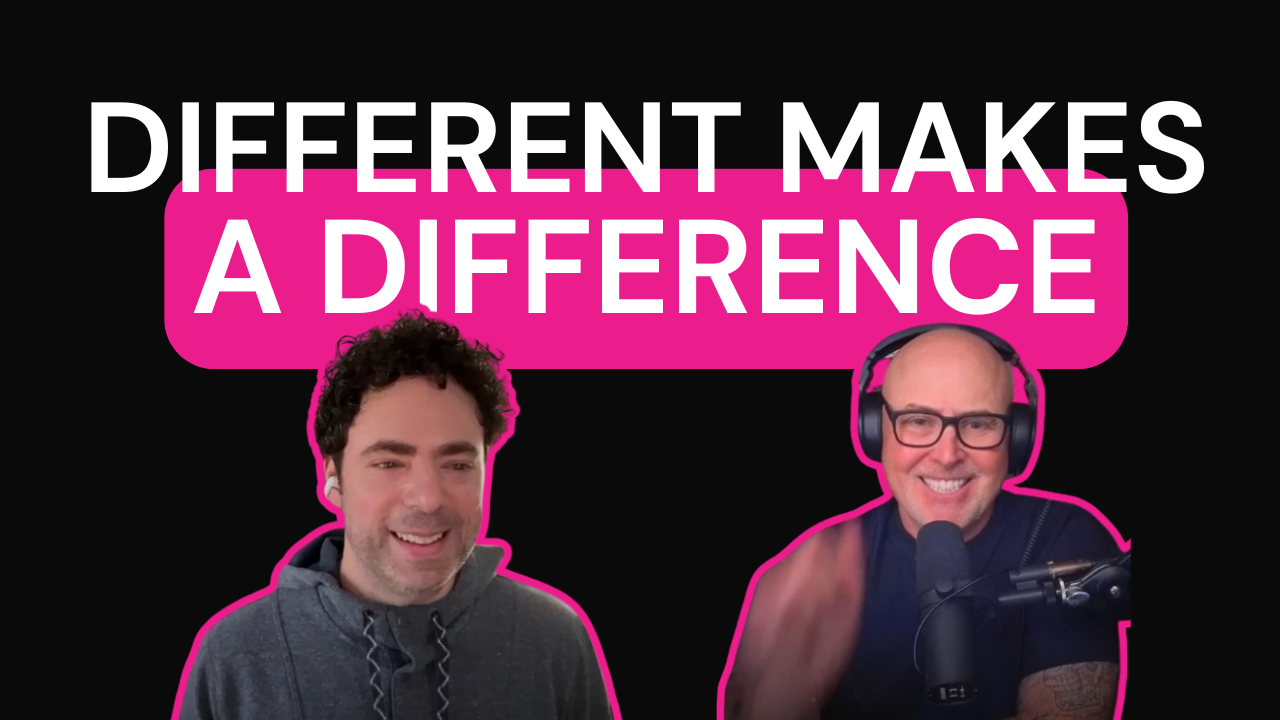
The man who co-created category design — the strategic framework behind companies like Salesforce, HubSpot, and Drift — has a blunt message for principals: your recruiting ads are announcing that nobody wants to work at your school.
Christopher Lochhead is co-author of Play Bigger, Niche Down, and Category Pirates, the wildly popular business newsletter read by some of the sharpest operators in tech and venture. His latest book, Creator Capitalist, makes the case that the creator economy isn't a trend — it's the future of every career, including the ones you're trying to build on your campus.
Most principals spend their careers trying to fix a reputation problem they don't realize they have. This conversation with Christopher Lochhead lands like a two-by-four: your school's reputation is built entirely by what people say when you're not in the room, and most of the signals you're sending are saying the opposite of what you intend.
The connection between category design, teacher recruitment, AI in education, and what it means to do school different turns out to be a single through-line — and it starts with the courage to be different.
🤩 What You'll Learn
- Why "we need teachers" recruiting ads tell candidates your school is a bad place to work — and what to say instead
- How category design thinking applies directly to school leader reputation and teacher retention
- Why AI makes memorization-focused schools obsolete — and what replaces it
- The difference between being an entertainer in the classroom and creating scaffolding for student legendary
- How to build the kind of school halo that outlasts every teacher who passes through your doors
✅ Key Insight #1: Your Recruiting Language Is Telling Candidates to Stay Away
- What's broken: Most schools post "we need teachers" ads with lists of open positions, believing they're being transparent about opportunities.
- The shift: What gets said in a communication and what doesn't get said are both heard — and the unspoken message of a vacancy list is that nobody wants to work there.
- Impact: Principals who reframe recruiting around what makes their campus different and what problems they exist to solve go from struggling to fill positions to having more applicants than openings.
✅ Key Insight #2: Reputation Capital Is Everything — Principals Are Building It Whether They Know It or Not
- What's broken: Educators treat reputation as a soft, unmeasurable byproduct of doing good work rather than as a strategic asset they actively shape.
- The shift: Reputation is simply what gets said about you when you're not around — and the most effective principals build schools where being hired there carries a career-long halo, the way working at Nvidia does in Silicon Valley.
- Impact: A school with a strong reputation halo attracts better teachers, retains them longer, and becomes the kind of place parents, students, and staff are proud to talk about.
✅ Key Insight #3: AI Doesn't Threaten Good Teaching — It Exposes Bad Teaching
- What's broken: Schools are treating AI as a threat to academic integrity while continuing to optimize for test scores and the memorization of existing knowledge.
- The shift: AI makes existing knowledge close to free, which means the real skill is no longer knowing things — it's learning how to think, create, and build with AI as a tool.
- Impact: Principals who lead schools where students learn how to learn and create with AI will produce graduates who can find or make a place in the world; those who don't will produce graduates who can't.
🎙️ CHRISTOPHER LOCHHEAD QUOTES FROM THE RUCKUSCAST
"The people who make the biggest difference, by definition, are different. Because if you're the same, you fit in. And when you're the same, you don't stand out. And as a result of not standing out, you don't make much of a difference."
– Christopher Lochhead
"When you put an ad out there that says we need teachers, and here's a list of 200 job openings or whatever it is, what's the unspoken? The unspoken is nobody wants to work here."
– Christopher Lochhead
"If I'm an educator, I want my school to equal working at Nvidia. Because if somebody qualifies to get into my school, when they go forward in their life and they say, I was a teacher at X, everybody goes, oh, wow, that's a great school. That's a halo."
– Christopher Lochhead
"AI makes the availability of existing knowledge closer and closer to free every day. And many people in the education business thought they were in the business of imparting knowledge. Well, not so much anymore."
– Christopher Lochhead
"I want to teach young people to learn from AI and to create and build things on their own with AI. Just like when the pen was invented, we learned to create things with the pen. This is the new pen."
– Christopher Lochhead
"People don't go to school to see Professor Danny or Teacher Danny perform. They go to school for themselves. So the real question is, what do we need to create for them — for the students to be legendary?"
– Christopher Lochhead
"You are more legendary than you know. The vast majority of people, including insanely successful people, undervalue the value of their value."
– Christopher Lochhead
🧗♂️ Your Do School Different Challenge
Ready to implement these ideas? Start here:
- Tomorrow: Audit your school's current job posting or recruiting language and identify the unspoken message it sends to candidates.
- This Month: Define in one clear sentence the specific problem your school exists to solve and what makes your campus different — then rewrite your recruiting materials around that answer.
- This Semester: Build a school halo by systematically collecting and sharing teacher success stories that make the experience of working at your campus feel like a career credential, not just a job.
⌚️ Episode Timestamp
- 00:00 - Different people make the biggest difference
- 02:42 - What's the real job of the education system
- 08:02 - The human animal doesn't train its young to succeed
- 13:32 - Why we're wired to fit in — and what it costs
- 15:20 - How to be the teacher nobody forgets
- 18:45 - The unsaid message in your recruiting ads
- 24:33 - Teaching kids their life is theirs to design
- 29:53 - School is not a performance — it's a scaffold
- 31:31 - The unrideable bicycle and unleashing creativity
- 44:11 - AI makes existing knowledge close to free
- 47:48 - 1,400 transcripts, 30 minutes, Digital Danny's flywheel
- 58:52 - One message for every school marquee in the world
00:00
Speaker 1
Foreign.
00:03
Speaker 2
Here's the thing I'd say to teachers, especially those who want to be ruckus makers. The people who make the biggest difference, by definition, are different. Because if you're the same, you fit in. And when you're the same, you don't stand out. And as a result of not standing out, you don't make much of a difference. You might make some difference, but if you take an honest inventory of your life and you think about the teachers or the adults, the people who make the biggest difference are the ones that you find the most remarkable, that you find the most interesting, that you find the most unique, that you find different. Because different stands out. More of the same is more of the same. And when somebody's more of the same, well, you might appreciate it, but it's more of the same.
00:56
Speaker 2
The desire to fit in is totally normal. It's human, and it's even animalistic. Because if you want to make a difference, you have to be different.
01:11
Speaker 1
Still scrambling for supplies like it's 1999, ODP Business Solutions streamlines everything from pencils to projectors so you can focus on what matters, making an impact. Visit ODP business.comeducation to learn more. That's ODP business.com education. If you're making decisions about staffing, student support or operations this year, having the right context matters. Frontline Education's 2026 K12 Lens report shows where pressures are easing, where they're not, and how districts are responding. It's based on insights from 1000 school leaders across the country. Visit FrontLineEducation.com leaders to uncover insights from over 1000 school leaders across the country. IXL is a go to support for classroom teachers because its adaptive platform makes differentiated instruction easy. See for yourself. Get started [email protected] leaders. That's ixl.com leaders. All right. And Christopher, welcome to the show.
02:35
Speaker 2
Danny. I'm stoked to be here. I love all things Danny the ruckus maker.
02:42
Speaker 1
And I love all things creator capitalist. So we're here to talk about the book. Legendary book for sure. And I figured, you know, why start easy? We might as well start off slapping some ruckus makers in the face and thinking deeply about the purpose of education. Because in my view, we often are preparing kids for a world, a reality that doesn't even exist anymore. Right? So I'd love to invite you, Christopher, to just riff on that idea and maybe sprinkle in the seed of what's the new American digital dream.
03:18
Speaker 2
Great well, first of all, I love teachers and educators. They do an incredible job and I had many teachers, a handful, a few I could name for you if you wanted, who made an incalculable difference in my life, like when some doors were shutting. You know, I have five or six learning differences. Dyslexia, dyscalcia, adhd, la la la. And so as worlds like math were shutting down for me, I had teachers who saw that I had skills and talents and was attracted to different things and they nurtured me with that. And if they hadn't, I probably wouldn't be here today. So I think the job that educators do is extraordinary. I don't think they get paid enough and I don't think they get acknowledged enough. So I, I think that's just important to say. I love teachers.
04:09
Speaker 1
Thank you. Thank you.
04:11
Speaker 2
And I have school teachers in my life. My mother in law was an elementary school teacher for years and she's that person. And you know exactly what I mean when I say that person. There's a very special person who's an educator in general and I think even more so maybe with young kids. So I, I hold your world in a very laudatory place and people I appreciate tremendously. Okay, so if you say, well, what's the job of the education system? You know, my fear is that there's an over focus on test scores and getting into universities and things along those lines. And look, I'm not an expert in education, some of those things are probably worthy pursuits, certainly for some people.
04:59
Speaker 2
But I think if you take a big step back to get to your question, Danny, I think the job of our education system is the same as the job of those of us adults who are involved with raising children. What do we want? We want to raise, we want to build, we want to grow, we want to nurture and love younger people who grow up to be healthy, happy, successful, fulfilled, financially solid and capable human beings who build great lives who either find their place in the world or if there's somebody that's more like me, where there was no place. We want young people to learn how to make their place if they can't find their place because many of us have to make our place because there isn't a place.
05:47
Speaker 2
And so I think what the job of an educator or school system is, the outcome is a happy, healthy, successful, productive, contributing, dare I say, loving human being who lives their American dream. And if you're not in America, then lives your fill in the blank country that you Live in dream, right? This is what we want, right? Like when somebody has a baby and they show you their new baby, and we all, every human beings, we love babies. And one of the reasons we love babies is they're just this massive, beautiful little blob of potential and, and legendariness yet to come.
06:26
Speaker 2
And you feel that when you hold a baby, right, you feel like, wow, like I want to, you know, and those of us of a certain age who have held babies, and then one day that baby's 30, and if that baby is a successful 30, then the joy you have around that, whether it's your child or your sibling's child or the child of a friend, but any child that you love, that you feel invested in when you see that child go from born or very early on to having success in life, to maybe getting married, to creating a career, to doing the things that you hope for them, that they live their dream, I don't know that there's any more satisfying feeling than that. That's the biggest contribution I think we could make.
07:12
Speaker 2
And so I think the job of education is to produce a happy, functional, healthy, well rounded person who can deal with the world and be successful in the world. I think that's the job. And I think there are many educators who make a giant difference to that, an incalculable difference. And you would know better than me. But I think a lot of experts would say, as a system, as an education system, we're not, let me say it this way, we're not always achieving that goal because today we see a lot of young folks getting out of high school and getting out of university, in some cases with big amounts of debt after university, who really aren't capable of succeeding in the world. I had Joe Desina on my podcast a while ago.
08:02
Speaker 2
He's the creator of the Spartan Race and he's an extreme athlete, to put it mildly. And one of the things he said to me, it was years ago, but it has stayed with me ever since. He said, the human animal right now is the only animal in the world that doesn't train its young to succeed in the world. So you may or may not agree with Joe, but the phrase struck me. And so I think, is it all on teachers? Of course not. It's on parents, too, and it's on aunts and uncles and it's.
08:34
Speaker 2
But I think our job is to raise successful people on every dimension who are financially successful, who are successful in relationships, who are successful in finding and or creating their jobs, who are great partners to their friends and their spouses and other people that they love in their lives who contribute massively. You know, we want a world where there's a lot more makers and much fewer takers.
09:05
Speaker 1
You sort of did an overview of what you find in Creator Capitalist 2, right? The four capitals with financial and reputational relationship. And in Creator, I was reading, I was diving deeper into reputational again today in preparation of this conversation. Partly because, you know, I think you all argue that that's such a big piece, right? They all matter. But that reputation, right, that the way people talk about you before you show up in the room, that matters a lot. And I'm just curious, you know, I get it in business. Like, it makes sense, right? I need to deliver outcomes and results for my clients, right? That they can experience that they'll tell their friends, they'll be excited about it and that kind of thing. But for educators, I don't know that they realize they're in that business too.
10:00
Speaker 1
The outcome business and the, you know, in that's your reputation as a campus, as a school leader, as a whatever.
10:06
Speaker 2
It's everything.
10:07
Speaker 1
So. Right.
10:09
Speaker 2
It's everything, right? And so if you define reputation as what gets said about you when you're not around, right? It's everything. Why do people call you what problems do they seek you out for? And what are you known for? What kind of work are you known for? What kind of difference are you known for making or not making? When I was going into grade three, I think there were three grade three teachers at my school. If I remember right, there was definitely more than one. I think it was three like home classrooms that you could get. And the most feared and miserable grade 3 teacher in my school. And she had a perfect name. It's like, it's like right out of a Dickens. Her name was Knee wracker. Oh, gosh, Mrs. Kneeracker. And you didn't want Mrs. Kneeracker because she was the horrible one.
11:04
Speaker 2
I don't remember why. But you sure didn't want to. I remember that. And I could barely sleep the night before the first day of school, my third going into third grade. And sure enough, I got Knee Wracker. And the only thing good about that was after a couple months, she got pregnant, went on mat leave, and we got a young up and coming teacher, a younger guy at the beginning of his career, and he was unbelievable. And he played guitar and taught us songs. And so Knee Racker disappeared. Okay, you don't want to be Knee Wracker, right? You want to be, don't you? I mean, I don't know. Don't you? I'm a teacher now in our world. I'm not a teacher in your world, but I'm a teacher in our world.
11:48
Speaker 2
I want to be the teacher that everybody wants to come to my class. I want to be the hard teacher to get in to see because there's so much of a line to get in to see me because people say my classes, my courses, my programs, my approaches, my teachings and the way I do it and the care and the love and the no bull. You know me well. You know, I'm not necessarily always gentle, right? But. But I always say it with love and I'm always really direct with people. Anyways, the. The point, though is as a teacher, as an educator, as a school, it's everything what people say about you when you're not there is everything.
12:33
Speaker 1
Sorry to jump in there for a second. I was getting excited. I don't know if it's fear or I don't know what it is. So if you have insight, I'd love to hear. But, like, I think it's a choice too, right? Like, people need to choose. I wanna, I wanna be in this lane, so to speak. Right. And in your book, you talk about, you know, the Matthew McConaughey story. And I can't imagine saying no to fourteen and a half million bucks, right, to take my shirt off and be in a rom com like, sign me up. I'm happy to do that. But he had a bigger vision for himself. But to the context, you know, of the Ruckus Maker. On a, On a school campus, you got to choose that lane in you. You certainly can't be everything to everybody.
13:17
Speaker 1
And that's the temptation, that's the siren song. And when you go that route, you're just, you're. You're average at best, you're mediocre, you know, and to be known as a school that you're going to be just legendary with this one thing or handful of things.
13:32
Speaker 2
Yeah.
13:32
Speaker 1
What is it that. That stops people from saying yes to that?
13:37
Speaker 2
So we're taught to fit in. And it's a primordial instinct, and I, I see it every day. So as you well know, we have five hens, chickens in our garden, and they're great pets. They're. Everybody's awesome as a dog or a cat. They have personalities and they're fun and funny and silly and playful, and they have different voices and they're awesome pets, and they're flock animals or pack animals. And the reason they're pack animals is simple. They've got one primary defense against their prey, which is to hide. And they can beat their prey up, too. One of our hens who wants to beat the. Out of a hawk, but that's a whole other story. Anyway, so they stick together. And it's interesting when you watch the dynamics of them because all five of them are almost always together.
14:23
Speaker 2
And when one of them, for whatever reason drifts off, there's this moment where she realizes she's nowhere near her sisters. And you can see it on her face. And there's a little bit of a panic. And then she starts talking, yelling for them, and they yell back and she goes to where they are. And the reason that happens is there's safety in numbers. We're a lot more. We're less likely to be injured when there's five of us. And when there's one of us, well, that's. That instinct is in every animal. The other thing we also got to remember is because of standardized testing and because of standardized syllabus and. And things along these lines. How do I want to say this school can feel overly like a manufacturing process, right? Like making hamburgers at In N Out Burger. But of course, every child's different.
15:20
Speaker 2
So I guess here's the thing I'd say to teachers, especially those who want to be ruckus makers. The people who make the biggest difference, by definition are different. Because if you're the same, you fit in. And when you're the same, you don't stand out. And as a result of not standing out, you don't make much of a difference. You might make some difference, but if you take an honest inventory of your life and you think about the teachers or the adults or even today in your life, the people who make the biggest difference are the ones that you find the most remarkable, that you find the most interesting, that you find the most unique, that you find different. Because different stands out. More of the same is more of the same.
16:10
Speaker 2
And when somebody's more of the same, well, you might appreciate it, but it's more of the same. We're not going to remember it in a few years from now. Most of my teachers, I don't remember, I'd have to think about their names, right? But Mr. Ross Russell, he was the one that as the world of math and science and those worlds are shutting down, he was the one that drove me to the arts, music and art and drama. I will Never forget him. I can see his. I can see his face in my mind right now. And this is a side note. Years ago, as Facebook was sort of taking off, Ross Russell's kid was my age and went to the same school. So I. I became Facebook friends with his son, who I went to school with, who, of course, I remember well.
17:00
Speaker 2
And of course I asked him about his dad and how his dad was. Anyway, long story longer. I got the opportunity in my 40s, or I guess maybe my late 30s, to send Mr. Ross Russell, as we called him, the letter. You know, the letter. The letter that every teacher loves to get. I got an opportunity to send him that letter, and he responded, and it was amazing. You know, this is what we want. So to get back to your question, the desire to fit in is totally normal. It's human, and it's even animalistic. And there's some real value to that. And if we want to make a difference in anybody's life, particularly a child's life, we have to be different. Because if you want to make a difference, you have to be different.
17:48
Speaker 2
Because if you're not, you're the same, and you're not memorable, and therefore, you don't make a difference.
17:52
Speaker 1
So to steal a word from you know, I re. Swizzle a lot of ideas that you've taught me. Right. You've been a mentor in my life for years now. And obviously, I've fallen in love with category design and the pirates, of course. And I think deeply about, like, how do you take these ideas and build a bridge and talk about, like, what this looks like on campus? So one of the things that I see schools do really poor job of is, like, marketing themselves as a great place to work. Right. Come join our campus. And in most of the posts just go like this. We need teachers badly. We don't have any teachers. Please join our team. It's a fantastic place to work. And I've run a couple workshops. One that comes to mind was with a charter network specifically.
18:43
Speaker 2
Hold on. Can I interrupt you, Danny?
18:44
Speaker 1
Yes, sure.
18:45
Speaker 2
What do the ads say?
18:47
Speaker 1
I mean, we need teachers. Yeah, yeah. Basically.
18:51
Speaker 2
Okay. It was like.
18:52
Speaker 1
And then a list of just like 5,000. 5,000. Yeah, yeah.
18:57
Speaker 2
Right. Okay. So as you well know, category design is a lot about the strategic use of language to change thinking.
19:06
Speaker 1
Sure.
19:07
Speaker 2
One thing that doesn't get talked about very much is there's what gets said in a communication and there's what doesn't get said in the communication. And sometimes the unsaid is much louder than the said. And maybe my favorite example of this is, I have many tattoos. And years ago, I got a new tattoo, and my stepmother and father were visiting me, and were up in Lake Tahoe skiing, and we're in the hot tub, and I showed my stepmother, God rest her soul, my new tattoo. And I said to her, hey, Nelly, here's my new tattoo. What do you think? And she said to me, well, Christopher, I'm really glad you like it.
19:54
Speaker 1
Yeah.
19:55
Speaker 2
Okay, so when you put an ad out there, says, we need teachers, and here's a list of 200 job openings or whatever it is, what's the unspoken? The unspoken is nobody wants to work here. So we want to make sure if you get back to reputation capital, we can talk about marketing category design if you want, but we want to make sure that we are the place where the greatest teachers in the nation want to work. And then when we go to market ourselves, we want to talk about the massive opportunities at our educational institution, not, oh, my God, we need teachers. The emphasis is on the wrong slobble. And when you run that ad, you actually say the opposite of what you want to say.
20:46
Speaker 1
Yeah, well, how can you say, join a dynamic team when you're like, we have all these vacancies. What's nobody.
20:52
Speaker 2
Dynamic team? I'm not going to join the dinette. Look, it's simple, right? So you. Let's say you and I are together. I live in beautiful Santa Cruz, California. Maybe you're coming over and we're going to go have dinner. And maybe my wife has said, oh, there's this new place in town that maybe Danny like, so we're going to go try the new place. So we go to the new place, and as we walk up to the new place, we look in, we notice there's nobody there. We're probably not going to eat there, because if there's nobody there, it means it's not good food. Well, if nobody will work there, that means it's not a good school.
21:26
Speaker 2
Now, that may or may not be true, but when you do that marketing, you've failed a fundamental test, which is you're actually marketing that you're a place to go work. When you say, we need teachers and you publish the list.
21:39
Speaker 1
Well, the thing that worked. So, you know, the interesting part is not everybody will take action on the wisdom that you try to share. Like this, I believe, is gonna work for you. And so I'm speaking to this group of charter leaders, and I talk about category design, and I talk about what's the problem you solve on your campus, you would have thought that I asked everybody to swallow a grenade, live that combination of thinking and education that had never been shared with them before. Right. So it was fun to watch that. But we talked, yeah, what is the problem? And then I said, Christopher, what makes your campus different way?
22:25
Speaker 2
What? Right.
22:26
Speaker 1
And so we started pulling on those ideas and on the Ruckus Maker, Substack just released a mini book on sticky core values. So I think that's a genuinely like new idea that I've been teaching, you know, for years to schools. But yeah, the ten second version. Instead of integrity, honesty, respect, you have you again, languaging combination of words that tell a story, that get people to lean in, that spread by word of mouth, that's sticky core values. So we go over through all that problems you solve, how are you different sticky core values? I know for a fact at least one guy took action because he's like, we don't have enough positions. Now we have more people applying than we know what to do with. Right.
23:09
Speaker 1
And to me, you know, for him it solved the retention and attraction problem for staff and it was building that bridge from category.
23:16
Speaker 2
I mean, education doesn't everybody want to work at a place where everybody wants to work? Yeah, you know, in my world in Silicon Valley, everybody wants to work for one of the Mag 7 companies. Well, so I have a nephew who's, I don't know, maybe barely 30. He's had a wonderful career, wonderful education. Well, he got hired by Nvidia. Well, guess what? Unless he screws up in an intergalactic way, he's made for life. The Nvidia halo on his LinkedIn will last probably his entire career. And so, you know, this is what we want. This is the level of success that we want.
23:57
Speaker 1
You have a quote in the book.
23:58
Speaker 2
And I think my point, I just want to make sure I'm clear on that. If I'm an educator, I want my school to equal working at Nvidia. That's the point I'm trying to make, right?
24:07
Speaker 1
Yeah.
24:08
Speaker 2
Because if somebody qualifies to get into my school, whether they stay their entire career or whether they stay a handful of years, whatever it is, but no matter what, when they go forward in their life and they say, I was a teacher at X, everybody goes, oh, wow, that's a great school. That's a halo. And the greater the school, the greater the place we work, the bigger, the more powerful and the longer the halo exists.
24:33
Speaker 1
Right on. And I think one of the things you could do to make that happen on your campus is start telling kids they can create and design the kind of life that they want to live. Right. There's a. There's a quote in your book that really resonated with me, that nobody sits you down when you're an adolescent and tells you that your life is yours to design. Well, we would like to give you a gift, the permission to create the life you want to live. That's what it's about, you know, connecting some dots to how we started off. Right. Permission to live in the world.
25:06
Speaker 2
Well, that is the American dream, isn't it?
25:08
Speaker 1
Yeah. Yeah.
25:09
Speaker 2
Look, I'm an immigrant to this country. I'm living the American dream. I'm living the California Silicon Valley dream. And then some. And, you know, when people say, oh, this is the greatest country in the world, that means different things to different people. But I will tell you this. I listen. I used to travel 2 to 400,000 miles a year on a plane for the better part of 20 years. I've been to a lot of places. I know of no other place where somebody can come with nothing. And you think about the four capitals. Relationship capital, financial capital, reputation capital, and intellectual capital. Well, I showed up in the United States very thin on all four at a very young age. I was 28 years old. And I've lived the American dream from nothing. I don't have a ged.
25:58
Speaker 2
I got thrown out of school because of my learning differences. I only found out later I had the learning differences. And so the United States of America is a place where we are all free to design the life that we want. And it's a place where you don't have to have very much to achieve very much. That's a gift, teaching kids that it was a radical idea when as a later teenager, somebody said to me, you can design the life that you want.
26:31
Speaker 1
What?
26:32
Speaker 2
I'm not stuck here like everyone else that I know or whatever. I can. Yeah, it's a radical idea for some. And the earlier you are when you hear it, maybe the more radical it could be to some. And. And what is school? School is, you know, years of life, design. Who do I want to be?
26:56
Speaker 1
It could work. You know, it is inspiring to hear that young but reading creator capitalist too. There were tons of stories of folks that figured it out in their 50s or later as well. Right. So it's kind of like the Chinese proverb.
27:09
Speaker 2
Right.
27:09
Speaker 1
Planting a tree 20 years ago was the best time. Today's the second best. Like, do something now. Right?
27:16
Speaker 2
Listen, we had a gal on LinkedIn post this, okay. She has a PhD in education and organizational design. She just posted it. You might have seen it. Eddie reposted it.
27:26
Speaker 1
Okay.
27:27
Speaker 2
And I'm paraphrasing. I think she said she was 54, she's a PhD in this stuff in education and organizational design. And she said, she read creator, capitalist, and she got her life. And the problem, she said, in her life was she was in knowledge worker jobs that rewarded applying existing knowledge inside an existing system to affect a known outcome. That's what a knowledge worker does, Right. I apply existing knowledge inside an existing system to. To affect an outcome, an existing outcome that is desired and understood. That's effectively what a knowledge worker is. And she said, well, I'm not a cog in a machine. I'm somebody that creates things. And she. She figured this out at 54. Right. She was in the wrong place. She had a PhD in education, and she's just figured it out. That's powerful. It's legendary.
28:26
Speaker 2
So, yes, the door is waiting to be open for those who wish to open it.
28:32
Speaker 1
Yeah. And let's continue to open that door on campuses, too, because I love to say you've heard this before. You helped me design it. The Ruckus Maker point of view is that we do school different. We make shifts from old, broken, and traditional ways of educating to new, different, and creative ways. And. And I can't wait, too, to start talking about the new category of self mentorship. So I'm just gonna. I'm gonna tease everybody with that. But there's. There's a lot coming to be shared soon. But when it comes to that piece, in creating, like, a campus experience that's worth showing up for, like, I'm waking up, and it doesn't matter if I'm a student staff member. I cannot wait to be on campus because something's happening that is that radically different, and it doesn't mean that it's entertaining.
29:18
Speaker 1
People hear it and they're like, I'm not a clown. I'm not. I've had people on Twitter, right? Teachers, they told me, I'm not bozo. I don't dress up as a clown in class. And I said, if you dressed up as a clown in class, that would be absolutely horrifying and traumatic. Can you imagine what that would do to your kids? Don't do that. I'm saying, do you have enough curiosity and empathy knowing your students in front of you and what they're interested in and you're plugging that into the curriculum that they can't wait to be there and explore it with you.
29:53
Speaker 2
You know, it's also me, I, I'm not going to dress up as a clown comment. If you take a step back, listen to the words, I'm not going to dress up as a clown. So that sentence suggests that the educator needs to be an entertainer, which then suggests that children are in school for the teacher. So I'll give you a simple one. My mother turns 80 this year. One of her bucket list items is she would love to see Jerry Seinfeld live. So next week, I'm taking her to go see Jerry Seinfeld live in Las Vegas.
30:31
Speaker 1
There you go. All right.
30:33
Speaker 2
We are going to see Jerry perform. That's why we're going. People don't go to school to see Professor Danny or Teacher Danny perform. They go to school for themselves. So the real question is, what do we need to create for them? For they, for them, the students to be legendary, not what do I need to do to entertain them. Then fastest is on the wrong slobble. I have a friend who's a legendary corporate brand designer named John Bielenberg, and he's taught at universities and community colleges for years. And he teaches design and innovation mostly. And in one of his design classes, he gives the kids, and this is, you know, community college level, university, or first year university, second year university level kind of classes, he gives them an assignment.
31:31
Speaker 2
They have to create a bicycle, and they have a couple weeks or whatever it is to do it. And there's only one design criteria for the bicycle. It cannot be rideable. Now why does he do that? Because something unleashes in people's creativity when you take away constraints to their thinking. Breakthroughs happen, fun happens. Right? And so the younger a person is, typically the more creative they are. And the older we get, the less creative we are. We get it beaten out of us. We get the fun of being creative beaten out of us. We get the joy of being silly around new ideas and new things beaten out of us over time. And so if we as educators can create an environment for people where we give them the scaffolding, the framework for their own legendary to occur, that's where breakthroughs happen.
32:32
Speaker 2
We didn't, when you came to the category Design Academy to work on your own business.
32:37
Speaker 1
Sure.
32:37
Speaker 2
We didn't tell you what to do. We gave you a framework. We helped you think about some things. We were hopefully a good sounding board. And with the framework and with the case Studies and with a methodology, not a formal stuffy methodology, but a place to start. You were able to take that scaffolding and take those learnings and produce some pretty amazing results in your business. Yes, absolutely.
33:03
Speaker 1
Yeah.
33:04
Speaker 2
This is what we want for all students of all teachers. Create an environment for me that's enlivening, that's exciting, that allows me to be a creative person. We are born. If you look at the average five year old, they're insanely creative. You put three five year olds in a room together and give them a game or give them some crayons or anything like that, they don't even have to know each other and they're going to tear the place apart. There's going to be laughing and there's going to be silliness and there's going to be whatever there's going to be stuff and stuff will be created. Human beings are radically created a creative when we let them be, but we beat it out of them.
33:43
Speaker 2
And so if you think about that from a school perspective, what are the, what's the frameworks, what's the environment, what's the scaffolding we can create for them, for their legendary, for their different to come out?
33:57
Speaker 1
Yeah, and I was sharing that back a minute ago, that ruckus maker point of view, because what if the goal of school was to create that campus experience we're showing up for because we create creator capitalists on our campus? You know, so this, this, you.
34:13
Speaker 2
Know, you've got a good school when this, when the students, parents want to come to the class.
34:18
Speaker 1
Absolutely. Oh that. Now that's, yeah, don't get me started. I mean we can start jamming on that for who your student is and how to provide that experience. Like that could be a whole nother topic. But this isn't, you know, creator capitalist doesn't say a book for K12 school principals, but it is a book for K12 school principals. Right. And, and I think it's a really important read too because you know, I remember one of my nephews and they are the youngest is in seventh grade currently the oldest is a sophomore in high school. But even years ago, let's say three, four years ago, they both were like, oh, I want to be a YouTuber. Right. And I found that really that was, it was interesting that they said that right.
35:01
Speaker 1
Like as like this is like kind of like a career choice or who they see themselves growing up to be. And you know, it wasn't like the Oh, I want to be an NBA athlete or whatever. And I, I don't know, at first I was like, what do I do with that? But as I processed it, I was like, this makes, this actually makes a lot of sense, you know, because of the radical agency, the ownership, you know,.
35:25
Speaker 2
And they consume it all day, right? And you know what, it depends on what they want to create. If they want them to be the 4 millionth donkey looking at their phone going, hey, guys, it's me. I'm having a burrito and doing your Gary VD or Kim Kardashian routine where you want to be famous for nothing, just being famous. Go make a sex tape. Fine. You know, everybody says, I want to go viral. Great. Take a picture of yourself naked and put it up on the Internet. You'll go viral, right? That's not what you want. What you want is to make a difference, right? And so the interesting thing is, if they have that desire, I would ask why? Why do you want to be a YouTuber?
36:06
Speaker 2
And if you ask somebody why about a career choice enough times, you will almost always get to because I feel like I make a difference there. They'll say it's fun. They'll say I like it. They'll say whatever they'll say. And I'm not invalidating any of the things that people say. But at the core of every legendary career, full stop, is a sense that I matter and that I am loved for what I do. That is. Look, you can look at any longevity study on human beings. What is the number one harbinger of long life? I am loved and needed and others love and need me. That's it. You can look at any study you want. You can look at any report you want. You could go watch the movie Happy. It's legendary. And there's a lot. There's a, There's a new series on Netflix.
37:05
Speaker 2
We've been watching about longevity. And look, there's lots of other factors. La la. But the number one thing it always comes down to is, am I loved and needed? And do I love and need others? And so a legendary career is one where we feel a tremendous connection to purpose. And the purpose is always anchored, however they say it, in making a contribution to other people. That's what makes teachers great in the first place. I have teachers in my life. When I ask them, why do you want to be a teacher? Look, my mother in law, teaching is not her profession. It's who she is, right? I see her at church with the young people. I see how great she is with them. She's naturally attracted to them. She wants to be with them. They love her. It's incredible. She's like a professional grandmother.
38:00
Speaker 2
It's unbelievable. This is who teachers are, right? And so once you realize that the core of a legendary career is making a difference to others, then what happens for most people is they say, how do I make the deepest and widest difference that I can make? And that gets full circle to where were earlier in the conversation, which is if you want to make a big difference, you have to be different. And the four capitals are where you access your different.
38:37
Speaker 1
ODP Business Solutions, formerly Office Depot Business Solutions Division, has been a trusted partner for schools for 30 years. At ODP Business Solutions, we're by your side to meet your evolving education needs. Let's talk about what keeps Ruckus Makers up at night creating engaging learning spaces while juggling budget safety protocols and those endless supply lists. Here's the game changer ODP Business Solutions helps you tackle it all. We're not just another vendor, we're your strategic partner in transformation. Want to turn a tired computer lab into a STEAM innovation center? We'll help design it. Need to keep eight schools stocked and spotless? We've got sustainable solutions that scale. Looking to upgrade from whiteboards to interactive displays will guide you through the entire process. And the best part?
39:31
Speaker 1
You can get it all from a single supplier that helps you simplify ordering and streamline budgeting while staying compliant with easy access to cooperative contracts. However you want to advance. ODP Business Solutions has 30 years of experience helping districts like yours get ahead. Visit ODPbusiness.comeducation to learn more. That's ODPbusiness.com education with so much changing across K12, it's not just about reacting. It's about making decisions that hold over time. Frontline Education's 2026 K12 Lens report brings together insights from over 1,000 school leaders to show what's shifting across staffing, operations and student support. Learn where momentum is building and where districts are feeling the pressure by visiting FrontLineEducation.com leaders. You can get your full report at FrontLineEducation.com leaders.
40:45
Speaker 1
Teachers love the support that IXL provides in the classroom, and Ruckus Makers love it all as well because IXL also gives school leaders meaningful insights on every level. Put your finger on the pulse of student performance with IXL and its dashboard to drill down to see progress and growth for individual students. You can even customize reports to hone in on the information that matters most to you. IXL helps ruckus makers make data informed decisions that will benefit their students. Growth goals. Get started [email protected] leaders. That's ixl.com leaders. So I'd love to ask you about AI because there's a lot of fear around that when it comes to education. And I was speaking with another founder. He has a, you know, a robust AI service that has kids thinking about careers and their future in a different way. And I love what he's building.
41:54
Speaker 1
And he was just talking about the shocking number of school systems that just don't even have an AI policy. They're so afraid of it's just shut down in not even a policy, like how to interact, like, nope, it doesn't exist kind of thing. But you're for sure an AI optimist and I've heard you right, I've told you that I've created these projects where you and Eddie and Clint and Steve Jobs are my co founders and give me feedback on stuff all the time. And then I go sharpen that thinking with the Eddie bot and then I bring it back to the founder project and it's incredible like the kind of stuff we do. But yeah, why are you such an AI optimist?
42:42
Speaker 2
Okay, so first, I'm not an idiot. There are some concerning things about AI that are very real that we have to deal with. Some of them are legal in nature, some of them are privacy in nature, some of them are security. There's a robust conversation around governance and guardrails with AI that must happen. And I could tell you, to the best of my knowledge, they are happening big time. The AIs are for the United States of America is a man I know and respect. His name is David Sachs, a very successful entrepreneur now venture capitalist here in Silicon Valley. And for the first time we have an AI strategy as a nation. And I think that's very good, Very good. So I think some of the concerns are very real and need to be addressed.
43:30
Speaker 2
That said, it's shocking to me that roughly half of Americans are afraid of AI because AI is the greatest single innovation that human beings ever created. AI is how we'll solve cancer. And AI right now is how we access the entire knowledge of the world. I mean, imagine my mother, we grew up with very little single mother. From the time I was five years old, working class, struggling. And when the door to door world book sales guy came to the door to sell the encyclopedia, the pitch worked. We still have those World Book Encyclopedias.
44:11
Speaker 1
We had them too.
44:12
Speaker 2
And every year you'd get an update and it would have the year number on the spine of the book and you'd put it next to all of them in alphabetical order at the end. So next to the Z's would be the updates for the years, which was like the Internet update. Well, now we have this thing called LLMs. And so here's the big aha. AI makes the availability of existing knowledge closer and closer to free every day. And many people in the education business thought they were in the business of imparting knowledge. There are many schools in the world that have knowledge. Is power up on the wall? Well, not so much anymore because I can ask Claude or Perplexity or chatgpt or Grok or pick your favorite and I'm going to get the answers. And so existing knowledge is close to free.
45:10
Speaker 2
Well, so now what do you do? If it's not about studying and memorizing existing knowledge, what is it about? Well, it's about leveraging existing knowledge to create new things. I no longer have an impediment called I don't know everything. I do know everything. Yeah, because the AI does. Right. And so once you realize that, then there's an aha that goes like this. I want to teach young people to learn from AI and to create and build things on their own with AI. Just like when the pen was invented, we learned to create things with the pen. This is the new pen. This is the new slide rule. Right. Only times a zillion. And so I think what there is for us to do is be teaching children how to think, not what to think, and how to use AI to learn and create.
46:14
Speaker 2
And I think the degree to which we're doing that is the degree to which individuals will learn and win. And ultimately our country will learn and win. And if we don't, I think that'd be very bad for individuals. Because if you don't learn how to learn and create with AI, you won't be able to find or make a place in the world for yourself very soon. And if you do, you will be the most learned and the most creative human beings ever walked to Earth. And isn't that what we freaking want?
46:51
Speaker 1
Absolutely.
46:51
Speaker 2
I think that's what we want. And so, look, I think it's really simple. If I was an educator today, I would be all over figuring out how to teach the children in my world how to learn with AI, how to.
47:04
Speaker 1
And how to create with AI, as you love to say, thinking about thinking is the most important kind of thinking. And that's what. That's what we're talking about here. And I wish I could show you. So I'm so very thankful that people on Facebook Marketplace were not. They were being very cheap with me. I was trying to get rid of an old imac before I upgraded everything this past year.
47:26
Speaker 2
Yeah.
47:27
Speaker 1
And it was a 2020, so it's not ancient. It still runs. It runs well. And nobody would pay what I wanted them to pay, so I kept it. Well, guess what? Now I've got. As we've been having this conversation. Right. And because people are so cheap. Claude. Cowork. Claude. Code has been running in the background.
47:48
Speaker 2
Right.
47:48
Speaker 1
We're doing this. I'm fully present with you. And in the last 30 minutes, it's sorted through not one, not two, not three transcripts, 1400 transcripts from 2020 to 2026.
48:05
Speaker 2
Right.
48:06
Speaker 1
Real coaching conversations, Christopher, that I've had with school leaders that are listening to this show right now. And it's triaged all those conversations because the next step will be to. I don't want to get too deep into it, but we're gonna. We're going to create training documents. Yep. And then those training documents are going into digital, Danny. To serve school leaders at scale.
48:29
Speaker 2
And. Oh, by the way. And. And here. Here's why we use the term flywheel so much. I love all what you just said, Danny, and that intellectual capital flywheel you just created with AI. If I'm one of your educators using your. Your stuff, the version of it I use today will be the dumbest version of it I ever use, because when I come back and use it again tomorrow, it's going to be smarter than it was yesterday.
48:53
Speaker 1
Yeah.
48:54
Speaker 2
And that will always be true. The AI we're using now will always be the dumbest AI we're using, right?
49:01
Speaker 1
Yes.
49:02
Speaker 2
Or the last dumb AI we're using, or the latest dumbest, however you want to think about it. Right. My point is simple. The AI gets smarter every day. The AI gets smart two ways, Right. One is we ingest data into it, and it, quote, unquote, trains on the data, learns the data. And the second is it learns by using. Right. Every question, every prompt, everything we put in it. So in this case, the transcripts. And so your AI gets smarter and smarter every time an educator interacts with it and. Or you enter things into it, both of those things are happening. And that flywheel of intellectual capital value gets More and more valuable every day.
49:43
Speaker 1
So valuable.
49:44
Speaker 2
Don't we want to teach children to do this stuff?
49:47
Speaker 1
Yeah, definitely. And the fun, the fun loop for me too, just to paint the picture for the Ruckus maker engaging with us. It started with humans, right? It's me supporting other school leaders. Then I'm using AI to evaluate and, you know, create these documents that I train my clone on that then goes back to humans to support them being the best version of themselves, right? So it's a. It's really fascinating and that. And one thing I gotta say, I'm. I'm. Oh, I could. Oh, it's just so much fun. The dumbest version, right? My super user, Corey had 910 conversations from August to December with the dumb version of Digital Danny. And it was a dumb version. Then I read your mini book on how to clone yourself, right? And I went to the training that you all hosted on that too.
50:40
Speaker 1
And I had an aha. Which was, oh, if I give the. If I give Digital Danny constraints, four jobs to be done, right? Think it through, apply a tool, reframe a story and how to communicate it, and then tag all the content to those jobs, it would get way better. So I get on a call with Corey, tell him about it. It's better. Try it out. 115 Conversations. Two weeks later, new. A new user who barely even like he's totally new to my world. He jumped in three days, 73 conversations. What, like proof of concept. I'm super excited.
51:17
Speaker 2
Yeah.
51:18
Speaker 1
And this and this hasn't been reached.
51:20
Speaker 2
Out to the public yet in a relatively short period of time. You, with a little bit of help and a little bit of courses and a little bit of whatever you did have invented and let's call it an offering, right, that Danny bought, right? That is that now essentially knows almost everything you know about running a legendary school from your background as an educator and a principal all the way up to doing what you do now. I mean, I, I can't imagine there are very many people in our country that have more con. That many more conversations than you do with educational leaders who are actually doing the work, right? I mean, you're right there.
52:01
Speaker 2
And so now everything you've learned and everything you do contributes to making you and everybody that interacts with you and your work and your programs and your content and such. Everybody gets smarter because everybody uses it all the time. It's incredible. It's legendary. Once you understand this stuff you can't not do would be insane not to do It, Yeah.
52:31
Speaker 1
And you see me smiling.
52:32
Speaker 2
I mean, look at, look, you're living. I'm going to get excited here. You're living proof. Right? One of the things we say all the time in what we teach people around becoming a creator capitalist is it's about discovering, figuring out your different superpower, connecting that different to making a difference in the world. And making a difference in the world at scale with AI. That's the game, that's the future of careers. That's where we go from knowledge worker to creator capitalist. That's what a creator capitalist is.
53:06
Speaker 1
That's right.
53:07
Speaker 2
Well, you did that. And now let's focus on the at scale part. Before you started to do all this digital work and particularly your Danny Bot and the things that we just talked about, you could make a difference at a certain level. Right, right. Well, how often is somebody in your world one of an educator who's working with you and your programs and now the Danny Bot, they could be working with the Danny Bot at 3am while you're asleep.
53:36
Speaker 1
And they do.
53:37
Speaker 2
Right in Europe. I met yesterday with a young Maryland medical doctor from Brazil. The guy's barely 30 years old, who's now an entrepreneur. He heard me on a podcast. He lives in Sao Paulo, Brazil. He got all fired up about category design and creator capitalist. He read all his stuff and he came, he's here for a conference and he came here to tell me that he's built his entire career and company on our teachings. Some young, super high potential, you know, newly married, six month old, beautiful baby girl. He showed me a picture of her. Incredibly talented.
54:22
Speaker 2
Look, if you think as a person who's, let's just say more in the Obi Wan stage than in the Luke and Leia stage, what could be more powerful for you to hear than to meet a super high potential young person, medical doctor turned tech entrepreneur in the med tech space in Brazil, who wants to show up and say your work made a difference. So when we talk about scaling and scaling digitally and using AI to scale, that Danny bot could be helping that educator in Brazil right now. We don't know. This is the amazing scale of the Internet and this is the amazing, the ability to scale improved exponentially with AI. And so now Danny Bauer, you used to be able to help dozens and now you can literally make a difference for thousands. This is what we want in the world.
55:23
Speaker 2
We want our creative difference making people to be able to scale. They're different. Right? Because if what you do makes a difference for one person. It probably makes a difference for a bunch of others if you can find them. The Internet allows us to do that and AI allows us to scale us so that you can help a school principal in Kuala Lumpur.
55:44
Speaker 1
We'd love to visit someday. That'd be great.
55:47
Speaker 2
Yeah.
55:48
Speaker 1
So cool.
55:49
Speaker 2
And this is what we want for everybody. This is what we want for every educator, this is what we want for every school and this is what we want for every student. And look, people say, oh well not everybody's creative and stick it in your ear. Look at a three year old child. We start that and here's what we just wrote about this. It's on my mind. So life presents us with a lot of false choices, Danny. And one of the false choices it presents us with is, well, there are the creators and they're the capitalists. There's the talent and there are the suits, right? There's the guys that make the products and the guys that run the business. These are all false. You want to know something? Bill Shakespeare was a creator capitalist. He was half creator, half capitalist.
56:37
Speaker 2
He took the money that he was making, which was not much to be a writer, didn't pay to be a writer. He saved his money and he bought into theater that was putting on his plays. He became a 12 and a half percent owner. That allowed him to make some real money. And then he put that money into real estate. And Bill Shakespeare died a wealthy man because he was half creator and half capitalist. Andy Warhol. Andy Warhol said being good in business is the most fascinating kind of art. And he wasn't kidding. He called his art studio the Factory. That's what he called it.
57:17
Speaker 1
Interesting.
57:19
Speaker 2
Jay Z, my favorite Jay Z quote. I'm not a businessman, I'm a businessman. Taylor Swift, well, she recorded all of her own music so she could take her ownership back. She took responsibility for her business in the beginning. I don't know Taylor, but I would be willing to bet she bought the lie. There's the creatives and there's the suits. Well, I'm the creative, clearly. And although the suits do what they do, she decided she didn't like her contract. She'd gotten screwed like many musicians have and she did something about it. She took over the business and so. And there's many, many examples. And so there's this false narrative that you're a creative person or you're a business person. And the reality is there's no such thing as a successful person who doesn't have a healthy dose of both.
58:10
Speaker 1
Ruckus Makers in the category pirates. Reject the premise. Right?
58:14
Speaker 2
So reject the premise. Who says so? Yeah, yeah. Maybe not.
58:21
Speaker 1
Maybe not. I love these kind of questions. And that. That uncorks the creativity bicycle that can't be ridden, you know, so schools. Schools without a location, schools without teachers. Not saying that's wrong just get you thinking in a different way, and that's going to unlock something for you. So, hey, I. I'd love to talk to you for, like, 10 hours and make this, like, the most legendary educational podcast forever. I want to respect your time. So I. I think I want to just ask one last question, which will be fun.
58:51
Speaker 2
So if.
58:52
Speaker 1
If you, Christopher, could put one message on every single school marquee around the world for a single day, what's your message? Yeah, one message.
59:03
Speaker 2
You are more legendary than you know. One of the things we've learned in our work, Danny, we've been doing this long enough now, and we've taught enough people through our academy and all our other stuff. The vast majority of people, including insanely successful people, undervalue the value of their value. Yeah. And so legendary is possible for everybody. It really is. You have. Everybody has a superpower. It might not be obvious to everybody. You know, there's an interesting biological fact. Genetically, we are all 99.9 the same. We're the same. We are 0.1% different, every single one of us. We are all identifiable as unique and different at the DNA level. And so we're all different, which means we can all make a difference. And most people undervalue the value of their value. And so you're more legendary than you know.
01:00:15
Speaker 1
Hey, Ruckus Maker, thanks again for pressing play. I hope you enjoyed today's episode as much as I enjoyed creating it for you. And before you go, if today's show shifted something in your mind or sparked an idea about how you could do school different, then I think you'd be a great fit for what we call the Ruckus Maker Mastermind. The Mastermind is a private community of innovative school leaders who meet weekly to grow, reflect, and disrupt the status quo. You can create the campus experience your staff and students deserve. Applications are now open and go to betterleadersbetterschools.com apply to put your application in.
Transcribed by https://fireflies.ai/
🔗 Connect With Christopher Lochhead
👩🏻💻 Website: https://lochhead.com/
- Portfolio: linktr.ee
- LinkedIn: linkedin.com/in/christopherlochhead
📕 Books:
-
- Creator Capitalist: Discover Your Superpower, Design Your Dream Career, & Get Paid To Be You
- The Existing Market Trap: (a Primer) Escaping The 13 Deadly Sins that Destroy Companies, Careers and Portfolios
- Play Bigger: How Pirates, Dreamers, and Innovators Create and Dominate Markets
- https://www.categorypirates.news/
- https://categorypirates.com/
- https://categorypirates.com/pages/creator-capitalist
🎧 Listen & Subscribe
Listen to Better Leaders Better Schools on Apple Podcasts, Spotify, Youtube or wherever you get your podcasts. If today's episode moved you, leave a review — it helps more Ruckus Makers find the show.
🧔🏻♂️ Your Self-Mentorship Guide
Meet Digital Danny — your self-mentorship guide. Always available, never forgets, and evolves with you. Think through your next leadership move at myprincipalcoach.com.
🤝 Today's Ruckus-Cast Partners
ODP Business Solutions®
ODP Business Solutions has been a trusted partner for schools for 30 years — and they're not just a vendor, they're a strategic partner in transformation. Want to turn a tired computer lab into a STEAM innovation center? Need to keep eight schools stocked, spotless, and compliant through cooperative contracts? They handle it all from a single supplier so you can stop juggling and start leading.
🔍 Visit odpbusiness.com/education to learn more.
Frontline Education
Frontline Education's 2026 K12 Lens Report is built for exactly the kind of decisions Ruckus Makers face right now — staffing, student support, operations — and it's grounded in insights from over 1,000 school leaders across the country. Know where pressure is building and where smart districts are getting ahead.
🔍 Get your full report at frontlineeducation.com/leaders
IXL
IXL gives classroom teachers an adaptive platform that makes differentiated instruction manageable, while giving school leaders dashboard-level visibility into student progress and growth — customizable down to the individual student. Make data-informed decisions that actually move the needle.
🔍 Visit ixl.com/leaders to get started today.
Twelve Practices LLC © 2026 | If Education Ain't a Bit Disruptive, Then What Are Your Students Learning?


