Leads education and innovation at Big Bad Boo Studios, where she builds multicultural animated content that helps kids navigate conflict, identity, and belonging. Rachael Thrash has spent 25 years designing curriculum and student leadership systems in international and public schools, from Helsinki to Portland, Maine. Her book, Let the Learners Lead, gives school leaders a field-tested toolkit for turning students from passengers into co-owners of their school culture.
Most classroom management strategies treat student behaviour as something adults control, not something students share responsibility for. Rachael Thrash, author of Let the Learners Lead, spent 25 years testing what happens when schools flip that assumption — inviting quiet, disconnected, and overlooked students into real leadership instead of asking them to earn it first. The results reshape how you think about culture, norms, and who actually gets to lead in your building.
💟 What You'll Learn
- How to identify and invite the students your leadership programs usually overlook.
-
Why revisiting classroom and student leadership norms all year — not just in week one — protects culture.
-
How to build an authentic audience for student work so learning doesn't end at a grade.
- Why peer acknowledgment does more for student engagement than teacher praise.
-
How the same student-voice protocols that work with kids also fix disengaged faculty.
🩵 Key Insight #1: Student Leadership Programs Recruit the Wrong Students
- What's broken: Most student leadership retreats and councils only pull in kids who've already proven themselves as leaders.
- The shift: Rachael intentionally invites students who haven't participated much, because they're the ones with the sharpest observations about what isn't working.
- Impact: A withdrawn ninth grader who'd never spoken up built a BIPOC listening circle and presented on student leadership at international conferences within two years.
🚀 Key Insight #2: Classroom Norms Set in Week One Don't Survive the Year
- What's broken: Teachers build classroom norms during the first week of school, when every student is on their best behavior, then never revisit them.
- The shift: Norms have to be revisited regularly — when something goes wrong, the conversation returns to "how is this contributing to our classroom," not a rule violation.
- Impact: Teachers who build in regular norm check-ins see students take ownership of classroom culture instead of waiting to be corrected.
🧠 Key Insight #3: Peer Acknowledgment Beats Teacher Praise
- What's broken: Schools treat teacher approval as the primary motivator for good behavior and engagement, especially as students hit adolescence.
- The shift: Coaching students to recognize and acknowledge each other's contributions builds a stronger, more durable motivator than adult praise alone.
- Impact: Students who get peer recognition repeat the behavior that earned it — without an adult having to prompt them.
🤩 RACHAEL THRASH QUOTES FROM THE RUCKUSCAST
"If you're looking at me to regulate your behavior, then you're not taking responsibility for yourself."
— Rachael Thrash
"If the supermarket line breaks into chaos, it's because each one of those people let it happen."
— Rachael Thrash
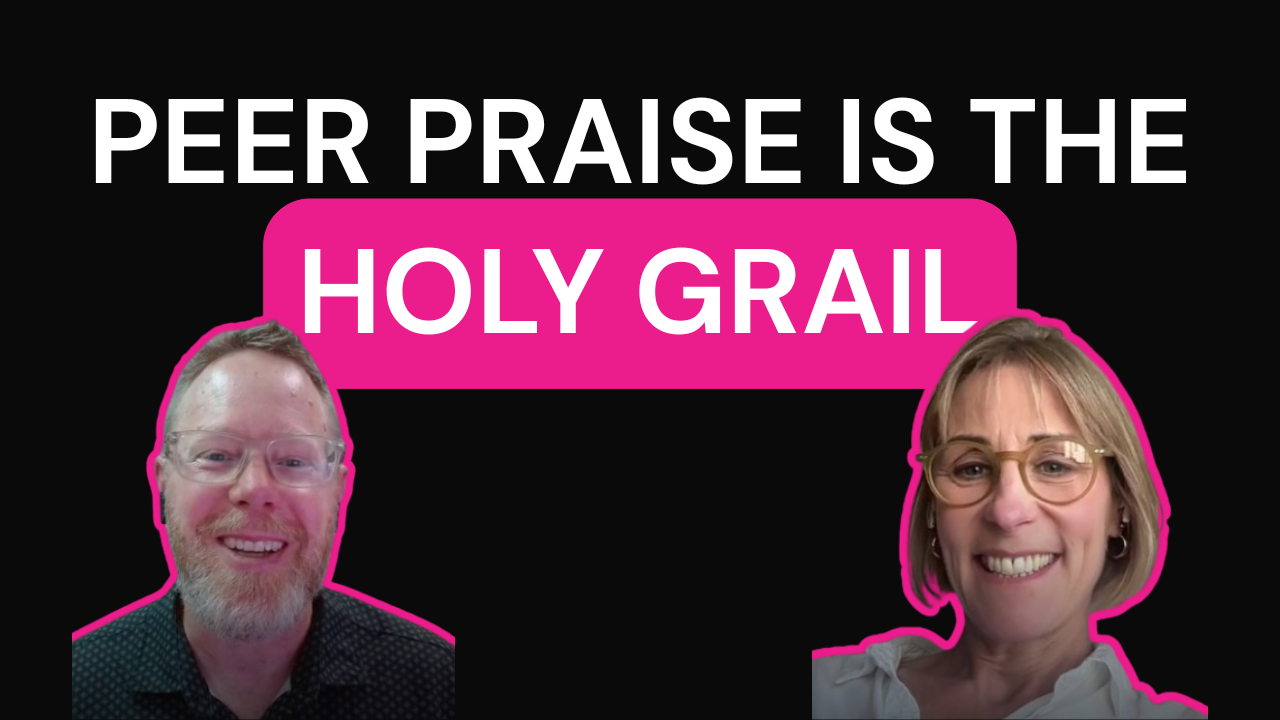
"Teacher acknowledgement is great. Peer acknowledgement is the holy grail."
— Rachael Thrash
"Who's the treasurer, who's the secretary — who cares is what I'm saying. What I care about is how you're treating each other and what we're doing collectively in this space."
— Rachael Thrash
"I am an AI optimist because I think that it's finally showing us that drill and kill is the most ridiculous thing ever."
— Rachael Thrash
"Every learner shapes this community. It has unique potential, and when each one of us contributes, we can create something beautiful."
— Rachael Thrash
🏃♀️ Your Do School Different Challenge
Ready to implement? Start here:
- Tomorrow: Pull aside one student who has never volunteered for a leadership role and ask what isn't working at school.
- This Month: Rebuild one faculty or student leadership meeting around a real question — "what would make this better for everyone?" — instead of a status update.
- This Semester: Set a recurring check-in to revisit your classroom and student leadership norms instead of leaving them posted and forgotten from week one.
🕰️ Episode Timestamps
- 00:00 - Why managing students differs from mobilizing them
- 05:11 - The quiet student who became a campus leader
- 10:23 - What the World Happiness Report reveals about isolation
- 11:58 - Helping English learners find voice through soccer4
- 14:53 - Applying student leadership tools to disconnected teachers
- 17:02 - Using cartoons to teach kids digital citizenship
- 24:58 - Why classroom norms need revisiting all year
- 27:25 - Why peer acknowledgment beats teacher praise
- 33:41 - Giving student work a real audience
- 37:57 - Why AI makes memorization obsolete in schools
- 40:00 - Shared responsibility over classroom control
- 42:48 - Three principles for building a dream campus
- 45:20 - The one thing every Ruckus Maker should remember
00:04
Speaker 1
We spend a lot of time worrying about the next generation, maybe too much time. We read the research, we go to conferences, we build the programs, and somewhere in all of that, we forget to just ask the kids in a real conversation where we actually listen. A student named Risa arrived at the International School of Helsinki not speaking the language, not knowing anyone, and by her own account, really lonely. Two years later, she was presenting at international conferences on belonging and student leadership. Someone made space for her voice and that was enough. There's a difference between managing students and mobilizing them. And when you invite them into that responsibility, something unexpected happens. You stop worrying about this generation and you start trusting them.
00:57
Speaker 1
My guest today is Rachael Thrash, author of Let the Learners Lead, senior Director of Education and Innovation at Big Bad Boo Studios, and someone who has spent 25 years figuring out how to build schools where every learner actually shapes the community. This conversation will change how you think about student voice and maybe your opening staff meeting. I'm Dan Watt and this is Better Leaders. Better Schools, the original Ruckus cast for visionary leaders who want to do school different, even within a traditional system, so that students are excited to be at school and learn. Thanks to Ruckus makers like you, this podcast ranks in the top 1% of over 4 million worldwide podcasts. So once again, thanks for listening and we'll be right back after a quick message from our show sponsors.
01:49
Speaker 2
You know that career quiz that tells you kid that they'd be great at healthcare and then nothing happens? Next Orchard goes further. Every student builds an actual plan with steps they can take. This week you can see it for yourself by going to betterleaders Orchard Careers. That's betterleaders Orchard Careers. Want to know how top schools create collaborative learning environments that actually work? ODP Business Solutions has equipped innovative educators for over three decades. Visit odpbusiness.com education and let's make a ruckus together. That's odpbusiness.com education IXL takes the guesswork out of lesson planning for teachers. IXL's ready made lesson plans are aligned to your textbooks and state standards, so teachers can turn to IXL for the exact content they need to help their students. You can get started [email protected] leaders. That's ixl.com leaders most professional development is forgotten by lunch, unfortunately.
03:14
Speaker 2
And that's because it's built for everyone and no one at the same time. Kids First Education prepares PD in a different way. They design every session around what your district or campus needs, what your priorities are. This episode is brought to you by Kids First Education. You can see how it works at Kids First LLC leaders. That's KidsFirst LLC leaders. There's a framework I built called the Ideal Week. It saves principals about 10 hours a month once they implement the system. Digital Danny can walk you through your version of the Ideal Week. Tonight, create your Ideal Week and [email protected] Ruckus that's my principalcoach.com Ruckus.
04:13
Speaker 1
Hello, my name is Dan Watt and I'm here today joined by Rachael Thrash. Rachael is senior director of Education and Innovation at Big Bad Boo Studios and an international educator, author and speaker with over 25 years of experience in curriculum design, student agency and school culture development. Good morning or good day, Rachael.
04:39
Speaker 3
Nice to be here, Dan.
04:41
Speaker 1
Yes, thank you for joining me. I didn't mention as well, you're also the author of Let the Learners Lead. Is that book out yet or coming out soon?
04:50
Speaker 3
It's out, so it came out May 6th. It's through Rutledge, but it can you can purchase it at any of the major booksellers.
04:57
Speaker 1
Fantastic. Well, and we'll get to that more soon, but I thought maybe we could open with the conversation we started about your experience at the International School of Helsinki and the student from Japan. Tell me more.
05:11
Speaker 3
Oh, I would love to tell you about Risa. So Risa was a young woman who entered the International School of Helsinki having never lived outside of Japan before. And at ish, the language of instruction was English. And Risa was still developing her English skills. So I met her in ninth grade and she was very understandably withdrawn, not really part of the community in a lot of respects, really quiet. And unfortunately for her, in the ninth grade there was not another Japanese speaker. And so she really came across as quite isolated and lonely. And somewhere in the end of her ninth grade year, I was running a student leadership retreat and I invited all students. This was not the kind of retreat that you had. You already have proven yourself as a leader.
06:03
Speaker 3
I very intentionally went to a variety of students who hadn't participated in much and said, hey, you know what? We need different voices. We need to hear what's worked in the past for you with student leadership or what isn't working at our school. And Risa had the courage to come on this trip and she sat in a couple of sessions in which were problem solving what is possible if we're going to be really visionary about. And in fact, we even did an exercise if somebody came and interviewed our school in 20 years and said, you have the most impactful student leadership in the world. What would they see? And so kids started opening up about some of the problems, some of the things they didn't like at school. And not in a I don't like the school lunch kind of way.
06:51
Speaker 3
But like sometimes I don't feel comfortable with this. Sometimes these kids, I feel left out, or sometimes these teachers aren't respecting my voices. And Lisa moved from seeing herself as the outsider to recognizing that other people were feeling some of the same feelings. And by the end of that day, she took me aside and she said to me, Ms. Thrash, I want to tell you that I noticed someone was being bullied. And so her first step was to advocate for someone else. And she said, this girl, I notice it's not very comfortable in pe and we started talking about solutions. Well, what can we do about it? Fast forward two years. Risa had started a bipoc listening circle. She had joined in a number of different initiatives to capture different kids voices. And she really saw her and she made a number of friends.
07:44
Speaker 3
She even had the courage to go with me to an international school conference for adults and present on the value of student leadership that promotes belonging for everyone. And I just think about all the Reese's out there who are not, who think that no one cares about their voice because they don't want to put themselves out there for an election or nobody has asked them. But really those kids have such rich observations about how school really feels and what can be done about it. And if we can empower those kids, the change that is possible in the.
08:21
Speaker 1
School, so much to unpack there so many Reese's. I'm curious what you think encouraged that student, that young person to be so vulnerable, to act courageously.
08:37
Speaker 3
Yeah. You know what's really fantastic about Risa is that I, when I wrote my book, I followed up with her and I interviewed her who she's now a student at the University of Toronto. And she was able to reflect back because I said, risa, that was so courageous of you. What made you go on that trip? And she said, you know what, I was so lonely. And you talked about having a really nice lunch. Sometimes it's the trappings of making kids feel honored and that it's not a privilege. You know, we're not saying it's a privilege for you to join, we're saying it's our privilege if you will share your opinions and making them feel valued. And she said, I said to myself, if I'm ever going to Try to make it with this community.
09:25
Speaker 3
I've got to at least do this one thing that doesn't seem very hard. And once I got there and people actually wanted to hear what I had to say, I started to get a little bit more courageous. And the more times that happened, the more support I got from you and from other students. Then it kept pushing me along and.
09:48
Speaker 1
I felt valued and all that in a second language to boot.
09:53
Speaker 3
Oh yeah,.
09:55
Speaker 1
I, I think everyone's probably had a similar experience either as a second language learner or being in a classroom with the second language learner and wondering what that must be like. You spoke a little bit about the vulnerability of that person. And I'm super captivated by the courageousness to put yourself out there and how else? What more can we do to empower students in that way?
10:23
Speaker 3
I read some research recently out of Stanford and it was part of the Happiness the World Happiness Report. And there was a chapter on young people specifically and the, a couple of Stanford researchers. And I wish I had their names off the top of my head, but I don't. But you can look up the World Happiness Report. It's, it's openly accessible. And they talked about how young people are feeling. You know, we know all the statistics about people are feeling more isolated and young kids are developing these crucial skills. But they did a study talking with kids about their assessment of other people their age, and they assessed that other people their age didn't really want to get to know them. And then they asked the people in the study, well, do you want to get to know other people?
11:09
Speaker 3
Do you have the kind of social skills and empathy that you actually would like to talk to? Oh, yes, I do. Right. The individual reported that they wanted to connect, but their perception of what their peers wanted was that they didn't want to connect. So what they found was when they could break down that isolation or disconnection, then they could move beyond the perception that other people don't really want to talk to me. And so what that looks like in practice. I'll tell you another story from a school I worked with. I went in with a teacher, an ESL teacher. ELL teacher reached out to me because she was working at a school in Portland, Maine, a charter school. And it's a project based school, math and sciences, kind of a magnet school situation.
11:58
Speaker 3
And she was working with a group of learners from Angola, and they were the group in the school who had the least proficiency in English. And she noted that when she was with them, she Was also their advisor and teaching them, helping them with English. They talked about some, not a lot. But when they got mainstreamed into group projects, they shut down. They weren't talking at all. And she was really worried about them. And so she brought me in to help problem solve around, how can you feel more comfortable and like a leader in this community? And so we did some activities, first just building connection and then a little bit of visioning work to say, hey, what could make this school better for everyone? Not just you, but for everyone?
12:43
Speaker 3
And that activity started to open kids up to saying, I feel really dumb when I'm in a group project, when no one talks to me or when they make assumptions about how I learn. I feel really lonely. Or, there's not even any soccer at this school. I really wish there was soccer. And when they started sharing how they felt it validated. They went from thinking, it's just. Just me. How embarrassing to this is a problem a number of us share. And then they started being able to say, okay, well, what could we do differently here? Maybe there's. We can't change the whole system. I can't magically be really comfortable with English, but maybe I can try to build some soccer opportunities. And these kids ultimately went to the administration who wanted to help them. You know, they also.
13:32
Speaker 3
It's really interesting to start to see. See the presumptions kids make. They presume adults don't necessarily want to help them. When you know very well, against a school leader, we're sitting around being like, we want to help you, but how we get them to a sense of comfort expressing the help they need. So they went to the school administrators and said, hey, we think it would be great if we could organize some soccer. And they were dumbfounded to find out that the school administrators were like, great, we'll make time in the schedule. We'll coordinate with the city park. And then they made a couple of different soccer tournaments, and other kids then wanted to talk to them. They built community, and it translated into them doing better in their academic classes because they were willing to raise their hand. Right.
14:17
Speaker 3
I mean, this is all connected. This, like, feeling that you matter, that it's okay to make mistakes. It's not magic. It's inviting kids to be their real selves in a school environment, but guiding.
14:33
Speaker 1
Them through, well, feeding them first. Feeding them always guiding them through the initial stage of feeling vulnerable in a supported way so that they feel seen, heard, and understood.
14:47
Speaker 2
Yes.
14:48
Speaker 1
I'm curious, how well do you think that translates to working with adults Oh,.
14:53
Speaker 3
I think it translates it well. I'd done work using some of the same protocols with adults. In fact, I worked with a school in Maine that the faculty was feeling a little disconnected from one another. A really small faculty ahead of school and ahead of school was feeling like she had to be in charge of every initiative and people would come into faculty meetings and kind of like, how long is this going to take? You know, that sort of apathy, perhaps, and not necessarily taking charge of the culture. And so we did some work saying how could we use faculty meetings in a way that feels really engaging to everyone and shares the responsibility? And it was fascinating to see what came up.
15:39
Speaker 3
Some of the new teachers started talking about there seems to be an implicit culture that no one has explained to us. And so it feels like if we suggest something, it is going to be vetoed because it's not part of the culture. But we don't know what the culture is. And some of the older teachers said, well, you can't define the culture. It's just either it is or it isn't. And once they heard themselves say that and then they heard the perception of the new teachers, they came to the recognition that they actually needed to do some articulation of the culture and work on how do we onboard new people so it's transparent and everyone has a voice and how do we structure faculty meetings so there's a more collaboration.
16:26
Speaker 3
So I agree with you very much that what some of our teachers are experiencing is the same thing that what some of our students are experiencing. And if we can open up opportunities for people to contribute, they have a greater sense of even accountability. Like this is. I'm building this, I care about it. As opposed to, I'm here for six hours today and I can't wait to get out the door because it doesn't matter what I say.
16:53
Speaker 2
Yeah.
16:53
Speaker 1
Accountability and responsibility.
16:56
Speaker 2
Yes.
16:57
Speaker 1
So I guess the big question is how do we do that? How do we shift those opportunities in schools?
17:02
Speaker 3
Absolutely. And that's what I think that's something we really struggle with because we're so focused on getting through these different learning goals and we forget that you can't get. There's no getting through everything's process. Right. Some of the work I do with Big Bad Boo, I've been really intrigued by. What we do at Big Bad Boo is we create cartoons. And the cartoons show children from all over the world really multicultural, learning how to get along with one another, how to face some of the issues that inevitably come up in life based on Developmental stages. And they can be. And it's cartoon, so it can also be really funny. There's actually research showing that you learn better when you're laughing. Right. So sometimes you'll see a kid.
17:52
Speaker 3
One of our programs is a girl named Judge Jody, and she's a third grader of Indian heritage, and she set up a courtroom in her backyard to help mediate disputes in the neighborhood. So these silly disputes come up like, I'm running for, you know, student council, but she accused me of being a vampire. And the girl who accused him of being a vampire says, well, I'm just saying, I've never seen him eat Garlet. I, you know, he doesn't seem to be around and like, he doesn't seem to like sunny spots on the playground. And so the kids watch this go on and it's funny. But they also learn to think about what's a rumor, what are some of the sources where we're getting our information? How do we check who's being impacted by false information? And that helps them think about digital citizenship.
18:49
Speaker 3
It helps them think about how relationships are impacted when things aren't true and communication breaks down. But what I find in this work, so that works more in elementary school. So when you bring in a resource like that and you ask kids, have you ever heard a rumor? Did you check if it was true or not? And they start talking about it and they're. And then they know a cartoon's coming, so they get to watch the cartoon. And then we ask them, if you were Judge Jodi, what would you decide? So they think about the two sides of the case. And ultimately they talk about how we really wanted to talk about rumors, but we didn't know how to Right. So some of the work is inviting kids into talking about the things that matter to them in a way that doesn't feel didactic.
19:38
Speaker 3
You know, when teachers come in and lecture to a school about. Or kids in a school about how they're treating each other, about, you know, social media, about behavior kids turn off. But when we invite them into. What do you do if there's a rumor? This is a funny thing. You know, this is a safe resource we can all talk about. Or what would we love to see our student leadership do at this school? Then they can be visionary. They're not put on the spot. And that changes the mind frame. It changes them into kind of the responsibility and kind of design thinking for complex problems. And it's fun. You know, everybody, I think everybody likes to be asked their opinion and given some chance to try it out.
20:29
Speaker 3
And I think the more space we can make for that, the more we're inviting kids to be critical thinkers and responsible for their own situation in a school, their own experience of schooling.
20:41
Speaker 1
Yeah. Especially after you've set the stage by giving them permission to be a little bit vulnerable and coaching them through that.
20:49
Speaker 3
Absolutely. And, and I think a lot of that also comes to modeling. You know, in my teaching, I would always, you know, you're an educator. Sometimes a lesson fails, it just fails. After the best of inventions, you're looking, everybody's got a blank face or they're bored or they're distracted. And I had a practice. I'm not in the classroom right now, but I would always either stop in the moment or go home, reflect on it and come back and say, hey, that didn't go very well. These were my intentions. This is what actually happened. Why can you help me problem solve? And inviting kids into that, giving me some purposeful feedback, holding them accountable too, to say, well, okay, you might want. Oftentimes they'll say, oh no, it was great. I'm like, no, it wasn't because. Because you look distracted. So was that you?
21:45
Speaker 3
Were you not holding up your end of the learning responsibility or was that me? And how can we talk about our collaborative responsibility in this classroom to create spaces to learn and grow and they'll give you. I mean, I've had some of the best professional development through that simple conversation, dumped whole lessons, improved units and how valued kids feel when I go back to them. I mean, I would love to stop a kid in the hall and I'll say, you know, when you told me that project could have been better last year, I improved it this year. And this is what some of the outcomes are. And that kid walks off, you know, 10ft tall because they had an impact on learning for the next generation, if you will, of students.
22:29
Speaker 1
Well, and that's come up a couple times now that circling back, but with an individual, which is sometimes a tricky thing to get to when we're dealing with the capacity of schools. But making those one to one connections seems to be a really important piece of what you're talking about.
22:46
Speaker 3
It does. But I also would say that the place in which this can be scalable is building in reflection time for a group. And so if we're doing things like student leadership, there's going to be conflict in student leadership groups. And, and you're going to have one group of kids is planning a special day to promote awareness of an environmental, I don't know, day in the community. And another group is going to say, well, we want the can drive on the same day. It doesn't matter. It always happens. Right. And we could just plow ahead and we as adults could just solve for those problems and make sure nobody is in conflict. But that is the biggest loss. We can do group reflection on how to solve for some of these problems.
23:35
Speaker 3
So like in my book, I have a tool to think about kids sitting down and saying, okay, we have this conflict. Now I want you to voice that conflict from the other students perspective. What did they see? And this isn't revolutionary. I mean, this is a common practice. But. But if you take the time to do it with student leadership groups, then the other group say, well, maybe they were thinking this way. Now let's reframe that together. What could we have done and what should we have done later? And they get into a practice of learning not just through the successes. It's great to celebrate the successes, but also through the moments that got really sticky.
24:16
Speaker 3
And we're showing kids that adults aren't going to solve those problems for you because you know, you could have gone in and solved that problem, but you're also going to have hurt feelings. You're going to have little isolated groups being like, they did that for my abuse. Right. You have to help them name that. Those things are natural human nature. Conflict erupts. And it's possible to use that conflict toward growth.
24:42
Speaker 2
Yeah.
24:43
Speaker 1
Regularly and consistently over time. Like, like coaches do. Almost like a spiral of inquiry.
24:49
Speaker 3
Yes.
24:51
Speaker 1
Keep coming back to it and setting the stage with cultural norms which can be revisited and added to over time too.
24:58
Speaker 3
Hey, I completely agree with you. And actually that's a tool in the book as well. But where the kids. I think that interestingly, we have a lot of teachers who start off a school year thinking about what are our norms and helping kids develop them. Oftentimes one of my critiques of that is it happens in week one. And then we forget to keep revisiting them. So we have these norms and we create them in the week that everyone is at their best behavior. Like everyone is looking to impress the teacher. They're still wearing their new school clothes, and that's when we ask them to create the norms and then we never revisit them. And then even worse, in student leadership, I think we sometimes bypass even creating norms.
25:44
Speaker 3
We get into this weird simulation of democracy where we're like, who's the treasurer, who's the Secretary who cares is what I'm saying. What I care about is how you're treating each other and what we're doing collectively in this space. And so if we're starting off in our classrooms and in student leadership spaces and in teams, we with this idea of what are our collective agreements to each other, what do we aim? What do you aim, Dan? To get out of being in this space. But also what do you hope the person next to you can get? And what do we have to agree together? And then a really important piece is revisiting those norms. So if someone makes a mistake, someone starts talking to somebody, is distracting them, somebody is belittling someone, rather than saying, you can't do that in this classroom.
26:35
Speaker 3
That's against the guidelines. Instead going back to the norms and saying, how is that contributing to our classroom? Or maybe is there a way we can fix that? Because I'm noticing something that isn't coming up. But the corollary to that I think we often forget to do is celebrating regularly when the norms are going so well. So I used to love to come into my class or into my student leadership group and be like, you know what I noticed yesterday? I left here feeling so good because that person helped that other person and that person had an aha moment, and we slowed down enough for it, you know, and celebrating those ways in which the community is working, not just assuming that those. That kids already acknowledge those or recognize them, and thinking about how everyone's contributing.
27:25
Speaker 3
So if they get that little nod of approval and that you're going to keep doing that again because it's been recognized and even further, coaching other kids to recognize that in each other, because that's when you know, especially as you're getting into adolescence, teacher acknowledgement is great. Peer acknowledgement is the holy grail.
27:45
Speaker 1
Absolutely.
27:49
Speaker 2
Quick word from our partner. Orchard. Here's a student you already know. Good grades, no discipline issues, never shows up on a single report as a problem. Then senior year hits, and they're sitting in the counselor's office panicking, with no direction, no goals, no plan for what's next. They were invisible until it was almost too late. Orchard catches that kid early. Early enough for you to do something. Every student builds a career plan starting as young as middle school. And counselors can see exactly who's falling behind by grade before it becomes a crisis. That's how you shift from reacting to leading. Learn for yourself. See it for yourself at BetterLeaders Orchard Careers. That's BetterLeaders Orchard Careers. ODP Business Solutions, formerly Office Depot Business Solutions Division, has been a trusted partner for schools for 30 years.
28:54
Speaker 2
At ODP Business Solutions, we're by your side to meet your evolving education needs. Remember that feeling when you wanted to upgrade your learning spaces but the budget said maybe next year? Here's what most people don't know. ODP Business Solutions doesn't just offer competitive pricing. We give you access to negotiated cooperative contracts and that maximize every dollar. Want proof? We helped the Baldwin School district transform their entire campus while staying under budget. How? By combining smart design with smarter purchasing. From essential supplies to cutting edge tech, from sustainable cleaning solutions to flexible furniture, we're your one stop shop to do school different. And the best part? You can get it all from a single supplier that helps you simplify ordering and streamlining budgeting while staying compliant with easy access to cooperative contracts.
29:52
Speaker 2
However you want to advance, ODP Business Solutions has 30 years of experience helping districts like yours get ahead. Visit ODPbusiness.comeducation to learn more. That's ODPbusiness.com education what makes an assessment effective? I would argue giving teachers access to quick, reliable and useful results that inform the next best steps for teaching. And that's where IXL really stands out. Teachers get powerful insights into student performance on a daily basis so they can address issues the moment they arise. Imagine that adjusting instruction in real time before it's too late. Your teachers have a tool that helps them be even more effective. And your students? They grow. And they grow. Check it out for [email protected] leaders that's ixl.com leaders here's something we don't say Enough. The person that's holding a school or district together is often the one that gets the least amount of support.
31:07
Speaker 2
Principals, assistant principals, district leaders. You're coaching everybody else. Kids First Education is built to support you, and the results speak for themselves. 99% Of educators found their Kids first coach knowledgeable. Nearly all said the sessions they led connected to the district's priorities. And 98% of participants walked out ready to use what they learned that week. That's what happens when professional learning is designed around your context, not pulled off a shelf. Partner with Kids first and learn more at Kids First LLC Leaders. That's Kids First LLC Leaders. One of my favorite moments in coaching is when a principal realizes they don't have a problem. They just have a problem someone else has already solved. Meaning there's an automatic school tool that I've built for it. They just didn't know which one to grab.
32:12
Speaker 2
Reactive Calendar Then use The ideal week, new principle, trying to figure out the first 90 days. Then you go to the entry plan bottleneck happening in your own office. That's a lead domino conversation. I've built 36 tools across the automatic school framework. Most leaders don't need more strategy. They need the right tool applied in their exact situation. Tonight, Digital Danny does the diagnosis. He knows every tool I've ever built, when to use it, and how to walk you through it for your campus. You get started with Digital Danny at my principal coach.com Ruckus that's my principal coach.com RuckUS.
33:06
Speaker 1
It's perfect timing. I've been redesigning my staff handbook and laying out my school for next year in a sense. Right. And what you're saying has me thinking about how do I build that in so that it's not a one and done in September at Startup, but that it's something we revisit as a staff on a regular basis at our staff meetings each month or how else is it built in to our school culture so that you use the term a lab for civic engagement? How do we ensure that there's plans for that lab to take place over the course of the year?
33:41
Speaker 3
And I think part of that also is providing an authentic audience. So in schools, I think we far too often imagine that learning ends when we turn in something that shows that we mastered that learning. And then it's typically an audience of one, a teacher who gives you a grade and that's very difficult to. And then. And then we'll even take it further, like, oh, don't compare grades. So the one place where a child is having an opportunity to show their learning is either oftentimes they're told they didn't do it well enough or they're not supposed to share it. And that seems to me quite the opposite of what we know about human motivation, that if you're going to do something, you want it to mean something to someone else and you want to see if it actually had impact.
34:36
Speaker 3
So I think if we're building in opportunities for either adults in the professional learning they're doing or students if they're trying to make change in the community. Going back to Risa, I don't think it's a mistake that she had a bipoc listening circle that she established. And I mentioned in the beginning that I took her to a couple international conferences. Some of them were virtual, but in order to share her knowledge. So that was affirming. She was like, what I have to say is really important. So Some of my learning matters to other people, and some of that might just be small. How are you sharing with a peer? How are you sharing with the community? One of my favorite projects I used to do in the 10th grade when I was teaching language and literature is we would talk about.
35:25
Speaker 3
We had a unit called how do youo Resist? And we talked about literature that was either visionary or realistic fiction as an opportunity to show inequity in society. And we talked about these two mediums, right? Which is better to show people how it can be or show them the pain of what is right? And then I coordinated with a local cafe to have a student installation of resistance art. And the kids got to pursue their own project on something they wanted to change minds in the neighborhood about. And so they. It was male mental health, it was eating disorders, it was school pressure, it was racism around Covid. And they would create artwork that used symbolism. So we borrowed it from our literature and it was, do you want to use realistic or do you want to use visionary?
36:19
Speaker 3
And they would put together these beautiful pieces of art and then display them in a local public, just almost like a fast food restaurant to a degree. We were in Finland, it was called Fafa's. And all of these people would come by and see what kids had to say. And the kids, I would have them do the opening, and it was really public. And sometimes their families would come by and sometimes just a random person looking to buy a falafel. And one girl came up to me and she said, Ms. Thrash, someone was talking about my artwork. I have goosebumps. And that, you know, that sense that what you say matters. Other people care. And we have to show them that if we want them to be people who participate in democracies.
37:07
Speaker 3
Not if you follow all these rules and you take all these tests and you do better on the test than anyone else, you're going to go to an elite school and make money. I think this is way too much of the messaging our kids are getting. When we can say, look, when you do something that helps other people look, you just got goosebumps. How can we continue helping other people feel that? Goosebumps. How can you be a contributing member of our community?
37:34
Speaker 1
And that's where I was going with my next question. I'm curious how we continue that dialogue about what's working, what's not working, how you. You circle back to Risa, you said 10 years later, how do we. How do we continue that?
37:49
Speaker 3
Do you mean in the field of education, like, how do we talk to Each other or how do we continue helping our kids make that kind of impact?
37:56
Speaker 1
Yes and yes.
37:57
Speaker 3
Okay. So, you know, I am an AI optimist because I think that it's finally showing us that drill and kill is the most ridiculous thing ever. That high stakes testing is not the most impactful way for students to show their knowledge, and that some of these very basic, you know, what we. What we call rigor, which is really just memorizing a bunch of stuff, is not good enough. And it's not going to compare our young people. Not compare. Sorry. Prepare our young people for the complexity of society we're facing. And so I think that we have an opportunity now to help our young people be. There's a lot of us out here who are panicked about where kids are right now, and a lot of headlines about mental health and isolation and. Okay, here's an opportunity. Let's ask kids, is this working for you?
38:57
Speaker 3
Is this learning working for you? I think with AI, a lot of schools, you know, Sweden just went about faith in their policy toward using technology in classrooms. They had been all in on technology, and now they're like, no tech devices. I think that's too swinging the pendulum too hard. And we need to be including kids in thinking about the impact of what we're doing, how we're doing it. And this needs to be part of the practice of teaching. So how talk to a kid at the end? You know, we have great. We have great methods of saying, what's the exit ticket? What did you learn? How could you have learned more? We need to continue bringing them in and not get so panicked that we need to redesign all of education. We need to actually use what is learner centered.
39:46
Speaker 3
What allows them to think and say, yeah, there's new tools. How are you going to use them in a way that you can still prove to me that you learn something and not even prove it to me. Prove it to yourself, because you want to feel that you've grown.
40:00
Speaker 1
That means the adults need to model vulnerability too, because we don't have it all figured out.
40:07
Speaker 3
We don't have it all figured out. I love when we talk about classroom management, to talk to the kids, to say transparently, look, if you all decided to rebel, I mean, obviously this is developmental. I wouldn't do this with kindergarteners because they wouldn't understand it. But with older kids, if you all decided to not listen to me, the game would be over. So if you're looking at me to regulate your behavior, then you're not taking responsibility for yourself. Or your classmates. The truth here is, if we're going to be transparent is we have to do this as a group. And the same goes for out in society. If, if the supermarket line breaks into chaos, it's because each one of those people let it happen.
40:55
Speaker 3
So how can you be a person who invites other people in to creating communities of, you know, I, I don't know if you know Barbara Wheatley at all in her work Creating Islands of Sanity. I think she talks a lot about right now. Society feels so complicated and we're kind of like, you know, late stage capitalism. And when we're only looking at what we can't solve for, we become really defeated. But if instead we're looking at these smaller groups in our schools, in our communities, with our friend groups and we respect each other, think about the individual dignity of each member of this group, we can actually rebuild our sense of empowerment and our sense of purpose.
41:41
Speaker 3
And I think we owe it to our teachers at our schools to feel engaged in that work and we owe it to our students to start to build. This sense of all is not lost, especially if you take it step by.
41:58
Speaker 1
Step and a responsibility in a sense, by extension to our communities. Yes, it's a great segue to the marquee question. If you could put one message on all school marquees around the world for a single day. And let's say grocery store marquees too, since you mentioned it.
42:16
Speaker 3
Good.
42:17
Speaker 1
What would your message be?
42:18
Speaker 3
I think it would be every learner shapes this community. Just a reminder that there are no people who, that there's never been this community before, that it has unique potential and when each one of us contributes, we can create something beautiful. So this is not you transform, we're going to transform you. You go into this school, you're going to transform us because you've shown up here today and we're willing to make space for that transformation.
42:48
Speaker 1
That's a lovely message. Well, and how about your dream school? You're building this dream school from the ground up. You're not limited by any resources. Your only constraint is your ability to imagine. What are the three guiding principles for building your dream campus?
43:05
Speaker 3
Number one. Thank you. I'm so excited to have all those resources, but I think my guiding principles is take the time to make sure everyone feels connected. So building that trust, if we had all the resources in the world, that also is going to give me the resource of time so people don't rush through that essential work of making sure everyone is known and everyone can share their different identities and feel comfortable learning from each other. So setting that groundwork of safety is number one. I think my second principle is that everyone has a chance to try something ambitious. And that ambitious thing should be something that matters to them and clearly matters to other people. So I think too much in school, we're preparing for some unknown future. Like, you need to know this. You have to remember this.
44:01
Speaker 3
These are all the skills. Just try them. Start doing something ambitious, and then your curiosity is going to spark you into learning new things, doing something different, feeling that your work matters, it's not just rote. And then my third principle would be the support for risk taking that would require. So everyone feels like it's really safe to try something ambitious and maybe fail and given the support to process what that failure looks like. And then all the time and resources to celebrate both the failures and the successes and a whole variety of successes because we're way too limited in what we think of as success in school. And sometimes kids will be doing amazing things. We don't even notice or acknowledge it. And they.
44:51
Speaker 3
It's like off in the background and it can be part of their identity and make them feel so much more valued if we're celebrating the right things. So those are the principles. I'd love the money to do it.
45:05
Speaker 1
I think I might be sharing those in my welcome back staff meeting. Those are great.
45:10
Speaker 3
Pull out. Thank you.
45:12
Speaker 1
And finally, the one thing to remember of everything we discussed today, Rachael, what's the one thing you want a ruckus maker to remember?
45:20
Speaker 3
I want a ruckus maker to remember. Stop worrying about this next generation. Like we spend way too much time angsting over them and instead invite them in to helping us solve for the problems. Because it's going to do two things. It's going to be meaningful for them. They're going to feel like it matters that you value their opinion. But it's also going to make educators feel better. Because when you start to see what kids are capable of, what they actually care about, you relax and you say, oh, this next generation is actually pretty amazing, as have been all other generations. But if we work together, if we co create it's going to make everybody calm down a little bit and focus on the things that actually are important to educating people for what's coming.
46:08
Speaker 3
We never know what's coming, but if people enjoy solving problems, we're going to be fine.
46:13
Speaker 1
What a great note to end on. Thank you, Rachael. Really appreciate our conversation today. And in closing, I have a question. For you. And is there anything I can do to help?
46:23
Speaker 3
Oh, that's a really interesting question. Well, thank you for including me on your podcast. You can help by following up if you do share any of those ideas in your opening messages if they land. And I think just this sense that sharing the idea that young people do want to talk about hard ideas and if we set it up in a way that feels safe that we're going to, we can revolutionize schools. And I'm very happy to. You know, I'm happy I have a book out that gives some of the tools to do that. I'm happy I get to work with a company, Big Bad Boo that is so passionate about including every learner and making sure that they see feel seen. So you know and reach out to me if you hear any other interesting raised it.
47:12
Speaker 3
There's nothing I like more than collaborating and learning about other people doing similar work. So let's stay in touch.
47:19
Speaker 1
Sounds great. Will do.
47:21
Speaker 3
All right. Thank you so much Dan. Enjoy the rest of your summer and I look forward to collaborating again.
47:28
Speaker 1
Awesome. Hey Ruckus Maker, thanks again for pressing play. I hope you enjoyed this episode as much as I did. One thing Rachael taught me is that anything is possible when we set the stage for our learners and invite them into the creation of today community. This matters because Ruckus Makers, like you do school different and if education ain't a bit disruptive, then what are students actually learning? Ruckus Makers create a campus experience we're showing up for. And before you go, if today's episode sparked an idea or shifted your thinking, then you'll love the Ruckus Maker Mastermind, a private community of innovative school leaders who meet weekly to grow, reflect and disrupt the status quo. Create the campus experience your staff and students deserve. Applications are now Open now at betterleadersbetterschools.com apply. You can also subscribe to the Ruckus Maker newsletter.
48:27
Speaker 1
Three new opportunities to do school different each week. Trusted by over 5,000 forward thinking leaders. Join free at Ruckusmakers News and check out my Principal Coach, your AI powered leadership mentor trained on 10 years of mastermind and coaching experience. It's like having a world class Ruckus Maker mentor in your pocket. Start your seven day free trial at myprincipalcoach.com.
Connect With Rachael Thrash
🌍 Website: Bigbadboo.com/education
🔗 LinkedIn: linkedin.com/in/rachael-thrash-9688091b
🎧 Listen & Subscribe
Listen to Better Leaders Better Schools on Apple Podcasts, Spotify, Youtube or wherever you get your podcasts. If today's episode moved you, leave a review — it helps more Ruckus Makers find the show.
🧔🏻♂️ Your SelfMentorship Guide
Meet Digital Danny — your Self Mentorship guide. Always available, never forgets, and evolves with you. Think through your next leadership move at myprincipalcoach.com
🫶 Today's Ruckuscast Partners
IXL
IXL's adaptive platform finds every student's knowledge gaps, adjusts difficulty as they learn, and gives you a dashboard showing exactly where growth is happening. Over 1 million teachers use it
💟 Get started at https://ixl.com/leaders
ODP Business Solutions®
ODP Business Solutions has supplied schools for 30 years — converting dead computer labs into STEAM centers, stocking multiple campuses, upgrading whiteboards to interactive displays — all from a single supplier through cooperative contracts.
💟 Learn more at https://odpbusiness.com/education
Orchard
Orchard gives every student a personalized career action plan and scores readiness across 8 dimensions — a number you can take to your board.
💟 See how it works at https://betterleaders.orchard.careers
Kids First Education
Kids First Education builds professional learning around your district's priorities, your data, and your classrooms — not pulled off a shelf — and 98% of educators walk out ready to use what they learned.
💟 Partner with them at https://kidsfirst.llc/leaders
Twelve Practices LLC © 2026 | If Education Ain't a Bit Disruptive, Then What Are Your Students Learning?


