Founder of The Institute for Arts Integration & STEAM and host of the Art Works for Teachers podcast, she has spent more than two decades leading creative curriculum design in schools. A former music educator, she helps school leaders build innovative, student-centered learning environments where creativity is treated as a system, not an accident.
Her work has been featured by Edutopia, Education Week, and ASCD, and her resources reach millions of educators every year. She is Susan M. Riley, author of the new book Creativity's Edge, which explores why creativity is the defining skill of the AI era and how educators and leaders can cultivate it with purpose. Find her work at The Institute for Arts Integration & STEAM.
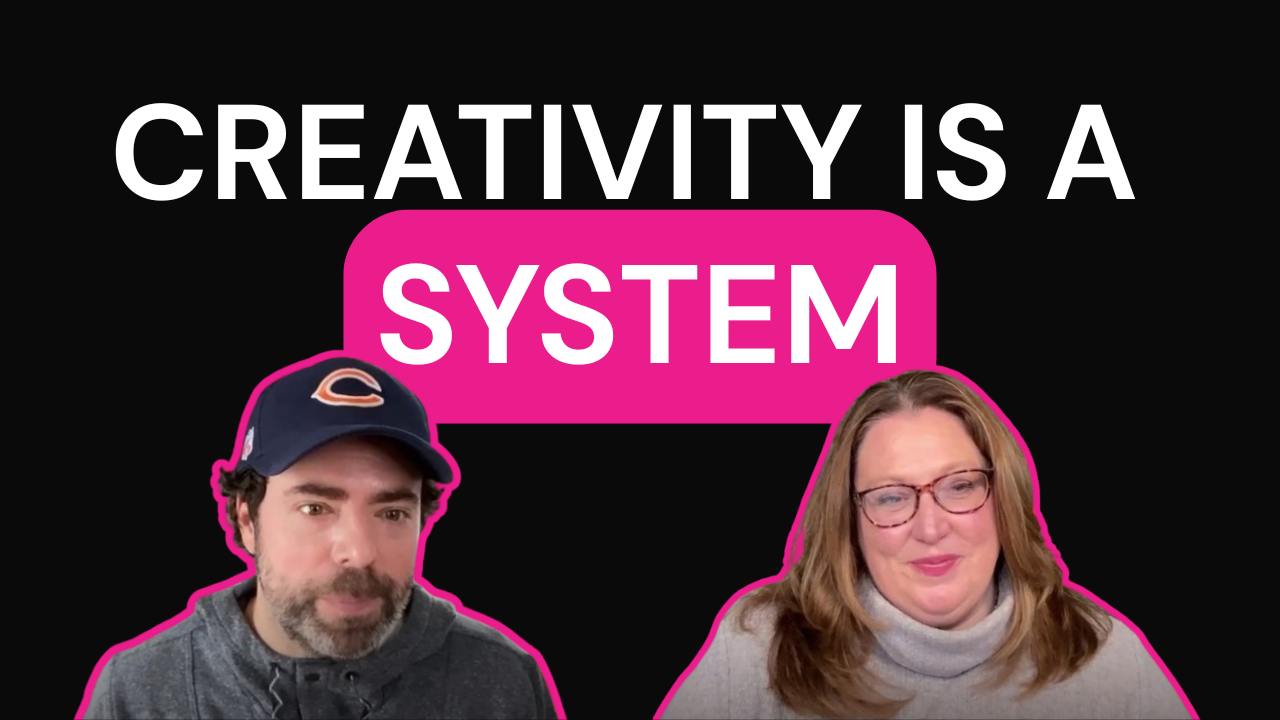
Most school leaders are stuck asking how to compete with AI — but creativity researcher Susan Riley says that's the wrong question entirely. In this episode, she breaks down creativity in schools as a system with four distinct branches, most of which never get touched inside a typical classroom. If you're trying to build a campus where creative thinking isn't reserved for art class, this conversation gives you the framework to start.
👨🏫 What You'll Learn
- The four branches of creativity most schools never intentionally build.
- Why creativity — not knowledge — is becoming the real dividing line between students and AI.
- How a simple daily habit can turn creativity into a repeatable practice instead of a rare spark.
- Why adding constraints, not removing them, produces your team's best creative work.
- A five-minute walking exercise any leader can run tomorrow to see their campus differently.
🫶 Key Insight #1: The Four Branches of Creativity Every School Leader Should Know
- What's broken: Schools treat creativity as one narrow skill — usually the art room — so a student or teacher who "can't draw" assumes they're not creative.
- The shift: Creativity actually breaks into four branches: creative skills, creative application, creative thinking, and creative expression — and most schools only ever cultivate one or two.
- Impact: Leaders who intentionally build all four branches give every student and teacher an entry point into creativity, not just the ones already comfortable in art class.
📚 Key Insight #2: Why Creativity Is the Human Advantage Over AI
- What's broken: Most educators are asking "how do we compete with AI" instead of building the human skills AI can't replicate.
- The shift: Creativity and curiosity work together as a trainable daily practice — the questions a student or leader asks matter more than any answer AI can generate.
- Impact: Schools that build creative and critical thinking as an everyday system, not an occasional unit, prepare students for the work AI genuinely can't do over the next five to ten years.
🧠 Key Insight #3: Constraints in School Leadership Don't Kill Creativity — They Fuel It
- What's broken: Leaders treat budget cuts, time limits, and other constraints as walls that shut creativity down.
- The shift: Research shows the more a team is constrained, the more creativity flourishes — reframe a constraint as a game to play instead of a problem to survive.
- Impact: Schools that rehearse constraint scenarios in advance, like planning for a hypothetical 20% budget cut, respond calmly instead of panicking when real cuts hit — which is exactly what happened when federal title funding was paused in July.
💬 SUSAN RILEY QUOTES FROM THE RUCKUSCAST
"Creativity is a system. It's not a secret."
— Susan Riley
"Where your gap and your capacity meet is where creativity lives."
— Susan Riley
"The more you fail, the more you learn, the more you fail, the more creative you have to be."
— Susan Riley
"I create, before I consume. That's my motto."
— Susan Riley
"Leaders are just elevated educators."
— Susan Riley
"The more we are constrained, the more creativity flourishes."
— Susan Riley
💟 Your Do School Different Challenge
Ready to implement these ideas? Start here:
- Tomorrow: Take a 15-minute see-think-wonder walk around your campus and write down everything you notice without judging it yet.
- This Month: Build one daily creative habit — even five minutes of writing or walking before you check email — and protect it like a meeting you can't miss.
- This Semester: Run a budget-constraint game with your leadership team, planning what you'd cut and build if funding dropped 20%, before you're ever forced to.
⌚️Episode Timestamps
- 00:00 - How schools kill creativity while fearing AI
- 05:40 - The Super Soaker story on unplanned creativity
- 06:56 - Can creativity actually be trained
- 09:10 - Susan's morning habit for daily creativity
- 12:16 - How creativity differs for teachers versus leaders
- 14:57 - The four branches of creativity explained
- 18:34 - Why creativity is the human edge over AI
- 22:46 - Creative moments versus creative systems
- 31:42 - The Dr. Seuss story on creative constraints
- 35:39 - Improv games that build hard fun
- 39:27 - Designing environments that support creativity
- 42:52 - The see-think-wonder walk exercise
- 45:26 - Three principles for building your dream school
00:00
Speaker 1
Foreign.
00:03
Speaker 2
Schools love to say they value creativity. And then they cut art, they eliminate music, and they measure success solely through standardized test scores. Doesn't make sense to me. Meanwhile, AI is getting scary good at everything we spent decades teaching kids to do. They could write essays. It creates presentations, solves math problems, even generates art that can win a competition. And most educational leaders are asking a wrong question. They're wondering, how do we compete with AI? But Susan Riley says that the real question is this. What makes us fundamentally human? It turns out it's not what we know, it's how we think. The questions we ask, the creative risks that we take, our ability to work brilliantly within constraints. Problem is, most schools only focus one or two branches of creativity while completely ignoring all the rest.
01:03
Speaker 2
We obsess over what's measurable and skip what's truly transformational. We treat creativity like it's reserved for artistic types instead of recognizing it as a trainable skill that every human possesses. And when the budget. Excuse me. And when the budget cuts hit, and they do right, when teachers are drowning, when leaders are managing chaos all day, creativity gets pushed to the side like it's some nice to have luxury. But creativity is not extra. It's essential. It's a difference between students who can follow algorithms and students who can do what algorithms never will be able to do. So what does it actually look like to practice creativity daily? As a school leader, how do you create environments where hard fun becomes the norm? And why do the best creative breakthroughs happen when you add more constraints, not fewer?
02:04
Speaker 2
Susan Riley is about to flip everything you thought you knew about creativity in schools. It's a great discussion. We talk about our new book, Creativity's Edge. Hey, I'm Danny Bower. This is Better Leaders, Better schools, the original Ruckus cast for visionary school leaders who want to do school different. That means reimagining the project of education within a traditional system so that we create campus experiences worth showing up for. Thanks to Ruckus makers just like you pressing play and engaging with this content. This show ranks in the top 1% of nearly 4 million worldwide shows. Thank you, thank you. Thank you from the bottom of my heart for pressing play today. And we'll be here with the main content in just a second after a few messages from our show sponsors. Your counselors are heroes. They're also stretched almost 400 students to one. That's insane.
03:04
Speaker 2
Orchard helps every kid build a career plan without adding to your counselor's plate. That's leverage. That's real support. Check it out for yourself at BetterLeaders Orchard Careers. That's BetterLeaders Orchard Careers. Still scrambling for supplies like it's 1999, ODP Business Solutions streamlines everything from pencils to projectors so you can focus on what matters, making an impact. Visit ODP business.comeducation to learn more. That's ODPbusiness.com education IXL is a go to support for classroom teachers because its adaptive platform makes differentiated instruction easier, easy. See for yourself. Get started [email protected] leaders. That's ixl.com leaders most professional development is forgotten by lunch, unfortunately, and that's because it's built for everyone and no one at the same time. Kids First Education prepares PD in a different way. They design every session around what your district or campus needs, what your priorities are.
04:30
Speaker 2
This episode is brought to you by Kids First Education. You can see how it works at Kids First LLC Leaders. That's Kids First LLC Leaders. The best leadership coaches. They don't hand you answer. They help you discover the insight yourself through curiosity and inquiry. Questions that help you see your situation differently. That's exactly what digital Danny does. And you can get started with [email protected] RUCKUS that's my principalcoach.com RUCKUS all right. And Susan, welcome to the show.
05:16
Speaker 1
Thank you so much. I'm glad to be here.
05:19
Speaker 2
Yeah, you know, you were so gracious to have me on your show, and now I'm returning the favor. And we're here, you know, talk about your new book, Creativity's Edge. But also, you know, we're getting to a lot of great, you know, topics where I want to start. How was the super soaked soaker created?
05:37
Speaker 1
How was the Super Soaker? What?
05:39
Speaker 2
How was it created? Yeah.
05:40
Speaker 1
Oh, yeah, yeah. So I, I love this story. It comes. There was this engineer and he was working in his bathroom, just literally tinkering around with some things. Had no idea what he was really he was trying to do. He was trying to fix some plumbing, right? And ended up discovering the, this whole, like, plunger velocity component. And he was like, this could be amazing. And his, like, his son started to play with this. Like, as he was in there, his son comes in, he starts playing. He was like, this is a toy. What I just created is a toy was he meant it to be for plumbing. And he ended up creating the Super Soaker, which goes on to be this phenomenal toy that, you know, people of our age definitely remember my daughter, I gave it to her.
06:23
Speaker 1
But I'm not sure how many of our. Of our kids will remember this, but for sure, I can tell you. I mean, days upon days in the summer with those things running around. Right? And so I love that story because it's. It shows you what creativity can do, Right? It's not speak up on you sometimes. It's not something that can be forced. It's not necessarily something that, I mean, we can train it, but it's something that everybody has. And when we're open to it and open to the possibilities that it. That it allows, amazing things can be born, you know? Yeah.
06:56
Speaker 2
And I want to follow up on that in a second, but you just said something interesting. You know, that creativity could be trained. And I'd love to ask you a little bit more about that, because somebody that I really respect in our field, I saw him tweet and he said that creativity couldn't be trained. And I don't agree. I don't think you agree either, but yeah, can you talk about, like, how does one train creativity?
07:18
Speaker 1
Yeah, I think. Well, first we have to understand what creativity is, right? It's not this outside ethereal thing that happens to us. It's. It's a core of who we are as humans, right? We all have creativity within us. How we express that is what makes us human. It's. It's our diversity of expression. Right? But training creativity can happen in a lot of ways. If we're. If you look at creativity in terms of the mode of expression, certainly if you're a musician or if you're an artist or if you are, you know, a designer, there are skills and capacities that you have to learn that are fundamental to that modality that can be trained, right. You can learn scales if you are a musician. You learn how to hold your brushes if you're an artist.
08:08
Speaker 1
So the fundamental skills in that modality can definitely be trained. But when we're looking at creativity as a whole and who we are and our expression of that could also be trained through habits, through processes that we develop that work for us. I mean, if you go to. If you go to any social media channel and you start scrolling, people are going to share. Here's the processes that worked for me to design this, which is great, right? If you need some inspiration, find out. But. But everybody has their own processes. And the trick for training is being able to be consistent with them and to develop them and commit to them over time. It's just like an athlete, right? It's like where you continue to show up and put in the reps. And when you do that, creativity flourishes.
08:53
Speaker 2
Right, right. Is that what you're talking about too? When you, when you discuss like creativity as a sort of a, a daily habit and you know, feel free to answer this or pass. But I'm just curious, like in your work and what you do, like, what is practicing creativity daily look like?
09:10
Speaker 1
Yeah, I mean, I'm a big believer in creating a daily habit for creativity. I think I outlined that in the book a lot, that there are both artists and non traditional artists, people who we wouldn't necessarily think of as artists, but who went on to do great things. You know, Nobel Peace Prize winners and everybody, if you look at them, they have a practice that they covet, that is theirs and theirs alone. And they, and they follow through with it all the times. For example, Georgia o', Keeffe, she'd get up early in the morning, every morning, even if she's on vacation, right. And go for a steady walk because she knew that walking in that time in the day was going to release for her whatever those, you know, creative endorphins were for her work. Maya Angelou did the same thing.
09:55
Speaker 1
She had a hotel room that she had specifically for her writing that she would go to, but before that she had a writing practice every morning. Right. For me, when it comes to creativity, my individual practice is that when I get up in the morning, before I look at social media, before I ingest anything, I create, before I consume, that's my motto. So I like to sit and journal. I will write out things that I'm thinking about, maybe something that I dreamt about, what's coming up for me in the day. Writing for me is really important. It allows me to kind of get my thoughts out there, but also it's the practice of writing. I will then go from there and I'll do my Bible practice and I will continue to write through that.
10:38
Speaker 1
Devotion pieces, Those devotion pieces and then from there this, you know, get a cup of coffee, go for a walk and get started in the day. But for me, those 30 minutes when, between, when I wake up and the time I get my first cup of coffee are sacred. It's the way that I get set up. And when I miss it, like if I'm on the road or if I'm doing something else and I miss that period of time, man, do I feel it. I feel it. And I, like, I'm not as if I'm not as connected and it's really bad if I open my email or my social media before I've created anything. That's really bad.
11:16
Speaker 2
Yeah, yeah. I don't know necessarily what the, I gotta think about like what the bridges for the ruckus maker leading to school. But I had a business coach tell me if I want to make more money to work less. Right. And really what he was saying was to put open space, white space into the calendar. Have your creativity habits, all that kind of stuff. But basically like I tell leaders all the time, you can't pour from an empty cup. Right. And so maybe a school leader might have a little less autonomy. Like they can't just take off half a day or whatever, but you can schedule in a monthly massage or you can make sure that you're not consuming content before being creative. You know, at work you can, you know, go out for walks and that kind of stuff.
12:01
Speaker 2
And so that I think that might be the connection there. But yeah, thanks for sharing you know, what you do to practice it daily. Any, any thoughts on like how creativity might change for like the classroom teacher versus the campus leader?
12:16
Speaker 1
I think that classroom teachers just, they naturally have this creative flair to them, whether they realize it or not. Right. Like even if you're an 11th grade calculus teacher. Right. Or 12th grade calculus teacher, I guess I guarantee you have creativity built in the way that you teach and how that expresses. Right. Leaders often will people think of leaders, they're like, oh, for some reason we get in our mindset, it's a business suit and their, and they have all the strategies and they have the checklists and they're right. And that's so not true. Leaders are just elevated educators. Right. They have, they have elevated to a different capacity, but they're at their heart, if you ask them who they really are, they're still educators. Right.
12:58
Speaker 1
And that creativity comes out in a different way maybe so maybe it's in the way that you diffuse a serious situation or diffuse an argument between teachers. Or maybe it. You have this gift of being able to connect with parents and be able to communicate with them in a certain way that others don't have. Wherever you find, for me, creativity lives in where the gaps and the creativity or your capacity meet. So where your gap and your capacity meet is where creativity lives. It's where it sparks. And I think for school leaders particularly, right. You're, you have to do a thousand things in the, in a single moment. You never have Time to sit down at your desk or eat lunch. You're in the midst of putting out a thousand different fires, but you put out those things. And the.
13:50
Speaker 1
What makes you different than the other principal at the street, the school down the street, is the way that you do that. Right. It's your expression of that. And so finding what that gift is and then looking to leverage that gift in the gaps that exist, like where are the weaknesses? How can I then take my strength and build a bridge to the weakness and strengthen that? That's creativity right there.
14:16
Speaker 2
I think for me, thinking about the teacher and then campus leader, even when I'm coaching now, it's like ability to tell stories is something that I've, you know, used in all three domains. In humor, you know, humor, whether it's a joke or just poking fun of myself, not taking myself too seriously, that's always, you know, served me well. And these days I still think I'm a teacher. Right. Like I'm not in the classroom, so to speak. To speak. But it just looks different and my students look different. Right. So, yeah, I'm really resonating with a lot what you're saying there. Susan, you know, you talk about the different branches of creativity. Could you sort of just like concisely go over what those are?
14:57
Speaker 1
Yeah, this was a big aha for me. After studying creativity for, I don't know, maybe three years prior to writing the book, what became really clear to me that has not kind of been shared before is that there are really four branches to creativity and how we take a look at it. And when we're in schools, we really only focus on maybe two of these branches. So the four branches are creative skills, which is where like arts classes live. When you're taking in our class or going to choir or in band, those are arts skills, and we're developing those, right? Then there's creative application. That's when we're looking at something like arts integration or STEAM or project based learning, where you're taking what you've learned in both content areas and creative areas and merging them together into an application of some sort.
15:47
Speaker 1
So there's a branch to be cultivated there. There's a creative thinking branch. So when we're thinking about convergent, divergent, or lateral thinking and developing those which are super critical, especially right now in the age of AI, right? When we're looking at what makes us different than those AI machines, it's how we think, what the questions we ask are, how we're Curious what all of that is built in creative thinking. And then there's also creative expression. So that's when we're looking at things like our emotions, environments, the representations of ourselves. So when you're in choir and you're singing together as a choir, how did that make that child feel? What kind of belonging do they build in that moment when we're talking about sel, this is a great place of where creative expression can live, because you can't be wrong when you're just expressing yourself.
16:39
Speaker 1
It's how you've, you know, it's how you're built. It's how you are. So when we're in schools that we're really, if we're lucky, working on art skills and maybe creative thinking, maybe. And if you have an innovative school, quote unquote, you might also be pushing into that creative application branch. Right. The trick is to notice, first of all that there are four branches. So when we say creativity and people say, well, I can't draw. Well, that's only one branch, really. So you have three other branches to maybe, you know, cultivate. And this one you can really, you know, either dig into or maybe not hang out on that branch as much. Right. But also cultivate each of these four branches in schools and understand their roles. Because the other side of this is, Danny, that there's these four branches that they have to.
17:30
Speaker 1
They're all connected to a trunk. And the trunk goes up and down, Right. So it feeds up and it comes, and it also pulls down into the ground. And if you're going, we can look at accessible skills, and we can look at explorable skills and so accessible things. Like we can assess arts skills, we can assess arts integration, but it's difficult to assess our expression. Right. It's really difficult to assess creative thinking. And so those are really explorable branches. And it doesn't mean that's worth any less. It's just an understanding that they are. They have a different set of values, that's all.
18:12
Speaker 2
Yeah, cool. So accessible and explorable. You know, in terms of big buckets, you brought up AI and, you know, that's something that I love talking about, for sure. In, you know, in your view, why. Why is creativity, like, basically the human's advantage in this world that is more and more, you know, AI driven.
18:34
Speaker 1
Yeah, well, I think, you know, AI can do a whole lot. In fact, I just saw this morning there was a. A post in on my social feed that you were reading it, and it was like, this Heart wrenching thing of a teacher who was being replaced by AI and he was an old dog and couldn't teach him a new trick and you felt for him and you were like, oh my gosh, this is such a terrible story. And then the trick at the end is, hey, it was written by a guy, right. And so when AI pokes fun at itself, right. The trick with AI is that it's, I mean it's algorithm based, clearly, but also it doesn't know how to ask questions. And for me, creativity and curiosity are two strands on a braid that work simultaneously together.
19:22
Speaker 1
The more you build one, the more the other will flourish. And what's going to end up setting us apart is the ability to think creatively and critically and ask questions. And not just any questions, but the right kind of questions. There are so many questions. You have to be able to discern which ones are the important ones and how do we ask them and why are they important and then continue to follow that curiosity thread to find the ways in which we can build things that AI can't touch. And so yeah, when people are like, well, AI can paint now and it can create videos and it, yeah, sure, but does it have soul to them? Right. No. And it's because it's the way that we're asking the questions that we're asking, the prompts that we're giving it, those are all human driven components.
20:12
Speaker 1
And so for, I think really just studying the research, studying where, you know, trends for work in the next five to 10 years and what AI can replace and what it can't do, it just, it has the limitation. I really think that creativity and cultivating those creative skills and creative mindsets is the thing that's going to set our students apart. We can't pretend that teaching students, you know, the same old things that we've taught them for the last hundred years is gonna matter. It's not. No.
20:47
Speaker 2
Yeah, we have to change, right? And that's what I talk about in terms of new school difference. Like how do we reimagine this project of education within traditional constraints so that we create campus experiences we're showing up for. Sometimes people don't like to hear that in, I'm not saying just throw out everything, destroy everything. Everything about school is wrong. That's not what I'm saying at all. But what I am saying, you know, if you have issues with attendance and teacher sort of like buy in or satisfaction, you know, within that, within their role and that kind of stuff, you probably have sort of a do school different problem because you're doing it the same way, and it's just not working for everybody. Right. So we got to get creative to make that campus experience that people don't want to miss.
21:34
Speaker 2
It doesn't mean that you throw a circus. Right. Or you become a clown or something like that. I don't know. I don't know why people read it that way. That's, like, ridiculous. But, yeah, it's. It's really about empathy, you know?
21:48
Speaker 1
Yeah. The whole edutainment thing, that's not what we're talking about. And I. I'm so glad you brought that up because it's. You don't have to, like, have a band playing every time you walk into the space and have balloon arches and, like, confetti go off and all this stuff. Right. Like, I just. That drives me crazy. I. I think that's fun. And maybe you do it, like, as a celebratory thing. Maybe, maybe. But it's not required. That's not what we're asking for. And you're right. When we're looking to do things differently, it is about those thinking skills. It's about how do we take what we have in the constraints that we have and rethink them, Maybe look at them from a different perspective. What have we not tried before?
22:31
Speaker 1
What's working for others and facilitating that and then thinking about what's our own spin on this. Right. Like, because what makes us slightly different, slightly better, and doing the small things, putting in those reps. Right. In order to make the difference that you want to make. Yeah.
22:46
Speaker 2
How would you distinguish between creative moments and creative systems?
22:52
Speaker 1
That's a really good question. For me. Creative moments are those things when you're in flow and you're. It feels like magic, like what you're creating in that space in that time, whether it's by yourself or in the midst of others, it's this magic that you feel like can't be replaced. Like, I'll give you an example. When I was in college, I went to Westminster Choir College. Clearly from the name were. We. The choir was a big deal. When 911 happened. I was a junior in college, about 45 minutes away from the Twin Towers. And the. When that happened, literally we all gathered together in within 45 minutes at our campus auditorium, and we stood together and talked about, we can go to give blood and we can go do all the things that are needed right now in this state of emergency.
23:45
Speaker 1
But then we also sang the. The Lord's Prayer. We all. We had memorized it. It was something that was. We sang at the end of every concert anyway. But there were 400 of us gathered together and we singing in this. Singing this Lord's Prayer in a moment where people were dying, you know, and were just completely in shock and didn't know what else to do. That moment felt like just like time stopped. Like magic. Right. Because were creating together and there was a bond between us. And those things, those moments are the ones that you hold special. You hold them in your heart. You come back to them when you have like every year on 9, 11. I remember that. That's something special to me. Right. Creative systems are the things that we set in place for when the moments aren't ready to happen.
24:37
Speaker 1
Creative systems allow us to practice creativity on a regular basis. And it can be small creativity. It doesn't have to be the big moment. It can be the small subtle wins that we get that we feel like, oh, I made a difference there. Or that was that missing link that I was looking for. I've been looking for three weeks. And it just showed up for me right now because I've been, as I was thinking about it finally clicked together. The systems that you set up allow you to then have many creative moments on a regular basis. And so each feed each other, I think, and they're. It's helpful, you know, to be able to. To feel like I can cultivate creativity like a garden and to know that it's not.
25:23
Speaker 1
Those magic moments don't show up very often, but when they do, because you've experienced the little ones, you know what a big one is and you appreciate it so much more.
25:33
Speaker 2
Yeah, it's kind of like those habits we talked about earlier in the conversation. Right. And by having those habits, that's a part of a system that allows you to be creative. Right. Or for me, whenever I'm in. In book riding mode, I'm sure you had something similar. I just wanted to write for an hour a day, right. So it might be 10 words one day, it might be a thousand the next day. But I had the discipline. Like I'm gonna do this same time. You know, I had rituals of walking and stuff like that. But it all supported, you know, the creativity piece. Does your school operate on conveyor belt mode? Does it push the kid to the next grade, the next test, drop them off at graduation and hope they figure it out?
26:19
Speaker 2
We all feel that model and it's cracking orchard helps you do school different students explore real careers, some they've never even heard of, and it builds a step by step plan tied to their grade and their goals. It connects what they're learning today to where they actually want to go. That's the work, and you can check it [email protected] careers that's betterleaders.org careers ODP Business Solutions, formerly Office Depot Business Solutions Division, has been a trusted partner for schools for 30 years. At ODP Business Solutions, we're by your side to meet your evolving education needs. Let's talk about what keeps Ruckus makers up at night creating engaging learning spaces while juggling budget safety protocols and those endless supply lists. Here's the game changer. ODP Business Solutions helps you tackle it all. We're not just another vendor. We're your strategic partner in transformation.
27:28
Speaker 2
Want to turn a tired computer lab into a STEAM innovation center? We'll help design it. Need to keep eight schools stocked and spotless? We've got sustainable solutions that scale looking to upgrade from whiteboards to interactive displays will guide you through the entire process. And the best part? You can get it all from a single supplier that helps you simplify ordering and streamline budgeting while staying compliant with easy access to cooperative contracts. However you want to advance, ODP Business Solutions has 30 years of experience helping districts like yours get ahead. Visit odpbusiness.comeducation to learn more. That's odpbusiness.com education Teachers love the support that IXL provides in the classroom. And Ruckus makers love it all as well because IXL also gives school leaders meaningful insights on every level.
28:31
Speaker 2
Put your finger on the pulse of student performance with IXL and its dashboard to drill down to see progress and growth for individual students. You can even customize reports to hone in on the information that matters most to you. IXL helps Ruckus makers make data informed decisions that will benefit their students. Growth goals get started [email protected] leaders. That's ixl.com leaders think about the last district wide training your team sat through. Was it built for your schools or pulled off a shelf and dropped into your calendar? Kids first. Education starts the other way around. They begin with your priorities, your data, your classrooms. Then they build professional learning around that using the C3 approach. Collaborate, create a real plan and commit to seeing it through.
29:33
Speaker 2
That's why nearly all educators they work with told them that sessions were connected directly to district priorities and 98% left ready to put it to work that week. Principals and district leaders you could build Something that actually fits. And you can learn more at Kids First LLC Leaders. That's Kids First LLC Leaders. Here's something I tell all principals I work with. There's two sides to every coin. The story you've been telling yourself about your campus, our parents don't engage, our teachers. They just won't change. This is just how it is here. That's not necessarily reality. It's just one side of the coin that's a story you decided to be true. But there's another side to that story and to that coin that is equally valid. One that probably positions everything you're saying in a much more generous light.
30:37
Speaker 2
The language and the story you're telling yourself, it really matters. It's the same situation, but depending on the lens and the perspective you take, you are a completely different leader. That's one move that Digital Danny is built for to make with you. He's not going to agree with your comfortable story. He's going to push on you right in the way that I would with the same questions drawn from 10 plus years of experience coaching school leaders just like you. That reframes the entire game. It can be a game changer for you. Get started with Digital Danny and reframe the story you've been telling [email protected] Ruckus get started at myprincipalcoach.com ruckus. Something else that supports creativity is constraints. I don't know if you ever heard this story, but, you know, when I think of Dr. Seuss, I think of Green Eggs and Ham.
31:42
Speaker 2
And he was famously bet by the publishing company, I don't know, maybe like 50 bucks or something, whatever it was, to write though, a story using only 50 words or less and maybe like one syllable or two syllables, something like that. And that's how he wrote Green Eggs and Ham, right?
32:00
Speaker 1
Yeah.
32:00
Speaker 2
He won the bet. I think it became his, you know, number one selling book. But that was a constraint. And within that game he was playing. Right. He produced the book. So what would you like to add when it comes to like, creativity and constraints?
32:13
Speaker 1
Yeah. And, and the research on that is pretty clear that, you know, the more we are constrained, the more creativity flourishes. It's who we are as humans. It's what our brain is, it's is primed to do. And so I actually used to do this exercise with students a lot where I would have them give me a definition of creativity, like in groups, like pull together as groups. Tell me what creativity Means, and they would come up with these big definitions, right? And then I would say, great, now pare that down to 150 characters. Right? Like at the time of Twitter when you had Twitter for 150 characters. And that comes. Right. Tell me what creativity is in 150 characters. Okay, now this is hard. Okay, great. Let's. Let's pull that together. Awesome.
33:00
Speaker 1
Now I want you to, in 10 seconds, be able to show me what your new definition of 150 characters is. Show it to me with acting, your body dance, I don't care. Show it to me in some capacity. Now. Now you've got to start thinking of creativity in a whole new way. Because now. Oh, now I got to add a different modality to it, right? So the more we pair away, the more minimalistic we can get, the better. And so I always say, take one more step than the one that you thought you couldn't pull away. So, you know, if you thought that I can tell them to cut down to 150 words and then I can cut down to. Now you have to do it in 10 seconds as a performance. Well, great. Now I want you to cut one more thing.
33:48
Speaker 1
So it. I usually gave that them to them as a choice. What do you want to cut? It could be time. You can cut time. You can cut the people who are being a part of it. So it's only one person who's demonstrating it. You could cut any sounds. There's lots of different pieces there too. But cut one more thing and see if you can refine it even further. And what's interesting is that the more that we put constraints on each other or play with those constraints or kind of cut things away, the better the creativity comes. And also the more refined it becomes. Like by the end of those little vignettes, I mean, there were, there are some really great performances I'm sure probably could have practiced for a week.
34:33
Speaker 1
But because we had this, these constraints, they really pulled it together and made the refinement happen quickly. And so when people talk about budget constraints, this is one of my favorite examples. Like, okay, let's talk, let's make it a game. Let's think about what can we do with the budget constraint that we've got, and let's pretend that they've cut another 20%. What are we going to do instead? Get yourself into that mindset. And I'll tell you what, when the federal government cut all of those, or paused, shall we say, the title funding in July, the schools that I were Working was working with that. We had already done the exercise of, okay, you've got this constrained budget. Cut it another 20%, now what are you going to do? They didn't panic because literally prepared for that.
35:19
Speaker 1
So I think, you know, constraint not only leads to creativity, but it also allows us to be prepared for the things that we're never prepared for.
35:29
Speaker 2
Paused is such a nice way to describe that chaos.
35:34
Speaker 1
Yeah,.
35:39
Speaker 2
Yeah, good. I. I appreciate that. I appreciate that energy. You know, a lot of. A lot of our ruckus makers listen to the show with kids in the background and that kind of thing. So, you know, it's good to. To be that way. Well, I. I want to talk about improv just for a second because, like, there were a few games we played last night that illustrate exactly what know you're talking about. One was that we, you know, in between responses, we had to wait three seconds. Another was the director told us we can only use 7 words in our responses, right? So there's a constraint there. And then we did some scenes too. No words at all, right? You can only act stuff out, you know, facial expressions.
36:19
Speaker 2
And it was really amazing, like, the depth of the scenes, you know, that were able to communicate even in scenes where there were absolutely no words at all, you know, set. So I have a question.
36:29
Speaker 1
I have a question about that. How did that make you feel when you were in it, like, in the moment and then after it was over?
36:35
Speaker 2
In the moment and after it was over? I mean, I don't think too much about it. Like, I'm open to anything, right? And I want to learn. So in the moment, I see it as a. Like a cool challenge and wondering what. What. What could happen after the fact. There's always probably, like some level of pride or satisfaction, one, because you sort of met the director's challenge. And so that's a game in itself. And I just. I love making people laugh, right? And I know how to do that. And so whatever. Just being there with my colleagues, you know, or in front of a live audience and having people laugh, like, that's everything to me, so.
37:12
Speaker 1
Well, I ask because oftentimes we're afraid to do that, right? We're afraid to take something away or provide a constraint. Especially when you're working, either you're coaching teachers or if you're in the classroom and you're working with students, you know, like, we're afraid to make people a little uncomfortable. But in that discomfort or taking something away or surprising you when you have to do it in the improv okay. Now you can't do it with that, with your voice, or you have only seven words. It's what researchers call hard fun. That it's hard fun. Hard fun. That it's like, it. It's that moment, and it's a feeling that almost everybody has that it's like, oh, this is challenging. This is hard. But, oh, I'm. I'm having fun with this because it is a challenge and I, I'm excited to meet it.
37:58
Speaker 1
That beautiful space, kind of like on the t, the seesaw, that it balances. It's not too hard that the, that people are like, I can't do this. Like, if your improv teacher had said to do all of those things at once, that might have been too hard. Right. And so understanding this and knowing what. Where that balance is, but when you hit it, when you hit that hard fun spot, that's really. It provides so much satisfaction and it's. It's hook. People will come back for that. Right. Like, I want to do it again, buy something more. Let's go to the next level for sure.
38:31
Speaker 2
I, I, like I said I could do it all day, every day, if I could figure out how to get well paid to only do that, like, that would be my thing. Yeah. But I, I think I only have two fears. Like heights I don't like very much. And, And I guess. I guess only one. One fear is like, mostly heights and mostly just like falling off a hike.
38:51
Speaker 1
Right.
38:51
Speaker 2
Like, because I. I'll. I hike. I like mountains and that kind of thing. And then I. I tend to not like conflict. Right. So I don't know that's a fear. I'm just uncomfortable during it. But I only want to say that because, like, anything that happens in improv, there's nothing I'm afraid of. Like, I just, I going to do it. I'm a weirdo, you know, so that's great. Yeah. I embrace it. Environment's important. So were kind of talking about, like, my theater and improv experience and being there. Right. Definitely unleashes creativity. But can you talk about the importance of environment as it relates to creativity too, in your view?
39:27
Speaker 1
Yeah. Again, I feel like it's a. It's a balanced component. So for a long time, we sold people who are like, let's make the environment super bright, super cheerful, make sure every wall is covered with everything, or let's make sure everybody feels super comfortable and invited and all of these things. Right. Which was a total pendulum swing from maybe 50 years previous when there Was like nothing hanging on the walls, right? You go to your seat, you sit, and it's kind of the sterile environment. And when we're talking about creative environments, we want to be thinking about. You don't want too much, you don't want too much distraction to take you away from the flow that you want to get into. But you need something more than just a sterile environment.
40:10
Speaker 1
Because if you're thinking about, like if you're in a hospital room and there's nothing there, it can be really challenging to get creative in that kind of a space. Right? And I think as educators, especially when we're talking to young teachers who are trying to build environments where students feel belonging and feel as though they can take creative risks and all of these things. Sometimes in our exuberance to do that, we build out classroom spaces where we have the opposite effect, where there's, you know, a rainbow threw up in there and there's like 25, you know, beanbag chairs in one location and that are stacked and, you know, all of these things. So we want a balance of stimulus, we want a balance of purpose, an intention in that space. But then that's just the physical space.
40:58
Speaker 1
When we're thinking about an environment, there's also cultivating the environment of that creative expression where it is okay to take risks, it is okay to fail. Making that normalized is okay. We want to encourage that. Because the more you fail, the more you learn, the more you fail, the more creative you have to be. The more constraints that you have, the more creative, you know, creativity tugs on us. And so building environments where it's safe to do those things, it's encouraged. We step back maybe from holding hands so much and instead think about how do we facilitate peer discussion and peer work and peer support and providing a space for collaboration and community. Oftentimes when I'm working with teachers and working with leaders that are working with students, they want to help the students so bad.
41:50
Speaker 1
Like, I want to just come in, like, you miss this piece. Well, oh, think about this or think about that. And I will often tell them, just wait five seconds, just wait a tick and see. See if somebody else, one of their peers will do that. And sure enough, almost every single time, one of the pretty much will support, right, and work together. And that is important for creative risk taking as well. And building those environments where creativity flourishes. Because creativity does not live in a vacuum. Creativity requires collaboration and community of some sort. And so fostering that is as important as maybe fostering the creative skills themselves.
42:34
Speaker 2
Right on let's say, Susan, this is a nightmare thought experiment. You're dropped into a traditional school system tomorrow. No. What's. What's the first creative habit that you. You'd help leaders build that would signal, you know, real change and transformations happening here.
42:52
Speaker 1
If I were in that spot, I think my first go to would be a see, think, wonder walk. So. And it's something that everybody can do. You can do it by yourself. You can do it in collaboration with others. I might have a team of teachers do it. But a see, think, wonder walk is where you walk around the school and you just document every single thing that you see. Just write it down. Okay. And then bring it back together and have that full list all together. Now, you could do this alone, but I think it's really helpful to do it and the staff notice and be observers of literally everything from what's hanging on the walls to if there's trash on the floor or if there's.
43:30
Speaker 1
You hear somebody who's doing a great, you know, something great happening in that classroom, and you hear dialogue around that, write down the dialogue. What's happening, you know, write it all down and then bring it back together and think about, like, what buckets could we put this in terms of, like, this is instructional or this is building level, or this is things that we could. That we want to focus on for, you know, projects that we're headed towards. I don't know. But put it in the buckets that. That matter to you. And when start asking questions, what do you wonder what. If you. If this was a phrase you heard, like, you heard, you know, over the moon. And that was. And everybody was excited about that. What was going on in that moment? Let's talk about that. Why was that so exciting?
44:11
Speaker 1
If you. If you saw like 15 gum wrappers as you're walking around the school, what does that mean? Are, like, do we just. Do we have a bad day where people are just dropping stuff? Do we need more custodians? Do we. What does that indicate about us? Are we, you know, even little things like that. Get curious about everything that you're seeing? Because that is going to tend to lead you to, okay, what do we need to now focus on? Right? Like, is there an overall picture that's starting to develop on who we are as a school, what we value, where we want to go? Is that coming together with these questions? And if. If so, let's start it to digging into it. That's our starting line. It's really effective to do that. See Think wonder walk. It's quick. It can be really short.
44:58
Speaker 1
It can be really involved. It's really dependent upon the leader and how much you want to bring people in. But I think that also starts a lot of conversations and it. And it indicates this is going to be different. This is something that we haven't done before.
45:11
Speaker 2
Right on. Yeah. Very practical. So thanks for sharing that exercise. If you could put a single message on all school marquees for one day, what would Susan's message be?
45:24
Speaker 1
Creativity is a system. It's not a secret.
45:26
Speaker 2
Let's talk about building your dream school. You don't have any constraints in terms of resources. Your only limitations, your ability to imagine. So what would be the three guiding principles? Building your dream school.
45:39
Speaker 1
So to build my dream school with no restraint whatsoever, we just have to kind of build it together. I would want people who want to be there. That's the first one. You got to want to be there and you got to want to be creative, be willing to think out of the box the whole thing. But really I want you to want to be there. The other piece of a dream school is that we're going to be different than everybody else. It's just. And that might be that we're just a fully arts integrated school that's doing amazing things in and of the arts. It could be that there is no school in the next 100 miles that does anything with engineering, and that's the path we're going to choose.
46:17
Speaker 1
Whatever it is, we are going to be different than anybody else because we want to stand out, we want to be different. We want to have try new things. And that's the third piece is that no matter what, you got to be prepared to take risks and you have to be prepared to fail. Those three things are. Would help me to build any school that I want, I think.
46:37
Speaker 2
Right on. Yeah, well, you know, creativity very important to the Ruckus Maker tool belt, so to speak. So definitely check out Creativity's Edge. That's Ruckus Maker approved. And Susan, we covered a lot of ground on today's show. So of everything we discussed, what's one thing that you want a Ruckus Maker to remember?
46:57
Speaker 1
I would love you all to remember that creativity lives in you every day and you just have to tap into it. It's there. Don't discount. Don't discount it. Even if it doesn't show up the way everybody else's does, you still have creativity. Embrace it.
47:13
Speaker 2
Hey, Ruckus makers, thanks again for pressing Play I hope you enjoyed the show as much as I enjoyed creating it for you. And before you go, if today's episode shifted something in you so that you want to do school different, or maybe you have a new idea about how to reimagine education on your campus, then check out my Principal Coach. It's your AI powered leadership mentor. It's trained on 10 years of mastermind and private coaching experience that I've had. It's like having a world class ruckus maker mentor in your pocket 24 7. You can start your free 7 day trial at myprincipalcoach.com.
Transcribed by https://fireflies.ai/
🔗 Connect With Susan Riley
- Website: https://susanmriley.com
- Facebook: Facebook.com/artsintedu
- Instagram: Instagram.com/artsintedu
- LinkedIn: Linkedin.com/in/susanmriley81
🎙️ Listen & Subscribe
Listen to Better Leaders Better Schools on Apple Podcasts, Spotify, Youtube or wherever you get your podcasts. If today's episode moved you, leave a review — it helps more Ruckus Makers find the show.
🧔🏻♂️ Your Self-Mentorship Guide
Meet Digital Danny — your self-mentorship guide. Always available, never forgets, and evolves with you. Think through your next leadership move at myprincipalcoach.com.
🫶 Today's RuckusCast in Partnership With
IXL
IXL's adaptive platform finds every student's knowledge gaps, adjusts difficulty as they learn, and gives you a dashboard showing exactly where growth is happening.
🔎 Over 1 million teachers use it - get started at ixl.com/leaders.
ODP Business Solutions®
ODP Business Solutions has supplied schools for 30 years — converting dead computer labs into STEAM centers, stocking multiple campuses, upgrading whiteboards to interactive displays — all from a single supplier through cooperative contracts.
🔎 Learn more at https://odpbusiness.com/education
Orchard
Orchard gives every student a personalized career action plan and scores readiness across 8 dimensions — a number you can take to your board.
🔎See how it works at https://betterleaders.orchard.careers
Kids First LLC
Kids First Education builds professional learning around your district's priorities, your data, and your classrooms — not pulled off a shelf — and 98% of educators walk out ready to use what they learned.
🔎 Partner with them at kidsfirst.llc
Twelve Practices LLC © 2026 | If Education Ain't a Bit Disruptive, Then What Are Your Students Learning?


