Founder of the Baltimore Forest School and a voice for children's right to the outdoors, Terris King II has spent his career proving that play and nature belong at the center of school, not the edges.
He led a kindergarten team at Shanghai American School, came home to Baltimore during COVID, and built a forest school that now works inside Baltimore City Public Schools, partners with the Smithsonian, and helped place 60 weather stations across the city.
He now serves in the city's sustainability office and sits on Maryland's Environmental Advisory Council, which gives him the policy power to make children's outdoor rights enforceable.
Outdoor learning in public schools is treated as a reward, a field trip, or ten minutes of recess on a parking lot, while private and international schools send kids outside for 90 minutes in rain, sleet, or snow.
That gap is a choice. Baltimore is closing it by treating outdoor access as a right, and the system Terris built shows any principal how to start with the forest patch already next to the school.
📝 What You'll Learn
- How Baltimore is turning a ceremonial Outdoor Bill of Rights into enforceable policy for children.
- Why calling play "participatory science" gives principals something they can measure and defend.
- The three city partners (schools, parks and recreation, and the office of sustainability) that make a forest school a city service.
- How church volunteers and Sunday school teachers ran group literacy lessons to prevent learning loss during COVID.
- Why the health system may be the future funding model for outdoor learning.
🚀 Key Insight #1: Outdoor Learning as a Right: Making an Outdoor Bill of Rights Enforceable
- What's broken: Cities sign an Outdoor Bill of Rights for a photo op with constituents, then file it away.
- The shift: Treat the document as leverage: put it on flyers everywhere, then push for resolutions and ordinances backed by investigators, cameras, and lawyers.
- Impact: Baltimore's 2026 city resolution positions it to write ordinances protecting children's rights to clean air, fresh water, and thriving ecosystems.
🚀 Key Insight #2: Participatory Science: How to Measure Play-Based Outdoor Learning
- What's broken: Principals dismiss play because they can't quantify it.
- The shift: Reframe play as participatory science, with soil sampling, water testing, and tree inventories run as repeatable protocols.
- Impact: Smithsonian practices now run in Baltimore City Public Schools and in churches across the city, producing data a principal can report.
🚀 Key Insight #3: Forest School Partnerships: The City Systems Every Principal Should Connect
- What's broken: Schools bus kids across town for service learning while the forest patch behind the building goes unused.
- The shift: Bring the superintendent, parks and recreation, the state forester, and the office of sustainability to one table, with the health system as the next pillar.
- Impact: A forest school becomes a city service that can be set up in a short amount of time, with students stewarding land they already walk past.
💟 TERRIS KING II QUOTES FROM THE RUCKUSCAST
"Advocating for the tree is advocating for the child."
— Terris King II
"Our metric would be if kids are crying when they leave our engagement, we've been successful."
— Terris King II
"I'm gonna bring in the certified teachers of yesterday, which is our grandmas who taught all of us how to read anyway, the Sunday school teachers."
— Terris King II
"What if we start the innovation with the 79,000 kids in public schools"
— Terris King II
"Public schooling, we've said as a country, is a right. So if that is the case, then with that right, should be the outdoors that are in the grasp of the kids to engage in."
— Terris King II
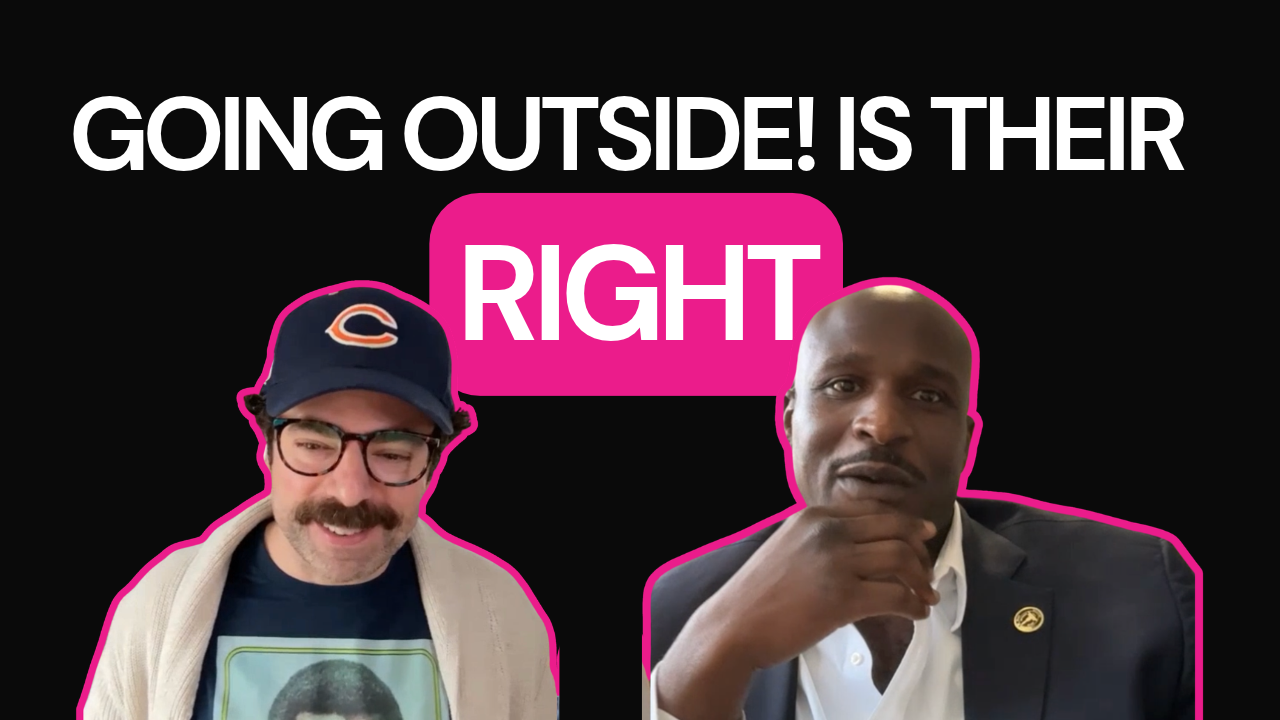
"Whatever you're doing, just do it outside."
— Terris King II
🧰 Your Do School Different Challenge
Ready to implement? Start here:
- Tomorrow: Walk your campus and mark every tree line, green space, or forest patch students could reach on foot.
- This Month: Meet with your parks and recreation department, state forester, or office of sustainability to ask which nearby land your students could steward.
- This Semester: Move one recurring service-learning project outside to that land and run it as a participatory science protocol such as soil sampling, water testing, or a tree inventory.
⌚️ Episode Timestamps
- 00:00 - Why nature is missing school infrastructure
- 4:41 - What COVID in Shanghai taught Terris
- 7:00 - Why screens are the most detrimental drug
- 11:05 - One Health and the recess disparity
- 14:43 - What the Outdoor Bill of Rights says
- 17:15 - Making children's outdoor rights enforceable
- 19:09 - Maryland's outdoor preschool licensure
- 6:28 - The joy metric and a five-year disruption plan
- 8:16 - Churches as classrooms during COVID
- 31:21 - Rebranding play as participatory science
- 32:10 - 60 weather stations erase data deserts
- 35:18 - Three city partners every forest school needs
- 40:08 - The forest patch behind your school
- 43:26 - Running the Chicago Marathon with students
00:00
Speaker 1
Foreign classroom in your city isn't a building. It's already there, right outside the school fence. Nature isn't a field trip destination or a reward for good behavior. It's the missing infrastructure of every school system that claims to care about the whole child. You've watched your school chase engagement through programs and platforms while kids stare at screens for six hours straight. Meanwhile, the research on outdoor learning has been sitting in front of us for decades. You've inherited a schedule built for compliance, not for kids who need sunlight, movement and real world stakes. If your students never experienced learning beyond four walls, you're not just missing a pedagogy trend, you're denying them something the city of Baltimore is now legally or codifying as a right. Schools that ignore the outdoors are handling handing screen addiction a captive audience and calling it education.
01:02
Speaker 1
Today's guest, Terrace King, built the Baltimore Forest School from a kindergarten classroom in Shanghai to a city sanctioned system serving 79,000 public school kids, partnering with the Smithsonian, placing 60 weather stations across the city. And he just secured a city resolution to make children's outdoor rights enforceable by law. The question isn't whether your city has the resources for this, it's whether you have the imagination. I'm Danny Bauer and this is Better Leaders Better Schools, the original Ruckus cast for visionary leaders who want to do school different even within a traditional system so that we create campus experiences worth showing up for. Thanks to Ruckus makers like you, this podcast ranks in the top 1% of over 4 million worldwide shows. So once again, thanks for pressing play. I will be right back after a quick message from our show sponsors. Your counselors are heroes.
02:06
Speaker 1
They're also stretched almost 400 students to one. That's insane. Orchard helps every kid build a career plan without adding to your counselor's plate. That's leverage. That's real support. Check it out for yourself at BetterLeaders Orchard Careers. That's BetterLeaders Orchard Careers still scrambling for supplies like it's 1999, ODP Business Solutions streamlines everything from pencils to projectors so you can focus on what matters making an impact. Visit ODP business.comeducation to learn more. That's ODP business.com education IXL is a go to support for classroom teachers because its adaptive platform makes differentiated instruction easy. See for yourself. Get started [email protected] leadership that's ixl.com leaders most professional development is forgotten by lunch, unfortunately, and that's because it's built for everyone and no one at the same time. Kids First Education prepares PD in a different way.
03:31
Speaker 1
They design every session around what your district or campus needs, what your priorities are. This episode is brought to you by Kids First Education. You can see how it works at KidsFirst LLC leaders. That's KidsFirst LLC leaders. The best leadership coaches. They don't hand you answer. They help you discover the insight yourself through curiosity and inquiry. Questions that help you see your situation differently. That's exactly what digital Danny does. And you can get started with [email protected] RUCKUS that's my principalcoach.com RUCKUS all right. And Terris, welcome to the show.
04:25
Speaker 2
Thank you so much for having me. And I can call you Danny, right? I can call you Danny?
04:29
Speaker 1
Absolutely. You call me.
04:30
Speaker 2
Emails. I've been saying Daniel, but I'm like, man, slay back. And again, thanks for having me and creating space. It's gonna be really therapeutic for me today to chat about education anytime, you know?
04:41
Speaker 1
Yeah, I can't wait. So let's start with you moving back to the US From Shanghai. And if I remember correctly, that's when Covid hit, too. So what did that year teach you about yourself, Leadership and education?
04:56
Speaker 2
I'll tell you, like, that the transition back from Shanghai was, you know, on the personal level and then also professional level. It was one of the first times you realized, like, you have to be there personally to provide students with what they need to learn and grow. And I think all of us were, like, you know, shook up that year when it comes to just our lives and how we think about education, like, all of it was about, for me in kindergarten was about being in person and creating a space for children to learn and. And engage together. And so the first thing that really hit me was like, I don't believe in virtual learning for children.
05:34
Speaker 2
And even in the context of how we use platforms and what's happening, AI, it's like for early childhood education, everything leans us to, like, getting the kids off the screens. And were mandated that year because our parents in the private schools. I was at Shanghai American School, they pay so much money, Danny, that they were like, no, you got to teach my kid today. You know what it also taught me about education is like, you know, were no longer learning in the buildings where, you know, families are. We're investing for their kids to be, like, kids were learning in their living rooms or in their bedrooms. So it was like, really, what is the value of this whole thing? And it was really, I think all this Learning like it was all about community.
06:15
Speaker 2
And the last thing I learned is just like I already had the power of the outdoors was a whole thing, but like the power of like getting kids outside during that time was something that you couldn't necessarily do. So I really realized like, wow, it's really powerful. Like, I don't know, I didn't know what it was like to be stuck inside because I felt like particles and stuff were in the air. So Covid was transformational for me as like an educator, but really as a leader. Yeah, just learned a lot about myself because I think I was heightened during that time. Probably a lot of sensationalism to what's happened the last few days with like, you know, we knew a lot of information during Shanghai around virtual learning and these platforms.
07:00
Speaker 2
Like there were all these rules in China around when kids could get on platforms, when they could do gaming. But here it was just like it's wide open for kids, you know. And I have a 7 year old son and it's like at that time, cause he was 1 years old, it was like I felt like I was fighting against the virtual landscape, the digital landscape. So yeah, I'm glad some people received, you know, justice for that in the last few days when it comes to Meta and Facebook and Instagram and their knowledge around how this was addictive. But you got to think about it in that context. We were forcing kids outside with the most detrimental drug ever created, which is the screen, and we forced them on it and they were, they.
07:41
Speaker 1
Become more.
07:42
Speaker 2
And more addicted. So those are the major things. And I could keep going on and on. But Danny, how was it? I mean, for you? Were you also impacted by during that time? Yeah,.
07:52
Speaker 1
Yeah, for sure. You know, it was interesting. I'll answer from a few levels, like business wise, it was interesting because it's like, oh, what's going to happen here? You know, we had been playing on Zoom because I, I lead a community of school leaders, right. So we would gather on a weekly basis to go deep on education leadership. And we have been meeting on Zoom, if you could believe it, Tara, since 2016. So although I think we should be very thoughtful about how much time, you know, kids spend on screens and all that kind of stuff. I will say that for my leaders, Covid, time wasn't easy, but it was easier. They played in that space for years and the shift was easier for them. Personally, I was in Scotland, right.
08:38
Speaker 1
I was in Glasgow and you know, around the world, especially in the United States too, there were different ways Governments responded. Right. States and that kind of thing. So it was wild because you were limited how much time you could be outside. Right. That was an expectation during that time. With the outside time, I could have. I would just tell my wife. I was like, yo, I'm going for a half marathon, you know? And she'd be like, what? You're not even training. I just. I need to. I need to do something right. And run. And I did it. And then I come back. I'd be tired and whatever. We had these social distance, little garden parties there and would play music with our friends and that kind of thing. So we came together.
09:23
Speaker 1
And the other interesting thing, you had to queue or you had to get in a line to go into the grocery store. Right. And they would only let in, like, two, four, you know, weren't more than 10 people in the store at a time. So everyone really had a lot of space. We then moved back to New York and Covid. Still happening. And I'm in Syracuse, New York, now, and I go to Wegmans, the grocery store, and I'm like, okay, where's the line? Where do I get in line? Right. Because we got to be socially distanced, because that's the frame of reference. And I get to the grocery store, and the door is just open, and there's just a lot of people in there. Right. Most of them were masks, wearing it correctly, but not necessarily everyone. Yeah. So it was really.
10:06
Speaker 1
It was really pretty. It was. It was wild to see how, you know, things were treated differently.
10:12
Speaker 2
Yeah. Yeah. And trying to. Everything shut down, like, literally. I'm.
10:16
Speaker 1
Sure.
10:17
Speaker 2
And then I got on that flight, came here, got to the airport, and I was like, wait, no one has on that. Everyone's kind of like. It was like, almost like no one knew what was coming.
10:27
Speaker 1
So.
10:27
Speaker 2
My whole format, jumping into leadership, because I went from kindergarten to running a school system here in Baltimore, I went from that to. Yeah. It was like, really. We've been a couple steps ahead of our thinking around certain elements of education, I feel. And so, yeah, it's been quite the learning. Like, you're living in the future, like, again. And so, yeah, we're really proud of the last five, six years of work we've done since COVID though.
10:54
Speaker 1
Absolutely. Well, I know that getting outside. Right. Nature is really important, so let's. Let's segue to that. Like, why is getting kids outside so important to you?
11:05
Speaker 2
I mean, just for us as human beings, is this concept of just like, one health. So it's one of those weird Things where we sometimes as human beings find ourselves to be separate from nature. Like, we are absent of it, like we're not the environment, but, you know, just where it's one health, like one health philosophy is just all about, like, the health of the outdoors. The animals, the humans is all one thing. And for us, it's like, you know, when you think, look at practices like nature bathing or just like taking a nature walk, or for you, that, you know, you're a runner, like, getting outdoors is what we absolutely need to live healthy lives. The fact that it's even an argument is around the times, right?
11:47
Speaker 2
And the demands and in cities, specifically around, like, the fact that people don't feel safe going outside, which is a whole thing.
11:53
Speaker 1
Sure.
11:53
Speaker 2
But for us, like, I believe it is the healing that's needed. Needed. You think about the book Last Child in the woods and just Nature Deficient Disorder. When I got into the game as an educator, that was one of the first books I read. So since then, I've just always looked at that disparity between the private schools I worked at, international schools where kids have an hour and a half outdoors, rain, sleet, snow, like we're going outside regardless. To them, public schools that give kids 10 minutes to sprint around on a parking lot outside of their school. It's one of those major disparities that aren't talked about because we're trying to get all kids outdoors and we're trying to advocate for nature, period. But then you go to communities like Baltimore, West Baltimore, and you're like, wait a minute.
12:40
Speaker 2
Even in that engagement, when is recess, taking recess from a kid not gonna be a punitive measure anymore? Cause they need it, you know, and so, yeah, it's necessary. And then for our survival long term, you know, our whole thing is a force. And so when you look at cities, it's like all these data points I always spit out around, like, sustainability goals. By 2030, like in 2050, 2/3 of the world's population will live in cities. So it's also like, are these cities prepared for all these people to sustain a livable future for us here in cities? And I've traveled to cities like, you know, like Tokyo and Shanghai, 20 some million people. So there are like whole groups of people in, you know, cities like Tokyo that don't even come out of their homes for 20, 30 years.
13:27
Speaker 2
Like these hermits that are, like, stuck in these buildings. And so for me right now, it's like, you know, speaking for, you know, people who hug trees, you know, what I'm saying. And then, like, for people like us who really love working with kids, it's like, how do you bring that together and never let it split? Like, advocating for the tree is advocating for the child. Like, you know, looking at the trees is like the lung of humanity. But the disparity and how things are even structured on blocks in some of these cities, like the canopy in this neighborhood, you know, it's 10 degrees cooler during the summer than it is in this neighborhood right next door. And how does that impact people and their, you know, what they do? So it is extremely important and for our survival around the world.
14:14
Speaker 2
And this is one of those geopolitical things that everyone agrees with, which is beautiful. It's not about race, culture. It's not about any of the things that could put us in silos. Taking care of the environment is something I think everyone agrees with and wants to do. But I think right now we have to advocate. It's almost like a state of emergency in some of these cities with the way things are structured. So that's where we came up with this concept of the, you know, the Baltimore Forest School.
14:41
Speaker 1
Yeah,.
14:42
Speaker 2
Yeah.
14:43
Speaker 1
And I know in the pre chat, too, you. You mentioned an idea that I never heard of. You call it the Outdoor Bill of Rights. So can you know, ruckus, maker, listening, watching, they might not have heard it either. So can you break that down for us, please?
14:56
Speaker 2
Yeah. And, and so I mentioned, you know, last child in the woods. And so Richard Lou, I don't want to butchered his name, but there's a child network. Getting children outside has been a thing that he has pushed, but it's a whole network of us across the nation. And so the League of Cities have adopted these Outdoor Bill of Rights. And so every city's a little bit different, but you have cities like Denver who have Outdoor Bill of Rights for the city of Denver, San Francisco, Austin, Baltimore is one of them. We went up to learn from folks from Wisconsin. So this is something that cities are doing across the country. You know how politics are, right? Like, you can create an Outdoor Bill of Rights, have a moment with your constituents, sign a big kind of thing, and then move on.
15:43
Speaker 2
So in 2018, in Baltimore, former mayor Jack Young signed on to the Outdoor Bill of Rights. When I arrived back in the states and doing work with the Forest Service and doing participatory science in the city, I had a mentor of mine, Morgan Grove, hand me the Outdoor Bill of Rights of Baltimore. And he looked at me, he said, go make some Good. Trouble with that. And I looked at the thing, and I was like, wait, this lists, like, clean air is a right of children, like clean air, fresh water to play in thriving ecosystems. I'm like, this is all the rights of kids that I used to advocate for when I was a kindergarten teacher, but now the city says they have one. And you know how it is. They store these things in the middle of nowhere.
16:26
Speaker 2
And I've printed off so many of these flyers, like, we're putting them up everywhere. And our only question is, do you know that children in Baltimore have rights to the outside? And for us, this was really important in a city like Baltimore because of the crime that I was coming back to. So this is a city that has always been ridden with crime. And just shout out to this administration and the people on the ground floor that have been a part of an ecosystem where now, like, I think in one of our communities that were just celebrating Yesterday, we've gone 365 days without a homicide. Crime is down, I believe. Don't quote me on this, but, like, 50% in Baltimore right now. So from Governor Moore to our mayor, Brandon Scott, like, we are all a part of that movement.
17:07
Speaker 2
And now for me, I'm part of the office. I'm a commissioning officer, sustainability for the city since we last talked, actually, then. So,.
17:14
Speaker 1
Like, I.
17:15
Speaker 2
Come to this work now with, like, were doing this as a business. We scaled out, we created a school system. But now we have, like, political power to sustain over time, like, policies and things to shift and make this outdoor Bill of Rights enforceable. I'm on the Environmental Advisory Council for the state of Maryland, right? So this is the council, and a lot of states have them. You know, like in New York, where if a corporation has a gas spill or like, something happens in the community, this is the department that will go after them on behalf of our client, that being the governor. So the people versus the corporation right now, you know, all of these outdoor Bill of Rights are connected to creating nature playgrounds, giving access to spaces. But Baltimore's environments have been ridden. Like, we have a massive incinerator downtown.
18:04
Speaker 2
A lot of our forests in the city have been used for things outside of educating children. So we have parks here where a lot of dead bodies have been found. You know, paraphernalia is everywhere, you know, dumping grounds for, like, you know, firearms and things of that nature. So for us, how do we actually enforce this? It's one thing for me to be.
18:24
Speaker 1
Like,.
18:25
Speaker 2
Hey, like, stop doing that. But it's another thing to Say, hey, like, we need some investigators here. We need the systems involved to put a camera here to find out what mechanic is dumping all the tires in this forest every month. Like, we need lawyers to get together and actually enforce this. And so we're super stoked, like, May 1, and I guess by the time people hear this will already be done, right? But, like, May 1st of 2026, we will sign the resolution. Shout out to Zeke Cohen, like, we've gotten it done. And this resolution now puts us in a position to create ordinances to protect children's rights in Baltimore. And we're just excited because we're not alone. Like, other cities are already working on this, other mayors are already working on this.
19:09
Speaker 2
And so we want to be a model for the nation around how to create this kind of forest school. And our forest school is all about educating kids around environmental justice. How do they activate in forest and systematically working with all the people involved needed to actualize these documents that our politicians put out there. That's the exciting news. And there's a lot of exciting stuff happening in the state of Maryland that has been launched in states like Washington and Colorado. We're the third state to develop an outdoor preschool licensure, which means you can come into the city of Baltimore and say, hey, I wanna start a preschool outdoors, like they do in Finland, like they do in the uk.
19:52
Speaker 1
And.
19:52
Speaker 2
It's a licensed system. And that means we have to create all of these systems of, like, what makes for a safe classroom outdoors. How, you know, how do we protect these children in these spaces that don't have official borders but have, like, a forced edge to it, you know, so it's all these exciting questions around our imagination around how children should learn and where they should be. And our work is really about, like, bringing systems together. I remember telling you that before. Like, that's a lot of our work.
20:20
Speaker 1
Yeah, maybe. I think that's a skill that ruckus makers can grow in. Usually when I'm. I'm teaching or coaching a school leader, we always start with the individual. Then we move into sort of building team capacity and culture. And then we end at, you know, that systems level thinking. And so for some of these shifts, you know, that you're talking about here, it does require system design, right, to support the vision for what you want to see and kids having that access to nature and all this kind of thing. Does your school operate on conveyor belt mode? Does it push the kid to the next grade, the next test, drop them off at graduation, and hope they figure it out. We all feel that model and it's Cracking Orchard helps you do school different students explore real careers, some they've never even heard of.
21:18
Speaker 1
And it builds a step by step plan tied to their grade and their goals. It connects what they're learning today to where they actually want to go. That's the work, and you can check it out at Better Leaders. That's betterleaders Orchard Careers. ODP Business Solutions, formerly Office Depot Business Solutions Division, has been a trusted partner for schools for 30 years. At ODP Business Solutions, we're by your side to meet your evolving education needs. Let's talk about what keeps Ruckus Makers up at night creating engaging learning spaces while juggling budget safety protocols and those endless supply lists. Here's the game changer ODP Business Solutions helps you tackle it all. We're not just another vendor. We're your strategic partner in transformation. Want to turn a tired computer lab into a STEAM innovation center? We'll help design it. Need to keep eight schools stocked and spotless?
22:25
Speaker 1
We've got sustainable solutions that scale looking to upgrade from whiteboards to interactive displays. We'll guide you through the entire process. And the best part? You can get it all from a single supplier that helps you simplify ordering and streamline budgeting while staying compliant with easy access to cooperative contracts. However you want to advance. ODP Business Solutions has 30 years of experience helping districts like yours get ahead. Visit ODPbusiness.comeducation to learn more. That's ODP business.com education Teachers love the support that IXL provides in the classroom, and Ruckus makers love it all as well because IXL also gives school leaders meaningful insights on every level. Put your finger on the pulse of student performance with IXL and its dashboard to drill down to see progress and growth for individual students. You can even customize reports to hone in on the information that matters most to you.
23:35
Speaker 1
IXL helps ruckus makers make data informed decisions that will benefit their students. Growth Goals get started [email protected] leadership that's ixl.com leaders think about the last district wide training your team sat through. Was it built for your schools or pulled off a shelf and dropped into your calendar? Kids first Education starts the other way around. They begin with your priorities, your data, your classrooms. Then they build professional learning around that using the C3 approach. Collaborate, create a real plan and commit to seeing it through. That's why nearly all educators they work with told them that sessions were connected directly to district priorities and 98% left ready to put it to work that week. Principals and district leaders. You could build something that actually fits. And you can learn more at Kids First LLC Leaders. That's Kids First LLC Leaders.
24:49
Speaker 1
Here's something I tell all principals I work with. There's two sides to every coin. The story you've been telling yourself about your campus. Our parents don't engage our teachers. They just change. This is just how it is here. That's not necessarily reality. It's just one side of the coin that's a story you decided to be true. But there's another side to that story and to that coin that is equally valid. One that probably positions everything you're saying in a much more generous light. The language and the story you're telling yourself, it really matters. It's the same situation, but depending on the lens and the perspective you take, you are a completely different leader. That's one move that Digital Danny is built for to make with you. He's not going to agree with your comfortable story.
25:46
Speaker 1
He's going to push on you right in the way that I would. With the same questions drawn from 10 plus years of experience coaching school leaders just like you. That reframes the entire game. It can be a game changer for you. Get started with Digital Danny and reframe the story you've been telling [email protected] Ruckus get started at myprincipalcoach.com ruckus. So can you talk about a bit of the process of like. Yeah. How you think about designing the system to support this bold vision?
26:28
Speaker 2
Yeah, I think about it in the concept of like, you know, as a kindergarten teacher. I love the fact that now high school teachers are talking about pbl, you know, and it's like a whole thing, project based learning, passion based learning. But it's like that came from kindergarten and the fact that we would have these sitters set up and children roam.
26:45
Speaker 1
Around.
26:45
Speaker 2
To play and engage. And so for me coming into the city, I just remember being in Shanghai and it was almost like were running a small laboratory. Like, yes, it was a. Yes, we had a school model. It was rigorous, it was all these things. But Shanghai American School allowed me as a leader who was over this team, this dynamic team there, kindergarten team to try new things. And when you're investing a lot of money, you want to see new, innovative things happening in the classroom with your child. But also were creating a countercultural movement in China around play, which I think is fascinating. We came in you think about tiger moms, this whole stereotype of like, they're all focused on academics over there. And it was like, no.
27:29
Speaker 2
We just had to make a case for how play will impact children's ability to thrive in the future. Right? Critical thinking, all those 21st century skills we talk about as educational leaders. So for me, when I came to Baltimore, I was like, okay, yes, we could start another school. I know friends of mine started charter schools. Everyone I talked to is like, well, you should be a principal at school. But I'm like, wait, I want to run a kindergarten classroom that has impact on systems. Meaning, like, I want to run a laboratory where the bar here isn't how many kids tested at this. But it's like the joy metric. Like, our metric would be if kids are crying when they leave our engagement, we've been successful. I don't want to go.
28:16
Speaker 2
So, like, we created, you know, temple, like, schools, in a way was like, how do we do these micro. It was all these. This new movement during COVID around micro schooling. So you saw parents getting together and doing homeschooling pods and people with 8 to 10 to 12 kids. And I said, what if we would create a five year mission to just disrupt the system? Let's just do things that are so avant garde in the city of Baltimore. That one, it catches people's attention, but it brings in new stakeholders. And that was the first thing we did. So our first initiative was to say, okay, let's pick something really provocative that hits home. I'm a second generation preacher's kid.
28:55
Speaker 2
There were faith leaders in this city who were and should have been during that time advocating for children in schools against the superintendent, against the systems that be. So were like, well, what if we create a relationship between church and state? Which is not a normal thing if you look at any city, you look at Syracuse right now, is there an official, documented relationship between the public school system in your city and the church system in your city? And then you just need to understand churches, right? Like, there's the Catholic diocese, there's the black church, there's this. And you could just keep going down. So that was the first thing we did, was we started to serve as liaison during COVID because all the schools were shut down, but the churches could still open.
29:43
Speaker 2
So those were the places we said, hey, why don't we have the kids come here? And then it was about using our imagination. Like, you know, everyone's like, are you gonna bring in certified teachers? And I'm like, no, I'm gonna bring in the certified teachers of yesterday, which is our grandmas who taught all of us how to read anyway, the Sunday school teachers. And we had a group of mothers from churches sit in churches, and we just cycle kids through for group literacy lessons to make sure there was no learning loss during that time. And that was, like, our first success story. Then were like, all right, what do we do next? Like, let's connect this church network to science. Like, science and F is a whole thing that we need to talk more about.
30:25
Speaker 2
Like, what is the connection between these two spaces here in Baltimore? You have the country's first basilica here in Baltimore, and the country's first research institution here in Baltimore, Johns Hopkins. So I'm like, okay, is that a coincidence? And so then we start mapping things. And I'm like, oh, in city planning in Baltimore, it just so happens, I don't know why. There's five churches in walking distance around every school and in walking distance of every forest patch, and there's 2,000 forest patches in the city. So then I'm like, oh, wait a minute. Those three things and connecting signs of faith. We have a model here. So Smithsonian put us on contract, and we worked a system with them where they scaled all their practices that happen in D.C. but mainly in Annapolis, the Smithsonian Environmental Research center, they scale that throughout churches.
31:21
Speaker 2
So imagine if the church has become the sustainable places where learning can happen. And instead of using the word play, Danny, we use the word participatory science and that translation for any leader, for any early childhood educators, specifically, if you're running a learning center, if you're elementary school teacher. I remember being the annoying kindergarten teacher that kept saying, play. And my principal's kind of looking at me like, all right, Terrence, I can't quantify play. And now we have the word, which is participatory science. Like, you can quantify this soil sampling, this water testing, this tree inventory. What are these things, this protocol where you just do the same thing over and over again? And so that was the second thing we did. And now Smithsonian is throughout Baltimore city public schools.
32:10
Speaker 2
We're very proud of being a part of that push out in the city. And they've work. Worked in multiple schools. I don't want to quote it wrong, but we've. They've been in seven churches, and they've set that up in the city. And then the last thing we took on, and this is our last big project in this five years, was to say, how do we create this thing where Baltimore, the whole city, every Building and every space is our classroom. And so there's this big initiative through the Department of Energy here in the nation. It's $24 million was invested in Baltimore to create a field lab here focused on resiliency in our environment in this city. Chicago has a field station, and so do we here. And this project called Baltimore Social bsac, Baltimore Social Environmental Collaborative was founded here.
33:00
Speaker 2
And I was one of the main community kind of liaisons, and were a part of placing 60 weather stations around the city to eradicate the data deserts in our community. So the government didn't know what the difference was between the temperature in West Baltimore, where I sit right now in the Inner harbor, because there were no metrics, no collection of data in our neighborhoods. And what were able to do is get in there and make sure that through this data collection system, we can couple that with biodiversity trackers, pollution monitors, and all of these private, all this private land. And that in theory, Danny, becomes our school. That is the future.
33:42
Speaker 2
If you imagine it in every city, once we are collecting data and we understand our environments, if they're clean, what the status of them are, and we own it as a community of stakeholders, in theory, then we can say it is viable for us to scale forest schools throughout a city. Like in Baltimore, we have. This is the end of, like the coal mine, you know, like the coal process. Like, all the coal comes here to csx, it sits down here and they're getting ready for the port. So if were to say, hey, kids, go outside in South Baltimore, like, there's a 30 year gap in life expectancy if you live in South Baltimore because of the coal mines. So with that, we can't necessarily advocate for kids to go outside in spaces that are gonna harm them, you know.
34:30
Speaker 2
And so this has been our journey, and I'm proud to say in five years, and especially now in my seat, the Baltimore Forest School is a part of our city system. We are in complete collaboration with city schools, which is the most important thing. A lot of times, as you know, as leaders, innovation happens in private schools, international schools, where I come from. And in my opinion, and I may be wrong, there's a lot of dynamic stuff happening in public schools. But you're talking about the difference between managing 1,000 kids and 79,000 kids. And how do you scale to every space through curriculum? And so for us, it's like, what if we start the innovation with the 79,000 kids in public schools instead of going to Gilman and Park and McDonough, all these private schools here in this area, starting there.
35:18
Speaker 2
And so we've been super successful in that. And what I just named in this conversation is like, three major stakeholders that in every city, even in Syracuse, can work together. That being your city schools, public schools, your parks and recreations. And they work together, but more intimately. Like in this city, our forest patches that the Forest Service runs literally touch our schools. Like a lot of our schools, the kids could walk into a forest, but there's no collaboration between them two to give that access. And then lastly, it's our Office of Sustainability in every city, when those three groups work together. And that's what the forest school does, is it brings those groups together. And the last pillar, Danny, is the health system. And one thing we talked about last time was this concept of prescribing nature.
36:11
Speaker 2
And I do believe it is the future financial model for all schooling is when we can connect the education of our kids to the health of not just their environments, but themselves. And finding ways for our hospital systems that in Baltimore make a lot of money. Then, like, Hopkins makes a lot of money on people being sick in this town. What if we start to fund an operation of these kinds of school settings from the cost savings in us actually healing young people? And that theory, you know, we're right on the cusp of, like, scaling throughout. We work with, you know, University of Maryland Pediatrics and Johns Hopkins Hospital. But that has been what we've done in the last, you know, five years, since 20. 20. 2025. So this year we're, like, trying to tell as many people as possible.
36:58
Speaker 1
Right.
36:58
Speaker 2
About that work. Yeah.
37:00
Speaker 1
Well, it's inspiring, you know, and I appreciate the bold vision that you communicated. I appreciate how you've thought through the system. And also modeling for the Ruckus Maker, engaging with today's episode, how you bring multiple stakeholders and partners together. Right. Because we're all stronger working together type of thing, instead of working in isolation. And I don't know that often is the default, but you just can't get as far and cast a vision of, like, how that could look, you know,.
37:32
Speaker 2
And what ends up happening is like when we say Temple X schools with an S, right? Our thought process is like, you know, we're in school right now, you know, and so we're a faith institution. So it is about people gathering. You know, I always talk about Matthew 18 and 20. Like, when two or three are gathered in his name, we have church. Like, our whole thing is when you walk outside of your home, wait before you woke up, walked outside of your home, you were in a school. You're learning from your parents, like, trying to break down schooling. And I do know it's confusing. Like, people tell me often, like, where is your school? I'm like, everywhere. Right here, right now. Right.
38:09
Speaker 2
And what happens is, it's like it does become a school of thought, but also what happens is to break down the disparity. The private, public, international, parochial school thing. I went to Catholic schools in Baltimore, taught independent schools, and then taught international schools. I would have never thought in my days I would impact the public system. When I got back and I was put in a situation to do so, I was like, we have to do it the same way that those three school systems do things. Parochial schools are all about service, learning ethic, moral development. Right? Yes, you get an amazing education, but that's what they're selling. That's why my parents sent me to Catholic schools here in Baltimore.
38:53
Speaker 2
But then you have international independent schools, which, as you know, these are for profit entities, some of them nonprofit, but they are about selling a model to families that can afford it. But now you're talking about, like, the 1%. Like, you know, some of these schools are more than going to college, you know, and, like, who can really afford that? So then you're talking about, like. Like I said before, I keep Talking about the 79,000 kids in the city. When you talk to the mayor and the governor, like, when they talk about schools, they're not talking necessarily about the private schools in these spaces. Yes, they support them and they engage with them, but that is a decision that the citizens are making to get that service. But public schooling, we've said as a country, is a right.
39:42
Speaker 2
So if that is the case, then with that right, should be the outdoors that are in the grasp of the kids to engage in. And that to me, for when I go to different cities and we're trying to pilot just in Philadelphia, talking about the Philadelphia Forest School. Look, the fact that we can even buy the name shows that no one has thought about it in these cities in this way. When I mentioned taking kids into the forest in Baltimore, people look at me like I'm crazy.
40:08
Speaker 1
Sure.
40:08
Speaker 2
Now, we've also, as a laboratory, done some crazy things. I've walked kids in forests that are dangerous. My son is with me. The parents trust me. The things that the children have seen and experienced, they'll never forget, you know, moments. I've walked through forests here. And we've picked, you know, a kid has picked a gun out of the under a trip. But also that engagement has cultivated a system of support in these systems. So like, for. And I love how you bring it back to the ruckus makers. Like, there are principals I talk to who, Danny, don't get it because they don't have to. And I'm looking at them like, but you're doing social programs and service learning all the time.
40:48
Speaker 2
Why are you getting on buses traveling across the town to do it there when you have a forest patch right out back here that our state forester needs you to steward? And sometimes it's about like, oh, we've been doing habitat for humanity all this time, you know, like. But then it goes to like that mom right now in her home. Like, there's ruckus makers on the line who are running maybe homeschool pods and us being able to set up systems with Baltimore city recs and parks that says, this is for the Baltimore. This area in this massive 1200 acre forest in Baltimore is for the forest school. And it's decentralized. And as the principal of this forest school, I'm functioning like a kindergarten class. Like, it should be open, like, it should be a play environment. And it shouldn't be.
41:36
Speaker 2
Like, there has to be safety and policies in place. But also, we have the second largest urban forest in the nation here. It's 1200 acres. And I walk through with kids and I don't see anyone else. And I just want to. Our job right now is to invite the educators back in that are traveling to Baltimore county or places outside of the city to go to the forest. When we have pristine forests here and in cities like Baltimore, Philly. What we are going against are two elements for the culture that I serve. One, a lot of our fear is around what happened in the forest, Danny, in the past, in this country,.
42:14
Speaker 1
Sure, we're.
42:15
Speaker 2
In Maryland. So you're talking Harriet Tubman, Frederick Douglass. What happened in these forests? Good, bad, ugly. And then two. In the 70s, 80s, 90s crack epidemic, you know, in our cities, these were the major places where a lot of illegal activity happened. And here we have Covid, and here we have our conversation. And I'm like, at the same time, what we've seen here in Baltimore is if the systems get together around lighting the paths on a walk, putting cameras. Look, we put cameras out to see how many coyotes are now in Baltimore. Here with all research, why can't we put cameras out to protect kids from.
42:51
Speaker 1
The.
42:51
Speaker 2
Elements around it? And I think every city can do that. And so our model, you Know, we'll come into the town and, like, in a very short amount of time, you can have a forest school set up. And it is about the communication between that superintendent, that director of the office of sustainability, and that forester, you know, in your state forestry department that's working with city recs and parks. When we bring those three groups together, you have a business model, and that's the most important thing. This is a city service. When I come to New York, I go to Central Park. I think it's gorgeous. I'm walking around, I'm spending money in there in whatever.
43:26
Speaker 1
Way reminded me of is when I was a high school teacher still, and moving into being an assistant principal, I ended up running the Chicago Marathon three years in a row, but with. With my students, right? And I went through every homeroom. I said, hey, who's. Who saved somebody's life? Nobody raises a hand, all right, who needs. Who needs service learning to your point? Who needs service learning to graduate? And all the kids, right, raise their hand, say, cool, well, run the marathon with me. We'll raise. Raise money for clean water projects around the world. And anyways, we would get out in Chicago. I don't know if you've been on the. The Lakeshore Drive, but they have a beautiful path, right? That's outside, and you go through nature, and you can see the city, too. It's. It's stunning.
44:16
Speaker 2
But.
44:17
Speaker 1
That's where we would train, you know, from the far south side, run up north and back down. Poor kids thought like a marathon was maybe like a 5K, like three miles, you know, and then we had some more to put in. But it was cool to bring them into that environment, especially because so many. Like, you were talking about Tokyo, and I'm sure it's similar in Baltimore, it's similar in Chicago. But, you know, a lot of kids that grow up in the neighborhood and they stay there, even in a big city like Chicago, never explore, like, what it has to offer, whether those are cultural experience or the nature ones or whatever. But we did that. And then when you run the race, you do a 26.2 mile.
45:00
Speaker 2
Round.
45:01
Speaker 1
Tour of a city that, you know, they never had experience. So that's all great. And I will say probably my proudest moment as a. As a teacher to cross that finish line, to watch kids cross the finish line, say, Mr. Bauer, I hate you. That was so hard. But then. But. But then say, you pushed me to do that. I literally can do anything now, right? And that was. That was everything to me.
45:29
Speaker 2
Well, you shared that during our intro call. Right. And when I. When I got off the line, I was like, man, I love hearing stories of when educators take their passions, because you're obviously a runner. And, like, I have mentioned that I did my first half last fall. I'll never do one again. It was tortured half. I was like, why am I doing this on 10 mile?
45:48
Speaker 1
Sure.
45:49
Speaker 2
But you took your passion and the entry point. Like, things in education seem like it's getting a bunch of friction. It's like these easy pathways that we're missing a lot of times because we're trying to figure all these other things out that may not work. And you were like, I love to run. I'm going to do this anyway. You all already have to do this thing. I want to introduce you to these other things, get you outdoors. Like, your element in was one thing. And this is where, again, with the forest school. As I'm just, like, pitching it to everyone, they're like, well, what do I have to do? I'm like, whatever you're doing, just do it outside. I'm a painter. I'm an artist. I'm like, can you take the easel outside? You know, like, I'm a.
46:31
Speaker 1
Runner.
46:31
Speaker 2
Like, you could have been in the treadmill inside. But I love that story, and I love the pride when you talk about it as something. As a teacher. Like, it.
46:40
Speaker 1
Was a thing that she.
46:41
Speaker 2
Did, you know?
46:42
Speaker 1
Right. And connecting it to what you've been saying, too. It takes the institution of school. Like they were doing, learning outside. They were learning a lot about themselves. You know, going through that challenge, you. You become a different person after running a marathon. You don't do that even a half. Right. Like,.
46:58
Speaker 2
Yeah, you.
46:58
Speaker 1
Just don't wake up and do it. And additionally, they. They did a lot of research, too, about access to clean water and all that kind of stuff. Right. And so. And. And how were helping out. So, yeah, super cool. But I'm really enjoying this conversation. Teris, I'm going to bring us to the last three questions that I asked all my guests. And the first one is, if you could put one message on all school marquees around the world for a single day, what would your message be?
47:27
Speaker 2
Go outside. It's the children's rights. I might mess up with the plural there, like, children's rights. But something like, go outside. Exclamation.
47:37
Speaker 1
Yeah,.
47:37
Speaker 2
It's the children's right. Like, that is. Would be the. And I can see the visual, like, black and white, like. Like a fist through it with a tree. Behind the fist. Yeah, but that will be the message. Yeah.
47:50
Speaker 1
And you kind of already doing this, building your dream school. The, the difference in my thought experiment, you don't have any constraints in terms of resources. Your only limitations, your ability to imagine. So if you were building that dream campus, what would be the three guiding principles of it?
48:05
Speaker 2
So get to your point. I mean, the first one is the imagination. Like I talk about this endlessly. We have visuals. But like, unless someone's willing to imagine, like that's the most important thing. Number two is inclusion. And this is one of those things for us as a model. Like, I truly see that, like everyone's needed. There's ageism in education, there's sexism in education. Like, but the inclusive nature of like forcing that we all have to work together. And then lastly this, and I don't want to call it a philosophy and it's not a movement. It's just like wholly common sense, as my grandmother says. But like One Health, like us as human beings not separating ourselves. And that's what happened in Covid. We separate ourselves as beings away from the environment and like we're totally connected.
48:54
Speaker 2
So if we could just have a premise around like One Health, like we're all in this together and it is our responsibility in a way to see ourselves as the whole. We are the environment. Those would be the three things that yeah. Would develop especially in our school model. Like yeah. Pathways and scalability. So.
49:12
Speaker 1
Wonderful. We covered a lot of ground in today's conversation of everything we discussed. What's the one thing you want a Ruckus Maker to remember?
49:21
Speaker 2
Strive on. Strive on. It's a quote from the school Park School of Baltimore. I taught right before I went to Shanghai and we would just talk about like striving on, like just do it like, but any concept around just like perseverance. So yeah. Strive on. This is what I would say to a Ruckus Maker.
49:42
Speaker 1
Hey Ruckus makers, thanks again for pressing play. I hope you enjoyed the show as much as I enjoyed creating it for you. And before you go, if today's episode shifted something in you so that you want to do school different, or maybe you have a new idea about how to reimagine education on your campus. Then check out my principal Coach. It's your AI powered leadership mentor. It's trained on 10 years of mastermind and private coaching experience that I've had. It's like having a world class Ruckus Maker mentor in your pocket 24. 7. You can start your free 7 day [email protected].
Transcribed by https://fireflies.ai/
🧩 Connect With Terris King II
🌎 Website: https://www.baltimoreforestschool.org/, https://www.templexschools.com/
👩🏻💻 LinkedIn: https://www.linkedin.com/in/terriskingii/
🎧 Listen & Subscribe
Listen to Better Leaders Better Schools on Apple Podcasts, Spotify, Youtube or wherever you get your podcasts. If today's episode moved you, leave a review — it helps more Ruckus Makers find the show.
🧔🏻♂️ Your SelfMentorship Guide
Meet Digital Danny — your Self Mentorship guide. Always available, never forgets, and evolves with you. Think through your next leadership move at myprincipalcoach.com
🤩 Today's Ruckuscast Partners
IXL
IXL's adaptive platform finds every student's knowledge gaps, adjusts difficulty as they learn, and gives you a dashboard showing exactly where growth is happening.
🔎 Over 1 million teachers use it — get started at https://ixl.com/leaders
ODP Business Solutions®
ODP Business Solutions has supplied schools for 30 years — converting dead computer labs into STEAM centers, stocking multiple campuses, upgrading whiteboards to interactive displays — all from a single supplier through cooperative contracts.
🔎 Learn more at https://odpbusiness.com/education
Orchard
Orchard gives every student a personalized career action plan and scores readiness across 8 dimensions — a number you can take to your board.
🔎 See how it works at https://betterleaders.orchard.careers
Kids First Education
Kids First Education builds professional learning around your district's priorities, your data, and your classrooms — not pulled off a shelf — and 98% of educators walk out ready to use what they learned.
🔎 Partner with them at https://kidsfirst.llc/leaders
Twelve Practices LLC © 2026 | If Education Ain't a Bit Disruptive, Then What Are Your Students Learning?


