Estella Evans Hamilton is the Founder of G-SAP Life LLC, G-SAP Life Developer, Academic Wellness Coach, retired educator, and TEDx speaker with more than three decades of experience in education.
In 2016, she developed and implemented G-SAP Life in a 6A high school, the largest high school enrollment classification in Oklahoma, typically serving a large and diverse student population. G-SAP Life became a game-changing process for helping students understand GPA, attendance, credit sufficiency, transcripts, goal setting, and action planning.
By moving students from academic unawareness to engaged empowerment, G-SAP Life helps transform school culture into one of shared responsibility, connectedness, and academic wellness. Learn more at www.g-saplife.com.
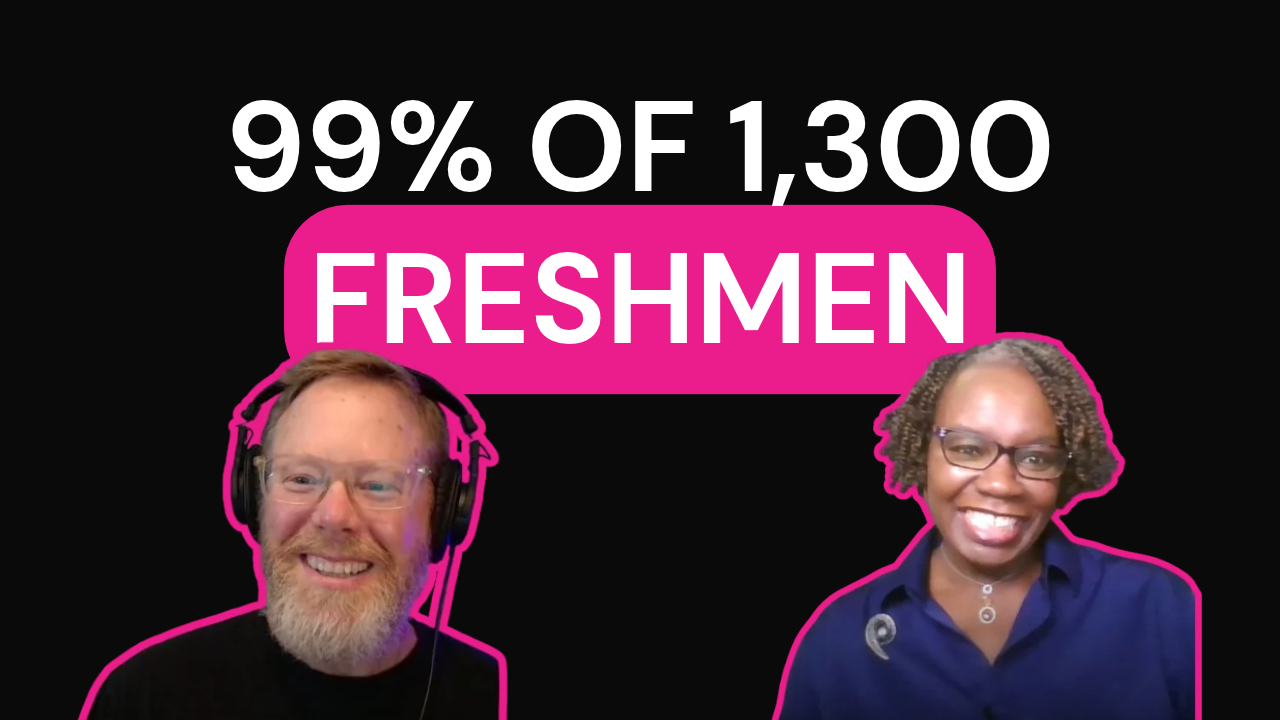
Freshman year predicts graduation, and most ninth graders fall behind for a reason no one says out loud: nobody taught them the hidden curriculum. GPA, transcripts, credit sufficiency, graduation requirements — the rules of school stay invisible until a 15-year-old finds out in April they're repeating ninth grade. Estella Evans Hamilton made those rules visible, handed students the system, and watched freshman credit sufficiency climb to 99%.
📖 What You'll Learn
- How a 10-minute monthly routine moved freshman credit sufficiency from 65% to 85% in one year — and to 99% after the pandemic.
- The five questions every freshman should answer every month to own their path to graduation.
- Why setting a goal one letter grade higher beats chasing straight A's.
- How a public credit sufficiency wall builds a culture of ownership instead of competition.
- How to turn parent-teacher conferences from blame sessions into goal conversations.
🧰 Key Insight #1: Teaching the Hidden Curriculum Raises Freshman Credit Sufficiency
- What's broken: Schools expect freshmen to protect a GPA and earn credits they've never had explained to them.
- The shift: Make the hidden curriculum plain — GPA, transcripts, credit sufficiency, graduation requirements — to students and their parents.
- Impact: Freshman credit sufficiency rose from about 65% to 85% in one year, then reached 99% of a 1,300-student class.
🧰 Key Insight #2: Student Goal Setting That Works — One Letter Grade at a Time
- What's broken: Students set impossible goals like straight A's, miss them, and give up on school altogether.
- The shift: Every month, each student checks their current GPA, sets a goal one letter grade higher, and writes a plan to get there.
- Impact: Students reach their first transcript without Fs because they've been moving up one grade at a time since September.
🧰 Key Insight #3: Goal-Based Parent-Teacher Conferences Replace Blame
- What's broken: Parents learn two weeks before graduation that their child is short on credits, and conferences turn into blame and shame.
- The shift: Students meet with teachers first, then lead the parent conversation around the goal they set for themselves.
- Impact: Teachers, parents, and students all work toward the same goal, and the sting comes out of conference night.
💬 ESTELLA EVANS HAMILTON QUOTES FROM THE RUCKUSCAST
"We give students the purpose, the why, and we give them the what. But we don't necessarily always provide the how."
— Estella Evans Hamilton
"It's not that they're incapable, it's just that they don't understand or they don't know how.
— Estella Evans Hamilton
"Now the onus of ensuring credit sufficiency moves off the shoulders of administration, school district teachers and sits squarely on the shoulders of the people who can make the difference now that they have a system."
— Estella Evans Hamilton
"It's not about did you fail? Did you pass? It's about how well are you doing and what can we do to do better?"
— Estella Evans Hamilton
"You have to be present to achieve the goal."
— Estella Evans Hamilton
"If you can ask any freshman what their GPA is, what's their plan to achieve a better GPA, and they can answer it, then you're doing schools differently."
— Estella Evans Hamilton
🧠 Your Do School Different Challenge
Ready to implement? Start here:
- Tomorrow: Ask five freshmen their current GPA and whether they're credit sufficient, and note how many can answer.
- This Month: Launch the five monthly questions — current GPA, goal GPA, plan, credit sufficiency, days attended — in every ninth grade advisory.
- This Semester: Shift parent-teacher conferences to student-led goal conversations and post a credit sufficiency wall updated monthly.
⌚️ Episode Timestamps
- 00:00 - How 99% of 1,300 freshmen stayed on track
- 04:12 - The freshman who loved his grandpa
- 05:47 - Why the pandemic proved the system worked
- 09:12 - The heartbreak behind G-SAP Life
- 13:12 - Teaching students systems from first grade up
- 18:25 - The credit sufficiency wall at lunch
- 19:41 - Why posting results is about more than recognition
- 23:06 - Academic wellness and the monthly folder
- 26:01 - Why no student plans to fail
- 32:15 - The five questions students answer monthly
- 34:50 - Taking the sting out of parent conferences
- 37:36 - Starting the GPA conversation before ninth grade
- 39:17 - Dream school principles and final takeaway
00:00
Speaker 1
Sa.
00:38
Speaker 2
We found that by year 2024, which is two years out of the pandemic, 99% of our students were credit sufficient going into 10th grade. 1300. 99% Of 1300. Yeah. It's amazing how once we shed light on what I call the hidden curriculum, or what is called a hidden curriculum, and that's the culture of schools. You know, your gpa, your transcript, credit sufficiency, graduation requirements. And when we make that plain to students, but not only to students, to their parents, it changes the trajectory of that child because now they are owning what comes next in their academic experience.
01:30
Speaker 1
My friend Corey built something I wish I had as a principal. It's called Orchard. It gives every student a real career plan, not just a quiz result. The motto says it all. Don't fall into your culture. Climb to it. Check it out at BetterLeaders Orchard Careers. That's BetterLeaders Orchard Careers. For over 30 years, ODP Business Solutions has helped schools transform from whiteboards to smart boards. Why? Because when you get the right tools, everyone wins. Visit ODPbusiness.com education to revolutionize your school's learning spaces. That's ODP business.com education Over 1 million teachers rely on IXL because it's empowering. It helps them make better decisions with reliable data, and it adapts instruction based on student performance. You can get started [email protected] leaders. That's ixl.com leadership leaders. 98% Of educators told us they left a Kids first session ready to use what they learned. It's not a fluke.
02:55
Speaker 1
It's the standard. This episode is brought to you by Kids First Education, professional learning that's built for the way schools actually work. See the proof at Kids first llc. Slash leaders. That's Kids First LLC Leaders. A principal I work with walked into her staff meeting last week with one clear next move on the culture problem she'd been circling for months. She didn't get there alone. She got there with Digital Danny. He's always there, never forgets, and he evolves with you. Get started with Digital [email protected] Ruckus that's my principalcoach.com Ruckus.
03:48
Speaker 2
Thanks for having me. I really appreciate the opportunity to be a part of Better Leaders, Better Schools podcast. I think it's a awesome opportunity for us Ruckus makers to change how we do things in school with our ideas. So thanks for providing this platform.
04:12
Speaker 3
You're most welcome. Why don't we begin with you telling us the story of the freshman and I heart grandpa.
04:19
Speaker 2
Oh, sure. So I belong to. I was an assistant principal at a sick face school in Oklahoma City. 6A pertains to a large enrollment, huge diversity, and they provide lots of academic, athletic, fine arts, career tech opportunities for our students. But it's so. It's huge. Our freshman classes are from 1100 to 1300 students, and that's just freshmen. So our building has to be huge in order to house all those students. When we have new students come and assistant principal or council gives the students a tour of the school. New students. So I'm touring the school with this young man and he's looking around. We have posters all around the building that say, I heart my gpa. And so he's walking through the building. Toward the end of the tour, he goes, wow, you guys really love your grandpa around here, don't you?
05:23
Speaker 2
So, I mean, you know, I thought it was some. I mean, we chuckle about it. You know, I chuckled with him. I explained that it was grade point average so that he would understand. We do love our grandpa around here, but we also love our gpa.
05:39
Speaker 3
Right on. I feel like that would make a great T shirt.
05:44
Speaker 2
I know, right?
05:46
Speaker 1
Right on.
05:47
Speaker 3
Something you said in our intro call about the pandemic being an indication that you were on the right track. Really? Twig for me. Can you tell us a little bit more about what you mean when you say that the pandemic was an indication that you're on the right track?
06:01
Speaker 2
Well, before the pandemic, we would track the students who were credit sufficient so that we would know who needed extra help getting back on track for graduation. And our numbers were freshman class. Our numbers were kind of low. 65, 60 To 65% of them had all their credits going into 10th grade. And that's a big portion of them that didn't quite meet the mark. So GCEP Life is a goal setting action planning process. During this process, the students just kind of calculate their current gpa, set a goal for one letter grade higher, and then they write a plan to achieve the goal. So we put that in place. I developed that in the year two, 2016 was in place, and we noticed a significant number of students going to 10th grade with all their credits.
06:59
Speaker 2
As a matter of fact, in one year, it jumped from 60 to 65% to 85% of freshmen moving to the next level credit sufficient. So I am not saying that gsapp life is the thing. I just think it engages students. And once they engage, they become empowered to use that information and to Kind of navigate how they're going to move forward with their academic experience. Well, depending. So we're having this wonderful success of 85%, and we're all excited about our students because we know that if they're past their freshman year, it's an indication that they're going to be doing really well all the way through high school. So, yeah, there's a research done by the University of Chicago that talks about the predictability of students graduating according to whether or not how well they do in their freshman year.
08:00
Speaker 2
So that was another indication to me that I needed to really figure out how I was gonna get our students over the huge hump. Freshman year is a transition year, and it's difficult for our students. So it's 2016, 17, 18, 19, and we're doing really well. We're happy about the. The strides we're making. We let 1% more each of those years, and then, bam, the pandemic happens. And then we had a hybrid year, which was some students in school, traditional face to face, and others choosing to study from home. And then that year we noticed that again, the student credit sufficiency dropped tremendously. So it was an indication that were on the right track with having the students calculate their own GPA and making it a personal ownership type system for them to be successful.
09:02
Speaker 3
So could you break that down for us a little more? How would a ruckus maker go about doing that? From 60 to 65% sounds pretty great, but to 85%, that's phenomenal.
09:12
Speaker 2
Yeah. And I tell you, I was amazed at the results as well, because I went into the. The development of it. Actually, the development of it came from the fact that our district had the goal of 100% graduation, college and career ready. And so as a ruckus maker, I immediately went to, how do I make that happen as an assistant principal? So gsapp life derived out of that and out of the young man who loves his grandpa. And several of my students coming to me, like, in about April of the year, saying, hey, Ms. Evans, am I going to have to repeat ninth grade? And I'm like, well, let's check your transcript. And now I'm using language that they. They don't have awareness of. So, and, you know, you see the squinty eyes, like, what do you mean, transcript?
10:09
Speaker 2
And I pull it up, explain to that one student out of 1100 to 1300, I'm explaining to this one student about her transcript and why she didn't make the mark. And there was a chance that if she didn't do credit recovery. She would have to repeat ninth grade. So the stories, heartbreaking stories like that, or the story of the young person that goes to the 10th grade building, because were a 9th grade building unto ourselves. And the 10th, 11th, and 12th were another building. And they went over there to receive their schedule for their 10th grade year and were told they had to come back to their freshman year. And they're looking at me and saying, Ms. Evans, what? You know, and it broke my heart.
10:56
Speaker 2
So gcep life drived out of that situation, wanting to make sure that every student knew once a month exactly where they were academically, they had control of that. They would say, this is my GPA right now. This is the GPA I want, which I encourage them one letter grade higher because it's accessible and it's easy in a month to be able to move just 10 points or easier than saying, oh, I want straight A's, and seeing the impossibility of that and then losing hope altogether. So they started that in 2016. They started that, and it was amazing because now it was a personal system that they can control on their own. And I find that the pandemic really left our students feeling flung out into space. My parents don't even have control.
11:57
Speaker 2
I think the reason that were able to sink right back into those kind of percentages, as a matter of fact, the pandemic was over, I think, in 2022. By 2024, we're using the same. The same way of choosing, I mean, knowing how many students were credit sufficient, meaning how many needed credit recovery. We found that by year 2024, which is two years out of the pandemic, 99% of our students were credit sufficient going into 10th grade, 1300 99% of 1300 70. So, yeah, it's amazing how once we shed light on what I call the hidden curriculum, or what is called the hidden curriculum, and that's the culture of schools. You know, your gpa, your transcript, credit sufficiency, graduation requirements.
12:54
Speaker 2
And when we make that plain to students, but not only to students, to their parents, it changes the trajectory of that child, because now they are owning what comes next in their academic experience.
13:12
Speaker 3
You talked about giving students ownership and sort of blowing the smoke off the jargon that we use in schools so frequently as system. A system that they learn how to navigate. Can you tell us more about the systems of navigation you developed?
13:29
Speaker 2
Oh, so I think systems of navigation must have been the thread that goes through my whole career as an educator. I started as A first grade teacher. And at that time, I'm going to age myself now. We were all having the discussion of phonics or sight words. And I wanted to ensure that my students had everything they needed. So we did both. And I realized at that point, this is the beginning of my career, my first year, that if we give students systems a means of following the steps, as we provide those steps for them, it's amazing how well they will do. Then they moved me. My next assignment was fifth grade. And in fifth grade they had the writing test. And this test would indicate whether or not they could get driver's license.
14:27
Speaker 2
So for me, again, it was the thing of I want all of my students, when they're 15 and a half to be driving, but I wanted to park, but I wanted them to be driving because I knew that would be their heart. So how am I going to provide a system for them to use? And so we talked about the writing process, how paragraphs are formed, how transition sentences. We just, I gave them. We walked through the process of writing an essay. We started off as a whole class and everybody participated in writing one class essay and broke it down into small groups and then partner essays and then till they. They were writing essays by themselves. In that I found were at the 99 percentile, my fifth graders, when we got our test scores back in their ability to write.
15:27
Speaker 2
So again, having this system in place that they can follow independent of me was really helpful in them owning their ability to write. And it shows. It's not that they're incapable, it's just that they don't understand or they don't know how. We give students the purpose, the what, I mean, the why, and we give them the what. But we don't necessarily always provide the how. And I think systems embrace the how to navigate. Then I moved to eighth grade at a magnet school. So everybody's gifted 99. And so they had to test whether or not you're as gifted as they are. So it was the dynamics was a big change for me. But then I was teaching us history and for me, I wanted to ensure that they would be able to read for content or for knowledge rather than learn to read.
16:32
Speaker 2
So this is at the other end of the spectrum of my career. And we studied the process or the system of SQ3R, which is survey question, read, review, I mean read, recite and review. And the system we started again, I learned from fifth grade. We started as a whole group writing notes and then went to table groups and then partner notes and then individual notes so that by the time it's very time consuming at the beginning when you, that's the thing about systems, they, you know, you had to walk them through. So it takes time, but once they get it, the investment of that time is incredible. And then I moved to, after that I moved to oh, and I would let them use an incentive for writing really good notes.
17:26
Speaker 2
You can use your notes on your quizzes so you know, they, you know, it's not just okay, I'm going to throw something on the paper. I wanted them to see how systems helped them. So then I graduated to administration, which was another all unto itself and big deal all unto itself. And that's when I encountered young people navigating high school like skipping through the lilies. You know, they were oblivious and I knew as an educator that this is like the foundation year for them to launch their life and their lifestyles. So, so it was very important to me to figure out what system I can use that would be school wide rather than classroom oriented that not only students could use, but parents could have a hold of the system as well.
18:25
Speaker 2
Teachers love the system because now the kids are holding themselves accountable and now the teacher can teach and the kids can self motivate. They have intrinsic motivation of their own. And I also had a credit sufficiency wall that I displayed at school. So that was amazing for students to be able. I changed it out once a month because we would check our GPA every month to see if were still credit sufficient. And then I explained what that terminology meant. Means you're passing all your classes and you're on track for graduation. And it was amazing to see every time I changed out the colored list how people would at lunchtime now this is 13, we had to have three different lunches for all the kids to eat.
19:14
Speaker 2
So to see them gather around a board and look for their name with their friends and explain to their friends if they weren't on there, how they could get on there. Now the onus of ensuring credit sufficiency moves off the shoulders of administration, school district teachers and sits squarely on the shoulders of the people who can make the difference now that they have a system.
19:41
Speaker 3
So do you think displaying results was that just about public recognition and accountability or is there more to it than that?
19:49
Speaker 2
I think it's more to it than that. I'll tell one more story I had and educate a parent. So she's a parent who's also an educator and her child with special needs. And she and her child experience Going to these award assemblies from the time he was in first grade and not receiving anything. So now here at the freshman academy, this is ninth grade, where the trajectory of his life is going to make a difference. He was able to work, move his one, his grade, one letter grade and find his name on the list. So he came. She told me the story at parent teacher conference. She said, Ms. Evans, he came home, he had taken a picture of his name first.
20:36
Speaker 2
He took a picture of the whole board, took a picture of his name, really closed up, then took a selfie with himself in the board. So it's more than just let's display who has, whose credit's sufficient and who is not. It's more about building a culture of owning the system, of knowing how to navigate that hidden curriculum and get what you need to be successful. And then it also built a different culture amongst the students. Now it's not necessarily they're competing one with another. This is me saying, this month I'm here, next month I want to be here. And so it changes from looking all around to looking inward and working from inward out and producing the numbers. The GPA that they would like to see at freshman year, they may not understand.
21:38
Speaker 2
They may not understand exactly, you know, what all of this works out to. But in their junior and senior year, when they're looking for scholarships, internships, or all those things that they experience at that level, I want them to be able to say, oh, I didn't understand why they were pushing that gpa, gpa. But now that I have it, I have options. It's much better than not knowing and going through skipping through the lilies and getting to your junior year and realizing, I sure wish I would have worked harder when I was a freshman. So my whole. The other part of my heart is I want my students to always feel a sense of academic wellness. When I taught first grade, it was good success.
22:27
Speaker 2
Like I wanted them to not just feel successful, but to feel the kind of success that makes you want more and more. And so you self motivate. Yeah. Always wanted my students to have that sense of academic wellness. Knowing that when I get there, I may not understand all of the breadcrumbs getting there, but when I get there, I can have a whole sandwich and I can have a choice of what kind of sandwich that I want. And I wanted to make sure that they enjoyed academic wellness.
23:04
Speaker 3
It sounds empowering.
23:06
Speaker 2
Yes. So I'll have to tell you this. GCEP Life has a folder that they interact with gcep, life means goal setting, action planning, and it's a life skill for a lifestyle. And it's a folder that they interact with every month. So when they reflect on their last gpa, they set a goal for one letter grade higher, and then they write a plan to achieve the goal. In doing so, they manage the year and this on their first transcript that first semester at the end, there's a good chance if they have been practicing moving one letter grade higher by the time they get to that first transcript. We're not looking at any Fs because if we had an F, now we're moving at one letter grade higher. Now we're at a date.
23:58
Speaker 2
So the whole point of that is to show them incrementally that they can succeed. Academic wellness is understanding that there is a gpa, understanding that there is a hidden curriculum, understanding those things, and then it is monitoring that gpa, making sure you're keeping on top of it. And then it's this protection that's in the plan, writing the plan, checking with your teachers, all of the things you need to protect your tpa, and finally the last part of improvement. That's right. So when you realize that you're in a place where I have the chance, this is on me. I have the chance to improve. All is not lost. I think sometimes when students, especially freshman year, they start freshman year just without any kind of system by that first progress report.
24:54
Speaker 2
When they realize it's not like 8th grade and they see those grades, there's this discouragement and despondency that happens. And then there's this apathy that follows that where they don't want to come to school because who wants to come someplace where they fail and they feel like they can't be successful? So I'm not saying that GCEP life is the be all that end all. I really don't think that it is. I think it's an undergirding. It just gives the students a bucket to carry all the other things in. And once they're actively engaged in the interventions that it provided for them and interacting with their teachers and their parents and even the principal, it's just an amazing way to keep the culture what we're about.
25:49
Speaker 2
And I remember telling you that when I, the first time I posted their Credit Sufficiency board, it was amazing to see young people gather around something positive.
26:01
Speaker 3
Because as you said in our intro course, students don't want to fail.
26:05
Speaker 2
Yeah, they don't. I mean, if you say to a student, if you ask a student, any student, at the beginning of their freshman year, if you say to them, okay, so what's your goal for high school? They're not going to say, oh, I'm going to fail and I'm going to stop coming to school and I'm going to drop out and I'm going to get a job. And they all have aspirations. And if you say to them, what do you want to be? What do you want to do with your life once you leave high school? None of them say, I don't want to do anything. They have these visions and these goals and these dreams that they want to accomplish and they can make that happen if we provide them with systems.
26:51
Speaker 1
I want to tell you about Corey. Corey is the founder of Orchard, and he's been a guest on the show. Growing up, Corey watched his dad hate his job. He'd worked just long enough to pay the bills, then stop, then panic when the money ran out. So over and over, this was happening. And Corey decided early on that's not going to be his life. It shouldn't be anyone's life, to be honest. And that's why Orchard exists. It helps students explore careers, understand their real options, and build an actual plan so they climb toward a future they want to be a part of instead of falling into whatever comes next in their life. Every student deserves that. I think you agree. So go see what Corey built at orchard by visiting BetterLeaders Orchard Careers. That's BetterLeaders Orchard Careers.
27:50
Speaker 1
ODP Business Solutions, formerly Office Depot Business Solutions Division, has been a trusted partner for schools for 30 years. At ODP Business Solutions, we're by your side to meet your evolving education needs. Here's the thing about creating remarkable learning spaces. You need a partner who gets it. Someone who understands that transforming education isn't just about swapping whiteboards for smart boards. It's about reimagining what's possible. That's why innovative school leaders trust ODP Business Solutions. We don't just deliver supplies. We help you design dynamic learning environments that make students actually excited to show up. From tech integrations that bring lessons to life, to flexible furniture that transforms any space into a collaboration zone, to sustainable solutions that teach by example. We've got everything you need to do school different.
28:48
Speaker 1
And the best part, you can get it all from a single supplier that helps you simplify ordering and streamline budgeting while staying compliant with easy access to cooperative contracts. However you want to advance. ODP Business Solutions has 30 years of experience helping districts like yours get ahead. Visit ODPbusiness.comeducation to learn more. That's ODPbusiness.com education something that drove me nuts as a ruckus maker was hearing teachers say things like, I taught it. They should have learned it. But really, some teachers just don't know how to teach, or reteach for that matter, so that all kids get it. That's where IXL comes in. IXL's diagnostic automatically identifies knowledge gaps for teachers and provides them with a personalized growth plan for each individual student. Teachers can step into the classroom every day, knowing what their students know and what they don't know.
29:52
Speaker 1
IXL's adaptive platform makes differentiating instruction easy. As students learn, IXL adjusts to the right level of difficulty for each student. Close knowledge gaps and accelerate learning with IXL. Get started today at ixl.com leaders that's ixl.com leaders when you bring in professional development, you're making a bet with your team's time and attention. And let's be honest, often it doesn't pay off. Kids First Education is an exception to this. Nearly all educators that they work with have told them that their session directly connected to the district priorities, and 98% walked out ready to use what they learned right away. That's because every kid's first session is built around your goals, led by coaches who have done the work and grounded in how adults actually learn. Principals Admin District leaders if you're done gambling with PD that fades by Friday. Check out what Kids first offers.
31:08
Speaker 1
You can learn more at KidsFirst LLC/Leaders. That's Kids First LLC slash Leaders. I was talking with the principal last month who'd been wrestling with the same staff problem for six weeks. Every Monday it was on her list. Every Friday it was still there. She kept telling me she needed more information before she could make the call. Here's what she actually needed. She needed someone to ask her. If you already knew the answer, what would the answer be? That question cut six weeks of circling down to about four minutes. She made the move that afternoon, and that's the conversation Digital Danny is built for. He's your AI coach, trained on a decade of how I actually work with principals. And he's available the second you need him to think through something. You can get started with Digital [email protected] Rukus.
32:15
Speaker 3
So you were expanding a little bit on the folder. Can you tell us about the five monthly questions?
32:22
Speaker 2
Oh, yes. Okay. Every month the students answer five questions and the first question is, what is my current gpa? Second question is, what's my goal gpa? The third question is what's my plan to achieve that goal? The fourth question is, am I credit sufficient? Am I passing on my classes? And the final question is, how many days have I attended school this month? This is so that they start making the correlation between being there and meeting achieving their goal. You have to be present to achieve the goal. And you know, it's a life skill. I think that's what I love about the gsapp life system is that it's not just for gpa. It's how we as adults navigate our lives. We set a goal, we find out all the information about what we need to do to achieve it.
33:20
Speaker 2
Then we write a plan, we plan it out and that's how we achieve. And we make adjustments. If we don't quite, and I let the students know that too. If you don't quite meet the goal, just adjust your plan. It doesn't mean, you know, it doesn't mean all is lost. And I think it's a hope filled kind of system to help students stay on track for graduation and to live a positive life beyond, even beyond high.
33:50
Speaker 3
School in a sense. How to engage, how to engage with school, how to engage beyond school.
33:58
Speaker 2
My hashtag for GSAP life is, and this is before I knew what a hashtag was, I just thought, oh, the kids are using it, so I'm going to use it too. So the hashtag for GSAPP life is Engaged Empowerment. So Engaged empowerment is first we have to tell them about systems. I mean about the hidden curriculum. Let them know that these systems exist. And then once they know about it, they can use that data or that information to navigate how they're going to. And that's the engage them first. And now you empower them to navigate and find their means to success. And it's individual, it's not something that they're doing for mom or dad or whomever. It's. This is my thing for me.
34:48
Speaker 3
Brilliant.
34:50
Speaker 2
The other thing about those five questions is if the school district makes that the five questions that we all gather around as a community, then that becomes what the school is about, the culture of the school. Now instead of parents finding out two weeks before graduation that their child owns they don't have the credits that they need, they've known all along to ask the correct questions. And it's not about did you fail? Did you pass? It's about how well are you doing and what can we do to do better? And that's not just parent student relationship. That's parent teacher relationship. Johnny's doing well in my class. He has a goal for a B. But here are some things that I've noticed in the last month that have happened that's preventing him from getting that beat. Now the conversation is different.
35:48
Speaker 2
And everybody's working toward Johnny's goals. And so we become. We become, I call the wind at their backs and their cheerleaders. You know, it's not a thing of blame or shame. We're not blaming the parent. What are you doing at home? Why is your kid acting this way? And then we're taking the sting out of parent teacher conferences because now all of our talk, all of us speak is around goals and goals. Can't. Don't have feelings to be hurt. Right? All we can do is say, okay, this is the goal. And here are some things that we need to see in order for your child to achieve. And I want with GSAPP Life, students have to be at append. They have student led. They meet with their teacher before they meet with their parent.
36:38
Speaker 2
They sit down with the teacher and say, we have nine weeks until our first progress report. What do I need to do to get this on my transcript? So they're talking about these things way in advance to give them enough time to achieve the goals that they set for themselves. Which it's amazing how when they have those things in hand, how they empowered, they feel like, I can do this kind of thing. You know what I mean? And parents are seeing, oh, you talked with your teacher and your teacher told you these are the things that you need to do to get that B in English. Not the whole parent teacher conference is like family getting together and discussing the best Thanksgiving dinner that they possibly. That they possibly can have, rather than a disappointment, students being disgruntled, all those things.
37:36
Speaker 2
And the other thing that I wanted to mention is how important it is that we start the conversation about gpa, credit sufficiency, and all those things before students actually get to ninth grade. So GCEP Life has a junior GCEP Life. That's for fifth through seventh graders. And the fifth through seventh graders, they're just talking about goals, just starting the conversation about what that looks like, what that is. In eighth grade, they have an intermediate gpa. I mean, GSAPP Life. And that's when they start the monthly process where they go through the same thing that they will experience when they get to ninth grade. They this way, when they're in a space where it's consequential, it's a consequence if you don't succeed. They already have everything that they need. They know the language, they know the system, and they're just operating almost on autopilot.
38:41
Speaker 2
And the other thing I love about gsapp life, a lot of times when we have these kinds of things, it takes us a while to implement it. Once we show them the system them at the beginning of the semester, it takes about 30 minutes maybe to introduce it and to talk about all the things. But once they get a hold of it's 10 minutes once a month. Imagine that 10 minute investment. What happens with just investing 10 minutes a month for a student?
39:12
Speaker 3
Totally doable.
39:13
Speaker 2
The outcome is.
39:17
Speaker 3
Estella, if you could put one message on all school marquees around the world for a single day, what would your message be?
39:24
Speaker 2
My message would be engaged. Empowerment equips students to experience academic wellness. So it's important to provide systems.
39:38
Speaker 3
You're building a school, a dream school, from the ground up, and you're not limited by any resources. What would your three guiding principles be for your dream campus?
39:49
Speaker 2
My guiding principles would be we are student centered. We're about the students, and we are their support. The second one and third systems create success.
40:05
Speaker 3
Brilliant.
40:06
Speaker 2
So we'll want to make sure that we provide the students with the systems that they need for success.
40:13
Speaker 3
Right on. And of all the things we discussed today, what's the one thing you want a ruckus maker to remember?
40:19
Speaker 2
I want you to remember this, that if you can ask any freshman what their GPA is, what's their plan to achieve a better gpa, how many? And they can answer it, then you're doing schools differently. And in doing school differently, you are building successful students.
40:41
Speaker 3
Great. Well, thank you, Estella. It's been a pleasure chatting with you this afternoon.
40:45
Speaker 2
You as well. Thank you so much for the opportunity.
40:51
Speaker 1
Hey, Ruckus Maker, thanks again for pressing play. I hope you enjoyed this show as much as I enjoyed recording it. And before you go, if today's episode shifted something for you where you want to do school different or you have a new idea about education, then I want to invite you to subscribe to ruckusmakers News, that's our newsletter. And you get three new opportunities to do school different every week sent to your inbox. It's trusted by over 5,000 school leaders. And if you want to reimagine education within a traditional setting so that you could create a campus experience worth showing up for, subscribe for free. @Ruckusmakers.com news.
Transcribed by https://fireflies.ai/
👩🏻💻 Connect With Estella Evans Hamilton
🌎 Website: https://www.g-saplife.com
💚 LinkedIn: https://www.linkedin.com/in/eehgsaplife/
🎧 Listen & Subscribe
Listen to Better Leaders Better Schools on Apple Podcasts, Spotify, Youtube or wherever you get your podcasts. If today's episode moved you, leave a review — it helps more Ruckus Makers find the show.
🧔🏻♂️ Your SelfMentorship Guide
Meet Digital Danny — your Self Mentorship guide. Always available, never forgets, and evolves with you. Think through your next leadership move at myprincipalcoach.com
💟 Today's Ruckuscast Partners
IXL
IXL's adaptive platform finds every student's knowledge gaps, adjusts difficulty as they learn, and gives you a dashboard showing exactly where growth is happening.
🔎 Over 1 million teachers use it — get started at https://ixl.com/leaders
ODP Business Solutions®
ODP Business Solutions has supplied schools for 30 years — converting dead computer labs into STEAM centers, stocking multiple campuses, upgrading whiteboards to interactive displays — all from a single supplier through cooperative contracts.
🔎 Learn more at https://odpbusiness.com/education
Orchard
Orchard gives every student a personalized career action plan and scores readiness across 8 dimensions — a number you can take to your board.
🔎 See how it works at https://betterleaders.orchard.careers
Kids First Education
Kids First Education builds professional learning around your district's priorities, your data, and your classrooms — not pulled off a shelf — and 98% of educators walk out ready to use what they learned.
🔎 Partner with them at https://kidsfirst.llc/leaders
Twelve Practices LLC © 2026 | If Education Ain't a Bit Disruptive, Then What Are Your Students Learning?


