The retail architect behind the Apple Store and the Genius Bar, Ron Johnson served on Steve Jobs's executive team and grew Apple Retail to nearly 400 stores and 60,000 employees over 12 years.
He later served as CEO of JCPenney and founded Enjoy, the first mobile retail store. His new book, Shop Different: How Retail Revealed Apple's Genius, takes readers inside the room where Apple's service culture was invented, and its lessons map directly onto how a principal builds a school.
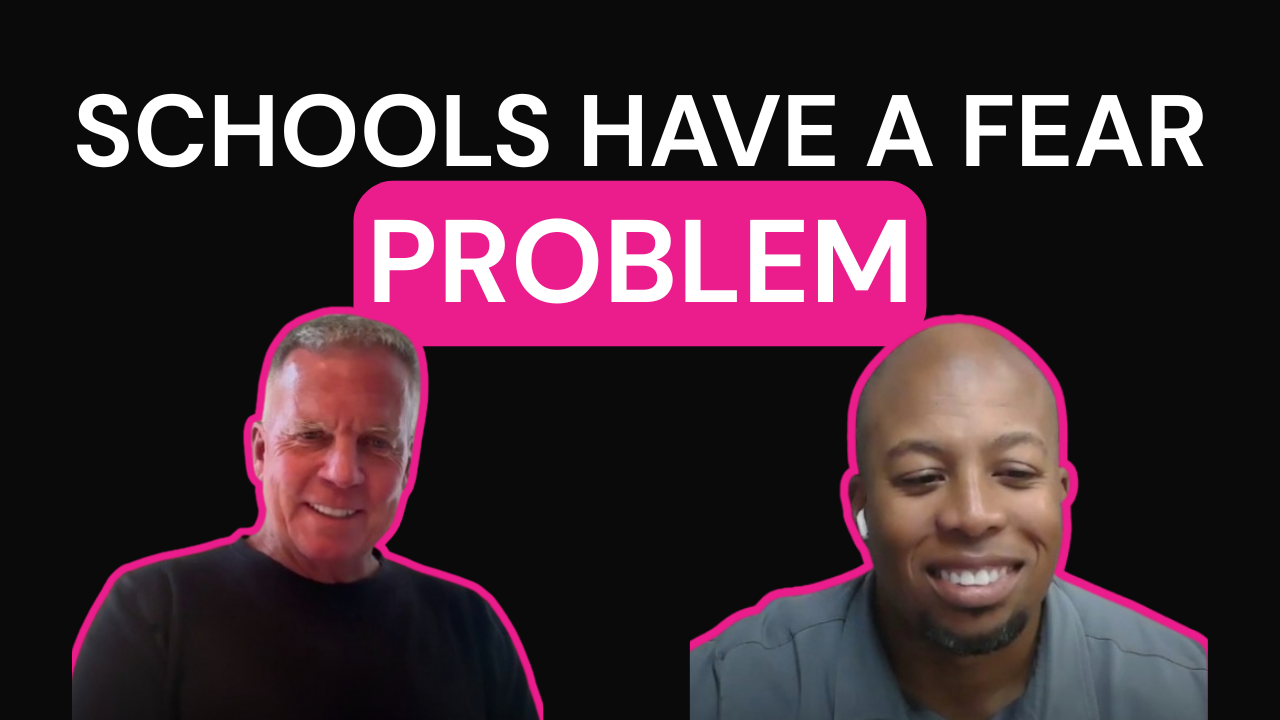
School leadership is the relationship business, and most schools are running it on fear. Ron Johnson spent 12 years teaching 60,000 Apple employees to "enrich lives," and he argues the same principle decides whether a student, a teacher, or a whole campus flourishes. If you're a principal who suspects your building has more anxiety than belonging, this is the playbook for changing it.
🧰 What You'll Learn
- How to treat every interaction with a student or staff member as launching, deepening, or restoring a relationship.
- Why Ron interviewed all 400 Apple store managers himself, and how principals can use the same move to stay one degree from everyone in the building.
- Why "power dynamics" between principals, teachers, and students are an artificial construct, and what to do instead.
- How to shift school accountability from outcomes to inputs so fear stops driving performance.
- The three guiding principles Ron would use to build a dream campus: welcome, flexibility, and transparency.
💟 Key Insight #1: Relationship-Driven School Leadership: Launch, Deepen, Restore
- What's broken: Schools see themselves as the education business and treat relationships as a soft extra.
- The shift: Every interaction with a student either launches, deepens, or restores a relationship, and principals lead like that's the whole job.
- Impact: Students who know they're seen start responding, and broken trust gets repaired instead of written up.
💟 Key Insight #2: Principal Visibility: Staying One Degree From Every Staff Member
- What's broken: Principals lead from the office and experience their own building through layers of hierarchy and staged walkthroughs.
- The shift: Know your leaders well enough that everyone is one degree from you, stand at the front door every morning, and talk to the first person you meet instead of the person in charge.
- Impact: Staff and students feel known, and you hear the truth about how new initiatives are actually landing.
💟 Key Insight #3: School Culture Built on Love Instead of Fear
- What's broken: School accountability that stares at outcome numbers every day floods the building with fear and anxiety.
- The shift: Lead on the inputs (relationships, stories, belonging) and still manage the numbers without making them the weapon.
- Impact: Teachers and students perform better, because nobody performs well under fear.
💬 RON JOHNSON QUOTES FROM THE RUCKUSCAST
"You're in the relationship business. You're not in the education business."
— Ron Johnson
"Because people perform when they know they're loved, when they're seen."
— Ron Johnson
"If you think you're powerful because you're a tenured teacher or you're a principal, you're looking at your job the wrong way."
— Ron Johnson
"People want to work in small organizations, they don't want to work in large bureaucracies. They want to have a chance to impact, to make a difference."
— Ron Johnson
"Most people can't be the smartest kid. They can't be the best athlete. But anybody can be the nicest, the kindest because you gotta make the choice to be kind."
— Ron Johnson
"Nobody performs well under fear."
— Ron Johnson
🧩 Your Do School Different Challenge
Ready to implement? Start here:
- Tomorrow: Stand at the front door during arrival and learn the name of one student you don't yet know, then ask them how it's going.
- This Month: Write your school's mission in four words or fewer, then name one practice in your building that doesn't support it and cut or redesign it.
- This Semester: Rebuild your staff meetings and walkthroughs around inputs by opening every meeting with a relationship story before any data and talking to the first teacher or student you meet on every visit, not the person in charge.
⌚️ Episode Timestamps
- 00:00 - Why schools have a fear problem
- 06:40 - Steve Jobs said don't use love
- 08:26 - Launch, deepen, restore every relationship
- 10:03 - The principal who always asked about his kids
- 12:02 - The four-word mission test
- 14:03 - Staying one degree from 60,000 employees
- 17:51 - Why principals belong at the front door
- 21:55 - Power dynamics are an artificial construct
- 25:09 - Love or fear: leadership's two choices
- 33:37 - What the Genius Bar teaches schools
- 36:57 - Is your classroom starting to feel tired
- 39:48 - Choose kindness and the kindest kid
- 42:11 - Three principles for a dream campus
- 44:14 - How to remove fear from school
00:03
Speaker 1
Steve Jobs told Ron Johnson not to use the word love in Silicon Valley. That was too soft, too fluffy for a company about to reinvent the phone. So they called it something else. Enriching lives. Same idea, different label. And became the operating principle behind every Apple Store on the planet. 60,000 Employees talk to secure the good of the person standing in front of them. Here's the stakes. If the guy who built the Apple Store experience believes every relationship is either being launched, deepened or restored, and there's no fourth option, no neutral gear, then every single interaction in your building today is doing one of those three things to a child, whether you're paying attention or not. Ron Johnson ran retail for Steve Jobs, built the Genius bar, and later ran J.C. penney.
01:02
Speaker 1
And today he makes the case that schools have a fear problem when they need to have a love problem. And they'll tell you exactly what that looks like on the campus, in a classroom, and at the front door every single morning. I'm Demetrius Ball and this is Better Leaders. Better Schools, the original Ruckus cast for visionary leaders who want to do school different, even within a traditional system. So the students are excited to be at school and learn. Thanks to Ruckus makers like you, this podcast ranks in the top 1% of over 4 million worldwide podcasts. So once again, thanks for listening and we'll be right back after a quick message from our show sponsors.
01:54
Speaker 2
You know how we're always talking about how to do school different? Well, Orchard has brought something to the table that does exactly that. For the first time, there's an actual score for career readiness for your students. Orchard scores every student on how ready they are for life after graduation and hands you a number you can take to your board. Learn more at BetterLeaders Orchard Careers. That's BetterLeaders Orchard Careers. Looking to create the kind of campus experience students never forget. ODP Business Solutions transforms ordinary spaces into extraordinary learning environments. Visit ODPbusiness.com education and let's do school different. That's ODPbusiness.com education. If you could differentiate instruction in 20 minutes or less, would you do it for all your students? Well, you can with IXL. Over 1 million teachers use IXL because it empowers them to use effective data, informed instruction.
03:07
Speaker 2
And you can get started [email protected] leaders. That's ixl.com leaders. You didn't take the principal's chair for the budget meetings and the paperwork. You took it to change kids lives. Kids First. Education helps you get that back with coaching and with support that's built specifically for school leaders. This episode is brought to you by Kids First Education. Learn more at KidsFirst LLC leaders. That's KidsFirst LLC leaders. Corey talked to Digital Danny 910 times in just five months and when I asked him about why he hired Digital Danny he said, well, the first job was to communicate things. Those high stake messages I needed to share, a non renewal of the teacher, a difficult parent situation and I needed those messages to land and Digital Danny helped.
04:14
Speaker 2
I had an idea of what I wanted to share, but Digital Danny gave me other ways of thinking about how to communicate based on the stakeholder. So if you have high stakes messages that you need to land as well, maybe you should hire Digital Danny for that job as well. Get started and try for yourself at myprincipalcoach.com Ruckus that's my principalcoach.com Ruckus.
04:44
Speaker 1
Welcome to the Better Leaders Better Schools Podcast. My name is Demetrius Ball and I have the honor of serving as host here on the program and I'm a high school principal in San Ramon, California today. I'm super excited to have our guest today, Mr. Ron Johnson. Ron is the Apple Store creator and he is a sought after speaker, board member and author of the upcoming book Shop different how to Retail Revealed Apple's Genius. Excuse me, How Retail Revealed Apple's Genius. I apologize for that. He's also founded Enjoy, which is the first mobile retail store and served as a CEO of JCPenney. He's best known for creating the Apple Stores or working directly for Steve Jobs while serving as a member of Apple's executive team.
05:35
Speaker 1
He has done a variety of other things in the business world and has a great message for us in leadership as school leaders. So Ron, I want to welcome you to the show.
05:49
Speaker 3
Well, it's great to be here Demetrius, and it's probably nothing more important than people are involved with educating children, you know, because we all benefited from that throughout our lives as students, as parents, as I have. And it's a really important work that your teams do and the principal leads the school and sets the culture, sets the tone. So your work is very important and it's a privilege to be here to share some thoughts.
06:17
Speaker 1
Thank you so much. I know you have such a wide variety of leadership experiences and in our pre call one of the things that we talked about is, you know, a powerful story that will help us engage our Ruckus Maker listener today in our conversation. So I'm super excited to hear you share that story. That's going to really launch us into our conversation today.
06:40
Speaker 3
Well, the story is really simple. It's when I was interviewing with Steve the first time, and after one interview, he offered me the job to create the atmosphere. So we connected very well. And he asked me a question after a long conversation. What is our service velocity going to be? And they said, it's really simple. We're going to love our customers. He said, we're going to love our customers. What does that mean? I said, well, that's what you do every day. I don't love our customers. I said, dougie, design products that are easy to use. He said, yes. I said, dunkey designed products that let mere mortals, like make their own movies and do things with photography. He said, yes. I select an act of securing the good of your customer.
07:29
Speaker 3
And anytime we think about somebody else to secure the good, we're performing an act of love. You know, love isn't romantic, it's service, right? And Steve said to me, well, I'm Al Baaden. Just don't use the word love. We're in the Silicon Valley. I don't understand that. And so we set out to enrich lives, right? And as we did that, we empowered our employees on the floor to enrich lives for our customers. And we told them one simple lesson, which I think carried through to everything we created, everything we did, is when you're in the relationship business, when you're in the business of loving people, you're either launching a relationship. You know, the first time they buy a product at Apple, you're deepening a relationship when they come back at the store, either to get help, or you restore your relationship when something's broken.
08:26
Speaker 3
And what's broken is their trust in you. But if you're the every day, all you do is manage relationships. And I think that's a powerful lesson for school because the best principles, they recognize they're in the relationship business, right? And the relationship for school is really the student. How do I make sure the student grows and flourishes every day? And when you launch a relationship, typically that's the beginning of the school year or the new class. What does the teacher do to make that student understand that you are there to help them grow and help them learn? And every day, how do I deepen that relationship with each and every student? Because each student is different, just like every employee is different at the Apple store. My employees, I tell my story leaders, they're like a garden.
09:23
Speaker 3
And when you build a beautiful garden, every plant needs different care. It needs water. It needs sun, it needs fertilizer in a different way. And if you're going to have your garden flourish, your store flourish, you got to treat each individual as an individual. But you have to feel they did every day. So you need an operation to these things. And when they're not doing well and they're failing or they're not behaving, how do you restore their relationship? But you got to do it out of love, because you're doing that because you care deeply about that person and our ethnopoise. You know, the stores are known for people just blown away by the experience that they received in the store.
10:03
Speaker 3
And that's because were in the relationship purpose and we empowered the primary person, the one dealing with their customers like a teacher deals with a student, to love the customer in the way that fit their personality, their authentic self. You know, as a principal, you know, my kids went to Sacred Heart over an aftertime, right? Really good private school. Rich Duoli was the principal there for nearly 40 years. He's just retiring. But every time I saw Rich the first week, said, how's Will doing? How's Lindsay doing? He never asked me about ring. He asked about my carrots. Right. He set a standard for what was important, the relationship with my carrots. They are the students. How are they doing? And that was a question he turned, encouraged me to know that he cared deeply about those kids. And he still does.
11:01
Speaker 3
I ran into Rich, and my kids now are 30 and 28. And Rich said, how's Will and how's Lizzy? You know, a dozen years later, he's still asking about my thoughts. And that's the kind of principle that I'd love to work for if I was a teacher. That's the type of teacher I'd love to have teaching my clients. Yeah, so that's kind of my story. The Apple Store is about relationships. It is about an act of love for every customer and is empowering the employees to take care of customer.
11:33
Speaker 1
So on such a large scale, with an organization like Apple and each, you know, individual store is going to have its own individual personality. And as a leader, how do you develop a program where you bring in the folks or, you know, maybe you've got folks that are already hired, and I'm coming into an Apple Store as a manager, how do I begin to build that type of philosophy, that type of culture?
12:02
Speaker 3
Yeah, well, the first thing I do is you got to have a vision that's more clear that you can communicate in four words or less. I learn I for C. Steve said, if you can't communicate your mission or your vision in forwards or less, you haven't thought about it hard. So if you think about it, you know. Demetrius, you're an Apple product owner.
12:26
Speaker 1
I am, yes.
12:27
Speaker 3
Has he been for a number of years? Probably, yes. Do you remember when the ipod came out? Do you remember. Do you remember if the tape line for the ipod was by chance?
12:39
Speaker 1
Oh, unfortunately I don't.
12:41
Speaker 3
But a lot of people know a thousand signs in your pocket. So we developed that product. The idea was, how do you put a thousand songs? That was like all my music in a pocket, which means it's portable and it's small. That was memorable. And the people that woke up every day were trying to put a thousand songs in the pocket. And that was a heroic achievement to do back in 2001. Do you remember when the iPhone came out? What was Steve's. What did Apple do with the phone? I can tell you.
13:11
Speaker 2
Tell me.
13:12
Speaker 3
We were going to reinvent the phone. Now, that's going to get people to wake up in Memoria. You're going to reinvent the phone? The phone was created by Alexander Graham Bell a century ago. And now I'm at Apple. I get to reinvent the phone. That's going to get me out of bed in the morning. So it starts with having a mission for your school that people can dream about, aspire to, that has true meaning, you know, and you got to communicate clearly and then you got to back it up with everything you do. Everything you do has to support that very clear mission. If something doesn't fit, that's gonna be a problem. Okay, but the most important thing when you're trying to scale, if you're a principal and you have lots of classes, classrooms, or lots of school. Yeah. How did I do it?
14:03
Speaker 3
We had 60,000 employees. When I left Apple Retail after 12 years, were operating nearly 400 stores. Well, you know, what I did is I knew every store manager well, 400 of them. I interviewed each of them before they joined Apple. That's when I launched my relationship with them. Remember, we're in the relationship business. And I'll tell you, I bet you remember when you interviewed become a principal. I bet you remember who you interviewed with that day and what that was like. That's the important day, right?
14:39
Speaker 1
Absolutely.
14:39
Speaker 3
Well, I had everyone fly out to Cupertina, whether you're immigrant for a star in Shanghai, Singapore, London, Paris, Pleasanton. They came to meet me in my office and sat down for an hour. And that was a Meaningful moment. Well then I could say to them, well, you know what's interesting is this was a big moment for you. It was a big moment for me to meet each other. I would like you to do one thing for me and that's to interview every employee in your store before they start. And just like I know you, I want you to know them well. I didn't want them to have to come into the store and one day see some store leader walk in and wonder, I wonder if the store leader likes me.
15:27
Speaker 3
Because if I interviewed with the store leader as an employee, I know I'm on the team. From day one, I'm on the team. Well, that means that store leader is going to really know that employee. Well, if the store leader knows the employee and the store leader knows me, there's only one degree of separation between Ron Johnson leads the Apple or creating the apple store and 60,000 employees. Every employee knows someone well that knows me well. That's a pretty powerful thing. So when you make decisions, even though you think you've got a lot of responsibility, a lot of students, you might teach a couple classes, a principal might have a lot of, but when you start to break it down, you can create ways to really be connected to all your key stakeholders. And that's what it takes to be great.
16:17
Speaker 3
People want to work in small organizations, they don't want to work in large bureaucracies. They want to have a chance to impact, to make a difference. They want to do things their way, but they want to know that they're seen and their work counts. And that's how you scale things. You stay small and you stay on.
16:40
Speaker 1
I think that is really key. One thing that I'm kind of pulling out from that is that one degree of separation. I think as school leaders or leaders in general, it's easy to sit in your office and do the emails and those types of things. But your folks want to know you, they want to be able to see you. And if I know that I've got a relationship, if I know that, you know, Demetrius is going to remember my kids names or likes, you know, or knows that activity that I like to do that I'm a painter or, and brings that up each time like that's meaningful to the people that you work with and it, you know, lowers attention levels. You know, I'm able to approach you as a leader and like, you know, have a discussion or ask a question.
17:36
Speaker 1
You know, I, I think it could be intimidating, like, oh, Ron's right next to you. Know the CEO right next to Steve Jobs or whoever is leading the organization. But he knows me well enough and wants to know me. I think that's. That's huge.
17:51
Speaker 3
If I were. If I were a principal, I guarantee the place I would be every morning, because I would be at the front door when the kids are coming on the school, and I'd find a way to high five or introduce myself to some kid I don't remember. Every day I ask them how it's going. I'd find a way to create the time for them, because that's the most important thing. Get these kids motivated to know that you care deeply about them as people. The principal's job is to help kids flourish. Sure. You design programs to help people flourish. You run meetings and do all that. But you got to inspect what you expect. Just like I go visit stores, I talk to customers, I talk the first employee I walk into, whoever it is, that's who I talk to.
18:38
Speaker 3
I don't go talk to the manager. I talk to the employee. How's it going? What can we do better? How's this new initiative going? Yeah, you gotta be in touch with people, delivering the stakeholders. You matter. You gotta be in touch with that.
18:52
Speaker 1
Yeah. And. And did you find that, though, that first person that you came in contact with that they were able to be honest with you?
19:00
Speaker 3
They were, yes, absolutely.
19:03
Speaker 2
Because we had that culture.
19:04
Speaker 3
You know, when I. It was so fun because I grew up, you know, after I left. Yeah. The person who took over would visit a store and they meet with the district manager for coffee in the morning, because the district manager ran a lot of stores. And then those two would come together and they have the store manager greet them outside the store. And the powerful team would walk in and look at the store, and all the employees were just observing. I would walk in. I wouldn't do that. I'd walk in and the first person that came across. Hi, I'm Rotham. What's your name? I'm Demetrius. How long have you worked at Apple? I assume you're a specialist. Yeah. Well, that's great. Tell me, how do you love your job? What can we do better? You know, we just rolled out this handheld checkup.
19:53
Speaker 3
How's that going? As I'm talking to this person, after a bit, I'd move on to another. And then also, people, Ron's here. Ron's here. And the storm. And if we come up, might say, hey, nice to see you, Barry, why don't you join the conversation? I'm talking to Demetrius and The reach for success personal check. I could better. Well, what does that mean? Okay, well, let's go on and talk to someone else. And suddenly this became an event where the store visit wasn't. It was with the store, which are all the employees. It wasn't with the manager. Now it's getting the truth, right? And to this day, when I go visit stores, I'm in the south of France, Wimbledon, chapter Netter. I went to the Apple store at Mies. We opened that store 15 years ago.
20:39
Speaker 3
I talked to 10 or 12 employees who were there when we opened that CER and they remembered me being there. These interactions really matter. It was a thrill to do that for me. You're in the relationship business. You're not in the education business. You're in the relationship business now. You're responsible for helping those kids deepen their knowledge, restore their knowledge, love learning. But if you don't care about the person who you're teaching are responsible for, they're not going to respond. Because people perform when they know they're loved when they're seen. I really believe that.
21:17
Speaker 1
And I think about as adults, it can be hard when there is kind of a natural, you know, a natural power dynamic, if you will, between student, teacher, administrator. It can be hard to be transparent with, you know, with all the things that go on. And sometimes as adults, we feel like we have to have that, you know, that power dynamic in order to get students or get other adults in that spot in the space that we need though. Do you find that in the private sector?
21:55
Speaker 3
I never believed in a power dynamic. I never felt I had any more authority than the pro child speaking chair. I think that's an artificial construct. If you think you're powerful because you're a tenured teacher or you're a principal, you're looking at your job the wrong way. In my opinion. No one likes power.
22:18
Speaker 1
Okay, say more. Say more about that. No one likes power.
22:22
Speaker 3
Well, yeah, every the way. Leadership, the art of leadership. You got to recognize, I believe that every person is a leader and every situation needs a leader, right? So when I teach a class, I'm leading the classroom. The moment I ask the question of a student, that student is the leader in the classroom. When they're answering that question, they are in charge. When they're getting a book report, they are the leader of the classroom. We should be celebrating their leadership. Make sense?
22:58
Speaker 1
Absolutely.
22:58
Speaker 3
Me, when you're asking the question, you're the leader of the conversation. When I respond, I'm the leader. But it's not power class. Everyone's a leader. Every leader has their time, right? And you got to recognize that. And that's a sign of respect, you know, and you want people to learn, and so you want to give them a chance to lead. And you got to give away, if you want to call it power, qualifier, give away, leadership. Recognize those moments, you know, and that whole adventure will change how you interact with students. You know, once the students know you love them. You know my favorite movie, I think it was To Serve with Watt. You watch that with Sydney Poitier With Love. I had to see that one. You got to know what, Eric, I'm.
23:46
Speaker 1
Gonna go watch it after this.
23:48
Speaker 3
Sydney Poitier was a 1960s movie. It was an Academy Award win. To Serve with Love. And watch that movie about Sidney Poirier leading up entering the school and how he led that school and interacted with the students. It'll inspire him. I guarantee you.
24:09
Speaker 1
That's what we all need. All right. We all need a little bit of inspiration. I'm gonna. I'm gonna watch it.
24:14
Speaker 3
You know what I might do if I were graceful? I would play that movie at a teacher meeting and make a leadership experience out of it and then have a big discussion about what can we learn from the Serlet Love, what can apply to our school? Any interest?
24:28
Speaker 1
Yes, that's really good. And you know, I thinking back to our pre call couple days ago, you brought up about, you know, your leadership style. And I asked you know, how did that play with your. With your peers or other, you know, other leaders, other organizational leaders, when it came to, you know, just relationship focus, was that because it seemed. It seems like, you know, from the outside looking in, it seems like, you know, corporations, businesses are worried about the bottom line, not worried about the people necessarily. How does your leadership style, how did your peers. How did your peers address it? What did they see?
25:09
Speaker 3
What happened the 40 year earlier? Transparent leader gets energy from his chin. Yeah, that's a little bit unusual. And so people that aren't that way, it's hard for them to appreciate the leaderships. But you gotta be authentic to yourself and you gotta do what is gonna get a response. Throwing words. And I know enough about retail that the only retail leaders that really flourish love their employees so they can love the customer. That's what Sam Walton did. That's what the Nordstrom family did. You know, that's what the great retailers. I thought that's a great teachers. And you've got Chief Clond Valley. Two charges of leadership Love or fear? Now that's Marianne Williamson has a great book and Return to Love. And she says love is the natural state we are born into, but then as life goes on, we get overtaken by fear.
26:13
Speaker 3
And that's from how people hold us accountable and the way they focus on outcomes instead of inputs, for example. And that creates a lot of pressure. And in business, that's only, here's the plan. You're accountable. Let's look at the numbers every day instead of we're here to build relations with the customers. Tell me a great story about building a relationship. What are we going to deepen our relationships? Talk about the inputs that will create the great. Those things are focused on love. When you focus on a mentor, you're bringing a lot of fear into the organization. Now, it doesn't mean you don't have numbers at management, but it's how you treat them, how you. How you achieve them. And I'm just advocating for love versus fear. And if you're offering a thing where you're fearful, nobody performs well under fear.
27:10
Speaker 3
Nobody performs well under fear. Dying well.
27:14
Speaker 1
Absolutely.
27:16
Speaker 3
Does it look like Steph Curry plays with a lot of fear? I think Steph Curry loves absolutely not. Well, I think if. If I'm a good coach Kerr, he loves those influence men. Didn't like King of that well there. He loved his players. Right. And they have a great culture. Yeah. And you know, if so see Kirby made that way. Go for the principal is where I try to make you. Are you going to love people or are you going to make people fury?
27:50
Speaker 1
Yeah, I love that. Focus on those inputs.
27:58
Speaker 2
Most career plans end with a checklist. Take the quiz, you grab the brochure, you name three careers, it's done. But checklists, they're not a. They're not a plan. Orchard's different students have an AI career buddy named Orchi. To explore options, compare real plans. Compare colleges, trades, apprenticeships, military. And it builds a personalized plan with steps they can take right now, that Sunday, this week. And it grows with them as their interests change. This is what career readiness should have looked like all along. Go see it for yourself at BetterLeaders Orchard Careers. That's BetterLeaders Orchard Careers. ODP Business Solutions, formerly Office Depot Business Solutions Division, has been a trusted partner for schools for 30 years. At ODP Business Solutions, we're by your side to meet your evolving education needs. Picture this. A learning environment so engaging students forget to check their phones. Sounds impossible.
29:10
Speaker 2
That's exactly what we helped Belago Academy create. Their secret working with ODP Business Solutions to build collaborative spaces that actually work. We didn't just deliver furniture, we delivered a completely new way of learning. From tech integration that makes lessons come alive, to flexible spaces that adapt to any teaching style, to sustainable solutions that reduce your carbon footprint. We're here to help you do school different. And the best part? You get it all from a single supplier, all to help you simplify ordering and streamline budgeting while staying compliant with easy access to cooperative contracts. However you want to advance. ODP Business Solutions has 30 years of experience helping districts like yours get ahead. Visit ODPbusiness.comeducation to learn more.
30:05
Speaker 2
That's ODPbusiness.com education as a school leader Time is your greatest resource, and there is a real sense of urgency when it comes to getting students what they need right now. That's why I love IXL's universal screener. In 20 minutes or less, you can identify students in need of intervention, and IXL's Learning Adaptive Platform makes differentiating instruction easy. As students learn, IXL adjusts to the right level of difficulty for each individual student. Get started [email protected] leaders. That's ixl.com leaders somewhere under the emails, the compliance and the crises, there's a reason you got into education. It was for the students. The kids. Kids First Education exists to help school and district leaders put that reason back at center. It's led by educators who've done the work that have partnered with teams across the nation on coaching, leadership development and professional learning.
31:21
Speaker 2
And it's all built around what's best for your students. It's practical, it's personal, and it sticks. 98% Of educators that Kids first works with says they left ready to use what they learned that week. Principals Admin District leaders let's put Kids first together. You can partner with Kids first at KidsFirst LLC leaders. That's KidsFirst LLC leaders. Of all the principals who use Digital Dandy, the one who uses him the most lost a teacher in the first week of school. It was an abrupt resignation, and students and staff thought about quitting or leaving the school. In response, this principal had to address his staff Monday morning. The wrong tone in any direction would have made the situation worse. Too soft and it sounds like nothing happened. Too hot and it sounds like you're blaming the teacher who left. What he needed wasn't a rider.
32:30
Speaker 2
He needed someone who'd sat in that same exact seat for hundreds of reps to help him land the right move. Teaching as a calling connection over compliance and Then crafting the right words. The principal followed up with a speech and a memoir to the staff that week and it worked. If you also have high stakes messages that you need to land digital, Danny can help.
33:05
Speaker 1
He was built for this.
33:08
Speaker 2
And you can get started with him at myprincipalcoach.com Ruckus that's myprincipalcoach.Com Ruckus.
33:22
Speaker 1
So I do want to give you the opportunity to highlight any components of the book that you have. Shop different How Retail revealed Apple's Genius. Is there anything that stands out from the book that you really want Ruckus Baker to hear about?
33:37
Speaker 3
I guess what I hope is I wrote the book in prosebidos book with here at 10 lessons. It's just a really fun read. It's very personal. I wanted you to feel like you were in the room when I was meeting with Steve Jobs and I wanted to feel like you were in my head when I was thinking about Curry Dental, the Genius Bar or building store on fifth Avenue or whatever you're doing. And I think the best lessons come from storytelling. And so I think a lot of people know the Apple Store. Nobody knows the story about how it was created. Know where that tend from. I think you know, you a school could use this. They could read it and say, well, what did we learn from how the Apple Store created that amazing service that might apply to how we teach students?
34:29
Speaker 3
I bet there are a lot of lessons in there that you spend your time on. You know, you got outside your subject matter to find the real new ideas. Yeah. Built the Apple Store and make a decision. We're not going to build it based on other retail stores. We're going to build the Apple Store to serve customers like the five star hotel. What if we serve customers like the four Seasons of Gala Larisse, Carl, what would that look like? Because most people give them great cred for storehouse. You know, stores sell stuff we want. Screw people. Where's Hock Novel book Bud did the Genius Bar. I'll tell the bar you had staff hiring a really kind person. He's very good with people. Loves to go at the bar to talk to the bartender. He drank out of planning.
35:21
Speaker 3
Well, imagine he had belly in the Algae bar and had a great consultation with the smartest Apple person in your city and they dispensed advice that would be brains parents. But that became the Genius Bar. But that's because we imagined were creating a hotel versus a store. Well, why can't school learn from the Apple store, how to build a relationship with the student. I disinterest so I don't have any lesson, but I think there are stories that would inspire people that they'd enjoy reading and would attached to the impact how they educate the classroom, how principal were in the school.
36:04
Speaker 1
I think that totally speaks to our listener because, you know, we exist in school systems that have been doing things a certain way for, you know, a certain amount of time. And you know, we want our staffs, our students, our schools to be successful. So you've got to do things a little bit differently, you know, to create those experiences. I think, you know, you. You've touched on it quite a bit. Your philosophy around creating a better human experience. I think that's what we want to do. That's our goal, that's our focus. And you know, there's so many folks that have always been doing things a certain way. But I think, you know, again, speaking into that idea of focusing on the inputs, thinking about creative ways to give to the hearts and minds and love. Love the folks that we. That we serve.
36:57
Speaker 3
Yeah. Another thought that might be your wise. You know, in the retail industry, if you go to a mall, you'll see stores that just feel tired. Right. You walk through God, this store is tired. That's the one that goes away, you know, and there are other stores that feel alive. They that energy. There's a sense of nearness finding on allu. I hope that's true for a classroom. I hope there are some classrooms that feel a little tired. We haven't really updated how we teach this class for a while. We haven't updated the activities we do in the classroom. We kind of do it like we did last year and the year before syllabus and that's how we teach the subject. Well, I have to become tiring even from the teacher, because you're just doing something we've done before.
37:46
Speaker 3
Every time I hear a speech, I encounter myself thinking a different speech. I never give the same speech twice. I never take notes. I go in and I go, what does this group need to hear? What do I think they need to hear? What stories can I share that might inspire them? That would be good, but I've never tied them. I'm never just delivering something I've done before. Really preach on your toes. Keep your front forward, you know. So I asked the question, is my classroom experience a little bit tired? I like bringing new energy, events I can have radioactive as a teacher, those kind of things. I'd be asking if you're trying to get lessons from outside the education industry, Tyrone region work. I've been telling classes don't work.
38:39
Speaker 1
Absolutely. And you know, again, one of the motivations for this podcast is, was getting that development that we want that Danny wasn't getting when he became a school administrator. So, you know, there's got to be a level of self leadership. You know, when you talk about going in to give a different speech for every event, like that pushes you, that's a little uncomfortable. Not taking in a can speak, that's going to get you better. That's going to get you prepared to have random conversations that you weren't necessarily prepared for, which happens all the time.
39:22
Speaker 3
As a school leader, I agree.
39:24
Speaker 1
Oh man, Ron, I think that's great. I want to be mindful of our time. It also get to the three questions that we ask all of our guests. And the first question is, if you could put one message on all school marquees around the world for a single day, what would that message be?
39:48
Speaker 3
Choose kindness.
39:50
Speaker 1
Choose kindness. Can't go wrong there.
39:52
Speaker 3
I remember one time I, I was having breakfast with my son Will. He was about 12 years old, as found and with his best friend and the dash bar, I'm sitting with the kids and I said, okay, who's the best athlete in the class? Will goes, that's dash. And I'm thinking, this is a smart skid in the class. Dash goes, let's probably Will. And I said, we used to count this kid. And they thought about it for a bit and they said that's probably the name of it was that. And I said, well, it's interesting. He's the only one that made a choice. You're the best athlete because you have a gift for sports. Your athlete Will, you just got a great mind, you work hard, but you're the smartest kid. Most people can't be the smartest kid. They can't be the best athlete.
40:40
Speaker 3
But anybody can be the nicest, the kindest because you gotta make the choice to be kind. I said, guys, imagine as the smartest stiddy cool was the kindest kid in the school, Ray Bosa. That'd be amazing. Imagine the best athlete was the nicest kid in the school. The kindest kid in the school. That'd be amazing because when you choose kindness, people feel good. Yeah, they feel good. It creates a culture that enables people to flourish. Right. If I kind, I can encourage, I can do things. And so I really think that's the one thing I care. When she's Kindness. What would that look like when someone walks into school at the. What does that look like if you go on after school? What does that look like in a teacher meeting? What does that look like in the lunch line?
41:30
Speaker 3
What does that look like when, as a student you're putting your cherry away? What does that look like in the classroom?
41:38
Speaker 1
I think that is really good. I think the way that you put that, I think that raises everyone's level of performance and you're inspired by that person. That is the kindest. Great, great note there. All right, my second question. You're building your dream school from the ground up. You're not limited by any resources. Your only constraint is your ability to imagine. So what are the three guiding principles for building your dream campus?
42:11
Speaker 3
Number one is every student will feel welcome at the school. The Apple Store. We want that people feel like they belonged to the Apple Store. Right. We greet people with the warm welcome. So how do you create a school that people feel welcomed, they feel like they belong to? That's number one. Number two, hugging crew to school that has flexibility, that is dynamic, that we can change as needed. We can change classes being taught in classrooms, activities, things down in the gym, things out of the pleasure. How do you create a dynamic space that can constantly evolve? Because so often you see these beautiful schools that are built and a few decades, a few years later, they're stuck in an old model because of how they were built. So I want to welcome you place that's dynamic and flexible.
43:15
Speaker 3
And I want a place that's absolute, where no one is ever going to close door unless it's needed for confidential. You know, where like at Apple, we wouldn't let a store manager ever be in his office during the day. They had to be on the floor. How do you make sure everyone's out there in the middle of the school, visible and present and have transparency? So that would be a third thing I'd want. How do you create transparency that nobody's sitting at an office when they shoot you out? They're leading from the front now. That's right.
43:59
Speaker 1
Great. And our final question. We've discussed a lot of things. Leadership, you know, your experiences. Love and loving the people you're working with. What's one thing that you want a ruckus maker to remember from our discussion today?
44:14
Speaker 3
I just listen back. This idea of love and fear now, I think so many people, and they're kind of scared. They're scared of a subject. They're being too hard for them. They're scared of a teacher, they're scared of an exam. There's too much fear in school. How do you eliminate fear and replacing with love? What does that look like? Yeah, unfortunately, I think there's a lot of people are anxious about a pee in school. Kids are anxious about fitting in with the province. You know, there I, I eliminate fear from a school and make it a place along. Yeah, church would do a pretty good job.
45:00
Speaker 1
Yeah.
45:01
Speaker 3
You know when I go to Sunday school at church and I thought Sunday school rehearsed. The kids ran into Sunday school. They had fun in Sunday school. Their lessons churches kind of are pretty good at. Wow. Schools I think are kind of predator fear And I want to think about how I at least reduce the amount of fear and anxiety students have and if they have a little more belonging and feeling loved at all times.
45:29
Speaker 1
All right. Well, Ron, it has been a pleasure to speak with you today. I want to thank all of our Ruckus makers for taking the time to listen and again, thank you for sharing such good wisdom about leadership and your experiences as a leader.
45:48
Speaker 3
Thank you, Demetrius. It's my pleasure. Good luck to everybody.
45:54
Speaker 2
Hey Ruckus makers, thanks again for pressing play. I hope you enjoyed the show as much as I enjoyed creating it for you. And before you go, if today's episode shifted something in you so that you want to do school different or maybe you have a new idea about how to reimagine education on your campus, then check out my principal Coach. It's your AI powered leadership mentor. It's trained on 10 years of mastermind and private coaching experience that I've had. It's like having a world class ruckus maker mentor in your pocket 24. 7. You can start your free seven day trial at my principal coach dot com.
Transcribed by https://fireflies.ai/
🔗 Connect With Ron Johnson
🌎 Website: https://ronjohnsonshopsdifferent.com/
💚 LinkedIn: https://www.linkedin.com/in/shopdifferent/
🎧 Listen & Subscribe
Listen to Better Leaders Better Schools on Apple Podcasts, Spotify, Youtube or wherever you get your podcasts. If today's episode moved you, leave a review — it helps more Ruckus Makers find the show.
🧔🏻♂️ Your SelfMentorship Guide
Meet Digital Danny — your Self Mentorship guide. Always available, never forgets, and evolves with you. Think through your next leadership move at myprincipalcoach.com
💙 Today's Ruckuscast Partners
IXL
IXL's adaptive platform finds every student's knowledge gaps, adjusts difficulty as they learn, and gives you a dashboard showing exactly where growth is happening.
🫶 Over 1 million teachers use it — get started at https://ixl.com/leaders
ODP Business Solutions®
ODP Business Solutions has supplied schools for 30 years — converting dead computer labs into STEAM centers, stocking multiple campuses, upgrading whiteboards to interactive displays — all from a single supplier through cooperative contracts.
🫶 Learn more at https://odpbusiness.com/education
Orchard
Orchard gives every student a personalized career action plan and scores readiness across 8 dimensions — a number you can take to your board.
🫶 See how it works at https://betterleaders.orchard.careers
Kids First Education
Kids First Education builds professional learning around your district's priorities, your data, and your classrooms — not pulled off a shelf — and 98% of educators walk out ready to use what they learned.
🫶 Partner with them at https://kidsfirst.llc/leaders
Twelve Practices LLC © 2026 | If Education Ain't a Bit Disruptive, Then What Are Your Students Learning?


