Phil Brown trains educators to build the kind of learning moments a curriculum can't schedule. As an experiential and adventure education trainer at High 5 Adventure Learning Center, he's guided everyone from Iraqi high schoolers working through conflict resolution to NHL players from the Boston Bruins and Calgary Flames through experiences designed to stretch — not break — them.
He also serves on the board of the Association for Experiential Education and hosts the podcast Vertical Playpen, where he digs deeper into the theory and practice behind this work.
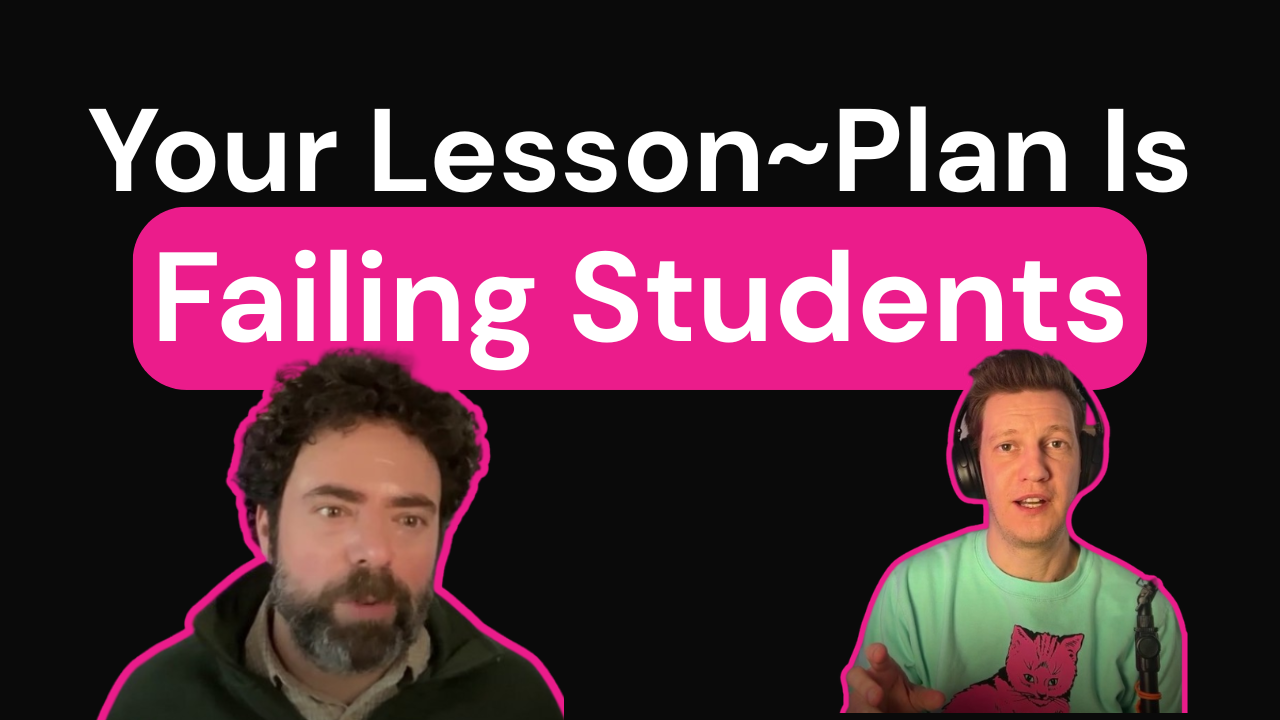
Most principals have sat through a lesson that went exactly as planned and taught nobody anything. Phil Brown has the opposite story: a day where nothing went as planned, and it became the most important teaching moment of his career. This episode is about what happened in between — and why experiential education, not another curriculum map, might be the fix your campus actually needs.
🫶 What You'll Learn
- Why following student curiosity can outperform even the best-designed lesson plan
- How the comfort zone, stretch zone, and panic zone model applies to staff and students alike
- Why "connection before content" isn't a soft skill — it's the fastest path to real learning
- What Kolb's experiential learning cycle looks like in a real classroom
- Why experiential education has a marketing problem, not a results problem
✅ Key Insight #1: Why Rigid Lesson Plans Kill Real Learning
- What's broken: Principals and teachers design lessons with locked agendas, tight timelines, and predetermined outcomes — then treat any deviation as a distraction.
- The shift: Follow the student's natural curiosity, even when it means abandoning the plan entirely.
- Impact: Phil scrapped an entire day's ropes-course curriculum to follow a student's question about a pine cone — and it became the most connective, most talked-about day of the entire program.
📚 Key Insight #2: Why Connection Before Content Changes Classroom Outcomes
- What's broken: Educators rush into curriculum before earning trust, assuming content delivery is the job and connection is a nice-to-have.
- The shift: Build genuine connection first. Content moves faster once trust exists.
- Impact: Groups who bond before instruction absorb content faster and take more risks, because they trust the adult guiding them enough to be honest when something's too much.
🚀 Key Insight #3: The Comfort Zone, Stretch Zone, and Panic Zone Every Leader Should Know
- What's broken: Educators assume "pushing kids out of their comfort zone" is automatically good — and push straight into panic without realizing it.
- The shift: Real growth happens in the stretch zone, not the panic zone. The goal is productive struggle, not overwhelm.
- Impact: Students who trust their leader will self-advocate the moment they're nearing panic — instead of shutting down or disengaging silently.
🗣️ PHIL BROWN QUOTES FROM THE RUCKUSCAST
"Find the pine cone. That just really means to be open to students' natural curiosity and follow it."
— Phil Brown
"Connection before content."
— Phil Brown
"It's the same thing with that supervisor who says, my door is always open — you know full well that door is not open."
— Phil Brown
"When in doubt, give them your heart."
— Phil Brown
"The only thing that you learn when you panic is, hell no, I don't want to do it again."
— Phil Brown
"Your aim is not to be childish, but be childlike."
— Phil Brown
🚵♀️ Your Do School Different Challenge
Ready to implement these ideas? Start here:
- Tomorrow: The next time a student or teacher asks an off-topic question, stop and follow it for five minutes instead of redirecting back to your agenda.
- This Month: Build one intentional "connection before content" activity into your next staff meeting, before any agenda item gets introduced.
- This Semester: Pick one entrenched schedule block — a 42-minute period, a PD day — and redesign it around Kolb's cycle: experience, reflect, apply, act, instead of a fixed lesson plan.
⌚️ Episode Timestamps
- 00:00 - Why rigid lesson plans block real learning
- 05:01 - Bringing Sunni and Shiite teens to Vermont
- 07:25 - Planning ropes courses the students didn't need
- 08:49 - The pine cone question that changed everything
- 12:20 - Using Ubuntu cards to build connection
- 14:20 - Why connection must come before content
- 15:23 - Kolb's experiential learning cycle explained
- 20:13 - The three components that make it adventure
- 26:37 - Comfort zone stretch zone and panic zone
- 29:34 - Why trust determines how far students stretch
- 35:59 - Why schools were built for the industrial age
- 38:11 - Selling experiential education to administrators
- 44:38 - Phil's message for every school marquee
- 47:47 - Find the pine cone the final takeaway
00:00
Speaker 1
Foreign.
00:05
Speaker 2
Lessons might be your biggest obstacle to real learning. We spend hours designing the perfect unit, preparing materials, building the ideal experiential. We show up with our agenda locked in, our timeline set, our outcomes predetermined. But here's what's happening on the other side of the classroom door. Students are asking questions you didn't anticipate, noticing things that you didn't plan for, and bringing their natural curiosity to moments you've already moved past. When we force learning into these neat 42, 43, 45 minute boxes and rigid lessons, we're operating from an outdated version of education, one that is built on the industrial model. You've heard this before. Meanwhile, our students are disconnecting. They're bored, and they're telling us through their behavior and through their absence and their lack of enthusiasm that schools doesn't compete with the real world. The real world that they're living in and facing.
01:10
Speaker 2
The cost of holding too tightly to our plans isn't just missed learning moments. It's lost engagement, diminished joy, and students who walk out the door thinking that schools sucks. But what if the breakthrough moment isn't found in what you prepared? It's found in the pine cone on the ground. What if the magic happens when you have the flexibility to follow your students natural curiosity, even when it means abandoning your lesson plan entirely? Today we're diving deep into experiential education and adventure learning with Phil Brown, an experiential and adventure education trainer at High 5 Adventure Learning Center. Phil's going to teach you how to build stretch moments that actually stick, create connections before content, and transform your campus into a place where students are genuinely excited to show up. I'm Danny Bauer.
02:08
Speaker 2
This is Better Leaders, Better Schools, the original Ruckus cast for visionary leaders who want to do schools different, even within the confines of a traditional system, so that we create campus experiences that are worth showing up for. Thanks to ruckus makers just like you, this show ranks in the top 1% of nearly 4 million podcasts worldwide. So once again, thanks for pressing play and we'll be right back after a quick message from our show sponsors. Foreign still scrambling for supplies like it's 1999, ODP Business Solutions streamlines everything from pencils to projectors so you can focus on what matters making an impact. Visit ODP business.comeducation to learn more. That's ODPbusiness.com education as districts look ahead to the coming schools year, the groundwork starts earlier than you might think. The way professional learning is designed can shape culture, collaboration and stability long before students arrive.
03:21
Speaker 2
Frontline Education's 2026 K12 lens report takes a closer look at how districts are connecting professional growth to stronger staffing stability. Download the full [email protected] leaders to learn more. That's frontlineducation.com leaders. IXL is a go to support for classroom teachers because its adaptive platform makes differentiated instruction easy. See for yourself and get started [email protected] leaders. That's ixl.com leaders. This episode is brought to you by Kids First Education. Founded by career educators, Kids first partners with Pre K through 12 schools and districts to deliver instructional coaching, leadership development and curriculum support that puts students first. Real educators, real results. Learn more@kids first.llc. That's Kids First LLC. All right. And Phil, welcome to the show.
04:42
Speaker 1
Thank you for having me.
04:44
Speaker 2
Absolutely. So bring us to a moment. We're in Vermont in the woods, I believe, working on conflict resolution with Sunnis and Shiites from Iraq. And there you are like, what's that? What's that about? What's that like?
05:01
Speaker 1
Yeah, so I gotta go, like, I'll go back a bit and explain why they're even there. But so I work in Brattleboro, Vermont, and for an organization called High 5 Adventure Learning Center. And we have the benefit of also having in Brattleboro, a place called the School for International Training that brings in students from all over the world. And then the intent is to integrate them with some American students and a bit of cult, have a bit of a cultural exchange and then design programming that they'll bring back to their countries to help whatever situation they're going through in their country. It's the intent to try to serve them. What we do is our organization is every time those students would come to Vermont, they would send them to us for a couple of days where we would focus on connection.
05:49
Speaker 1
And, and so I work for an organization where our motto is connect, empower, lead. And so the entire purpose is using adventure or experiential education to connect people and teach them and learn about themselves and others and how they interact. So this particular group was for sunni and Shiite 18 year olds. So high schools seniors who were coming to Vermont as part of a program to bring back some conflict resolution programming and back to their nation in Iraq. And for those who don't know Sunni, Shiite populations, then they do not get on. So it was quite a dramatic experiential for them coming here, seeing them get off the bus, arrive in Vermont. And the intent for us was to try to connect them to groups of Students. And initially when they got off the bus, it was like.
06:43
Speaker 1
Like a western culture high schools dance where you've got like, the girls and the guys on either side of the gym, like, they don't want touch. Or maybe it's middle schools, maybe they're young, where this. The cooties vibes. But it was kind of that experiential where they were very separated, Sunni Shiite. Now, the thing for us is the plan, and we have a beautiful property here in Vermont, and we have a ropes course. Part of our adventure learning is that we create experiences that stretch students. So we create large experiences that kind of push them outside of what's deemed as the comfort zone and kind of encourage kind of that growth. It's kind of a little bit of a nudge towards growth. So the intent was I was going to get the students from the field to the woods.
07:25
Speaker 1
I was going to get them in harnesses, helmets. I was going to belay. I was going to get all this stuff set up. And the part for me was because as a someone originally from England but now living in the US Being white, the term adventure for me is almost recreational, right? Like, we. Our lives are comfortable enough whereby we seek risk to stretch ourselves. The. The thing that I didn't have as a. I was probably 27 at the time, the naivety a little bit was like, I didn't really understand that coming to Vermont was a stretch for them. Like, I didn't need to get them in a harness, I didn't need to get them in a helmet and to height to stretch them. And so I had my intention in my mind.
08:06
Speaker 1
The reason I wanted to bring up this story is partly because of the change in mindset I had from an educational perspective around what my expectations should be around working with students. So the expectations that I had, the expectations of the staff that came for this program, was that they were going to get to height and climb and have these incredible experiences. There was going to be some great videos and marketing and all the other things they might want to use this for. But what I was noticing from the students really quickly is that they could care less about that stuff. They really cared about the fact that the trees were green and this was fields and there were hills and the fauna and flora was way different than they had experienced. And we are their first stop in America.
08:49
Speaker 1
Like, they're coming to us before they go to other places. So it's an overwhelming experiential anyway. And so a student came up to me and said, phil, what is that? And it was a pine Cone. So there was a little pine cone on the ground. And I have a background in outdoor education, so when I first came to the U.S. i taught outdoor ed, which was like, forest ecology and all of those kind of things in upstate New York. And so I drew on that and was like, oh, I'll teach you about where a pine cone is and what a pine tree is and what the difference between deciduous is and coniferous is. And, like, I got into, like, the weeds a little bit, like, nerdy esque in that.
09:30
Speaker 1
But as I started opening that door to those questions, more and more people had more questions, and it was starting to suck into the time. And typically, I would have, in that moment, shut down that conversation and gone into the adventure stuff because I had a curriculum in mind. Like, I knew where I was going, but I decided to default into rely on the students to lead me rather than me lead them. And it was a good reframe from me the whole day. We never left the ground. We never did any of the things I intended to do. We spent an entire day talking and wandering in the woods and asking tons of questions about moss and lichen and all the different things. And seeing a squirrel, and it's like, things that we take for granted as, like, obvious, normal things.
10:10
Speaker 1
I'm seeing through the eyes of them. Then it began to rain. And in my head I was like, nah, it's gonna rain. It sucks. Like, this is ruining stuff. Put on my jacket. And they were laughing and clapping and like, it was the best moment ever. So the reason I bring up this story, and I think it aligns with, like, you know, ruckus makers and like, changing education and looking at it differently is, for me, it was a big impactful moment to say I should follow the students and I shouldn't follow my own agenda because of all of the other reasons I think I should follow stuff. And so I wrote a blog and I to find the pine cones. So, like, the message I often lead to new educators is find the pine cones. And that.
10:50
Speaker 1
That doesn't have to be the specific of that cone. But, like, I remember that moment being more impactful than anything I could have crafted myself. And I just led with the students. And it gets brought up a lot by the schools and. And it gets brought up in different moments. Like, oh, you remember when you didn't do anything you said you were going to do? It's sort of like a joke in house, but, like, it's become a philosophy that I lead with, is trying to ignore my curriculums and agendas and try to lean more towards what the students are bringing to me in the moment. And that I think in a nutshell anyway, or a pine cone maybe is the purpose of experiential education, which is what I do is like create experiences to maximize learning.
11:31
Speaker 1
And it's more about what's happening in the moment than anything I could really craft. That's where the magic comes from anyway. And no doubt listeners have all experienced those moments where like a student asks them something and derails you completely and it leads to something cooler afterwards. And then you're like, oh, okay, that's. That was a really cool thing that the kids taught me versus me teaching them.
11:51
Speaker 2
Yeah, that's the best part. And that's what I'm resonating with. Right. I'm glad you told that story because yeah, too often we hold on to everything maybe a little too tightly. And if education's this dance, you know, maybe let the students lead from time to time or all the time. I mean, just see where it grows. So a great opening story. I'm curious how long they were with you and you know, if that middle schools cooties vibe dissipated right after their time.
12:20
Speaker 1
Yeah, I would say so. They were with us for a full day. They're really with us one day. But they were in that program for a couple of months. But the goal once again given to me was to connect the students. It wasn't necessarily to get them to do all of the high stuff, it was to connect. And I would have used that medium of climbing. But what ended we doing? We had a medium of conversation. We did, I did use a deck of cards that we have called Ubuntu for those who don't know the word. It's from the Bantu dialects in southern Africa. And it translates into I am. Because we are into this idea of community. And so the cards have, it's similar to spot it.
12:58
Speaker 1
They have images on them, they're non language based but we use those to create opportunities to talk about connection. And were finding images that related to something we connected with and then find those connections between us. I, I'm always of the mindset and this is something, you know, I'm not. You know, I have techniques and skills in conflict resolution, but I'm not a therapist, you know, I'm not there to resolve some of the bigger issues. But a lot of our work can still be therapeutic. Someone recently told me the difference between therapy and therapeutic is one is a very doctor driven this is medication or strategies. And then the other one is just if it makes you feel good after the fact. And so that's what I team.
13:37
Speaker 1
Some of our stuff is more therapeutic and just through those opportunities to connect, you can start to see those mirror neurons between the students and. And that ends the bond them. The benefit, I think, of any kind of experiential that you can guide students with is then they have that shared experiential in just an experiential that is shared is a very powerful way to connect people. We all probably can draw back on those moments where you've done something. Typically they're not that fun, but like they're a bonding moment. Like you get caught out in a snowstorm and. Or you're riding on a bus and you know, with students and something happens. Like it's a moment that you share with others and that tends to be the thing that connects.
14:20
Speaker 1
So that's what I think is our greatest ability as experiential educators is because we create experiences. A lot of the work is sort of done for us. Like, I don't have to craft too much because the experiential itself. Craft itself. So just those students being in Vermont for that. That day with me and having conversation was enough to connect them. Which was. Which I think is the. We have this phrase in the work that I do called connection before content. And I think that's a part. When I'm working with public schools educators sometimes gets missed mainly because of time and there's strict curriculums they're working with. But like spending the time to connect. If you just did a day of connection and. And ignored the curriculum for a day, the.
15:01
Speaker 1
The benefits after that are so powerful because you're able to develop your content quicker if the groups are connected and especially to you as the. As the adult role model in the group. So yeah, connection before content.
15:13
Speaker 2
So you've been talking a lot about adventure education and experiential education. I'm curious, like, how. How do you define experiential education?
15:23
Speaker 1
Yeah, so what I don't want to describe it as. I'm going to sort of like say what I don't want to describe as because I think it get mixed in the. In there somewhere. It's not necessarily just learning from an experiential. And sometimes I think that people see experiential education and think, well, we're just learning for experiential. There is intentionality. There was a guy called David Kolb in 1984 that came up with something called the experiential learning cycle. In this. This process by which somebody learns the first is to be able to go through the concrete experiential. So like you do something, the end result isn't immediate learning because you can do plenty of things and not learn anything from them. So there's. That's where the intentionality then comes in. The next step is reflective observation. And so you spend the time to reflect.
16:12
Speaker 1
For us as educators, that's by leading conversation that reflects. So giving frameworks. There are like you can ask, we call them the what questions. So you could say, what happened? So what? So what does that mean? And then now what? How do we draw that into the next? So like you can follow that pattern that can be helpful in reflective practices.
16:34
Speaker 2
I'm going to cut in just super quick. Like my favorite question I asked at the end of a coaching call is what was most helpful today?
16:41
Speaker 1
Right, Exactly.
16:42
Speaker 2
Folks are reflecting on that piece and drawing out, yeah, there's value here. I learned something. I've changed. So sorry, please continue.
16:50
Speaker 1
But it's important. It's like the benefit of journaling, right? Like journaling is helpful to people because it allows you to take a pause and reflect. Because the instantaneous learning isn't coming unless you spend a time to breathe and say, okay, what happened here? What did I do? What can I change the next of the cycle? So we've got doing the thing, the reflecting on the thing. The next is called abstract conceptualization. Very fancy terms, of course, but essentially it means that you are taking what you learn and applying it to a different setting. Like, how can I take the thing that I just did and bring it into something else for the work that I do? Experiential education is not to teach people how to better climbers.
17:32
Speaker 1
If I take them climbing, it's how do I take all the emotional experiential you just had and take that into your day to day? So what an experiential. What do you do in your life that gives you that same belly feeling of nerves, energy? What did you just do in this climb or maybe with some peers that you think would be valuable to take into that scenario? And then the next one is just the active experimentation. So that is now where you take that learning and give it a go. Try it somewhere. And if you don't do that as well, you're not also going to grow. So it doesn't. You can't just expect, all right, I did something and therefore I'm done. It's like when people do public speaking. And I think it's the number one fear.
18:11
Speaker 1
Because I work at Adventure, I deal with fear a lot. But the Number one fear in the US And I actually think it's in the globe when I looked it up, is something called glossophobia. And glossophobia is the fear of public speaking.
18:24
Speaker 2
And. And then death. Right? Is number.
18:27
Speaker 1
Yeah, probably death. Probably heights are in there somewhere because people say that. But fear of public speaking is. If you just say, okay, I want you to go up there and speak, that won't solve the problem of public speaking. That won't get rid of their fear. It might only enhance it because now they're like, oh, yeah, now I know why I'm scared. But it's to take what they did in that experiential, and then how can you reflect on it? How can you put that into a different scenario, and then how can you give it a go again somewhere else? In that kind of pattern of repetition is what experiential education is. How do we create something, reflect, take that information, do it again, rinse and repeat. And it takes intentionality to. To do that.
19:06
Speaker 1
The adventure word, where I do adventure education just means doing that exact same thing, but in a more stretched adventure scenario. So that's like ropes courses and climbing and all those. Yeah, that's where I'm. I take the same model and I just bring it into a bigger world.
19:23
Speaker 2
Yeah. Yeah. That's super cool. I must have been dropped out of my head too often as a kid, because I'm super happy to get on stage and talk to a thousand people. It's. I'm nervous.
19:34
Speaker 1
Yeah.
19:35
Speaker 2
You know, but that always disappears. And it's so funny to me because, like, that in that moment, I feel alive. But put me in a networking event and I. I hate, like, talking to the same people. That is terrible to me. So, anyways, just wanted to share that. Okay, cool. So thanks for defining experiential education and, you know, talking about those components, too. What do you. So other than, like, that experiential, sort of misconception. Are there any other misconceptions around experiential and adventure education that you want touch on or.
20:13
Speaker 1
Yeah. I was once introduced in a schools I was working with, like, I think it was 500 high schools seniors. I was doing, like, a. Just a team development thing at the start of the year. I got introduced on stage as Phil Brown, the kayaking guy. The reason I. And that reason that's tough is because I don't do that. So it's like I had to, like,.
20:32
Speaker 2
Okay, you don't kayak.
20:33
Speaker 1
Yeah, no. So I would say one of the misinterpretations is I think whenever I describe myself as an adventure educator is that they assume I'm doing like skydiving and stuff. And so what I always have to reframe to people is that education has three components. And once you realize the components of adventure, you realize that a ton of stuff is adventurous. So one is that it's unique and novel. So something that you don't typically do on your day to day. The second one is there is risk. That could be physical risk for sure, but it could also be social or emotional risk. And then the last one is there's a learning outcomes. So you're going to. Something will happen, you'll learn something and it could be that, hell no, I don't want to ever do that again. That that's a learning.
21:20
Speaker 1
But that is inherent in an adventurous experiential. Once you have those things of novel risk and learning and you take that, you can apply that to so much. Like when my daughter was born and every day since she's 10 now, every day is an adventure because I just don't know what's going to happen, right. So something's going to come through the door and she's going to come with something and I'm not gonna, I'm gonna learn something about it and it's going to be super risky, mainly for my mental state. But, but like that's an adventurous experiential. So I. The thing that I often tell educators is you don't need to have a ropes course. You don't need to have a massive outdoor facility. You don't need to go out into have an adventurous experiential.
22:00
Speaker 1
You just need to craft moments that can be those three components and then you can draw on it and then you can be saying you do adventure. And so a large part of my work is I teach educators how to create adventure programs in their schools. And one of those is just adventure in the classroom. Like, that's my start. Initial point. Like, how do we create an adventurous moment for you? How can we redefine adventure a little bit and realize the power of that? If you find it then super valuable, then you can create more stretching moments and do ropes courses. But like that's not the end result. And as much as I have skydived before and I think it's awesome, that's not what I do for a job.
22:41
Speaker 2
Okay. Yeah, I want to try open mic standups in 2026. So that would be adventure learning for me.
22:47
Speaker 1
It checks all those boxes and either it's it improv. I was talking to A guy about improv. Improv is the greatest skill that I think an educated could learn because like.
22:58
Speaker 2
I do that, I do that ability. Stand up's a bit different.
23:01
Speaker 1
I did, I did stand up in New York City when I lived there. I did one open mic night when I lived there when I was in my mid-20s and I had. That was terrifying. And I got a couple of laughs and I bombed a couple of times. You know, it was like. And that, yeah, that was tough. I, I think you'll love it. No, no. And just the conversations we've just had, I think you'll love it and probably do pretty well.
23:30
Speaker 2
Yeah, we'll see. I can't wait. I've been doing improv. I love that. I feel alive. I mean, I wish I could do that literally 24 7. You know, I just want to, Yeah, I want to try. Give, give. Stand up a shot and just see what happens. So I love making people laugh and I love to sort of point out the ridiculous. Plus, you know, I mean, I'm not gonna talk about what were discussing in the pre chat, but you know, there are serious things that are obviously happening all the time in the world. And through comedy you can address a lot of those very serious things and get people to think that might not have. Might not have thought about it in a.
24:04
Speaker 2
In a way they should potentially, if you were just sort of talking about it versus joking, you know, having jokes around it.
24:11
Speaker 1
So do you combine humor into the way you teach when you're. If you're teaching?
24:19
Speaker 2
When I was in the classroom, absolutely. 100, 100 All the time. And often during client coach calls, you know, I'm definitely looking for opportunities. It just kind of comes natural. But is there something inherently funny about the situation, like. Or how can I just let you know, sometimes like people get so worked up about a thing that's like, it's really not a big. And I'll just laugh at them, you know, not to be mean, right. But, but to be like, let's zoom out. Like, are you really. This is the thing that's gonna ruin everything. Like, come on. You know, so definitely. Yeah. Always trying to get.
24:55
Speaker 1
I think humor in is like massively under utilized skill. That seems like, to be honest, it's in the same way, like, I've got a light by me that says play a large. A large amount of the work that I do is play based on. And so there's some. There's so much the demeaning out there in the world. About, like, what play is. I tell. I tell educators, your aim is not to be childish, but be childlike. So, like, play is a huge part of their life. So be with the play. And I am a super goofball, so I'm like, I cannot. The seriousness is challenging for me. I like for people who maybe see this video, I'm wearing a very bright, luminous pinch catch sweater. I was gonna dress more formally, and then I was like, I'm not. That's not. Yeah, yeah, it's not.
25:44
Speaker 1
It's not me. It's not playful. So I think that's right. I always tell people just like, be. Embrace the humor if you can.
25:52
Speaker 2
Well, you see, I got the nutcrackers, the toys.
25:55
Speaker 1
Yeah.
25:55
Speaker 2
You see the things? These are called culture tiles. Or anyways, if my partner saw those, she's like, oh, gosh, this looks like a kindergarten room. And I'm like, perfect. That's perfect. That's. That's exactly what I want.
26:09
Speaker 1
Yeah.
26:09
Speaker 2
Play curiosity, imagination. You're talking about sort of like flexibility, resilience. These are all childlike qualities. Right. You know, fall down and get back up. So, yeah. So good. I think that kind of segues a bit to, like, the idea of a stretch zone, because I think kids have a. A wider stretch zone compared to adults. But how does stretch zone. Yeah. Connect to adventure and experiential education? Why is it so important?
26:37
Speaker 1
I think that there's this thing we call spheres or challenge zones. Lots of people have heard the term comfort zone, and I think that is another right thing that maybe gets misused occasionally. There was, I think it was an Outward Bound commercial in the 60s that showed a kid about to rappel off a cliff. And the kid was struggling, like, crying, like, no, I don't want to do it. And then it panned back to an instructor who then just kicked the kid off the cliff, looked at camera, and said, we push your kids to success. So I think that, like, I think that was the. The comfort zone thing was from that world. It's like in order to get moments of growth or change the dynamics, I have to push you into something.
27:26
Speaker 1
So you people will say, like, oh, I'm gonna push you out of your comfort zone. It's like, yeah, don't push anyone out of their comfor. So it doesn't typically go the way you hope it would, but we have this comfort zone model. It's like a circle in the middle. That's our comfort zone. Comfort I describe as where you are at the most relaxed and comfortable you could imagine. So for me, it's like a cup of tea sitting on my bed, reading a book. Like I'm, like, immersed in that world. Like I'm pure relaxation. What can we learn from that? We can learn that's a safe space, and that's not a bad thing to learn about. The next zone is what we call this. Like, it's a bit of a spectrum to. It is called that stretch zone, otherwise known as the challenge zone.
28:08
Speaker 1
And that's where majority of our learning occurs. And it's a spectrum. The closer to your comfort you are, the less you'll learn. But the more comfortable the experiential is, the further away from comfort you go, the more you might learn, but the less comfortable it is. And that kind of makes sense for experiential. The problem, though, is there's the outside circle, which has no spectrum, and we call that the panic zone. The only thing that you learn when you panic is, hell, no, I don't want to do it again. And we've all been in situations. You can all resonate with the idea of what panic might feel like. That's the butterflies in the stomach. That's feeling nauseous. That's the sweating. That's the red face. That's the hand shaking, eyes wide. There's so much physiology that goes into panic.
28:52
Speaker 1
That's where we don't, as adventure educators or experiential educators, that's where we don't want to bring our students. And I think that can be the mistake that I see when people start out, you just go too far, too hard. You're like, oh, I'm going to do this really cool thing. And then you realize that half of your participants don't want to do that or are terrified. And what did you learn from that? It's the Spider man quote of, with great power comes great responsibility. And I think that's in our world is a big deal because we can have such positive impact, but we can have the converse of that. We can have terrible impact if we just bring them too close too quick. And so the way that we teach it is always through guidance of how do we get to real struggle?
29:34
Speaker 1
How do we get to that moment where we really struggle? And then how can we empower our students to be able to say no and actively say, I don't want to do this anymore because I'm starting to feel panicked. And that requires trust. And that's why I think that the connection before content is so critical to the work that I do. Because if I don't connect with the students, they are not going to trust me. And when I tell them, you want, if you want to come down or if you, if this is too much, tell me, it's not actually likely they'll do it. Because even if I'm trying to be positively intending, it's like that supervisor who says my door is always open. And you know full well that door is not open. You know, like, can I say you.
30:17
Speaker 2
Could tell me anything, nor do you want to walk through it? You know?
30:20
Speaker 1
Exactly. You know that's not true. It's the same thing with student educators. I can tell them everything I want, but they're not going to believe me unless I prove that there's worth in that. So. And then how do we craft it so that they're only within that talent zone? And that's a really tough thing that comes with experiential, knowing where that line is and like being able to read your groups and identify the individual behaviors that you see.
30:43
Speaker 2
My lived experiential was having a supervisor tell me now, Danny, I value work life balance, right? But I'm still gonna write you up for having a personal trainer, doing your morning workout and showing up at, I don't know, 7:05 instead of 7:00 clock for the schools day, even though the kids don't arrive until 8 o'. Clock. You know, there's, there was a lot around that. Yeah. I was like, yeah, but you value work life balance. I got it.
31:10
Speaker 1
Exactly. So what did you learn? You learned, they didn't. Yeah. So it's that. Exactly.
31:15
Speaker 2
Yeah, I learned a lot that year. I learned a lot. ODP Business Solutions, formerly Office Depot Business Solutions division, has been a trusted partner for schools for 30 years. At ODP Business Solutions, we're by your side to meet your evolving needs. Education needs. Let's talk about what keeps ruckus makers up at night creating engaging learning spaces while juggling budget safety protocols and those endless supply lists. Here's the game changer. ODP Business Solutions helps you tackle it all. We're not just another vendor. We're your strategic partner in transformation. Want to turn a tired computer lab into a Steam innovation center? Will help design it. Need to keep 8 schools stocked and spotless. We've got sustainable solutions that scale looking to upgrade from whiteboards to interactive displays. We'll guide you through the entire process.
32:16
Speaker 2
And the best part, you can get it all from a single supplier that helps you simplify ordering and streamline budgeting while staying compliant with easy access to cooperative contracts. However, you Want to advance ODP Business Solutions has 30 years of experiential helping districts like yours get ahead. Visit ODPbusiness.comeducation to learn more. That's ODPbusiness.com education summer sets the tone when the professional learning is intentional and built for collaboration, it can strengthen culture before the year even begins. Frontline Education's 2026 K12 Lens survey report found staffing pressure has eased overall, but gaps still remain. Districts reporting easier hiring are more likely to have professional growth that's structured and targeted to individual goals, so learning carries well beyond onboarding and supports ongoing improvement.
33:23
Speaker 2
Nearly half of districts that use software to manage and provide professional growth say hiring has gotten easier compared to 30% that don't use software. Download the full K12 lens report at frontlineducation.com leaders to see the data and the practices behind stronger culture and retention. You can get that [email protected] leaders teachers love the support that IXL provides in the classroom. And Ruckus makers love it all as well because IXL also gives schools leaders meaningful insights on every level. Put your finger on the pulse of student performance with IXL and its dashboard to drill down to see progress and growth for individual students. You can even customize reports to hone in on the information that matters most to you. IXL helps Ruckus makers make data informed decisions that will benefit their students growth goals. Get started [email protected] leaders.
34:36
Speaker 2
That's ixl.com leaders better leaders build better schools and the best leaders don't do it alone. This episode is supported by Kids First Education. Founded by career educators, Kids first partners with Pre K through 12 districts and schools to strengthen teaching and leadership from the inside out. Through personalized instructional coaching, leadership development and curriculum support. They help teams make data driven decisions that improve student outcomes. Their approach is built on collaboration, reflective planning, shared problem solving, and a relentless focus on what's best for kids. Whether you lead a single building or an entire district, Kids first meet your team where they are. See how they can support your schools or your system. At Kids first llc, that's Kids first Dot LLC. This all sounds so wonderful. Adventure Education, Experiential education. But it's not. You know I don't remember in my studies, right?
35:52
Speaker 2
And when I was getting certified, really being exposed to this kind of thinking. Why do you think that gap exists?
35:59
Speaker 1
It's interesting because I I was interviewing someone at one point I was having a conversation with educational historian at Boston University and I was asking him like this whole traditional education Thing like where did that come from? He really defines traditional education as industrialized education because the public schools environment really is setting up students for the industrial age. Think about the bells and there's a lot of indicative parts of schools life that are setting students up for a factory based work life that doesn't exist anymore. But if you go before then, experiential education was the main way that people learned because that weren't designing our next level of workforce because that wasn't the intent.
36:43
Speaker 1
I think where the struggle is we've gone so far into that industrial educational model that's hard for us to see outside of that because we've got real structures that are preventing it. Time is a massive factor and then curriculums are a massive factor. When I talk to educators and they're working on a 42 minute class schedule, how do they, how do you fit in the things that we're trying to do into that? When a large part of what I do is creating scenarios and just letting time be you, it's hard to create an experiential. It becomes inauthentic and not natural. If I contain it completely, if I say it has to be boxed into this space, into this time, how do you really set up a true experiential that's going to emulate or represent the real life? Like that's. It's hard to do.
37:30
Speaker 1
So I think that's a part of why it's challenging. It's interesting. I've got a teaching degree and I learned none of this when I first dying back in the uk. It was only until I came to the States and interacted with a summer camp that I found this kind of experiential educational model. And that's one of my big things is there is an organization called the association for Experiential Education. I happen to serve on the board of that org. AEE.org is their website, but I encourage people to check it out because it gives opportunities for people to learn more about this and learn ways that you can integrate it in your schools in a nice, in a effective way. So it can be the start point.
38:11
Speaker 1
Typically when I talk to educators and I describe what we do and I demonstrate what we do, people want more of it. The thing that I often then tell them is how do you then explain that to the administrators? How do you explain that to the superintendents? How do you explain that to the parents? Like how that's I way. Yeah, exactly. All right, good one. Yeah.
38:32
Speaker 2
Your kids will love it. They won't be bored and say School sucks.
38:35
Speaker 1
Yep.
38:36
Speaker 2
And. And 2. You know, when I talk about the ruckus maker point of view, it's reimagining the project of education within the. The traditional box. 42 Minutes, whatever.
38:45
Speaker 1
Bell to bell.
38:46
Speaker 2
But here's the. The outcomes is what's most important. Listen to the words. To create a campus experiential worth showing up for. So if we learn what we've talked about here in the last half hour and start implementing more and more on that on campuses across the nation in the world, I think. I think you'll have a campus experiential that kids want to be a part of. And that's. At the end of the day, what's most important.
39:08
Speaker 1
Yeah. And I. And I do. Oh, you did wonderfully. And I would say one of the greatest weaknesses, I would. I would say for experiential and eventuate. And, and one of the reasons I serve at a board and want to be more active is the fact that I didn't know about it when I taught. Education is a problem. And, and it's a marketing problem, I think, at a bigger way. Because when I work with schools and we go in and we do this stuff, everyone loves it. When I work with students, everyone loves it. I, I haven't met a group who's saying, like, wow, this is kind of not really our feeling. Like, there's too much laughter. Can we cut that down? Yeah.
39:41
Speaker 2
Like, yeah, yeah. We're having too much fun. Please.
39:44
Speaker 1
The kids are learning. What the heck? You know, this. This kid who was a real problem, a struggle in my class is actually the best student. Like, that's a classic experiential. You know, I, I'm as. I'm of a. I am a student who had and has adhd. I know that the schools environment doesn't work for me. That's partly as well why I do the work that I do now. It's kind of. I found a thing that works and I want to invest that more in people. And, and so, like. But the fact that people don't know about it. If you're listening to this and this is the first time you've ever heard that experiential education is an actual pedagogy that is studied and taught.
40:19
Speaker 1
And there are some colleges that teach it in the US if you didn't know that, then that is not your problem. That's actually our problem. Right. Like, that we haven't marketed. And I think that's the thing that I encourage people to do is how do we get that message out there in a big way and really try to cultivate it so that administrators and otherwise are willing to spend the dollars that it takes to get your staff trained and willing to do those things in it. There is an investment, of course, there always is. But it's that value point. What's the return on the investment? And I would say for our work, it's not only for the students, but selfishness for the educators too.
40:54
Speaker 1
It will make your work life so much better and you will enjoy going to work in those student environments when you are getting to do play based learning or some version of that around a model that's different but is still achieving the learning outcomes that you're hoping to achieve.
41:10
Speaker 2
Yeah, you know, I went into it wanting to make a difference, seeing those light bulb moments. And I think this is just a, an atmosphere, right? A space that's going to create more of those light bulb moments, you know. So yeah, it's been great talking about this. I'd love for you to plug your podcast too. I know you got a podcast as well. So we tell the ruckus makers listening or watching what your show is all about.
41:36
Speaker 1
Yeah, it's called Vertical Playpen and it's about advice for adventure and experiential educators out in the world. And so it is exactly what we talk about. If you, if you've liked hearing me describe this, then every Tuesday, new episodes with educators across the world who do experiential and adventure education and they talk about how they incorporate it into their work lives and the benefits has to them. There are also episodes where I just took theory. So if you get super nerdy into theory stuff and you want to hear that, then you can hear me talk for half an hour about abstract conceptualization, then you can do that. So Vertical Playp. And the reason it's called that I always have to try to explain this one, which is not great really is it happens to be the name of a ropes course element.
42:25
Speaker 1
So it's, you take a, it's like taking a playpen and you stick it up in the air and people climb it. It's very emblematic of our industry and it also has like the idea of lots of different parts to help you grow. So that's the intent of Vertical Playpen.
42:42
Speaker 2
Right on. So the last live event I hosted was in Nashville, Tennessee. We went out to some adventure ropes course there because I, I like to add something fun indifferent to our events. So we've done hiking in mountains and hills around Taos New Mexico. In Denver, we did whitewater rafting. Nashville, we did this ropes course. A lot of it fun. Like, I love ziplining, I love climbing, that kind of stuff. But there was a part where, you know, from one tree to the next, it was these logs, right? With, you know, just coming out from the side for your feet. I nearly lost my life on that one. That part was so hard. I engaged every bit of the core muscles that I had, and I was pretty sure I was in a fall.
43:28
Speaker 2
And I knew I wouldn't die because I was strapped in. But, oh, my God, that part was so hard.
43:33
Speaker 1
I was trying to call the heights, like, the great equalizer, because it doesn't matter, really. Like, the physicality sometimes for some people works good. The emotional side is hard. For others, we have the benefit. The organization I work for, we work with National Hockey League teams. So I was fortunate to work with the. I've worked with the Bruins and the Devils and the Flames, Calgary Flames and stuff. And when we bring them out to our course, you'd see these giant human beings, and you think, like, oh, yeah, they'll master everything.
44:02
Speaker 2
They're going to crush.
44:03
Speaker 1
Like, they are so scared. And so. And it's like, it's very entertaining to watch, but it's also a great, humbling moment. That's partly as why we do it with those particular participants. And it's valuable to them because they don't have much of that in their life where they're really, like, pushed in a way that scares them. Sure.
44:19
Speaker 2
It is super interesting. Wow. Even for pro athletes, right?
44:23
Speaker 1
Yeah.
44:23
Speaker 2
Playing on the world stage. How about that? Cool. Well, I'd love to ask you the last three questions I asked all my guests. The first one is if you, Phil, could put one message on all schools marquees around the world for a single day, what would your message be?
44:38
Speaker 1
So mine is based on something that I was taught by a mentor of mine, and I use this phrase all the time, and it's, when in doubt, give them your heart. So. And the re. And I think it, like, it ties into what we've been discussing anyway, the flexibility piece. But I think that, like, because we're. The thing I struggled with as an educator is trying to keep within the boundaries of the curriculum and seeing people struggle. And then I kept forgetting that I'm a human being interacting with other, smaller human beings or other human beings, and so leaning in with just your heart. So when in doubt, just give them your heart. Just be you. And that typically works out the best. I'LL put out another little plug.
45:19
Speaker 1
But that same mentor just wrote a book and it's called when in doubt, give them your heart. So and a wonderful story about connecting with people. And so I have the privilege of being able to hear him talk about that quite often. But that always resonates with me and I tell that to pretty much all educators I work with. Like when in doubt, give him your heart.
45:41
Speaker 2
It's great advice. I feel if you were building your dream schools right. And you weren't constrained by any resources, your only limitation was your ability to imagine what would be the three guiding principles of your dream schools.
45:54
Speaker 1
Yep. So this one I wrote, I I the first one was how has adventure and education being purposely designed into the schools? And, and with that I don't mean like just throwing it randomly with a phys ed class or randomly with a home EC class or something, but like how do you holistically bring into everything you do? So from like the principal all the way down, every single staff member, everyone's bought in. And I think that is when successful. Like I know certain schools that I work with, we work with the students, we work with the staff, we work with everyone, we work with the parents. Like holistic programing is always going to better because there's general buy in. So that would be the first thing. The second one was pure investment into staff education that is unlimited because as we said, unlimited resource.
46:45
Speaker 1
But like absolutely investing in staff. I do think that there's a petering out of excitement from education when you're not being reinvested in. I think that's probably too true for all fields. But like it's not just pay increases you want at the ends of the year as much as those are helpful. But you do want people to actually say like we value you so education for them. And then the last one is if I do have truly did have limited it would be a massive outdoor campus. They're focused on the outdoor space in the outdoor world. Increasing the number of green spaces. I think that's what it's called in the UK but like just creating more outdoor opportunities is here is just, it just gives you more opportunity.
47:25
Speaker 1
Those places that are those schools that border wood and have wood space, if you're not using it, use it. But if you, and then when they use the value is just off the charts. So outdoor space would be the third piece.
47:38
Speaker 2
Brilliant. We covered a lot of ground on this episode of everything we discussed. Phil, what's the one thing you want a ruckus Maker to remember.
47:47
Speaker 1
So for mine, if I go back to the starting story that I led with would be find the pine cone. That would be the message I'd leave, Find the pine cone. And that just really means to be open to students, natural curiosity and follow it. So be open to their natural curiosity and follow it. Find the pine cone. It's so easy to have a student come up and ask you a question that's sort of not related to what you're doing right now and just, you know, quiet them down, say, that's not. You're not focusing on the right thing. I actually find that too with my daughter when she just randomly asked me something random like, where's that coming from? And I should just be like, oh, no, I'll just answer it. So lean into the student's natural curiosities and find the pine cones.
48:32
Speaker 2
Hey, Ruckus Maker, thanks again for pressing play. I hope you enjoyed today's episode as much as I enjoyed creating it for you. And before you go, if today's show shifted something in your mind or sparked an idea about how you could do schools different, then I think you'd be a great fit for what we call the Ruckus Maker Mastermind. The Mastermind is a private community of innovative schools leaders who meet weekly to grow, reflect, and disrupt the status quo. You can create the campus experiential your staff and students deserve. Applications are now open and go to betterleadersbetterschools.com apply to put your application in it.
🔗 Connect With Phil Brown
👩🏻💻 Website: https://high5adventure.org/ , https://www.aee.org/
👉LinkedIn: linkedin.com/in/phil-brown-high5
🎙️ Listen & Subscribe
Listen to Better Leaders Better Schools on Apple Podcasts, Spotify, Youtube or wherever you get your podcasts. If today's episode moved you, leave a review — it helps more Ruckus Makers find the show.
🧔🏻♂️ Your Self-Mentorship Guide
Meet Digital Danny — your self-mentorship guide. Always available, never forgets, and evolves with you. Think through your next leadership move at myprincipalcoach.com.
🫶 Today's Ruckuscast Partners
ODP Business Solutions®
Still scrambling for supplies like it's 1999? ODP Business Solutions has been the trusted supply partner for schools for 30 years — from restocking eight campuses with sustainable, scalable solutions to redesigning a tired computer lab into a full STEAM innovation center. Everything comes from one supplier, which means simpler ordering, streamlined budgeting, and easy access to cooperative contracts.
🔎 Visit odpbusiness.com/education to see what they can build for your district.
IXL
IXL isn't just a teacher tool — it's a leadership dashboard. Ruckus Makers use IXL to put a finger on the pulse of student performance, drilling down to individual growth and customizing reports around what matters most to their goals.
🔎 Get started at ixl.com/leaders.
Kids First LLC
Kids First Education was founded by career educators who partner with Pre-K through 12 schools and districts to deliver instructional coaching, leadership development, and curriculum support built on collaboration and real classroom data — not theory. Whether you lead a single building or an entire system, they meet your team where it is.
🔎 Learn more at kidsfirst.llc
Twelve Practices LLC © 2026 | If Education Ain't a Bit Disruptive, Then What Are Your Students Learning?


