Eight years ago, Chad Weiden walked into one of South Carolina's most underperforming elementary schools — a campus so low-rated that the state took it over, failed to fix it, and handed it back to the district. He just turned it into a good school. The strategy for school turnaround he used wasn't a new curriculum, a fresh initiative, or a culture retreat. It was building beacons of excellence on every team and coaching teachers in real time, in the moment, while students were in the room.
Weiden spent nearly three decades building and leading schools across Chicago and South Carolina, including turning around Meeting Street Burns Pre-K through second grade from "unsatisfactory" to "good" on the state report card — in one of the most underserved communities in the state. He's a principal who understands that every child can learn and that the system, not the child, is what needs fixing. Find him on LinkedIn to follow his work.
School turnaround is one of the most searched and least understood challenges in school leadership. Most principals know they need to fix culture — what they don't know is which two or three instructional moves actually move the needle. This episode answers that question directly, from a principal who lived it in real time in a school the system had already given up on.
🤩 What You'll Learn
- Why building one beacon teacher per team matters more than trying to develop everyone at once
- How to implement real-time instructional coaching — in the moment, mid-lesson — and get teachers to crave it instead of fear it
- The vulnerability framework you must unpack before jumping into a teacher's classroom
- Why joy is not performative and what it actually looks like in a high-expectation school
- How the paradox of high expectations and deep love for students coexist — and why low expectations are never kindness
🧠 Key Insight #1: School Turnaround Starts with One Beacon Per Team, Not Everyone at Once
- What's broken: Principals in turnaround schools try to develop every teacher simultaneously and end up moving no one.
- The shift: Identify and build one beacon teacher per grade-level team who sets the standard, holds the expectation, and shows colleagues what great looks like when the principal isn't in the room.
- Impact: Once a beacon is in place, a second strong teacher develops faster — and within a few years, the entire team performs at a high level because the standard is visible every day.
🧠 Key Insight #2: Real-Time Coaching Builds Better Teachers Faster Than Any Post-Observation Debrief
- What's broken: Most instructional feedback arrives as an autopsy — a sit-down debrief days after the lesson, long after the muscle memory has hardened.
- The shift: The principal enters the classroom as a co-teacher, intervenes the moment an instructional error occurs — modeling, adjusting, coaching in real time — the same way elite athletes are corrected mid-rep, not after the game.
- Impact: Teachers start craving the feedback because they feel the improvement immediately; confidence builds in the room, students re-engage, and the principal's classroom presence shifts from evaluative to transformative.
🧠 Key Insight #3: Joy in School Is Not Performance — It's the Small Moments That Make Learning Stick
- What's broken: When 53% of students are disengaged, schools respond with programs, pep rallies, or initiatives — and teachers interpret any call for joy as a demand to become entertainers.
- The shift: Joy lives in small moments — a student nerding out on a text, spotting an algebra pattern in geometry, owning a goal that feels meaningful — not in performative enthusiasm that burns teachers out.
- Impact: Campuses that build joy into the academic experience — through growth, celebration, and belonging — create environments students don't want to leave and teachers don't want to quit.
🗣️ CHAD WEIDEN QUOTES FROM THE RUCKUSCAST
"I had to build a beacon of a teacher on each team. One beacon of what the bar should be — because when you leave, they're really holding the expectations. They're showing other people what it looks like."
– Chad Weiden
"Act like the school is your classroom. Every classroom is my classroom, and when I walk in, I'm going to co-teach with you. That's how we built really great teachers really quickly — that system of real-time coaching."
– Chad Weiden
"There's nothing better when you get feedback that helps you feel more effective or confident. You start to crave it. And once people realize this is going to make your job easier — not tomorrow, right now — they're like, okay, this is weird, but dang, that was helpful."
– Chad Weiden
"To truly love a child is to hold that child to the highest expectation possible. To not love a child is to lower the expectation. I really lived in black and white — what I've deeply changed my mind about is I embrace the paradox."
– Chad Weiden
"Joy isn't big joy. Joy is in small moments — nerding out in a text with a kid, seeing them light up over a pattern they've spotted. That's joy. It's not performative. Because performative is exhausting and you can't do it every moment of every day."
– Chad Weiden
"The system is perfectly designed to get the results that it has."
– Chad Weiden
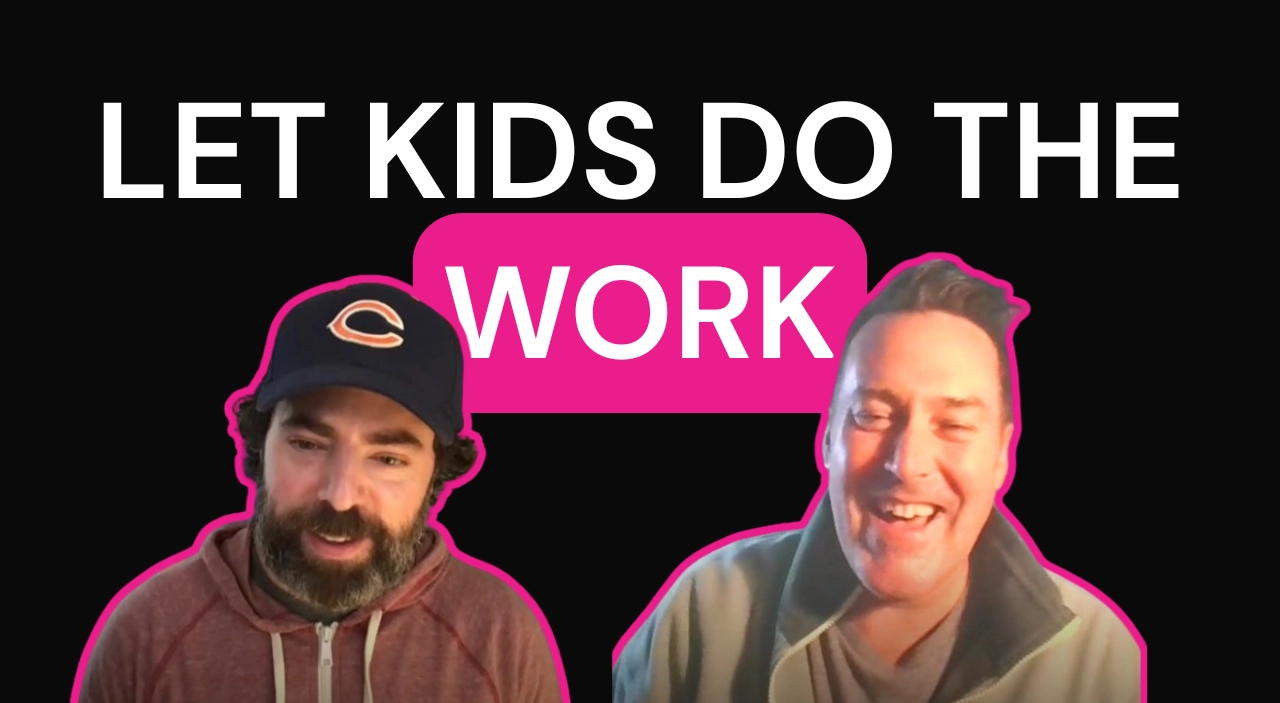
"Let kids do the work. Teachers hold the learning, hold the modelling — we're talking too much. Let kids do the work. They're ready."
– Chad Weiden
🧗♂️ Your Do School Different Challenge
Ready to implement these ideas? Start here:
- Tomorrow: Walk into one classroom with the explicit intention to co-teach for five minutes — not to observe, but to intervene and model in real time if you see an instructional gap.
- This Month: Identify the one teacher on each grade-level team who is closest to beacon status and invest your heaviest coaching hours there first, rather than spreading yourself evenly.
- This Semester: Build a vulnerability framework with your staff — naming real-time coaching as a school norm during onboarding, modelling receiving feedback publicly yourself, and making the four beliefs explicit: it's okay to fail, it's okay to not know everything, it's okay to ask for help, and we are in this together.
⌚️ Episode Timestamps
- 00:00 - The real lever behind student disengagement
- 07:18 - Chad's turnaround story in South Carolina
- 10:22 - The three moves that drove results
- 11:05 - Building a beacon teacher on every team
- 12:26 - Real-time coaching defined and how it works
- 15:18 - How to introduce real-time coaching without fear
- 21:06 - Why every educator should take an improv class
- 30:07 - Joy and growth as the engine of school turnaround
- 39:16 - What Chad changed his mind about in education
- 42:57 - Danny on firing yourself from your own organization
- 44:29 - Marquee message: Let kids do the work
00:00
Speaker 1
Foreign. If more than half of our nation's students are disengaged from school, the problem's not the kids. It's the kind of experience that we're creating for them. Most leaders respond to this crisis of disengagement by throwing more pd, more meetings and more initiatives at the problem. But what if the real leverage isn't another program? It's you in the classroom, coaching in real time, building beacons of exemplary leadership and instruction on every team, and insisting that the campus is filled with joy. Today my guest is Chad Weeden, a dear friend and incredible ruckus maker who turned around one of South Carolina's poorest performing schools and proved that every child can learn by building high expectations. Joy filled systems of growth in one of the most underserved communities in the state. I'm Danny Bauer.
00:59
Speaker 1
This is Better Leaders, Better Schools, the original Ruckus cast for visionary school leaders who want to do school different even within a traditional system, so that we create a campus experience worth showing up for. Thanks to Ruckus makers just like you, this show ranks in the top 1% of all podcasts in the world. So once again, thanks for hitting play. And we'll be into the main content after a few messages from our show sponsors. Want to know how top schools create collaborative learning environments that actually work? ODP Business Solutions has equipped innovative educators for over three decades. Visit ODP business.com education and let's make a ruckus together. That's ODP business.com education strong school culture doesn't happen by accident. It's built through meaningful support and opportunities to grow. Frontline Education's 2026 K12 Lens report explores how districts are connecting professional growth to stronger staffing outcomes.
02:16
Speaker 1
Visit frontlineducation.com leaders to see the full report. That's frontlineducation.com Leaders to see the full report. IXL takes the guesswork out of lesson planning for teachers. IXL's ready made lesson plans are aligned to your textbooks and state standards so teachers can turn to IXL for the exact content they need to help their students. You can get started [email protected] leaders. That's ixl.com leaders. All right. Welcome back to the show, Chad. Like, here you are.
03:01
Speaker 2
Here I am. It's so good.
03:04
Speaker 1
Yeah. In, I mean we go way back to University of Illinois.
03:10
Speaker 2
That's right.
03:10
Speaker 1
And, and you know, also. Yeah, I. And I and a lot of early education days back in Georgia. Wow. Right. I remember seeing like Ben Harper, I think with you do you remember, you know, I had one of those Midtown music.
03:28
Speaker 2
Yeah. So this Andre 3000, big boy. It's great.
03:34
Speaker 1
Did you know I made pizza for Andre 3000 at the Mellow Mushroom?
03:38
Speaker 2
No.
03:38
Speaker 1
I did.
03:39
Speaker 2
Tell me that.
03:40
Speaker 1
Yeah.
03:40
Speaker 2
Because I was working there near Piedmont.
03:43
Speaker 1
Well, I was in the Vinings. And because I was a early career teacher. Right.
03:51
Speaker 2
Yeah.
03:52
Speaker 1
Rolling in the cash, I decided to get a second job, and pizza. Pizza was it. So I think the two most meaningful moments before Andre 3000, I used to sing in. In broken Spanish, just making up songs that made no sense, but they were the Spanish words I could remember sounds like. And that was because the dishwasher spoke only in Spanish. Right. And so we'd have these little conversations, but I also just wanted her to feel like a part of the team. And, like.
04:20
Speaker 2
That's right.
04:21
Speaker 1
You're not just there to wash dishes. So I'd sing these stupid songs. She'd be dying laughing. My manager, he hated it. Right. And if you've been to Mellow Mushroom, they have open kitchens. It's not like you're in the back, right. Yeah, there's in the back. Everybody can see you, what you're doing. And I'm just having a blast singing these songs. And he told me basically to shut up or get fired. So I just. I sing in a whisper. I love it. And then one day, Andre 3000 walks in. I think he's like, vegan or something. So we did a very special, you know, no cheese, no meat sort of pizza. And we had him. He signed a pizza box, we hung it up.
04:59
Speaker 2
No way. Did he come with his entourage or just him?
05:02
Speaker 1
I do remember a few people with him. So I don't know how big. Like, what constitutes an entourage? Is that more than three? Four? Yeah, it wasn't. It wasn't more than five. I would have remembered that.
05:12
Speaker 2
So that's incredible.
05:13
Speaker 1
Yeah.
05:14
Speaker 2
Do you have you made it back to Mellow Mushroom in the past five years?
05:17
Speaker 1
So our. That's a great question. Second live event we hosted in Denver, I brought the team to a melon mushroom just to a celebration, so. Yeah, but it was in Colorado, not down in Georgia.
05:29
Speaker 2
Yeah, I was gonna say. Right. That is incredible.
05:32
Speaker 1
Yeah. And the secret that makes their pizza so good, they butter their crust and add cheese to it.
05:37
Speaker 2
Yeah, that's right.
05:38
Speaker 1
Yeah. So that's right. It's very southern. That's like that old racist lady. What was her name? Paula Dean or something like that.
05:45
Speaker 2
That's right.
05:47
Speaker 1
My wife's from Zimbabwe. She's black. And she bought a ton of Paula Deen. Like, like, what do you even call it? Like, plateware. What is it called? Yes.
05:57
Speaker 2
Like stemware playwear.
05:58
Speaker 1
Yeah. Because she said something terrible. Right. Like, extremely racist.
06:02
Speaker 2
Yeah.
06:02
Speaker 1
And so then, like, I don't know if it was. Let's just say Target. It probably was it like, slash, like 90% off. And so my wife was like, bam, let's go. Yeah, food tastes good. Lots of butter, you know, inexpensive. I upgraded my kitchen. Thank you. That being racist. That's hysterical. Yeah. So, you know, lemons into lemon juice, I guess. That's right. Lemonade.
06:26
Speaker 2
That's right. Get really good glassware. 90%.
06:29
Speaker 1
Speaking of lemonade, here's your hibiscus tea. That's great.
06:33
Speaker 2
Right? Good for the heart.
06:34
Speaker 1
Good for the heart in this regard.
06:36
Speaker 2
So viscous tea, supposedly. Good for the heart.
06:38
Speaker 1
Right on. Yeah. Yeah. And so, I don't know, I saw a post on LinkedIn and I think you're, like, celebrating something, and I'm such a great interviewer. Like, I don't remember what you were celebrating, but I, I, I just remember seeing. And I was like, oh, I'm so happy for Chad. It's like, it's been a minute and genuinely, the last time we spoke was one of my favorite conversations on the podcast. I've been doing it for 10 years.
07:02
Speaker 2
Right back at you, man. Well, you're biased. I'm biased.
07:05
Speaker 1
That's okay.
07:05
Speaker 2
I think we like each other.
07:07
Speaker 1
We're also smart, though, so the bias, like, concerned. But yeah. So I just wanted to, like, celebrate you a bit and just check in. Like, how's school leadership going these days?
07:18
Speaker 2
Thanks, man. That's a great question. I definitely was celebrating. I moved down to Charleston eight years ago to take over and turn around one of the most underperforming elementary schools in the state of South Carolina. Rumor, and sort of the story goes, this wonderful elementary school that serves predominantly African American students that live in poverty was so low performing, underperforming that the state took it over and couldn't do anything with it and gave it back to the district.
07:48
Speaker 1
Wow.
07:50
Speaker 2
Right? So I got the call from a former superintendent in Chicago Public Schools and said, hey, come down and interview for this. I was, that was not where I was expecting to go. I was expecting to be a area superintendent for Chicago Public Schools and, you know, manage 40 schools. But when I came down and saw the state of public education in South Carolina, specifically for our marginalized communities, our black and brown children, our children live in poverty like, blew my mind. And so after getting my butt kicked by the team that interviewed me, I fell in love and just was so excited to start a school, excited to give a community that had been promised so many different things and no one came through a good and great school.
08:33
Speaker 2
And so we started meeting Street Burns pre K through second grade, and a bunch of trailers behind a middle school. We called them learning cottages or cabanas. When it got really hot, it was the most challenging year to start a school from scratch. And after year two, we moved into a brand new building. Pandemic happened. We had to reset the whole school and start again. So it was like year three was.
08:56
Speaker 1
Sort of our year one.
08:57
Speaker 2
But after all that time of just trying to take this school that was ranked unsatisfactory and each year grow kids at least 1.5 years of growth. And after a good six or seven years, we finally got a good rating on the report card. And it was like, just thrilling to show our communities and in Charleston county and in the state that every kid can learn. Like, every kid can learn. And they're like, it's proof it's right down the road. A school that was taken over by the state is now ranked a good school.
09:29
Speaker 1
Right.
09:31
Speaker 2
So I love to celebrate.
09:32
Speaker 1
Totally. I love to say that, you know, students and staff, they'll meet your expectations whether they're high or low.
09:37
Speaker 2
Right? That's right. Yeah, they are. The system is perfectly designed to get the results that it has.
09:43
Speaker 1
Exactly. So good. Good on you.
09:46
Speaker 2
Yeah, it was such a joy. One of the greatest, I think my favorite principalship.
09:51
Speaker 1
Really?
09:52
Speaker 2
Oh, yeah.
09:52
Speaker 1
Because of the turnaround story or there's other.
09:55
Speaker 2
Yeah, turnaround story again, Like, I love creating order out of chaos. I think you and I have talked about this before, like, give me a mess. And I just love it. Put systems in place, routines, build culture from the ground up, change hearts and minds. It's the best. But I mean, it was hard. It's hard. It was good hard, though. Really great art and just met some amazing people along the way and were able to grow and develop incredible human beings to just better than me. So it was a blast.
10:22
Speaker 1
I'm sure that, like, installing a system to change things at that magnitude, it requires you to be responsive to what you're seeing in front of you. But when you reflect on, like, that system you've installed that has led to these results. Can you, like, paint a picture? Maybe top one, two or three, you know, like moves that you made that, okay, this, we're getting progress because we did these things.
10:52
Speaker 2
That's such a good question. I would want tons of think time but I'm not gonna think, I'm not gonna answer what I think most people would answer, which is right. Like I think most people would answer get your culture right.
11:05
Speaker 1
Yep.
11:05
Speaker 2
Know your kid routines and procedure culture. Right. That's all true, like 100% true. But I think everyone knows that. I think these are the things that surprised me the most that turned out to be true. And I think the one thing is that I learned in year one and two that I had to build a beacon of a teacher on each team I needed on every single grade level team or every single team. One beacon of what the bar should be.
11:35
Speaker 1
Okay.
11:35
Speaker 2
Like I thought I would just go after everything and build everyone up and everyone's going to get great. When really the first step is to build one great person one on every team. So they set the standard because they, when you leave, they're really holding the expectations. They're showing other people what it's like.
11:51
Speaker 1
Right.
11:51
Speaker 2
And I found that once I could build a beacon on every team, then I got two in the next year and after those two then it was three and so like then I could actually go now that's a high performing team, every single one of them. But I had to start with building a beacon on every team. And that system was very much transformative. 2 I would say, I think the system of embedded in that, how we got to that beacon. A system of real time coaching. Have you talked about real time coaching?
12:20
Speaker 1
I don't know, I mean there's probably million names for it. But just give us like how, what's.
12:26
Speaker 2
Your definition in the, I mean in the moment when a teacher is teaching and there is an error that they make, intentional or non intentional, you jump in and do something about it.
12:35
Speaker 1
Oh, okay.
12:36
Speaker 2
And so you like, you are literally like, you know I have a saying that like act lead, like the school is your classroom. So every classroom is my classroom and when I walk into every classroom, I'm going to co teach with you. Be it for 10, 15, 20 minutes, be it for five minutes. But building, but intervening. Really great athletes, really great musicians, when they're coached, they are stopped as soon as they made a mistake and they play it again, they practice it again.
13:02
Speaker 2
And that muscle memory that teachers that we have to get in the moment requires that sort of stopping, addressing it, modeling it, cognitive coaching just a little bit and in a way that's really nuanced that you're not interrupting the flow of teaching and working, that's how we built really great teachers really quickly is that system of real time coaching.
13:26
Speaker 1
You're right. About, like, I can't talk about being a elite athlete. Right. But in terms of, like, come on. Yeah.
13:33
Speaker 2
You were high school. Right.
13:35
Speaker 1
But you know, in terms of, like, I was telling you I was doing intro to Improv, and I'm really enjoying that experience. But our coach, you know, he'll have us doing some new exercise or developing a scene. Yeah. And we're novices and even experts. Right. They're gonna do something dumb, mess something up.
13:56
Speaker 2
Yeah.
13:57
Speaker 1
But he's. He stops you, like, in that moment. Feedback. Do it again. Right. So it's amazing. And then on my end, the receiving end, it feels awesome. Because now I feel like, even more competent or like, oh, my. My level of what's capable is now higher. My ceiling's higher, Right? Yes. But that's so abnormal in our industry.
14:19
Speaker 2
It is.
14:20
Speaker 1
So unfortunately, like, how did you. Did you just start doing it? You know what I mean? Like, how did the teachers respond? Because, yeah, most of the ones that I'm around would, like, probably kind of freak out or usually, oh, my ego. Oh, now you're saying I'm no good and I gotta, you know, cry out, crawl in the hole and die.
14:38
Speaker 2
Yeah. I mean, that's such a great question. And I'm really exploring that now in my current position. But for sure, it was different. Like, we started a school. We named that as a norm. Yeah, we just named it as norm. And we made it a part of adult culture. And so, like, if I was, you know, we would onboard teachers at New teacher boot camp. Right. And I would be up presenting, like, driving some practices, whatever it is. And I would have two of my leadership team members taking notes and giving me feedback. And so, like, we would pause then and say, hey, I'm getting feedback right now. To do this, I'm gonna ask you and check for understanding what's the best way to go forward, to let them know that this is not just you.
15:18
Speaker 2
This is a system that's in place for everyone. And so I'm getting lifetime coached while I'm teaching. Pd, you're gonna get lifetime coach while you're teaching. And so it's just a habit. It's a state of mind. It's a mindset. It's what we believe. But to your point, like. Yeah, I mean, I thought about it in Chicago. I started thinking about it, like, a lot. Cause I heard about it, heard at certain schools and certain networks where we're experimenting with it. And I started to do it at my, at Edgebrook, where I was at in the Northwest side, because I built a lot of trust and I was able to sort of jump in and talk with folks. But I think the framework around I real time coaching is there's the unpacking of vulnerability that needs to happen before you do it.
16:00
Speaker 2
That like, one, it's okay to fail, two, it's okay to not owe everything. Three, it's okay for help. And four, we're in this together. And so having that understanding before you jumped in was super helpful. But if not, there's. To your point, there's nothing better when you get feedback that helps you feel more effective or more comfortable or confident what you're doing. Like your improv example, correct?
16:22
Speaker 1
Yeah, yeah.
16:23
Speaker 2
Like when you jump in and you can give real time feedback and all of a sudden the teacher looks back, goes, oh my gosh, they're all listening to me, listening. I'm like, yeah, they're listening to you guys go. Like there's, there's like that spark of confidence or empowerment or just like I'm doing a good job, I'm doing better. Like it's, it becomes. What's the right word? You crave it. You start to crave it. And so if you can get people to realize that, oh my gosh, you're gonna get better. And actually this is gonna make your job easier. Not tomorrow. Not an autopsy of your lesson or a biopsy of your lesson. Like right now, I think people are like, okay, this is weird.
17:00
Speaker 2
But dang, that was helpful because oftentimes, like, I mean, you know, remember teaching Atlanta, like principal was like, hey, good to meet you, it's August. See you in May. Good luck.
17:11
Speaker 1
I remember in Champaign signing my paperwork that I was an exemplary teacher and I'm like, principal so and so they didn't come to my class, not once. She knew and I had a reputation, right? So she wasn't wrong. But even as a high performing teacher, I want feedback to. We all got blind spots. And even if I'm doing well, right, I want to be doing even better. That's just, that's just who I am in my, you know, DNA.
17:39
Speaker 2
Yeah. But there's this great article in the New Yorker called the Coach in the Operating Room.
17:43
Speaker 1
Have you ever heard of Atul Gawande? I think I'm saying, yeah, we read the Checklist Manifesto in the Mastermind.
17:50
Speaker 2
So good. And so he Wrote an article about. He hired a coach for when he was in the operating room.
17:54
Speaker 1
Right.
17:55
Speaker 2
And the. After hiring this surgeon that he respected tremendously, it all boiled down. He watched him do this one particular surgery a couple times and it all came down to it was. I believe his elbow needed to be lifted just a little bit more for the incision to be more precise. He would never have saw that. Like, talk about the power of someone real time coaching.
18:16
Speaker 1
Yeah. That's amazing. I've used that article before, very unsuccessfully to say this is why you need to join the Mastermind. Because like LeBron has a coach. Right. Beyonce has a voice coach, dance coach Atul Gawande in the surgery room. So why not? Why not school leaders.
18:34
Speaker 2
That's right.
18:35
Speaker 1
Hasn't been convincing though. Well, but here's. I don't know if it's. I'd love to hear what you think.
18:42
Speaker 2
Yeah.
18:42
Speaker 1
I know there are certain. Absolutely. Budgetary constraints. Right. So that's going to be a pocket of people and those two that aren't thinking creatively. Like there's money that exists elsewhere. Maybe I could work it out. There's certainly people who are big egos that think they're great and they're objectively not always. And then always, always. Yeah. And then I think, you know, I think there's some people, the ones that I had the pleasure to support, they're just super hungry, you know, Like I wanted that principal to view me as a teacher. I wanted to get better. I think they're just, they're actually already high performing leaders that just are still looking for a leadership edge because, you know, they know if they get 1% better. Right. Like it's a good thing for them.
19:26
Speaker 2
That's right.
19:27
Speaker 1
But yeah, I don't know. I've always tried to figure that out.
19:29
Speaker 2
Like why.
19:30
Speaker 1
What's the roadblock, the obstacle? You know what the other thing is? I think it's. This is very. And it's a good. I'm glad we're unpacking this in a real way for the listener because I think one of the big meta lessons actually is I think about this stuff all the time. But you know, everybody else in the world doesn't because they have a life. Right. Yeah.
19:51
Speaker 2
When you're.
19:52
Speaker 1
You got your vision and all this kind of stuff, it matters, but you know what I mean, people also have real lives and so they might not be as obsessed as you are. So I think that's part of it too.
20:02
Speaker 2
Yeah. Or Maybe I mean, like. Or is it the chest? Folks are not trained. Taught to, A, be super reflective, B, know that everyone can get better.
20:14
Speaker 1
Yeah.
20:14
Speaker 2
You know, or just, like, give space to, like, what's working, what's not working? Like, I'm constantly thinking, what's working, what's not working? What's working, what's not working? And I don't know if that's a tr. I don't know if that's a skill. I don't know if it's a mindset.
20:24
Speaker 1
Yeah.
20:26
Speaker 2
But, like, also, maybe it's just the, like, unfortunate detriment of someone never getting coaching and realizing how powerful it is. Like, if you've never gotten it ever, ever, you may be very skeptical.
20:37
Speaker 1
Right. Yeah. Like I am. With hibiscus tea.
20:40
Speaker 2
With hibiscus tea.
20:42
Speaker 1
But if you're drinking it, I'm now thinking it might be something I should try.
20:45
Speaker 2
Lovely. It's just got a sweet little edge to it. Just very slight, just very natural.
20:49
Speaker 1
Okay, just enough. So before we hit record, you know, I was telling you about the improv stuff, and I know you have a background in theater. I remember seeing some shows back in the day too. But yeah, you. You mentioned, like, oh, every. Every educator should have that experience. And.
21:05
Speaker 2
Yes.
21:05
Speaker 1
Why do you think that is?
21:06
Speaker 2
I would make the argument that every teaching program should have their candidates take at least one theater class. Improv class. Because I find that I don't know any other profession where you are on stage seven hours a day in front of people watching.
21:23
Speaker 1
Yeah.
21:24
Speaker 2
You know, like, and it's like your faults and your strengths are always, like, just amplified on the walls. And so, like, it is. It is you is. You will not know what you're doing your first three years or like, whatever, 10 years. I still know what I'm doing. But, like, there is a skill to improvising your way out of it so you can keep your kids engaged and focus. Right. And so, like, I think just like I always approached it like a show like that. Mr. Whedon is taking on this Persona my first couple years, and it just got me out of really precarious situations. The ability to have exude this confidence, although I had none of it. But I put on the show, I put on the act, I improvised.
22:09
Speaker 2
I could go back and forth with kids in a loving way, and I think it allowed me to get over the hump of running the culture in my room that I think other first year teachers really struggle with.
22:18
Speaker 1
That's a good point.
22:19
Speaker 2
Yeah.
22:24
Speaker 1
ODP Business Solutions, formerly Office Depot Business Solutions Division, has been a trusted partner for schools for 30 years. At ODP Business Solutions, we're by your side to meet your evolving education needs. Remember that feeling when you wanted to upgrade your learning spaces but the budget said maybe next year? Here's what most people don't know. ODP Business Solutions doesn't just offer competitive pricing. We give you access to negotiated cooperative contracts that maximize every dollar. Want proof? We help the Baldwin school district transform their entire campus while staying under budget. How? By combining smart design with smarter purchasing. From essential supplies to cutting edge tech, from sustainable cleaning solutions to flexible furniture, we're your one stop shop to do school different. And the best part?
23:19
Speaker 1
You can get it all from a single supplier that helps you simplify ordering and streamlining budgeting while staying compliant with easy access to cooperative contracts. However you want to advance, ODP Business Solutions has 30 years of experience helping districts like yours get ahead of. Visit ODPbusiness.comeducation to learn more. That's ODPbusiness.com education. Your school's culture shows up in the little moments. How supported people feel, how connected they are, and whether they believe they can grow. Frontline Education's 2026 K12 Lens survey report found that retention, not just hiring, determines staffing stability. And districts with easier hiring are more likely to have professional growth that is structured and automated. Nearly half of districts that manage professional growth with software report easier hiring versus 30% that don't. If you're building a campus where great educators want to stay, Download the full K12 lens report.
24:36
Speaker 1
You can get it at FrontlineEducation.com leaders Get that full K12 lens report at FrontlineEducation.com leaders what makes an assessment effective? I would argue giving teachers access to quick, reliable and useful results that inform the next best steps for teaching. And that's where IXL really stands out. Teachers get powerful insights into student performance on a daily basis so they can address issues the moment they arise. Imagine that. Adjusting instruction in real time before it's too late. Your teachers have a tool that helps them be even more effective. And your students, they grow and they grow. Check it out for [email protected] leaders that's ixl.com leaders. Two main takeaways for me. I'm four weeks into a six week program right? So baby improvisation.
25:47
Speaker 1
But you know, I think in many ways like I've been around humor comedy theater like kind of as a Voyer watching in, you know, even though I might not so but one of the big Takeaways how important it is for, like, the group to su, like succeed. And one of the major ways for that to happen is to be totally all in on whatever you're doing, you know, and not trying to necessarily stand out to be the funniest or to think, oh, that's not cool. So I'm going to, I'm gonna try to be cool over here while everyone else is, you know, pretending they're a dog barking, like running around on the floor.
26:25
Speaker 2
Yeah.
26:26
Speaker 1
And if I don't do that, I, I actually look like an idiot. And they look like an idiot. Yeah.
26:29
Speaker 2
Because it's fine.
26:31
Speaker 1
Yeah.
26:31
Speaker 2
It's not about you.
26:32
Speaker 1
So that's been a huge takeaway. And then what about.
26:35
Speaker 2
Yes. And did they go through. Yes. And.
26:37
Speaker 1
Yeah. Yeah. And that one, like, that one I read about. And I've known this concept for decades. Right.
26:46
Speaker 2
Yeah. Yeah.
26:46
Speaker 1
But. But actually doing it and affirming that other person in the real time in a way that like, helps them be successful and stuff. It was a, there was a shift. There's a difference between reading and doing.
26:59
Speaker 2
Yeah. Right, right. 100%.
27:02
Speaker 1
Yeah. And the other main takeaway I wanted to share number two was so I don't know if you know this about me, but I, you know, I really got into meditation and mindfulness so much so I did a seven day silent retreat. I did a two year program where I can teach. Right. Mindfulness meditation.
27:20
Speaker 2
No way. Where did you go for the retreat?
27:23
Speaker 1
That was at Spirit Rock in California. Wood Acre, California. Jack Kornfield, if you heard of him, he's. He's the one who founded that space.
27:32
Speaker 2
Wow.
27:33
Speaker 1
So Jack and Tara Brock were my teachers. And, you know, that's amazing. It was pretty cool. I haven't, I, I'm still one. One belt below levitating, but I'm almost there.
27:44
Speaker 2
So. You'll get there.
27:48
Speaker 1
I'll get there. But the other big epiphany was one of my classmates said during improv, said, oh, I really struggle with meditation, but this is the most present and aware I've ever been. Right. That's what she said in improv. Because if you're not paying attention to what's going on. Right. Like, you don't have a clue. So almost instantly, like, I became a better listener.
28:12
Speaker 2
Yeah.
28:12
Speaker 1
And just like more aware of what's going on in life because of these classes.
28:16
Speaker 2
I feel that way about teaching.
28:18
Speaker 1
Yeah.
28:19
Speaker 2
Like, it's like, it very. So similar, like improv in teaching. The betterment of the group. And, like, you just being so uber present and listening and picking up every single thing. Improv's a beautiful thing when it's done well by people who really play by the rules and the boundaries. It's just an incredible thing to watch.
28:40
Speaker 1
Yeah, it's been.
28:41
Speaker 2
I'm so excited. Four weeks in, and what do you do after six weeks? Do you have, like, a showcase?
28:46
Speaker 1
I thought the right answers. I give him my credit card so I could do the next six weeks. But yeah, like, literally on we. On the first. The first 10 minutes into the first class, I said, why did I wait this long? Like this? This. I feel. This is everything I like to do, right?
29:01
Speaker 2
Yeah, that's right.
29:01
Speaker 1
And the funny thing is, I do it all the time at home. Just other people aren't here playing with me. I'm making up skits. I sing these stupid. Well, I already told you about mushroom. I. That's my. That's what I do, right? Like, that's what I do. All right. Did you ask me another question that I didn't answer?
29:19
Speaker 2
You said silent meditation. You went for seven, and then. Where'd you get your certification?
29:23
Speaker 1
Oh, that. Oh, yeah. No, with Jack. With Jack and Tara. It was an online mindfulness and meditation certification program.
29:30
Speaker 2
That's so great. I started up again every day.
29:33
Speaker 1
Yeah. Really important, right?
29:35
Speaker 2
It's really important.
29:36
Speaker 1
Talk to me about back to, like, school turnaround and stuff. Like. Yeah, so you got this great grade now. And of course, like, obviously student achievement and testing, and I'm sure, like, that kind of stuff is a part of that grade, but that's not all school is. Right. And I'm just curious, like, how you navigate that terrain, right? Because if you get just too focused on those numbers and those scores and you kind of remove the humanity, like. Yeah, it's complex.
30:07
Speaker 2
Yeah, I think it's. It's complex. And I think the way went about it is the power of growth and that it's. When we go back to real time coaching, when people feel that they're growing, getting better, it's just. Nothing feels great. Like. Like, if you. Like, I learned this today, and look, I can show you I learned it. There is a pride, there's a sense of ownership, and there's a sense of identity. For me, you know, so many times, school and not feeling successful. Kids. Kids equate. Being smart was not a part of their. Who they are in their essence. And so we really roped this idea of growth and that kids, that it's okay for you to know what your goal is for the end of the year in a way that's not punitive, in a way that's just meaningful.
30:50
Speaker 2
And that everyone grows in various different ways. And some kids want to go 20 and some kids want to go 10. We're all very different. We grow into different ways. But I think just the joy and celebration of growth was how we navigated that. And then just, you know, I think.
31:06
Speaker 1
That would be it.
31:06
Speaker 2
I mean, that's it. But then also doubling down on, like, no waste of time. You know, like, evaluator school is like, there's just no waste of time. You are learning every single aspect, every part of the day, and it needs to be fun and it needs to be joyous. And so we're going to sing and we're going to chant, and, like, has to be fun. Joy is really, really important to me. Joy in the school, joy in the classroom. We could do really hard things, but there has to be joy. Otherwise it's just not sustainable. Does that make sense?
31:36
Speaker 1
Yes. I want to double click on it because I, I saw a Gallup poll within the recent year. I talk about this all the time now, but it said that 53% of students are, like, disengaged from school. Right. And I wrote a post about how I'm not surprised. So I stated that as an objective fact. Right. That's research that's been done, like, tons of. I mean, you could generalize is like tens of thousands of kids recently, you know, surveyed. And I said, and I basically said the. The answer is clear or the problem's clear. Like, schools aren't creating a can't miss experience. Right. Which I think taps into joy and fun. Yeah. And with a shorter kind of post, you can't go into all the nuance.
32:21
Speaker 2
Yeah, that's right.
32:23
Speaker 1
To me, the almost the irony was teachers who teach students to read closely and read between the lines and, you know, all this stuff, they basically said, I'm not a performer. Right. They said, I don't run a circus. I'm not in the Ringling Brothers. They went to this, like, performative model of education. And I was. And I looked back at the original post and I said, well, who said, you need to be a clown? Oh, yeah. One said, I'm not a clown. Right. And I said, thank God you're not a clown, Chad, because if you were a clown in a classroom and I walked in active. Well, not only that, it would be absolutely terrifying. Can you imagine? Like, all right. We got to call the police, probably, right?
33:11
Speaker 2
That's right.
33:11
Speaker 1
But I was just like, how did all these teachers jump to that? All I'm saying is create an experience. Joy, fun, can't miss where students are seen, they're heard. I know who they are. They know me. And so they want to be there. You know, I wish I could have maybe said it in a more elegant way, but I was just like, I was so surprised at, like, the vitriol, like, in the anger from the educators, know that responded. Who knows? Maybe half of them are bots. I don't know.
33:41
Speaker 2
Maybe. But that is an interesting point because people get confused with this concept of joy. Joy isn't big joy. Like, it really isn't. Joy is in small moments. And for me, like, I'm most joyous when I am nerding out in a. With a text, with a kid. You know, like, you're just nerding out in the academics and they're like, they're nerding out hard with you and talking about genre. That's joy. And so, like, to the teachers, like, I'm not a clown. Be like, agree, totally agree. Like, but joy's in those little moments where you are igniting passion and content or what you're learning. Or like, oh, this is a pattern I've seen in algebra 1. Now I can see a geometry too. Oh, my God, Isn't that great? Those joys and little moments, it's not, to your point, performative. It's not.
34:24
Speaker 2
Because that performative, like, that's exhausting and that takes a lot of work.
34:28
Speaker 1
Totally.
34:29
Speaker 2
You can't do it every moment, every day.
34:32
Speaker 1
No. Maybe sound like a Ace Ventura personality kid, but like, yeah, that's not the expectation for the normal average teacher. Right?
34:41
Speaker 2
No, no, agreed. That's why I think people, like, misinterpret what actual true joy is.
34:46
Speaker 1
Joyous, small bursts, you know, And I could connect this to the real time coaching because I think what that triggered in some educators that read the post was I was saying you're not doing a good job teachers. Right. Or. And, and you're not working hard, which is not true. I know people are working very hard and most are doing the best they can with what they have. But if they lack a leader like you that's willing to jump in and say, let's fix things right now, let's get better. Yeah, right. They get to keep coasting. And then I think one of the biggest lies in education is I've done it for 30 years. So, like, I think I know what I'm doing by now. Yeah, right.
35:25
Speaker 2
Yeah.
35:26
Speaker 1
No, you could be like a 50 year old, you know, 8 year old on the inside that like, has no idea how to teach or. Yeah. Navigate your messy emotions, whatever. Like, you're just like not that evolved as a human.
35:39
Speaker 2
Yeah. And like, how painful for that person after 30 years, someone's saying, try it this way.
35:46
Speaker 1
No, that's gotta be so hard. That's really true.
35:50
Speaker 2
It's, it's very. It's so deeply unfair to that teacher. No one invested and took time to really invest. So then now when someone invests. No way, man. No way. I've been doing it for 30 years. I know how to do that.
36:03
Speaker 1
Yeah. Yeah. I have kids older than you. Right.
36:07
Speaker 2
I've got, I've had that said to me many a time.
36:10
Speaker 1
Yeah. What's your, what was your most colorful response?
36:16
Speaker 2
I think, I think that my favorite anecdote was my first year's principal, and he was the second month.
36:24
Speaker 1
How old were you? Just for context.
36:26
Speaker 2
30, 31.
36:27
Speaker 1
Little baby, little baby dad. As a principal.
36:30
Speaker 2
I know, I know. Oh, man, I made so many mistakes. And someone from the district, Chicago Public School, like, came out and asked for the principal, and I happened to be the front office. And I said, that's me. Nice to meet you. And he said, no, little boy, go run back and get the real principal. God. And I said, sir, why don't you come back to my office and we can talk? Cause I am the robot school. Yeah. It was just like, wow, it's incredible.
36:54
Speaker 1
First year take away pants. Yeah. First year teaching. I'm in East Cobb Middle School back in Georgia with you. You weren't in East Cop, but we're in Georgia. So first year I go into the faculty lounge and think it's like the art teacher, she's like, excuse me, can you show me your hall pass? Like you. You know what I mean?
37:16
Speaker 2
Yeah.
37:18
Speaker 1
All right, first of all, Georgia, your middle school kids, look at. I had a beard.
37:23
Speaker 2
I'm pretty sure I always had a beard. What 8th grader has a beard?
37:28
Speaker 1
Well, I do. One more very quick anecdote. When I was in Champaign coaching basketball, we played a team in Rantoul where allegedly, I didn't verify this.
37:38
Speaker 2
Yeah.
37:38
Speaker 1
But I don't want to because the story is too good. Allegedly, this kid who objectively, I saw him dunk. He could dunk. Okay. He did have a beard. Okay. But I can't verify that he was driving to his middle school to. To go to class. Right. So I was told that he drove to middle school. Right. I knew we played this kid. We beat him in a last second crazy out of bounds play that I drew up. Right.
38:05
Speaker 2
Really?
38:06
Speaker 1
That faked him out. Yeah. And we won on the last second layup. But that kid was a baller, man.
38:12
Speaker 2
Really?
38:12
Speaker 1
Yeah.
38:14
Speaker 2
You love coaching champagne.
38:15
Speaker 1
I did. In. The only way to beat a man playing in middle school, I found is you put three. You put three kids on them. Because a man who is still playing basketball in middle school, you know, he's struggling. He has some struggles, right? That's right. And so throwing a little more conflict at him, didn't know how to necessarily navigate it back then. So that was a winning strategy. Basically put the whole team on him, leaving the rest of the team open. Yeah. He would not pass. So it worked, man.
38:45
Speaker 2
What do you call that strategy?
38:50
Speaker 1
You may have heard of it. Yeah.
38:52
Speaker 2
The power special.
38:53
Speaker 1
It's going to be used in the NBA this year. I'm pretty sure I'm going to use.
38:56
Speaker 2
It when I talk about teaching. That's great.
38:58
Speaker 1
If you do, I'll send you a check. I would love.
39:01
Speaker 2
Okay, I will.
39:01
Speaker 1
Yeah. That's amazing. I think what I kind of want to end with, and this is a think time question. Feel free to pause and think, but I'm just curious, like, what's a big thing you've changed your mind on regarding education or leadership?
39:16
Speaker 2
Oh, my gosh, Bauer. That's such a flipping good question.
39:20
Speaker 1
It's another Bauer special for you.
39:22
Speaker 2
I should have known that something I changed my mind about. I would say, I don't know. I mean, there's so much. This is really throwing me for a loop. I would say, okay, I'm going to answer big and then I'll answer small. And I'm not answering specific. I'm going very broad. I think what I've changed my mind about is that we as leaders, we as teachers, we as adults, we in this experience, this human experience, I think I really saw things as black and white. And I've changed my mind that I don't believe in black and white anymore. That I believe in the power of paradoxes. And is that like the actual essence of life, of leadership, of coaching, of teaching, lives in paradox, where two things are true at the same time. Right.
40:14
Speaker 2
Like to truly love a child is to hold that child to the highest expectation possible. To not love a child is to lower the expectation. Right. Oftentimes teachers Think I really love this kid. I'll just let them sleep on their desk because they know about their home life. No, no. Hold them to the highest standard. If you really love them, hold them to the highest standard. So, like, that's just one example, but I think I really lived in black and white. I think what I've deeply changed my mind about is I embrace the paradox of life in all aspects. I find that makes me a better leader. I find that makes me make better decisions. So I don't. Yeah, I think that's. I don't know if that's too broad, but that's where I'm landing.
40:53
Speaker 1
Now. You brought it concrete to that example in the classroom, because there are a lot of kids, they have tough experiences and, you know.
41:01
Speaker 2
Yeah, yeah.
41:02
Speaker 1
Educators will respond in different ways. So I think you give them another way to think about it. Right. And you brought the love component into. Yeah, really at the core of what we do. So.
41:10
Speaker 2
That's right. Cool.
41:11
Speaker 1
Hey, I've enjoyed this. Did we miss anything? Anything you wanted to make sure that got into the conversation?
41:17
Speaker 2
I want to know your answer to that. What have you changed your mind about?
41:20
Speaker 1
Something that I've learned over the years, like, and I. I taught this a couple years ago, so it's not too recent, but it is sort of a shift. But, like, looking for opportunities to fire yourself within the organization to sort of make it even better. Right. Because you kind of talked about if I leave this school and I don't have these beacons, you know, and then the powerful team, like the school might be great while you're there, and then you leave and there's nothing left. Right. There was no system, no culture after a playbook, so to speak. One of the scariest things I did within this business in this last 10 year journey is, you know, the mastermind. I used to coach all those groups and I no longer do that. Right. So I fired myself. Right.
42:11
Speaker 1
I empowered and coached and had some people that are. That are facilitating now. They were all former members and they demonstrated some interest to support school leaders. I thought, oh, shoot, you know, I got this show, I go speak like, yeah, is this. Are people joining because of Danny? Right. So that was kind of like an ego thing. But then I was like, you know, I'd actually rather have this fail. You know, if it's about me, if I remove myself and it doesn't work, I'd rather know that than, like, if I leave and empower the team and it continues. Oh, now it's actually about what we're doing, it's not anything to do about me. So. So that was a good, like, just sort of leadership lesson because, like, you want the control. And so here's.
42:57
Speaker 1
Here's something that actually nobody knows, but stuff has started to be put into motion. So this is the first time I'm saying this in public. I'm thinking about how to fire myself from this show.
43:08
Speaker 2
Really?
43:09
Speaker 1
Yeah. I've been doing it 10 years, and I know people still want to hear from me because the downloads and all that's there.
43:15
Speaker 2
Yeah.
43:16
Speaker 1
But my wondering is, how could I potentially build a team and support that team and make the show even better without me? Because that's what happened with the mastermind right now. I had, at the time, the biggest. It was with six coaches, and because of life now we have four, but that's four to six different worldviews, perspectives, years of experience in education brought to the table, influencing how we do things that wouldn't be there if it was. Just all get flowing through me. Right.
43:49
Speaker 2
Yeah.
43:50
Speaker 1
So that the big aha is like, the leader is the greatest opportunity and bottleneck in every organization. So I constantly keep thinking, like, how do I get out of it? How do I. Yeah. Not because I don't want to work.
44:03
Speaker 2
Yeah.
44:03
Speaker 1
But. Yeah. How can I make it better without. Without me involved?
44:08
Speaker 2
That's. You just said another paradox. To make your leadership better and fire yourself sometimes.
44:13
Speaker 1
Yeah. Isn't that weird?
44:15
Speaker 2
Yeah, it's beautiful. There's. I read an article about the power of firing yourself every year, metaphorically, emotionally, at the end of every year, what parts do you need to fire of yourself?
44:24
Speaker 1
How about that?
44:25
Speaker 2
I'll find and send it to you. It's brilliant.
44:27
Speaker 1
Yeah, thanks. I'd like that.
44:28
Speaker 2
Yeah.
44:29
Speaker 1
All right, well, here's where I want to end. This is very. Not. This is not a deep question, but if you. If you could put a message on all school marquees around the world for a day, what kind of message would you want to put up there?
44:40
Speaker 2
That's, like, a really hard question.
44:42
Speaker 1
Oh, it is. I asked this, like, five times a day on the podcast.
44:47
Speaker 2
Do you really? God, I want to lead the list of, like, your top five favorite answers. My immediate answer was all kids can learn, but I think the real answer is, like, a rallying cry. We haven't even talked about this. Let kids do the work. Like, there's so many times teachers hold the learning, hold the modeling. They're talking. We just are so scared. Let kids do the work. Teachers talk for five, 10, minutes and then just give feedback. Let kids do the work. Kids are ready. Let them do the work. That's what I would have on Rookie. I know it's not sexy. I know it's not attractive, but I rally and cry. Let kids do the work, y'. All.
45:26
Speaker 1
Hey, Ruckus Maker, thanks again for pressing play. I hope you enjoyed today's episode as much as I enjoyed creating it for you. And before you go, if today's show shifted something in your mind or sparked an idea about how you could do school different, then I think you'd be a great fit for what we call the Ruckus Maker Mastermind. The Mastermind's a private community of innovative school leaders who meet weekly to grow, reflect, and disrupt the status quo. You can create the campus experience your staff and students deserve. Applications are now open and go to betterleadersbetterschools. Com. Apply to put your application in.
Transcribed by https://fireflies.ai/
👩🏻💻 Connect With Chad Weiden
- Website: https://berkeleycharter.org/
- LinkedIn: https://www.linkedin.com/in/chad-weiden-99a31878/
🎧 Listen & Subscribe
Listen to Better Leaders Better Schools on Apple Podcasts, Spotify, Youtube or wherever you get your podcasts. If today's episode moved you, leave a review — it helps more Ruckus Makers find the show.
🧔🏻♂️ Your Self-Mentorship Guide
Meet Digital Danny — your self-mentorship guide. Always available, never forgets, and evolves with you. Think through your next leadership move at myprincipalcoach.com.
🎙️ Today's Ruckuscast Partners
ODP Business Solutions®
ODP Business Solutions has been a trusted partner for schools for 30 years — and they're not just a supplier, they're a strategic advantage. They give districts access to negotiated cooperative contracts that maximize every education dollar, and they proved it by helping the Baldwin School District transform an entire campus while staying under budget. From essential supplies to cutting-edge technology to flexible furniture, they're your one-stop shop to do school different.
🔍 Visit odpbusiness.com/education to get started.
Frontline Education
Frontline Education's 2026 K12 Lens Report makes the retention argument in hard numbers: districts that manage professional growth with software are nearly twice as likely to report easier hiring — 47% versus 30%. If you're serious about building a campus where great educators want to stay, this report is the data behind the strategy.
🔍 Download the full K12 Lens Report at frontlineeducation.com/leaders
IXL
IXL takes the guesswork out of what teachers do next. Ready-made lesson plans aligned to textbooks and state standards, plus daily student performance insights that let teachers adjust instruction before a gap becomes a problem. It's the kind of instructional support that turns real-time coaching from a principal strategy into a school-wide system.
🔍 Start today at ixl.com/leaders.
Twelve Practices LLC © 2026 | If Education Ain't a Bit Disruptive, Then What Are Your Students Learning?


