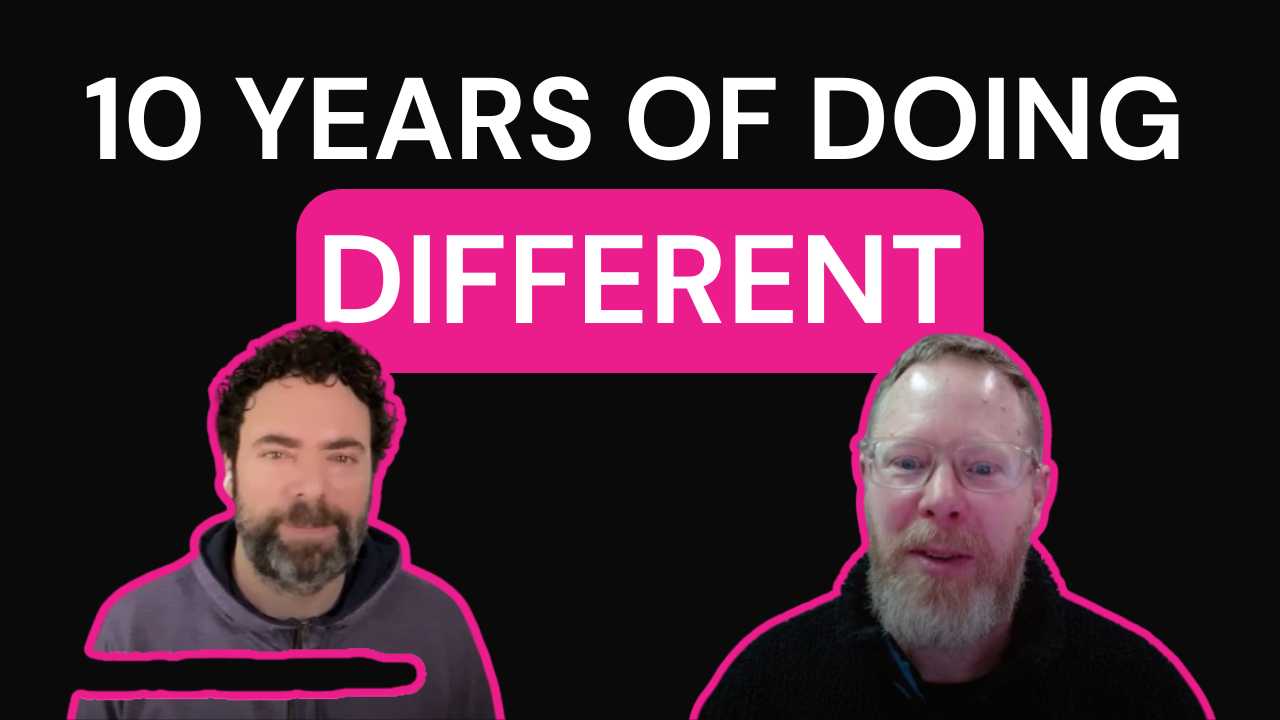
A decade into the Better Leaders Better Schools Ruckuscast, Danny Bauer has coached and interviewed hundreds of school leaders — and the patterns are clear. Dan Watt, elementary principal in British Columbia and Ruckus Maker, flips the microphone and puts Danny in the guest chair. What follows isn't nostalgia. It's the unfiltered architecture of a school leadership development ecosystem that actually works — and what it means for how you lead your campus.
The Ruckuscast turns 10 this year. That's 10 years of watching which principals grow and which ones stall, which leadership beliefs hold up and which ones collapse under pressure. This episode is the debrief.
🌟 What You'll Learn
- Why the same interview questions nearly killed the show — and the pivot that saved it
- The core leadership belief Danny held 10 years ago that he's since discarded
- What separates Ruckus Makers from Play-It-Safe Principals at the pattern level
- Why curiosity in classroom walkthroughs beats judgment every time
- The two questions every teacher on your campus is silently asking
🧰 Key Insight #1: Repeatable Processes Are Training Wheels, Not Destinations
- What's broken: Most school leaders build repeatable systems and then defend them — mistaking consistency for quality, and process for progress.
- The shift: Treat your systems as training wheels — useful at the start, necessary to eventually remove when they stop producing growth and start producing boredom.
- Impact: When Danny scrapped his standard interview question bank and replaced it with curiosity-driven pre-interviews, the quality of guest conversations — and listener value — jumped immediately.
🧰 Key Insight #2: Busyness Is Not a Badge of Honor for School Leaders
- What's broken: Principals optimize for activity — more posts, more meetings, more programs — and measure success by how full the calendar looks rather than what outcomes those activities actually produce.
- The shift: Think deeply about inputs you can control and whether those inputs are actually the right inputs — strategy first, then tactics, and only the tactics that move the right needle.
- Impact: Danny turned down CEO and sales positions, fired himself from facilitating the Mastermind, and cut social media volume — and the ecosystem got healthier, not smaller.
🧰 Key Insight #3: Judgment in Walkthroughs Evaluates Teachers Into Being Average
- What's broken: Leaders walk into classrooms, form a verdict in real time, and deliver that verdict to teachers — which trains teachers to play it safe, avoid risk, and teach to the evaluator.
- The shift: Replace judgment with curiosity — "huh, how did that go?" instead of "that lesson was weak" — and follow it with questions about what the teacher was trying, what they learned, and what they'd change next period.
- Impact: A teacher who took a risk in third period and got honest, curious feedback can refine the lesson and nail it in sixth period; a teacher who got judged will never take that risk again.
🎙️ DANNY BAUER QUOTES FROM THE RUCKUSCAST
If you come in there judging it and being like that was the worst lesson I've ever seen, is that teacher ever going to take a risk again? Probably not. Because you're a jerk. And you evaluated them into being average."
– Danny Bauer
"A Play-It-Safe Principal is just going to wait for the school district or whoever to develop them. Are you the hero of your story? Or are you a victim?"
– Danny Bauer
"Busyness is not a badge of honour, nor is it something that usually leads to the results that we want."
– Danny Bauer
"You exist in the system and there's a way that things are done. And so if you want to dream big and be bold in your leadership, then you have to get outside perspectives."
– Danny Bauer
"Your people really want to know the answer to two questions: Do I belong here? And am I doing a good job? If there's an absence of those answers, there's going to be problems within your culture."
– Danny Bauer
"What does it matter if I have a viral thread on X or a million comments on Facebook if they're just comments and nobody changes?"
– Danny Bauer
"Leadership is a human endeavor."
– Danny Bauer
🧗♂️ Your Do School Different Challenge
Ready to implement these ideas? Start here:
- Tomorrow: Walk into one classroom today and instead of evaluating, ask one curious question — "what were you trying to accomplish?" — and actually listen to the answer.
- This Month: Audit your weekly inputs — every meeting, habit, and commitment — and identify the three activities consuming the most time while producing the least change in student or teacher outcomes.
- This Semester: Build a belonging audit into your end-of-year conversations with staff by asking directly: "Do you feel like you belong here, and do you know how you're doing?" — then act on what you hear.
⌚️ Episode Timestamps
- 00:00 - 10 years of the Ruckuscast — what's changed
- 03:05 - Dan Watt takes the host seat
- 04:16 - Why the same questions killed the show early
- 06:03 - How guests are selected differently now
- 09:28 - Episodes that redefined doing school different
- 12:24 - The leadership belief Danny had to unlearn
- 14:28 - Why getting outside your district changes everything
- 19:00 - Patterns in leaders who actually grow
- 21:23 - Why curiosity beats judgment in classroom walkthroughs
- 23:17 - The two questions every staff member needs answered
- 33:46 - Saying no to stay vibrant — what Danny turned down
- 35:25 - Busyness is not a badge of honor
- 39:51 - What a tired principal needs to hear right now
- 41:58 - The invitation to dance and why enrollment beats compliance
00:00
Speaker 1
Foreign.
00:03
Speaker 2
It's kind of hard to believe, but at this point the Better Leaders, Better Schools Ruckus cast has been around for over 10 years and during that decade there's been a number of evolutions. If you've been a long time listener, you know that today is a fun episode where the microphone and roles are reversed. Dan Watt joins me again to host the show. I get to be the guest and we sort of explore what the last 10 years have been like, some of the pivots and changes, the lessons learned. And yes, we are talking about podcasts. Yes, we talk about how we support school leaders and yes, we bridge to what that means for a Ruckus maker who wants to do school different. How do you take these lessons learned and implement them on campus as well?
00:49
Speaker 2
So I think you're going to enjoy this show. I know I had a lot of fun being asked these questions. Thanks so much for being here. You know, this show, like I said, has been around for a decade and what we're all about is how do we reimagine education even within a traditional system so that we create a campus experience worth showing up for. Thanks for pressing play. Because of Ruckus makers like you, this show has been a dramatic success and we're going to get to the main content in just a second. But first, a few messages from our show sponsors. For over 30 years, ODP Business Solutions has helped schools transform from whiteboards to smart boards. Why? Because when you get the right tools, everyone wins. Visit ODP business.com education to revolutionize your school's learning spaces.
01:50
Speaker 2
That's ODP business.com education staffing stability isn't just about filling positions. It's about what makes educators stay frontline. Education's 2026 K12 lens report highlights what districts are doing differently to strengthen retention and long term support. You can download the full [email protected] leaders that's frontlineducation.com leaders. Over 1 million teachers rely on IXL because it's empowering. It helps them make better decisions with reliable data and it adapts instruction based on student performance. You can get started [email protected] leaders. That's ixl.com leaders.
02:52
Speaker 1
Good morning or good day depending on where you are and what time it is. My name is Dan Watt.
02:58
Speaker 2
Yeah, good to see you Dan Prince George.
03:01
Speaker 1
Nice to see you Danny.
03:02
Speaker 2
Yeah, right on. Glad to be here.
03:05
Speaker 1
For anybody that's just joining in on down the road, as I mentioned, my name is Dan Watt and I'm an ele country principal in British Columbia, Canada, and a ruckus maker and a coach. And Danny and I are spending some time this year doing a little bit of a retrospective on 10 years of the Better Leaders, Better Schools podcast. And so I'm super stoked to put Danny on the hot seat, in a sense, or Danny in the guest's chair and to learn a little bit from his experience. So good morning, audience, and good morning again, Danny.
03:43
Speaker 2
Yeah, good to see you. Thank you.
03:45
Speaker 1
Yeah, of course. Thank you. So I'm curious about Turning Points. You've been doing this for 10 years, as I mentioned, and I'm wondering, at what point did the pod stop feeling like a fun experiment and if that ever changed. Is there an element of responsibility to community, to the work, to the business and what that is like then and.
04:16
Speaker 2
Now in terms of, like, stop feeling fun? You know, there was a time in the early days where I used the same questions, right? And that was to sort of make it a process, a repeatable process that would be fun and maybe easy in some respects. I guess it would be like the training wheels, right, of a bike. And that was supportive. But quickly, right after putting out shows week after week, asking the same sort of same questions, that just got extremely boring, and I had to pivot there. So, you know, I trusted my intuition and decided, like, okay, we need to switch things up. And from there, I think I hired a podcast coach. So this might have been two, one and a half, two years in, because I know, I remember speaking to that podcast coach when I was moving overseas.
05:15
Speaker 2
And I might be, you know, combining some of my life experience here because it's been 10 years. Hard to remember all of it. But one of the things I remember him encouraging me to do and it was smart, was to do like a pre interview, you know, with guests. And so that helped me draft questions that would be very personalized, you know, to the guests. Make it. Make it a real successful show for them is certainly more work, which I wasn't necessarily excited about, but it definitely created, you know, a better show because the guests and I kind of knew the beats that we would. We would cover on a potential episode. We could talk about things that they felt great about and again, help them be a success. And then basically only the last three questions stayed the same.
06:03
Speaker 2
So, you know, for longtime listeners, they know it's the school marquee question, right? Building your dream school. And then the final question is always like, hey, we covered a lot of ground. What's the one thing you want to make sure A Ruckus Maker remembers. So, you know, that was one pivot. You know, interestingly, over the years, as the show's grown, you know, we really get a lot of pitches for people to be on the show, and that's a blessing and a curse. Right? I'm really honored. Right. People are only reaching out because the show has had some level of success. But at times I don't always want to talk about people's new book. Right. Or their service or product and that kind of thing. I really, I want to explore what does it mean to do school different?
06:49
Speaker 2
You know, how are you really innovating and trying to reimagine that experience within a traditional model so that. Right. We create a campus experience we're showing up for. And at times people just want to massage their answer and move their answer to that question to their book or whatever. And so that, that's really annoying. And, you know, if it kind of feels too much like that, then I don't want to do a podcast, you know, with those people. So I guess the other pivot when, you know, you mentioned stop being fun, I guess the other pivot at least was an irritation. I don't know that the podcast has ever stopped being fun. But the other annoyance and irritation is sort of what I'm talking about.
07:38
Speaker 2
And so my solution to that was, you know, we started doing some episodes where we could have a conversation with a Mastermind member and basically tell their story, talk about what challenges they've overcome or how they've grown. So those are like sort of case study episodes in other shows I like to do that are totally different would be, you know, just basically pro bono coaching. Right. You know, people can hire me as a coach, they can hire you as a coach in our team. They can join the Mastermind, and they should because it's really helpful and supportive. But sometimes folks might not think they have the resources financially or time wise.
08:20
Speaker 2
And so I can still create value for somebody and coach them, but in exchange, you know, for that value, because people do invest their, their money and their time into that, I could say, hey, I'd like to make this into an episode. If I'm gonna coach you for free. Right. That's one, that's how you can pay me back. And I think that's good too, because, you know, the listener, the Ruckus maker, engaging with the content probably has similar challenges and questions and things. They're working through as my guest. And if they're smart, they'll hear what we're talking about and apply it to their context, you know, so that's one way I've innovated. And then lastly, you know, we're doing our show. We're seeing, you know, how that'll turn out. And then I'm doing the adorable red hats, you know, with Mitch as well.
09:09
Speaker 2
And that's just kind of riffing on parts of education, but also just life, too. So. Yeah, hopefully that answers your question.
09:20
Speaker 1
Absolutely. I'm happy to hear that. It's still fun and for the most part.
09:27
Speaker 2
Yeah, for the most part.
09:28
Speaker 1
Well, yeah, exactly. There's going to be pros and cons all the time or good days and different days. One of the pivots that you talked about moving towards folks who do want to talk about doing school different, who sticks out in your mind in recent time or recent years that listeners might want to go back and find in the archives.
09:48
Speaker 2
Yeah, that's a tough question because I forget half of what I record. Right. And so if people ask me about books I've written and past guests, the answer is, I don't really know. I mean, there's one who knows what episode this was. I don't even remember the guy's name, but he was a superintendent, I'm pretty sure, in Missouri. And like, the big idea, I was like, huh, that's pretty cool. He, he purchased an abandoned amusement park and turned it into a learning laboratory. Right. And so when I talk about making shifts and doing school different, I like to say, you know, we don't judge the shifts. So you can move from traditional rows to learning centers and getting kids to collaborate in class. That's great. That's progress. Or you can be wild and see that, oh, in my community is an abandoned amusement park.
10:39
Speaker 2
It's just sitting there. What would it take to purchase that land in that environment and then turn it into some type of learning experience for my students? So, you know, there, it's a continuum. It's pretty wide, you know, what you can accomplish. So that one always really comes top of mind. But, you know, there's little anecdotes. I remember visiting Demetrius Paul at his high school in California. Right. And one thing that he was doing that a lot of schools are doing these days, but basically kind of having like a, like a mindfulness room, you know, on his campus. And that was just for kids to sort of like go when they were, you know, dysregulated, you know, and.
11:28
Speaker 1
Just.
11:28
Speaker 2
Really struggling, having trouble, and they could sit and they could breathe and calm down their nervous system. There also was like all sorts of stuff like crocheting, you know, things they could do with sand. Right. Different fidget toys, but just right to, to stop sort of the madness. And so that's a small thing. But I love that he was doing that. And I know he's seen a lot of success. So, you know, I've got stories, but I can't remember a lot of episodes and guest names and. Yeah, sorry about that. Fair enough.
12:04
Speaker 1
Well, you have interviewed certainly hundreds of people. I don't know, maybe even thousands of people. When you throw in all the coaching that you've done over the years, for sure, yeah. What, what's a core belief about leadership that you held 10 years ago that you've had to unlearn or discard in recent times?
12:24
Speaker 2
In terms of unlearning? Yeah, I love asking questions like this to guests too. Ten years ago that I would unlearn. Today I was way more ten years ago. And it's kind of following trends and seeing how the industry, you know, changes and that kind of thing. But I used to be way more connected online in terms of finding resources and stuff, and these days I care less about that. And part of it is because so much of it is BS out there now, right? And, and it's not even, you know, created by humans. And so, like, whether it's your program, by the time this releases, we've already done the Resilient Leader program, which I'm excited about. But like, even the mastermind, like, of course we'll still do some stuff, talk about it on social media or through email.
13:22
Speaker 2
But the most effective way to invite people to that party is just human connection, one one, right. Inviting them to sort of an exploration call, getting to know them, seeing what they're working on and if it makes sense and seems like a fit, inviting them. So I know I'm talking about like, how we support school leaders, but the same thing goes for, like, what's working in schools, you know, just because there's so much stuff out there, it's, you know, I almost find myself exhausted if I open up social media and it's just like, I know this is bs I know this is like, totally made up. You know what I mean? You could just. It's so clear, right?
14:02
Speaker 2
And so therefore, for at least Me, the default is like, well, how do I just talk to a human being who knows something about what I'm going through to. To help me? So whether that's running my business, whether it has to do with leadership, whether it has to do with relationships, communication, whatever. And yeah, go to somebody you can trust. Go to somebody real.
14:25
Speaker 1
Get out the office door and go get face to face with somebody.
14:28
Speaker 2
Yeah, but the hard part about that, too, because, like, something that really helped us back in the day and when were so connected and people are still are really connected online. I'm just saying you got to be even more vigilant now and a critical thinker about, like, what you're consuming. But it is. It is incredibly important to get outside of your district and see outside of the fishbowl. Right. Because it's great to. To reach out within where you work and. And you should. But understand there's. There's a certain culture and a way of doing things that at times inhibits your ability to see different perspectives. Right.
15:07
Speaker 2
And so, again, like a space like the Mastermind, where you're talking to real human beings from all around, at least the US Probably Canada, maybe the world, depending on the cohort you join, you get these perspectives that you just can't get anywhere else. Right. You're not going to find that within where you work. It's just. It's impossible. Right. It's not. It's not a. It's not a problem with the system. It's just you exist in the system and there's a way that things are done. And so if you want to dream big and be bold in your leadership, then you have to get outside perspectives.
15:43
Speaker 1
That's, frankly one of the most exciting parts of the Mastermind, and by extension the podcast, is that ability to connect with folks from outside my district and outside my country is the most exciting part of my week.
15:59
Speaker 2
That's great. Yeah.
16:00
Speaker 1
So thank you for providing that space.
16:02
Speaker 2
No, yeah. Thank you for helping lead it.
16:06
Speaker 1
Your hosting style, as you've alluded to, has definitely evolved over time. And I'm wondering again, as you think back to early episodes, what's the biggest difference about how you approach guests between now and then? We talked a little bit about the.
16:24
Speaker 2
Yeah, the pre interview is huge. Right. You know, and I. I've never done like, a ton of research on my guests. I. I really want to be sort of, like, surprised, and I kind of like taking the innocence of a child. Right. To like, to that space into that pre interview, because I just want to ask the most basic questions and follow my curiosity. And that comes from years of doing it and just trusting my intuition. Right. You can certainly really prepare. And for some people, that would be good based on how they're made up. But at least knowing me and my strengths and that kind of thing, I just want to bring an open mind, a blank mind and curiosity, you know, to that conversation. So that's been, that's been super fun.
17:11
Speaker 2
And the other thing too with that is word of mouth, you know, like having people recommend interesting people for me to chat with. That's been really cool. Or just being really lucky. Like, since I have this show, I've met a lot of people that do work within our industry and I know I'm now right, so I can text them and say, hey, you want to come on? I see you have something cool going on. And you know, they always say yes. So that's pretty neat as well.
17:40
Speaker 1
That's actually a neat opportunity to invite a guest back more than once to see the evolution of their growth over time too. Hey, for sure.
17:49
Speaker 2
And there's some people, you know, you develop relationships with and it's just a great way to reconnect. Right. And so if you get to reconnect with somebody you're interested in and have good chemistry with and it's going to benefit the Ruckus maker listening, right. And support them on their leadership journey, that's a huge win, win scenario. So, you know, I look for those and that's what makes, you know, what continues to make the podcast fun.
18:14
Speaker 1
Yeah, for sure. Part of the thing that I find so interesting about the podcast is in a sense, the front row seat that you have to the best leaders in the world, but then by extension, us as listeners and in addition to that, like even through the Mastermind, right. There's a lot of folks from around the world as you've mentioned that are participating in the Mastermind. And in an earlier response, you talked about the evolution of your, your questioning method and also what you talked about in early episodes and how that's morphed over time. But what are some patterns that you see in leaders and learners who are growing in this new version of podcast guests.
19:00
Speaker 2
So you're asking like, how are people growing? What do I notice? And sort of like those best leaders and what's the similarities between them? Patterns. Yeah, yeah. They take their leadership growth very seriously. Right. Obviously. So, you know, in my mind, right, if you got Ruckus makers and play it safe principals, a play it Safe principal is just going to wait for the school district or whoever to develop them, you know, And I don't. I mean, in some respects, to me, it's like, you know, are you the hero of your story? Are you a victim? Right. It's like, it's, you know, I, I have a therapist that I'll talk to, and one of the big things that we kind of explore is this idea of, like, what is it that you want here and what's the action? So what's your intention? What's your action?
19:50
Speaker 2
Right, because it's very easy. I mean, you could spin your wheels and go in circles for the rest of your life until your time expires and you close your eyes and they don't open again and you're like, oh, man, I really wish I would have done something. And maybe this is just like the kind of people I'm attracted to as well. But it's like, what is it that you want? What's the first step? It's not. How are you going to complete it in a week? You know, you don't have to do the thing in a compressed amount of time. But it's action, it's progress, it's moving forward. Right. Picking yourself up when you get knocked down. Right. So there's resilience and again, excited to see I'm going to be a participant, right. In your program, the resilient leader. So stoked about that.
20:31
Speaker 2
But that's something that people say they notice about me too. Right. Like, you'll get knocked down, you'll get beat up, but you figure out a way to dust yourself off and get back in the arena, as Teddy Roosevelt would say. So, you know, taking in control, intention and action, always getting back up. I think there's like a humility or, you know, what I say is rule number six, not taking yourself so seriously. And so. Right. Like, I know that I don't have the best ideas all the time, and it's great to be around people that can poke holes in my thinking or offer different ways to view the world in perspectives, and that's only going to make me better, you know, and so am I. Am I open to it and that kind of thing. They're less judgmental. Right.
21:23
Speaker 2
So you know how you were, were talking about the interview style and how it's changed and, you know, me knowing my strengths and relying on my intuition, but that curiosity and hopefully a lack of labeling and judgment, you know, if you can just kind of like observe the thing that happened. Just be like, huh, how fascinating. You know, isn't that interesting that happened? What do I need to know about it versus like oh, this thing happened and now that person's bad, terrible. You know, let's just say, let me put it like real concrete. You go into watch a teacher teach and the lesson sucks. Right? It just doesn't go well, the kids are disengaged, things don't land or whatever.
22:07
Speaker 2
Well, you could label it and judge it like I just did and say like the lesson sucks or you can just be curious, huh, Isn't that interesting how this played out? Right? And then have more of an open minded discussion about what was the teacher trying to do, where are they in their teacher journey? You know, like maybe they were taking a risk. Maybe they're teaching something new for the first time and seeing if it would land with students. If you come in there judging it and being like that was the worst lesson I've ever seen, is that teacher ever gonna take a risk again? Probably not. Because you're a jerk, right? And, and evaluated them into being average. Isn't that terrible? But if you're curious and like, huh, you know, how you think that went, what were you trying to accomplish?
22:52
Speaker 2
Da da da. You know, maybe you find out. Yeah, I was taking a risk. You know, I really wanted you to see something new. Here's what I learned. Here's what I'm going to change for six period because I taught it in third period. Right. Like it's just a different sort of style. So those are some things that I see patterns, you know, in terms of leaders that I think are doing it. Right.
23:12
Speaker 1
Something that you've sort of danced around the edge of but haven't said overtly is kind.
23:17
Speaker 2
Yeah, I mean, you know, compassion, right. And empathy, that's always a big piece of everything that we do. So you know, I love to tell people, and I'm sure ruckus makers that have been longtime listeners have heard this before. Maybe not, because I know I talk about it in like coaching spaces. Maybe I haven't said this on the pod, but I tend to believe that your people really want to know the answer to two questions on your campus. And if you're aware of these two questions, right. And you can answer them in a, a very solid way, right. Your people are going to feel great about where they're working. So the two questions are this. Number one, do I belong here? Right. And number two, am I doing a good job?
24:06
Speaker 2
So if people know that they are connected, they're a part of a community, they belong, that you want them on the team, that's great, obviously. And if they know that they have some level of competence, yet you're pushing them to better, who doesn't want to be a part of a high achieving team? Right. If there's an absence of those answers, you know, there's going to be problems within your culture. So that's. That's kind of an area of compassion I think you can explore as well.
24:33
Speaker 1
Nice, good answer.
24:35
Speaker 2
Have you heard those before?
24:36
Speaker 1
Yeah, yeah. It's always a great reminder, though. I think it really does drill down to the essence of what we do in schools. That unwritten curriculum of belonging and working hard, trying our best.
24:53
Speaker 2
Right.
24:53
Speaker 1
That's what we ask of kids and ideally of the people who are guiding our kids.
24:59
Speaker 2
Sure, absolutely. Yeah. Those questions translate right. To your students as well. Right. So that's a good insight that you had there.
25:07
Speaker 1
I'm curious, just to backtrack a minute, you talked about intention leading to action and the hero archetype. I'm curious, Danny Bauer, seeing that Harada template over your shoulder, what is it that you want?
25:21
Speaker 2
Yeah, that's an interesting question. Well, these days, you know, at least when I wrote that, and I might change some things on there, but the, you know, the goal was to figure out, like, what's the best version of me for 2026. Like, how do I show up? Yeah. And I was challenged that, oh, that's kind of a squishy goal. And I said, no, it's not. Because, you know, if you look at my pillars, my super goals all around. Excuse me. Yeah, the pillars, all that support the super goal, those are all very concrete. Right. And then when you drill into those, all those things lead up to, you know, me being the best version of myself. So I was able to convince the person who challenged me on that it wasn't squishy at all, but very solid and practical, pragmatic.
26:07
Speaker 2
So, yeah, that's what I'm thinking about. And the interesting thing is that, you know, it has to do with like, relationships, family, you know, me individually. I broke that into, like, things that I want to be doing. Sort of like, you know, you were at the training, so. And just Jesse Itzler, I got it from him, the Musogi, right. The year defining thing, your quarterly habits, mini adventures. So, like, I love to hike. Right. So I'm gonna go out to the mountains throughout the year. I broke down becoming better for me into like my mindset in my body, like how I'm taking care of those things and then sort of intellectually and professionally, the page and the stage. Right. So I want to write more content that is helpful for people and be on more stages telling stories. Right. And entertaining and inspiring, hopefully.
27:00
Speaker 2
So that's fun. I already do that professionally, as you know, but I'm leaning more into the comedy stuff, so really interested to see how that plays out. The improv comes very easy. I'm terrified of the stand up, so by the time this airs I'm. I would have already done some open mics. So we'll see on the next one if I've done it, you know, I can talk about it, but yeah, we'll see. The, the weird thing is I like exploring very dark topics and they're not light. Okay. So I gotta figure out how to have some softballs out there that will just be easy for people to enjoy.
27:36
Speaker 1
Yeah, that's hilarious because I, it feels like a departure from who I know. Can you give me an example? Like, what are you talking about a dark topic?
27:47
Speaker 2
Is that what you're saying? Yeah, school shootings. So, yeah, that's absolutely terrible. It's absolutely terrible. But. And I hate them. And I think what I've noticed about comedians is that they're able to talk about terrible, hard, difficult topics and they're able to say things that we know are true in a way that nobody else is able to say. Right. Because of politics, because of the emotions and all this kind of stuff. And you know, my standpoint is these things should not be happening and there. And to me, there's a real clear way to like stop it. And it's not by militarizing your school and building like big, you know, checkpoints and whatever. I don't want to get on a rant here.
28:38
Speaker 2
And I don't have my bit, you know, written yet, but I've shared, I'm not going to share it on the pod, but I've shared with some people in the inner circle, like, you know, isn't this kind of interesting that's going on here? And they're like, oh, yeah, that is funny when you say it like that. So I don't want to share too much here. But I mean, that's a topic, right, that I could talk about.
28:59
Speaker 1
That is an interesting insight though, too, into a way that you're able to explore something you're interested in that maybe veers into the potentially political. That might not normally be a topic for conversation where we're reading.
29:13
Speaker 2
Yeah, for sure. And again, like my. My viewpoint, my perspectives. These should not be happening. It's a terrible event every time. But yeah, I want to. I want to point out, like, the ridiculousness of it. And I think it's hard to do without doing the joke right. But there's no way I'm doing the joke right now. So I could tell you after we air I could tell you after we stopped recording the thoughts I have. Sounds good. ODP Business Solutions, formerly Office Depot Business Solutions Division, has been a trusted partner for schools for 30 years. At ODP Business Solutions, we're by your side to meet your evolving education needs here's the thing about creating remarkable learning spaces. You need a partner who gets it. Someone who understands that transforming education isn't just about swapping whiteboards for smart boards. It's about reimagining what's possible.
30:14
Speaker 2
That's why innovative school leaders trust ODP Business Solutions. We don't just deliver supplies. We help you design dynamic learning environments that make students actually excited to show up. From tech integrations that bring lessons to life to flexible furniture that transforms any space into a collaboration zone, to sustainable solutions that teach by example. We've got everything you need to do school different. And the best part? You can get it all from a single supplier that helps you simplify ordering and streamline budgeting while staying compliant with easy access to cooperative contracts. However you want to advance. ODP Business Solutions has 30 years of experience helping districts like yours get ahead. Visit ODPbusiness.comeducation to learn more. That's ODPbusiness.com education principals and school leaders know the hardest part isn't the hiring. It's keeping great people from burning out.
31:20
Speaker 2
Frontline Education's 2026 K12 lens survey report found that while recruiting and hiring has eased, gaps still remain. Districts that provide structured and sustained professional development are more likely to report better hiring outcomes. In fact, nearly half of districts that use software to automate professional growth report hiring has become easier compared to only 30% of districts who don't. If you're trying to build a campus where people feel supported, connected, and proud to stay, Download the full K12 lens report and see what's working for districts right now. Go to frontlineducation.com leaders that's frontlineducation.com leaders to get the full report. Something that drove me nuts as a ruckus maker was hearing teachers say things like I taught it, they should have learned it. But really some teachers just don't know how to teach or reteach for that matter. So that all kids get it.
32:29
Speaker 2
That's where IXL comes in. IXL's diagnostic automatically identifies knowledge gaps for teachers and provides them with a personalized growth plan for each individual student. Teachers can step into the classroom every day knowing what their students know and what they don't know. IXL's adaptive platform makes differentiating instruction easy. As students learn, IXL adjusts to the right level of difficulty for each student. Close knowledge gaps and accelerate learning with IXL. Get started [email protected] leaders. That's ixl.com leaders.
33:16
Speaker 1
Well, to switch gears a little, I have heard it said recently that you are inspirational, that people find you fun to hang out with, energizing, they love to learn from you. And all of that to say 10 years is a long time to stay vibrant. And I'm wondering what you've had to say no to personally or professionally to make sure the ruckus make your ecosystem stays healthy.
33:46
Speaker 2
I've told the story of firing myself from the mastermind. So, you know, that's, that was interesting and it didn't like, it didn't destroy it. Right. People didn't run for the exits. And so I wanted to do that to prove that this is really a model that is supportive for school leaders. Right. And it's not about me. And I was worried about that. But here we are years later, you know, after doing it. So that was, that was one way to stay vibrant and that cleared up headspace and time. Right. To. To figure out new experiments to run. I've been offered a number of jobs, you know, sort of like CEO and sales positions, both of those type of things within the education space. I've explored it, to be honest, at times just to see what the process was like.
34:35
Speaker 2
But I've ultimately turned them all down. So, you know, that's, that's something that I've said no to. That's real big. I don't know. I mean, some I'm saying no to it kind of connects to. Earlier you asked me about, like, what I've changed my mind on. And so, you know, I used to post like all the time on social media. And that's like the siren, right, that's singing to us on the waves and is ultimately, if you get caught up in her song, it just leads to you destroying your boat and then you drown and die. And so it's Very seductive to want to post all the time and get really good at it. But you might be optimizing for the wrong thing, right? And so that's something I think about a lot.
35:25
Speaker 2
And for the, you know, if the ruckus maker listening is like, what the heck does this have to do with school? The lesson is, are you optimizing the right stuff? You know, because. And again, depending on what you're seeing on social or what your district's telling you, busyness is not a badge of honor, nor is it something that usually leads to the results that we want. And I think deeply about sort of the inputs, you know, that are within our control that hopefully lead to outputs and outcomes that we want to see. And people usually just put a lot of weight on measuring those outcomes and they don't think about, well, how did we get there? And the how do we get there? Is, is a combination of strategy, sort of the big picture and tactics, the things, the actual things that we'll do.
36:16
Speaker 2
And I think there's just a lot of tactics, the things we should do and doing the wrong things, right? So that's something I think about a lot. And when it comes to like your program, the resilient leader, the mastermind, or, you know, I, I still do one one coaching, which I really love. It's not like advertisements and social posts and spamming people with information that's gonna, you know, really make the impact again. It's that human connection, creating space to chat with somebody, hear what they're working on, what they're faced with, what's holding them back, seeing if there's a fit and connection and chemistry. Right. And, you know, I'm interviewing potential clients as much as they're interviewing me for a coach and then being bold and saying, hey, you know, would you like to dance? Do you want to see where this will go?
37:11
Speaker 2
If we work together, you know, for three months, six months, a year, like, what would you like to accomplish? And whether again, that's in the mastermind or one one sort of setting. But yeah, optimizing for the right stuff. And it's just so easy to be like, you know, grow the podcast to this level of downloads or, you know, what does it matter if it's the wrong people listening? Right? What does it matter if I have a viral thread on X or, you know, a million comments on Facebook if they're just comments and nobody changes? You know, so I, I think about that a lot. And let me give a little bit of advice, too, for the Ruckus Maker. One, are you optimizing for the right thing? And two, you know, we've already talked about this a bit, but what's that?
38:02
Speaker 2
Intention, action, the first step. And how do you just prove the concept with like your minimum viable audience, let's call it, you know, so. And this is certainly like something that Seth Godin would say. And that's where we get. That's where we get the Ruckus Maker language, by the way. So he certainly, like, inspired me so much. But, you know, whether it's change on campus, change in school leadership, or change just in leadership that I want to see in general. Right. Who are, who are 10 new people, five to 10 new people that I could start supporting to see that what I'm thinking about is going to work, you know what I mean? And then serve them at such a high level. They tell a friend, and now there's 5 and 10 more. Right?
38:51
Speaker 2
And those people tell a friend, and now there's 30, you know, that's how movements work. And what's his name? Derek Sivers. Did a TED talk that's super famous. You've seen this one about the how to start a movement. And it's the guy dancing so old now.
39:07
Speaker 1
Yes, that is super fun.
39:09
Speaker 2
Yeah, it's just a dude on a hill dancing like a complete, like, weird goofball. He's not, he's not a good dancer at all, but he's dancing alone, Right. If you haven't seen the video. And then finally, like a second person starts to dance. I think it's when the third person joins the team and begins to dance. People start rushing in, right? Then it's 4, 5, 6, you know, and then it's the whole, the whole audience in the concert on the hill dancing, right? But it starts small. So find the just handful of people that you can support create a legendary outcome. Yeah.
39:45
Speaker 1
He's asking, would you like to dance?
39:47
Speaker 2
Yeah, for sure. For sure.
39:51
Speaker 1
Well, this episode is scheduled to release later in the spring, maybe June. We're thinking a notoriously busy time for school principals. And I'm curious if you could sit across the table right now from a tired principal. What would you tell them? What do they need to hear to finish the year strong?
40:10
Speaker 2
We talk about the fundamentals quite a bit, you know, and so eating, sleeping, moving, meditating, unplugging. And it's so funny. I mean, half of what we can teach is so it's the simplest stuff, but you need reminders you need people to ask the question in the pushy. But half the time when people are like, at their end or like, oh, God, I gotta quit, you know, being a principal. But do you sleep? No. Do you, do you eat lunch? No. Tell me about, like your email and like, connected to work. Are you always on? Yes. Right. Like, oh, you don't unplug? No. You have any hobbies? Do you hang out with friends? Right. Do you get any sunlight? Do you move your body? You practice some, you know, meditation or just basically slowing down. Right.
40:58
Speaker 2
And when I go through, when you go through those things with people who are usually, yeah, really tired, that stuff is pushed to the side, so it's a problem. So if you're here in June and you're like, yeah, burnt out, then take care of yourself. That I would look there first before I prescribe anything else because I almost guarantee that something there is off.
41:21
Speaker 1
Right on. Well, I think my light bulb moment from this episode is asking. Asking if they would like to dance was the phrase that you used. And I think maybe sometimes that's what makes. I was going to say coaching, but life in general, like getting out of our own comfort zone and asking the other person, like in a coaching context or in a sales context even, like, would you like to participate in this thing? In a school context, that looks a little different, but it is still, I think getting outside of ourselves and asking the other person is a vulnerability.
41:58
Speaker 2
It's the same in schools because the vulnerability. It's the same in schools because we're talking about enrollment. Right. Like, you can lead and be top down and be like, you know, you're going to do this thing, Dan, because I'm the boss, right. And you might do it, but you going to be thrilled about it? Probably not. You know, you're going to do it. You want to keep your job, put food on the table, that kind of thing. But you're not going to do it with your heart, right? You're not going to give me your best. You'll give me just enough to not be fired. Right. But if you do the invitation to the dance, right, and you invite people and people enroll and they say, yes, I, I do want to be a part of this.
42:36
Speaker 2
You're probably going to get somebody, you know, who's going to give their best and isn't that what we want anyways? And so that's part of the leaders challenge, is to figure out how to build that kind of culture and to either hire or sort of support people to become that kind of person on their team. Right. So that's a good one, I think, to kind of end with big ideas for our Ruckus Makers today. For sure.
43:03
Speaker 1
Yeah. It touches on the other, I think, theme here today about human connection, the importance. That's the value.
43:11
Speaker 2
It's a human endeavor. Leadership.
43:13
Speaker 1
Great.
43:13
Speaker 2
Well, thanks, Dan. Appreciate it.
43:15
Speaker 1
Well, thanks for dancing with me today, Danny.
43:18
Speaker 2
Anytime. We'll do the two step right on. Hey, Ruckus Maker, thanks again for pressing play. I hope you enjoyed this show as much as I enjoyed recording it. And before you go, if today's episode shifted something for you where you want to do school different or you have a new idea about education, then I want to invite you to subscribe to Ruckusmakers News. That's our newsletter. And you get three new opportunities to do school different every week sent to your inbox. It's trusted by over 5,000 school leaders. And if you want to reimagine education within a traditional setting so that you could create a campus experience worth showing up for, subscribe for free at Ruckusmakers News.
Transcribed by https://fireflies.ai/
🔗 Connect With Michelle Sloan
👩🏻💻 Website: Sloan Leadership Solutions
🔗 Facebook, Instagram, LinkedIn
📕 Book: Purpose-Driven Principal Book
🎧 Listen & Subscribe
Listen to Better Leaders Better Schools on Apple Podcasts, Spotify, Youtube or wherever you get your podcasts. If today's episode moved you, leave a review — it helps more Ruckus Makers find the show.
🧔🏻♂️ Your Self-Mentorship Guide
Meet Digital Danny — your self-mentorship guide. Always available, never forgets, and evolves with you. Think through your next leadership move at myprincipalcoach.com.
🎙️ Today's Ruckuscast Partners
ODP Business Solutions®
ODP Business Solutions has been a trusted partner for schools for 30 years — and they're not just dropping off supplies. They help school leaders design dynamic learning environments where students are actually excited to show up, from tech integrations that bring lessons to life to flexible furniture that turns any room into a collaboration zone. Everything ships from a single supplier so you can simplify ordering, stay on budget, and access cooperative contracts without the compliance headache.
🔍 Visit odpbusiness.com/education to learn more.
Frontline Education
Frontline Education's 2026 K12 Lens Report surfaces exactly what districts are doing differently to keep great teachers from burning out and walking out. The data is specific: districts that automate professional development processes are nearly twice as likely to report easier hiring outcomes than those that don't — and nearly half report measurable improvement. If you're building a campus where people feel supported and proud to stay,
🔍 Download the full report at frontlineeducation.com/leaders
IXL
IXL doesn't ask teachers to guess what their students know. Its diagnostic automatically identifies every knowledge gap, then builds a personalized growth plan for each individual student — so teachers walk into class informed, not hoping. The adaptive platform adjusts difficulty in real time as students learn, closing gaps without requiring teachers to manually differentiate everything.
🔍 Get started at ixl.com/leaders.
Twelve Practices LLC © 2026 | If Education Ain't a Bit Disruptive, Then What Are Your Students Learning?


