She helps principals stop surviving their schools and start leading them. Michelle Sloan is an educator, author, and leadership coach who spent seven years building a school from the ground up — which gave her something rare: “firsthand proof that mission-driven leadership isn't a feel-good concept, it's a survival strategy.” Her book The Purpose Driven Principal is the framework she wishes she'd had in year one.
School leadership burnout is not a willpower problem. It's a systems problem. A principal walks in energized, writes down what matters, and by 6pm hasn't touched a single item on the list. This episode is about diagnosing that drift — and building the structure to stop it from swallowing another year.
📚 What You'll Learn
- Why your open door policy is actively damaging your relationships (not protecting them).
- How the four pillars of a purpose-driven school — people, pedagogy, processes, and personal growth — create a filter for every decision.
- The Assess, Design, Align cycle and how to use it to get back to mission-driven work.
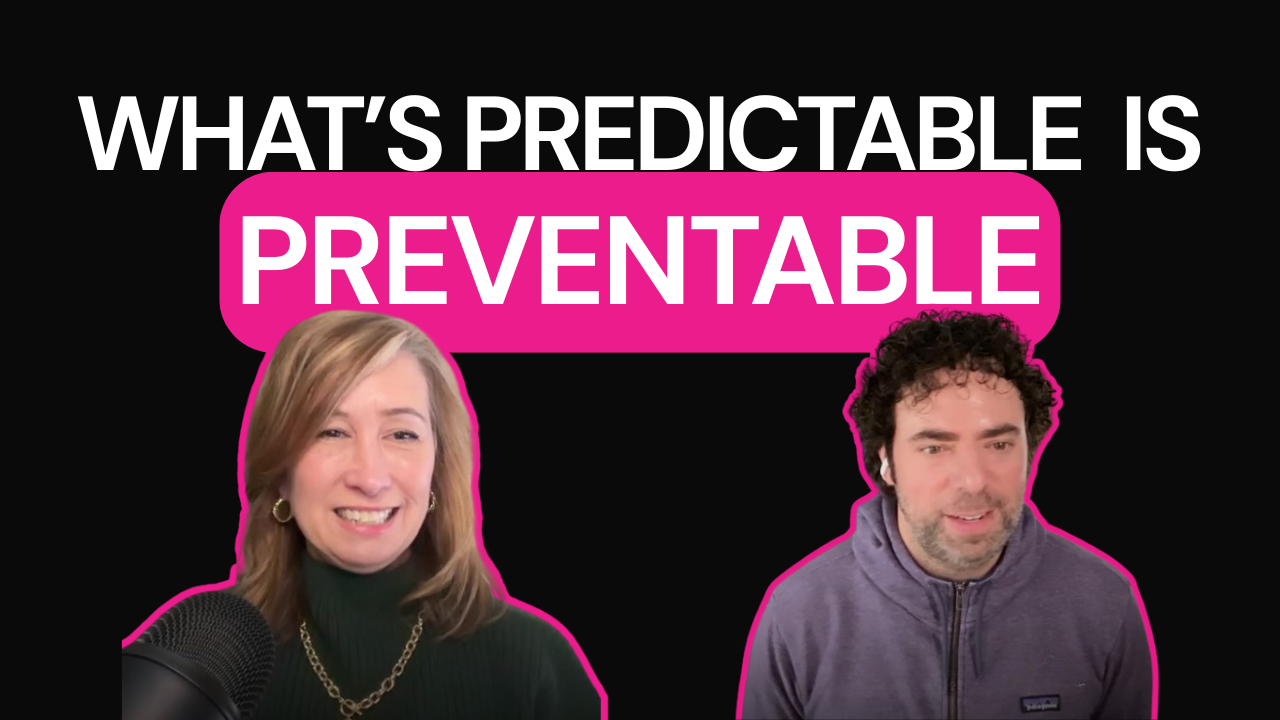
- Why what's predictable is preventable, and what that actually looks like in practice.
- The one calendar change that breaks the reactive leadership cycle.
✅ Key Insight #1: Principal Burnout Is a Symptom of Missing Purpose Filters
- What's broken: Principals measure their days by how busy they are, not by whether they're moving toward their mission.
- The shift: Define the school's mission, vision, and core values first — then use them as a filter for every demand, program, and shiny new thing that shows up.
- Impact: A principal who knows why their school exists can say no to the college prep program that works down the street but doesn't fit their community — and feel confident doing it.
✅ Key Insight #2: Processes Are a Leadership Superpower, Not an Administrative Chore
- What's broken: Every knock on the principal's door is treated as an individual problem to solve, so the same problems return every day.
- The shift: Treat every repeated interruption as a signal that a system is missing — then build the process that makes you unnecessary for that question.
- Impact: When processes are in place, teachers stop waiting until 5:30 to ask questions only you can answer, and you get to do the work that actually requires you.
✅ Key Insight #3: The Open Door Policy Is a False Virtue
- What's broken: Principals equate constant accessibility with relational leadership — and end up half-present for everyone, including their families.
- The shift: Set published hours for availability, protect deep work time with the same seriousness that teacher planning periods are protected, and be 100% present when you are present.
- Impact: Principals who define when they are available stop the low-grade distraction that makes a 12-hour day feel like zero progress.
🎙️ MICHELLE SLOAN QUOTES FROM THE RUCKUSCAST
"A good principal is in their office solving problems. But a great principal is out in the classrooms preventing them."
– Michelle Sloan
"What's predictable is preventable."
– Michelle Sloan
"If you never get out of that cycle, you can never be intentional about fulfilling your purpose in your mission. You're just in that cycle of whatever the day brings."
– Michelle Sloan
"You shouldn't lose yourself in the process because you stepped into leadership."
– Michelle Sloan
"There's a difference between perfection and being excellent. Do and just loving your people."
– Michelle Sloan
"You get out of alignment when you don't know who you are and why you exist."
– Michelle Sloan
"You were created on purpose and for a purpose. You have unique gifts and talents that only you have and the world needs."
– Michelle Sloan
🧗♂️ Your Do School Different Challenge
Ready to implement these ideas? Start here:
- Tomorrow: Block two hours on your calendar this week and mark it as off-campus — then use that time to highlight in yellow every unplanned interruption from yesterday and ask who else could have handled it.
- This Month: Write or revisit your school's mission statement and use it to evaluate one program, initiative, or meeting you're currently running that might not actually align.
- This Semester: Publish your availability hours to your staff and hold them — identify one admin or team member who can serve as the first stop for your three most common interruptions.
⌚️ Episode Timestamps
- 00:00 - Why principals burn out — it's not weakness
- 01:52 - Sponsor break
- 03:34 - Michelle Sloan joins the show
- 06:21 - What a school looks like when purpose is gone
- 09:53 - The four pillars of a purpose-driven school
- 13:55 - The most neglected pillar and its cost
- 19:12 - How to diagnose when you've drifted from purpose
- 21:21 - Two hours, twice a week: the proactive leader's calendar
- 27:34 - Why open door policies are a leadership trap
- 30:49 - What principals owe themselves (and their families)
- 36:19 - The Assess, Design, Align cycle explained
- 39:42 - The first step back to alignment
- 41:31 - How to work with Michelle Sloan
00:00
Speaker 1
Foreign.
00:03
Speaker 2
Some leaders don't burn out because they're weak. They burn out because they forgot why they got in the game in the first place. Today's conversation is about that moment in school leadership where it stops being purpose driven and starts feeling like firefighting. Constant urgency, endless hallway interruption, 12 hour days, and somehow still not doing the work. The most meaningful work that actually matters. My guest, Michelle Sloan knows that world too well. She's lived it, she's studied it, she's coached through it. And she wrote a beautiful book called the Purpose Driven Principle to help leaders get out of the reactive spiral and back into mission, clarity and meaningful impact. In this episode, we talked about what really happens when a principal stops filtering decisions through purpose the subtle drift, the emotional exhaustion, and the disconnection from kids, teachers and community.
01:01
Speaker 2
We explore the four pillars of a purpose driven school, why processes are a leadership superpower, how to prevent the predictable, and what it looks like to reclaim your joy as a leader. And yes, we even talk about why your open door policy might be slowly destroying your life. I'm Danny Bauer. This is Better Leaders, Better Schools, the original Ruckus cast for visionary leaders who want to do school different reimagining the project of school even within a traditional setting so that they create campus experiences worth showing up for. Thanks to Ruckus makers just like you, this show ranks in the top 1% of nearly 4 million podcasts worldwide. So thanks for pressing play. It means so much to me that you're engaging with this content today.
01:52
Speaker 2
We'll be here with the full episode in just a second, but first let's get in some messages from our show sponsors. Looking to create the kind of campus experience students never forget. ODP Business Solutions transforms ordinary spaces into extraordinary learning environments. Visit ODP business.com education and let's do school different. That's ODP business.com education school district challenges don't look the same everywhere right now. Some are seeing hiring improve, others are still navigating staffing gaps and increasing demand. Frontline Education's 2026 K12 lens report helps connect those dots with insights from more than 1,000 school leaders nationwide. You can get the full [email protected] leaders get the full [email protected] Leaders if you could differentiate instruction in 20 minutes or less, would you do it for all your students? Well, you can with IXL.
03:13
Speaker 2
Over 1 million teachers use IXL because it empowers them to use effective data informed instruction. And you can get started [email protected] leaders. That's ixl.com leaders. Michelle, welcome to the show.
03:34
Speaker 1
Hey, Danny. It's good to be here.
03:36
Speaker 2
Yeah, we've. We've connected so much behind the scenes, and I really enjoy that and love the work that you're. You're out there doing. And so, you know, we're here to. To discuss the new book. The new book that I love that it. That exists in this house. But because I've rearranged my office and I'm a mess, which I'm happy to. To admit, I have to find where it is. I don't know. It's like Where's Waldo, Right? I told you, this guest room is just a sea of books. Piles and piles of books. My. My wife wants me to clean it, and I was on my hands and knees seconds before our recording, and I just couldn't find it.
04:16
Speaker 1
Now just in a pile. It's in the abyss.
04:19
Speaker 2
It's in the abyss. But I'll tell you what, like, those books are all very good books, right? If the book is not good, it goes into the basement. There's a. There's a secret bookshelf down there where people send me books. And maybe I don't know them or I don't like the book that much. Those go to the basement. Yours is up here. I just haven't. With all my piles and madness. I have, you know. Yeah, it's beautiful. Purpose Driven Principle. So I. I was kind of wondering too, like, did Rick Warren's like, Purpose. What was that? Purpose Driven Life. Was that. Do you. Did you ever read that? Did that impact the title? I don't know.
04:59
Speaker 1
No. You know, I was just messing around with my message, which is about mission and purpose and trying to find. You know, I was dealing with finding focus and the chaos of school leadership. And that ended up subtitle. And so just came to me and I searched. I thought for sure that title is already somebody had there and searched. Talked to the publisher. I'm like, can you check and double check? Because the last thing I want is to go to all that trouble and then end up having to pull it.
05:31
Speaker 2
So.
05:31
Speaker 1
Yeah, so far so good.
05:32
Speaker 2
Yeah. That's amazing. I love when that happens because, you know, you come up with all these like, cool title ideas. It's just author talk. And then you look it up on Amazon or you do some searching and that kind of thing. It's like, man, that's already been done.
05:45
Speaker 1
Yeah.
05:45
Speaker 2
Especially, of course, it was a good idea now.
05:47
Speaker 1
I mean.
05:48
Speaker 2
Yeah, yeah. Because there's a lot of people who can't write that write books. So. And that means there's a lot of titles that are taken. So it's great. It's a more even playing field. But that also attracts some very average quality work. But that's not yours. Yours is great. So I want to. Yeah, Pleasure. I want to. Want to start off just by asking, what does a school look like when a leader has stopped. Actually stopped filtering decisions through purpose? Right. And why is that so important?
06:21
Speaker 1
I think, you know, we all. Because you were a school leader too, and I think we all hit a moment where we're just reacting to all the urgent demands that happen in a day. And, you know, whether it's the secretary needing information right away, she can't move forward unless you give her some information. Teachers calling and needing the principal in the classroom, a student needing to be dealt with right away, parents walking in unannounced. I mean, it just goes on and on. Subs that can't be found. There's when you notice that you're staying so busy, you're showing up early, you're staying late, you're working 12 hours a day, but you're not making progress on towards your mission. And you're not seeing that, but you're super busy. I think that's when you notice that, you know, something's got to change.
07:15
Speaker 1
I am not working out of my passion. I'm not working out of my gifts. I'm busy and the student. I'm not seeing students, I'm not seeing teachers. I'm not connecting with parents. I'm not building a relationship with the community. And all of those relationships are what truly matter. And if. But you're busy, but you're not getting to any of the relationship stuff.
07:37
Speaker 2
So, yeah, that's tough. And how did you land on, like, your. Your love sort of mission and vision, that kind of work? You know, everybody sort of has a focus. Minds that ruckus, maker your school different. It's really about creating that campus experience we're showing up for. But, you know, you're all about the mission part. Like, why is that so important to you?
07:57
Speaker 1
I think when you truly define who you are as a school, what makes you unique, what sets you apart, how the demographics of your school and your community differ from every other school, then you can begin to filter those decisions through that lens. And that's. So just reading. I think I read a couple of books. I had the opportunity to start a school from the ground up and do that mission and vision work. And because, you know, I owned that. I knew who were, why we existed. And for the duration, I think seven years I was at that school for that duration, I was able to see, you know, we call them the shiny new things that keep popping up and trending everywhere in education. And what's on going. We're not short of information right now. I mean it's everywhere.
08:48
Speaker 1
We see it on social media, it's on our phone, it's on. I mean we're not short of information. And so we're constantly looking for the next thing that's going to help our students and what's working down the street or in another state or another school. It's not like we have to reinvent the wheel every single time. You know, we, there are some systems and processes that we can put in place that other schools have, you know, made work. But we don't want to keep trying everything if it's not truly going to benefit who we are as a school and why we exist.
09:24
Speaker 1
And so I think a principal really needs to define that first and know the demographic of your school, what those students are capable of, what their struggles are, what their challenges are, and what the outcome do you want for them when they leave your school. Whether it's 6th grade, you know, 9th grade, 12th grade, that really matters on what type of student you want when they leave. And like building backwards, you knowing what you want and then working backwards to what you need to put in place.
09:53
Speaker 2
So yeah, absolutely. You know, and there's like four pillars to a purpose driven school, if I remember correctly. What, what are those? What are those pillars?
10:05
Speaker 1
Yeah. So I'm so impressed that you remembered that. So the purpose is the foundation. And that's your mission, your vision, your core values, who you are, why you exist. You catch that vision for what you want to see in your students and then you define the core value, which are the mindset, the practices, the beliefs that help you accomplish that vision. And then the four pillars are people pedagogy, processes and personal growth.
10:36
Speaker 2
Do you have a favorite?
10:38
Speaker 1
I'm a people person, but I love processes. Yeah, to me, that game changer, I don't know. Because it makes your job easier. You know, every question that's a knock on your door and there's a question to me it's like, okay, what's not clear? What do I need to make clear? What system is broken? What routine needs to be fixed? What. You know something, if that teacher didn't know how to do this or that parent didn't know where to get that information, or that secretary failed to communicate something somewhere, whether it's the onboarding, the training, the communication. How can I put a process in place so that they don't keep knocking on my door and asking these questions?
11:25
Speaker 2
Yeah, amen to that. Right? And just frees you up to actually do the work that's more important. Do you know Ken Williams? You know, are you familiar with him? He has some Unfold the Soul. He was one of my first interviews, like 10 years ago. He, he's, he does some really great. He's a really dynamic speaker. He's written books. A lot of work with Solution Tree. He also wears these, like, suit, you know, he's known for, like these big hat, like cowboy time pants. And he drives some really cool, very cool, like classic cars. And I remember he was very generous in my early days starting out and would take calls and like, give me a few pointers here and there. But I saw a story he told on Instagram recently, and he was saying, like, how consistent Chick fil a is, right?
12:13
Speaker 2
And it doesn't really matter what neighborhood you go to. You kind of know what you're gonna get in the quality, right? And the service that you're gonna expect. And I, I think he's right on that. And then he said, also, but if we talk about a school, you know, and place it in a neighborhood where you live versus, let's say a neighborhood on the south side of Chicago, right? Like, why is it the school at the south side of Chicago, we start telling all these stories about, you know, about the resources or potentially like the students and what they're bringing to the table. Parents involvement, lack of involvement. You know, there's a lot going on and he's poking the bear and he's trying to shine a light on biases.
12:56
Speaker 2
We could have, you know, and, you know, the ways people might think about, like, under resourced areas and that kind of thing. He's saying, why do we do that with schools? And now we're Chick fil a? Well, it is easier to make a chicken sandwich, I would argue, right? And there's not as much creativity involved, but they do a great job of still putting out, though, an awesome product that's consistent and their service is always really great. So I don't argue that piece. But to your point, I think the difference between a Chick fil a and schools doesn't matter the neighborhood. But successful or unsuccessful, back to Those processes, right? Like, is there a playbook? Is there a way that we exist, A standard way of doing school? You know, there.
13:39
Speaker 2
And so anyways, I love that you're about processes, because I think that really raises the bar, right, for the community. Back to those pillars. Is there a pillar that you've seen that leaders tend to neglect the most? And if so, what's. What do you think the cost is?
13:55
Speaker 1
I think it's building intentional relationships with. You know, as a principal, you have so many stakeholders, I guess they're called. And, you know, you have so many stakeholders. You have students, you have staff. And even with staff, it varies from teachers and faculty to admin to, you know, support, and then. Then you have parents, and they vary. And then, you know, depending on their culture that they're coming from and their beliefs about parenting and education and then to the community. And if you're stuck in those urgent demands that everybody's always putting on the principle and trying to solve problems. I have this saying, I heard it and I borrowed it. A good principal is in their office solving problems. But a great principle is out in the classrooms preventing them. I think what's preventable, you know, what. What's predictable is preventable.
15:01
Speaker 1
And if we can, if we know that there are going to be issues in the hallway when the bell rings, then let's be in the hallway. Let's put some schedule people in place where those pockets are, you know, outside the restrooms or by the lockers or around the corner where they're not seeing. That's where that always happens. We hear that in the conversations. It always happens in that one area. Or we're going to have lunchroom issues, recess issues, you know, whatever. If you can predict it, then let's get together and brainstorm ways that we can prevent it. And so I think a principal. Not by their fault, because we all get into. We all love kids. We all, you know, if you're a teacher first, you've connected with parents.
15:46
Speaker 1
You go from, you know, 20, 30 kids to, you know, you double that, 30, 60 parents. And then all of a sudden you're with. You're responsible for hundreds of kids and hundreds of parents. But you have that dream of how you're going to connect with those students and, you know, encourage them to grow and be the best version of themselves and how you're going to connect with your teachers and you'll never be like that principal that you had, that you hated and made you want to quit, and how you're going to lead differently and then ways that you're going to build relationships with your parents and engage the community to support the fundraisers. And so you have these dreams of building these relationships. And then, you know, in my. One of my cohorts, they are.
16:31
Speaker 1
The new principals were saying how they were drinking from a fire hose. And you know, that we've heard that term, you know, often when you. When you're first onboarding, I feel like I'm drinking from a fire hose. And one new principal lady pops up and she's like, I'm drinking from a fire hydrant. And so it's just. If you never get out of that cycle, you can never be intentional about fulfilling your purpose in your mission. You're just in that cycle of whatever the day brings.
17:04
Speaker 2
Have you ever seen the TV show or movie uhf behind the tunes?
17:09
Speaker 1
Uhf with.
17:10
Speaker 2
Yeah, I was with Weird Al.
17:12
Speaker 1
No, but my kids liked Weird Al for a while. I don't know why, but.
17:17
Speaker 2
Because he's goofy, easy, and he parodies songs that, you know, all the kids like and makes them fun. The guy who played Kramer had a character named Stanley Swadowski, who was given. It's. It's this. It's this TV station that's, like, gonna lose its. Lose. Right. It's license and not be able to broadcast anymore. So essentially, they're trying to figure out how to, like, capture people's attention again and somehow raise enough money to. To keep the show and keep. Keep the channel and keep broadcasting. And so they just test out all the weirdest, zaniest ideas for shows they can think of. And they give a custodian. And this is the Kramer guy playing Stanley Spadowski. His own, like, kind of, like, team show. And he has these kids drink from the fire hose. He's like, are you ready to drink from the fire hose?
18:08
Speaker 1
Oh, we're ready.
18:09
Speaker 2
And then he turns it on and it just, like, bam, Hits them in the face and launches them back. It's hilarious.
18:16
Speaker 1
Yeah. So you put that picture in your mind. I mean, it's not funny. It's really not funny to think that's how we're preparing our principals for this role.
18:27
Speaker 2
Yeah, no, it's really tough. But, you know, I'm glad. I'm glad that principals find you. Principals find me. Principals find others that support them because I think it's kind of stupid to. To do it on your own. I mean, it's just such a. Such a hard and challenging job. Right. And there's so many people that want to support. And even if you're not in like a coach or coaching community, you got to build a network, you know, because one thing that I've never seen is a group of principals drinking from a fire hose. Right. I've only seen individuals and so I'll just let that sit there with the ruckus maker listening. How does a leader diagnose when they've drifted from their purpose? Because you're all about being this purpose driven principle, like how do they know I'm off course?
19:12
Speaker 1
I think it's, and how you feel at the end of the day and you know, we're all going to have bad days, we're all going to have days where, you know, there's a crisis on campus and it genuinely is, you know, some type of crisis. But when that's happening routinely and you're going home drained, you walk in energized, you take that moment to pause and reflect and write down what you want to do for the day, how you're going to connect intentionally with students, whether you're doing some type of leadership group or you're hitting the recess and you know, connecting with parents, making those phone calls, coffee chats, whatever you do. And you have that on your list. It's on your plan, it's your passion, it's your heart.
19:59
Speaker 1
You know, it's going to make the school better, it's a better place for teachers, for students and for parents in the community. Then all of a sudden you're, you know, it's five o', clock, six o', clock, seven o' clock and you're looking at your list and you haven't done any of it. And if that's just a one off day, you can go home and you're like, okay, that was a lot crazy day. You're like, you know, the meetings, know it's, and then the next day it happens again and it's like, why, what am I doing here? What was I called to like, I, you know, you notice that you're not finding joy anymore and you're not making progress.
20:39
Speaker 2
So you need to address that too. Right? Like I feel if you're not having fun, you know, in making those connections and excited about the work and the change that you could be making on campus. It's like, well, what are you doing at this point? You know, so that's why this purpose thing, you know, to me is so important, why I wanted to have you on the show as well. You talked about how you could prevent the predictable, which I Love that idea. And like reactivity can be kind of seductive, like a reactive way of leading. And do you have any thoughts on like how a leader can break that cycle and be less reactive, more proactive?
21:21
Speaker 1
Yeah, and I think that's a. Another sign that we hear a lot about with principals just reacting. They can't be proactive. They can't get to, you know, this having space and time built in their day to reflect and build what they want. And so I think blocking. I recommend my principals put two hours on the calendar at least twice a week. Like they have a meeting or they're off campus and they put somebody else in charge. Just pretend I'm not here, I went home sick, I'm at a meeting, I'm off campus, whatever it is, two hours, twice a week because you need that space to reflect. And you know, we talk about the dream school, right? The dream that we had. You have to think about and look at your schedule, what's taking most of my time, why am I not getting to it?
22:08
Speaker 1
And you can highlight, you can do whatever categorization works for you, but I always just say like highlight in yellow the things that popped up in your day that you didn't plan and highlight and read the things that were a crisis and one off that's probably not going to happen. But take those yellows and say, okay, who can be a stop before me in these areas and how can I make that clear for that not just coming to me, you know, different admin or say, well, I didn't know what you wanted to do. What we both know the outcome, how the outcome, the desired outcome is. We may not do it the same. How may not be the same. And I'm okay with it as long as we have that same desired outcome. So it's empowering your staff as well.
22:57
Speaker 1
And I think we become so reactive, to answer your question, when those systems and processes aren't in place or we don't have a time to think about what needs to be put in place and to think about routinely. This happens at 11:30 every day when first, second grade come in from recess. I am bombarded with, you know, fighting and relationship issues or, you know, words, whatever it is. And so what? This always happens. Here they come. Well, maybe I'll get out on the playground and be intentional about teaching them, being proactive about teaching them instead of reacting to the first and second grade fighting all the time.
23:42
Speaker 2
Yeah, and a lot of times, you know, I talk about, you know, Pareto principal type stuff and 20% you know, of probably your students, let's say, are causing 80% of your problems. So knowing that as well and thinking about, like, recess and your example or whatever, like, how might I creatively work with that 20% of kids, you know, so that the collisions that happen in the fights and just the things, right, that end up in your office, you build some boundaries around that, some bumpers. And so it, like, it pops up a lot less. But usually, like, folks just let the school day keep rolling. Like, we do it, you know, and then it's, like, shocking. They're fighting again. Like, yeah, that's what they do. So how about we change, you know, how we support them right within the school day.
24:33
Speaker 2
And, you know, maybe they come in five minutes early or have a little, like, role assigned. I don't know. But, like, start trying to think of something. And I love to ask too, like, what's the dumbest way we could address this problem? Like, what's the. What's the worst idea you have? Because sometimes when you give people permission to just say the craziest stuff, there's actually. Oh, that's actually a good idea. Let's try that one.
24:57
Speaker 1
Yeah.
24:57
Speaker 2
So.
24:58
Speaker 1
And you don't have time to really think about. That's why the space is needed to have time to routinely think about, you know, what's happening. Because it usually happens in the middle of the night and you can't sleep. And then you add it to your to do list. And I'm going to visit first and second grade and start a, you know, an SEL class on conflict resolution or, you know, whatever. And then it never gets. You never get to it. So I think we have to have that space. But I remember I had a sign on my door that said, do not disturb. If this is an emergency, call 91 1. This is like, if you know, you've heard that before, right? You get. You're calling the doctor's office and they're like, hang up if this is an emergency and call 91 1.
25:45
Speaker 2
Yeah, for sure. They always say that.
25:48
Speaker 1
And everybody thinks that they're, you know, they're knocking on the door. Do you have a second or just one minute? Or I can't go home until you answer this question. And it's 5:30 and four teachers have one question that they have to ask me before they go home. And it's like, yeah, sure, I. My work won't start until everybody goes home then because I've got work to do before I can go home, too.
26:10
Speaker 2
Yeah. So, I mean, what Is the print. How do you solve that problem?
26:14
Speaker 1
Yeah, I think you establish set hours. Like, okay guys, I'm available from, you know, 45 minutes after school, 3:30 to 4:15. But after 4:15, my doors closed. You'll have to wait till the next day or send me an email and if I get a chance I'll respond. But you know, they had 45 minutes after school, now they're waiting with their coat on and their backpack on to come ask a question. And the other thing is it a valid question that was communicated earlier that they missed, that they didn't read or did I not communicate valuable information that they needed to be successful? And then in my mind I'm thinking, okay, what am I going to do to make sure that they have all the information they need? You know, where am I going to put that so that it's.
27:03
Speaker 1
Who else can I share that with so they're not just coming to me.
27:06
Speaker 2
Yeah, I like that, those hours like that schedule and communicating consistently. You know, here's when I'm officially available. Right. Like there's still times throughout the table bump into each other or whatever. But like for sure you can find me in this place at this time if you need support. Do you want me to ruffle some feathers? Not yours, but maybe the audience. It's up to you.
27:31
Speaker 1
You're a ruckus maker. I'm expectant.
27:34
Speaker 2
One of the, one of the most commented, shared, liked. The highest engaged post I've ever written is why, like why I think open door policies are so just dumb. And, and what I talk about is, do you understand if you have a 247 open door policy, you're just inviting yourself to be distracted and interrupted and never get any work done. But you want, like there's two things that you want. You want to be, oh, I'm this accessible, wonderful, empathetic relational principle. And I also like keep my job in my life and I never have time for myself. And my. You can't have it both ways. You got to make a choice. Now when I talk about why this is such a stupid idea, people think then that what I'm arguing is having the door closed 24 7. And that's not the case at all.
28:23
Speaker 2
Right? So to your point, you have hours and you communicate that maybe you have a link where people can schedule time with you too so that you know, you won't be distracted and you could give full attention as well. Because let's be honest, when you had that open Door policy, depending on the leader. But many leaders I've observed, you know, whatever, it just kind of happens, people coming in and you're like not even giving them full attention, you know, and that's actually, do you understand that's harming relationships too? You know, if you're like typing over here, pretending you can multitask, you're not really listening, you're not actively, you're not present. So you know that's something that, that I love to talk about. And again, the solution is not to close your door all the time, but just to rethink.
29:11
Speaker 2
And the root of the problem is there was this phrase at least 10 years ago, people were saying people over paperwork. Have you ever heard that? Yeah. Great. And there's a bit in parentheses after people over paperwork that nobody reads that they forget. It says people over paperwork because the people at my school are more important than my family and myself. And that's truly it. So in the argument goes, well, kids are only here and teachers only hear so much time during the school day, which is true. And last time I checked, you know, your own children grow up so fast and then they're gone. It's a choice, everyone. So what do you want to prioritize? Right? It doesn't mean that you give less to your campus. Right.
30:07
Speaker 2
It's about giving more to yourself and your family and then just having some boundaries and being available and 100% available when you are available, but permission to close your door from time to get deep work done because otherwise there's just no way to have a family. Now I'm going to make people really sad. You're going to die one day and is your family even to come to your funeral? Because if you were so busy working all the time, right? Like, oof. It's true. So, you know, can you make everyone feel better now that I've made them cry a little bit? Is there anything you can tell?
30:43
Speaker 1
Well, I mean, you should soften the.
30:46
Speaker 2
Edges of the ruckus. Speaker, please. Michelle, we could be a good.
30:49
Speaker 1
You shouldn't lose yourself in the process because you stepped into leadership and you know, we're a part of those principal groups on social media and we're seeing people leaving all the time. And we've, they've studied and put systems and routines in place for teachers, right? So they have their duty free line, they have their planning periods, they have, you know, time before school that's uninterrupted. Time after school, that's uninterrupted. But somehow we make that shift into being a principal. And you're supposed to just be available for everybody, you know, all the time, or you're not seen as a great leader. If you close your door and have lunch. I mean, I don't know about you, but I was grabbing a package of almonds and running down the hallway eating almonds because I had to deal with the situation at lunchtime.
31:43
Speaker 1
And so, you know, having 45 minutes twice a day, uninterrupted, having lunch uninterrupted, having time in my office before school and after school, uninterrupted. Those times just didn't happen for a principal. And if you try to put those and protect that time, you know, then you're. You're seen as not. You're never available. You're never seen. I can never get ahold of you. And so I think if those expectations are set ahead of time where they know when they can find you and, you know, just tell me what you need, I'm there. You know, it's. If our times don't align and my. My work time is. Is your prep time, then let's find a common time to connect so that we can find. Because connecting, it's not like it's not important, you know?
32:36
Speaker 2
Yeah, it's extremely important.
32:37
Speaker 1
We took this job for a reason. We love our teachers. We love our students. We want the best outcome. We want to be on the same team. It's unrealistic to think that you're going to have 100% of the teachers implementing what you want with fidelity and, you know, the parents never complaining about everything and the students all at or above grade level. It's not realistic, but it doesn't mean you. You stop trying. And, you know, there's a difference between perfection and being excellent. Do and just loving your people.
33:10
Speaker 2
Yeah, love on them. That's great. Cool. ODP Business Solutions, formerly Office Depot Business Solutions Division, has been a trusted partner for schools for 30 years. At ODP Business Solutions, we're by your side to meet your evolving education needs. Now picture this. A learning environment so engaging students forget to check their phones. Sounds impossible. That's exactly what we helped Belago Academy create. Their secret, working with ODP Business Solutions to build collaborative spaces that actually work. We didn't just deliver furniture. We delivered a completely new way of learning. From tech integration that makes lessons come alive, to flexible spaces that adapt to any teaching style, to sustainable solutions that reduce your carbon footprint. We're here to help you do school different and the best part?
34:10
Speaker 2
You get it all from a single supplier, all to help you simplify ordering and streamline budgeting while staying compliant with easy access to cooperative contracts. However you want to advance, ODP Business Solutions has 30 years of experience helping districts like yours get ahead. Visit ODPbusiness.comeducation to learn more. That's ODP business.com education staffing student support operations technology these challenges are often discussed separately, but they're deeply connected. Frontline Education's 2026 K12 lens report helps bring those connections into focus, showing how districts are navigating multiple pressures at once. With insights from over 1,000 school leaders. Frontline Education's K12 Lens report offers a clearer view of what's changing and how leaders are adapting their strategies. Explore these insights by visiting FrontLineEducation.com leaders.
35:21
Speaker 2
Get the insights of over 1,000 school leaders at FrontLineEducation.com leaders as a school leader, time is your greatest resource, and there is a real sense of urgency when it comes to getting students what they need right now. That's why I love IXL's universal screener. In 20 minutes or less, you can identify students in need of intervention, and IXL's Learning Adaptive Platform makes differentiating instruction easy. As students learn, IXL adjusts to the right level of difficulty for each individual student. Get started [email protected] leaders. That's ixl.com leaders. You had this cycle, too, the Assess, Design, Align cycle. What's that all about?
36:19
Speaker 1
Yeah, you actually helped me come up with that in one of our coaching sessions. Do you remember that?
36:23
Speaker 2
Oh, I do.
36:25
Speaker 1
Yeah. So trying to build, be purposeful and intentional. Part of that is when you're in that reactive mode and you want to be proactive, it's assessing the situation. So assessing where you are in those categories, your relationships with your people, pedagogy, the teaching practices, the processes, the systems, and then professional growth, whether that's you or somebody on your team that needs to grow and learn. So it's assessing where you are and where you want to be and identifying those gaps. And then the design part is designing this the processes, the systems, the training, the relationships, putting intentional plans in place where those gaps are and then aligning is just it aligns all the way back to your mission and your vision. If it doesn't align with that's a constant part of the cycle is alignment. Where are we out of alignment?
37:22
Speaker 1
You know, the teachers can get out of alignment, students can get out of alignment, process can get out of alignment. We can get out of alignment. And that's where we have to go back to. Is this going to further our mission? And, you know, one of the things that examples that I give is, you know, the SEL program. In the book, I talk about a school I was working with where they had an SEL program, bought the curriculum. It basically was. It was a phenomenal program, and it was a proactive way of dealing with the behavior situations. Coming out of COVID You have students who weren't used to connecting with each other and conflict resolutions, dealing with their emotions. But they saw it as a.
38:09
Speaker 1
Instead of implementing the time that was designated for this school to roll out the SEL program, teachers, I would say maybe more than half of the teachers were just bringing out the lessons as a reactive measure when they saw a situation unfold. Let's go back to this curriculum and see what this curriculum has to say. And then they would teach a lesson instead of being proactive. And so it's. It's the per. It was. The purpose of the program was to be proactive so that, you know, throughout the year, they have the tools to manage their emotions. They have the tools to handle the conflicts because they're taught ahead of time, and they have tools when that. When those arise instead of, you know, in the situation where now it's a reactive. They don't have the tools. So we're constantly reactive.
39:07
Speaker 1
So that's just one example. You know, technology programs are another one. Every teacher wants all the support system that they can, and we want to give them support systems so that they can be successful. But what can be established as a support for a few students in the classroom to differentiate can become the main form of teaching and learning for another classroom if they don't understand the purpose of that program. And so, yeah, purpose is everything to me.
39:42
Speaker 2
So, yeah, purpose is everything. I think before I get to the last few questions, I asked all the guests, if there's a ruckus maker listening. And they notice, ooh, I don't. I don't feel aligned, right? I'm like, out of alignment. What would you say is like, the first step or the baby step? The easiest easy step that, you know, one can take.
39:59
Speaker 1
How do you know you're out to get? What are you out of alignment with? So they need to know what. What is their mission? So if you've. You've got to have the base foundation to feel like you're out of alignment. You're. What are you comparing that to? What is. So you have to understand what that is, or you'll never feel out of alignment. So if you're feeling like you're out of alignment, then you must have some base foundation that's like, aha. Our school is, you know, we're career focused, we're tech focused, we're trade focused. If you're going to say that your mission is to help students when they leave your school in 12th grade, not go on to university, then the new shiny thing is a college prep program. And all the teachers are like, we want this. This will help support us.
40:52
Speaker 1
And you're like, okay, let's get it. And we'll be trained on it and we'll see how successful our students. Well, then you're not aligned. You're not aligned because the school down the street is implementing that program and having success with those students going into university. But your mission is different, your demographic is different, your vision is unique. And so you get out of alignment when you don't know who you are and why you exist. And you have to come back to that.
41:19
Speaker 2
So people know. I coach leaders. We got the mastermind. You support school leaders too. Do you want to share real quick some of the different ways or. Yeah, ways people can work with you and how to connect?
41:31
Speaker 1
Sure. I host a membership community called the VIP Leadership Lounge. And we connect with leaders and speakers like yourself in a monthly mastermind session. And they have probably 12 to 14 videos in the library. And we're continuing to grow that. So if they want to connect and grow and learn with other principals, meet great leaders like yourself and have a library of resources, then it can do that. It's $37 a month for that. And then the other thing is coaching cohort. So I'm going to have a new purpose driven principal cohort coming out in January. Nice to sign up for my email or my newsletter. It's free, so they can. I think that will be linked in the notes.
42:15
Speaker 2
Yeah, we'll link that up. All right, so let me ask you, if you could put Warren's message across all school marquees for a single day, what would your message be?
42:25
Speaker 1
You were created on purpose and for a purpose. You have unique gifts and talents that only you have and the world needs.
42:34
Speaker 2
Now let's talk about building your dream school. Michelle, if you could build your dream school, you were not limited at all by resources. The only constraint was your ability to dream, babe. What would be the three guiding principles of this school?
42:49
Speaker 1
The constraint is to dream big or you're.
42:52
Speaker 2
Yeah, yeah. Like the only limitation is your ability to imagine.
42:55
Speaker 1
Okay. And so what are my guiding principles in that? Yeah, you're gonna dream first of all, like you have to dream. Take the time, take the space. Create what you want for your students. Create what you want for your community. Put people first. Build strong, trusting relationships with your people. And you have to have fun. You have to have fun. Fun was one of our core values and it needs to happen every day on campus in your classrooms. If learning isn't fun, what are we even doing here?
43:33
Speaker 2
That's right. Well, we talked about a lot on today's episode of Everything We Discuss. What's the one thing you want a Ruckus Maker to remember?
43:41
Speaker 1
I think that to be the leader that they were created to be, don't try to copy somebody else down the street and don't be competitive with their leadership styles and comparing who you are. Just use your unique gifts and talents and lead from that.
44:02
Speaker 2
Hey, Ruckus Makers, thanks again for pressing play. I hope you enjoyed the show as much as I enjoyed creating it for you. And before you go, if today's episode shifted something in you so that you want to do school different, or maybe you have a new idea about how to reimagine education on your campus, then check out my principal Coach. It's your AI powered leadership mentor. It's trained on 10 years of mastermind and private coaching experience that I've had. It's like having a world class Ruckus Maker mentor in your pocket 24 7. You can start your free 7 day trial at my principal coach combination.
Transcribed by https://fireflies.ai/
🔗 Connect With Michelle Sloan
👩🏻💻 Website: Sloan Leadership Solutions
🔗 Facebook, Instagram, LinkedIn
📕 Book: Purpose-Driven Principal Book
🎧 Listen & Subscribe
Listen to Better Leaders Better Schools on Apple Podcasts, Spotify, Youtube or wherever you get your podcasts. If today's episode moved you, leave a review — it helps more Ruckus Makers find the show.
🧔🏻♂️ Your Self-Mentorship Guide
Meet Digital Danny — your self-mentorship guide. Always available, never forgets, and evolves with you. Think through your next leadership move at myprincipalcoach.com.
🎙️ Today's Ruckuscast Partners
ODP Business Solutions®
ODP Business Solutions has 30 years of experience helping school districts build spaces where learning actually happens. They helped Belago Academy go from ordinary classrooms to collaborative environments so engaging that students forgot to check their phones — through tech integration, flexible furniture, and sustainable design, all from a single supplier that keeps your purchasing compliant and your budget sane.
🔍 Visit odpbusiness.com/education to see what's possible.
Frontline Education
Frontline Education's 2026 K–12 Lens Report exists because staffing, student support, operations, and technology aren't separate problems — they're the same pressure showing up in different forms. Built from insights across more than 1,000 school leaders, this report gives you the clearest available picture of how districts are adapting right now.
🔍 Get the full report at frontlineeducation.com/leaders
IXL
IXL takes differentiated instruction from aspiration to 20-minute reality. Its universal screener identifies which students need intervention fast, and its adaptive learning platform then adjusts difficulty for each individual student as they work — so one teacher can actually reach every kid in the room. Over a million teachers are already using it.
🔍 Get started at ixl.com/leaders.
Twelve Practices LLC © 2026 | If Education Ain't a Bit Disruptive, Then What Are Your Students Learning?


