Her career started in Philadelphia public schools in the 90s, full of idealism and a master's in counseling psychology. A decade later, she was coaching executives in global corporations.
Now Sage Hobbs coaches school principals and superintendents on the skill that drives everything else — the ability to have conversations that actually matter. She is the author of Naked Communication: Courageously Create the Relationships You Really Want and the host of the Principal Pep Talks podcast.
School leadership research points to strategy, curriculum, data, and policy as the levers that move outcomes. Sage Hobbs will tell you those are all downstream of something simpler: the conversations principals are avoiding.
If you've ever softened a message that needed to land hard, or left a difficult conversation for "another time" that never came, this episode is the diagnosis.
🤩 What You'll Learn
- Why certainty is confused with competence — and what that costs you as a leader.
- How hard conversations drive change in ways checklists and management systems never can.
- What "lead with curiosity" actually looks like when a parent is angry or a teacher is underperforming.
- Why schools that prioritize community above all else outperform schools that prioritize programs.
- The one reframe that makes difficult conversations feel less like conflict and more like leadership.
🧰 Key Insight #1: Hard Conversations Are a Leadership Tool, Not a Soft Skill
- What's broken: Most principals treat difficult conversations as a last resort — something you escalate to HR or delay until the situation forces your hand.
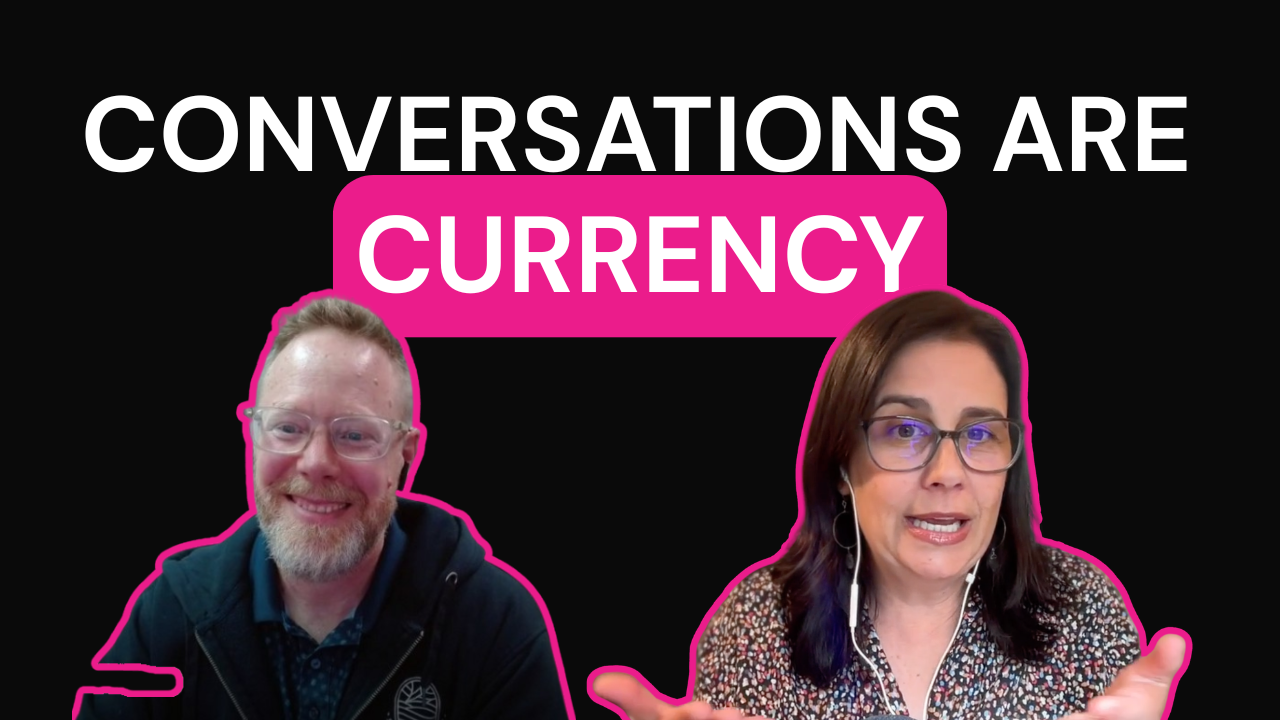
- The shift: Conversations are the currency your school runs on; every one is an opportunity for connection, and the willingness to have hard ones is what separates management from leadership.
- Impact: Teachers feel heard, trust builds faster, and change actually sticks — because the real issue got named instead of managed around.
🧰 Key Insight #2: Certainty Is Rewarded, But Curiosity Is What Works
- What's broken: The system trains leaders to have answers — uncertainty reads as incompetence, so principals perform confidence even when it costs them the truth.
- The shift: To lead is to risk; staying curious when someone pushes back, asking "I wonder what's actually going on here" instead of defending a position, is the higher-skill move.
- Impact: Parents who felt dismissed become collaborators, teachers who seemed resistant reveal skill deficits that coaching can actually fix, and the leader stops fighting fires that curiosity would have prevented.
🧰 Key Insight #3: Community Is Not a Program — It Has to Be Built in Conversation
- What's broken: Schools bolt community on through assemblies, newsletters, and culture initiatives that live in binders and die in staff meetings.
- The shift: Community is built through listening — and listening builds trust quickly enough that it actually changes how people show up, especially when things get hard.
- Impact: In a climate where the anger is "right there, like a live wire," as Sage describes it, principals who lead with genuine curiosity create the only real buffer between a school community and its fracture points.
🎙️ SAGE HOBBS QUOTES FROM THE RUCKUSCAST
"Conversations are currency — every conversation is an opportunity for connection, and they're highly effective for building trust and collaboration. And they're free."
– Sage Hobbs
"To lead is to risk. You can't please everyone. You don't always know the best next steps. You have to be willing to learn and pivot and be wrong — and that runs counter to everything, because you get rewarded for knowing the answers."
– Sage Hobbs
"Leadership and management are not the same thing, and they're both important. But leadership requires hard conversations, and that's really where change often happens."
– Sage Hobbs
"Can we lead with curiosity as opposed to assuming that person is incompetent or wrong? I wonder what's going on there. I wonder why they see it that way. I wonder if it's a skill deficit versus an actual incompetency."
– Sage Hobbs
"If you don't believe that community and connection is central to an organization running well, this book probably isn't for you. I'm not there to build the case for that — I'm here to tell you how to do that part better."
– Sage Hobbs
"Schools should be community hubs — a real sense of belonging and connection happening there. Make friends, learn cool stuff, and feel cared for."
– Sage Hobbs
🧗♂️ Your Do School Different Challenge
Ready to implement these ideas? Start here:
- Tomorrow: Identify one conversation you've been postponing and schedule it for this week with a clear intention: lead with curiosity, not conclusions.
- This Month: In your next two difficult conversations — with a struggling teacher, an angry parent, or a resistant staff member — open with a genuine question instead of a position, and notice what changes.
- This Semester: Build one structural habit that treats conversation as a leadership tool: a regular one-on-one format, a listening protocol for parent concerns, or a staff feedback loop that surfaces what's actually being felt on your campus.
⌚️ Episode Timestamp
- 00:00 - Why leaders avoid the hardest conversations
- 00:55 - What "Naked Communication" means for school leaders
- 04:00 - Sage's origin story in Philadelphia public schools
- 07:00 - Why she left education — and came back to it
- 10:43 - What changed in the book's revised edition
- 13:29 - Leading through polarization and community anger
- 22:52 - How to keep conversations focused on kids
- 25:49 - Every conversation is an opportunity for connection
- 31:22 - Dream school: community, nature, experiential learning
00:00
Speaker 1
Foreign.
00:04
Speaker 2
Leaders think the hardest part of their job is strategy, curriculum, data, or policy. But Sage Hobbs has spent a decade coaching principals across the country, and she'll tell you the real work, the work that actually moves the needle happens in conversations most leaders are avoiding. The problem is leaders are rewarded for having answers. Certainty is so often confused with competence. So admitting you don't know and staying curious when someone pushes back, leaning into discomfort instead of away from it, that runs counter to everything the system has trained us for. But what if the willingness to not know is exactly what unlocks your best leadership? What if conversations aren't just a soft skill, they're the currency your school runs on?
00:55
Speaker 2
Sage Hobbs joins me today to talk about her book Naked Communication and what it means to lead with clarity, courage, and compassion when the stakes are high and the answers aren't always clear. I'm Dan Watt, and this is Better Leaders, Better Schools, the original Ruckus cast for visionary leaders who want to do school different, even within a traditional system, so that students are excited to be at school and learn. Thanks to Ruckus makers like you, this podcast ranks in the top 1% of over 4 million worldwide podcasts. So once again, thanks for listening after a quick message from our show sponsors.
01:37
Speaker 3
For over 30 years, ODP Business Solutions has helped schools transform from whiteboards to smart boards. Why? Because when you get the right tools, everyone wins. Visit ODPbusiness.com education to revolutionize your school's learning spaces. That's ODP business.com education if you're making decisions about staffing, student support or operations this year, head Having the Right Context matters. Frontline Education's 2026 K12 lens report shows where pressures are easing, where they're not, and how districts are responding. It's based on insights from 1000 school leaders across the country. Visit FrontLineEducation.com leaders to uncover insights from over 1000 school leaders across the country. Over 1 million teachers rely on IXL because it's empowering. It helps them make better decisions with reliable data, and it adapts instruction based on student performance. You can get started [email protected] leaders. That's ixl.com leaders.
03:06
Speaker 2
Hello and welcome to another Ruckus Maker podcast. My name is Dan Watt. I'm a principal and coach in Prince George, British Columbia, Canada, and today I'm excited to welcome Sage Hobbs. Sage is an author, facilitator, and coach whose work combines her background in counseling psychology with a passion for helping people communicate with clarity, courage, and compassion. So welcome Sage.
03:35
Speaker 1
Hi Dan thank you so much for.
03:36
Speaker 2
Having me on joking beforehand. That's as polished as it gets today.
03:40
Speaker 1
Good, perfect.
03:43
Speaker 2
So when we last spoke on our intro call, you were telling me a little bit about your origin story. And I'm wondering if maybe we could start there with you sharing a little bit about the story behind why you began writing your book Naked Communication.
04:00
Speaker 1
Nice. I know. I think when we joked about this in our conversation, it's like, how do you do when you're almost 50, how do you distill down a life into, you know, a couple of beats that are relevant for other people? So, I mean, I'll see what comes out this time. I don't even remember what I said to you last time, but I started my career in Philadelphia. I'm from Philadelphia and I started in Philadelphia public schools full of idealism in the 90s, you know, thinking I could change and transform education as we know it and eradicate racism and inequities and all the things that 20 somethings feel when they, hopefully when they embark. I don't know if the 20 somethings of today do onto wanting to make a difference in the world.
04:43
Speaker 1
And that led to work as a school counselor, getting a master's in counseling psychology, spending, you know, probably about a dozen years in the schools directly before leaving to see how else I could make a difference and be of service with what I had learned in large part by being in the schools and being in hard conversations with teachers and students and families and administrators. So about 10 or 11 years ago, I pivoted. People thought I was crazy. You don't usually use. Leave public education before, you know, I was like, not even yet 40, I think, and. Yeah, that's right. And I was in like the school district where I live, where my husband's also at the time was a teacher. Now he's a principal. So it seemed kind of like crazy. Why would you leave the pension and all of the security?
05:32
Speaker 1
But there was just this like, desire to have more autonomy and creativity. You know, I really wanted to see, like, what can I make? You know, I know that ruckus makers are interested in doing things different like this. It can be somewhat stifling to be inside of the bureaucracy. Does things don't move quickly. And I do move quickly. So there was a little bit of that. And there was also. I had a second child and I. I don't do anything half. So as a school counselor, it was quite hard to have my role as a school counselor, my husband as a teacher, and then to come home to two kids and feel like we'd kind of given so much to other people's kids throughout the day, it felt hard for us both to maintain that.
06:13
Speaker 1
So I was curious, well, what else could be out there? And I started taking all of this communication and relational emotional intelligence, you know, body of knowledge that I had learned both in school but also in practice. Because as, you know, anybody listening who works in the schools, like they're kind of microcosms of society. You're, you are learning how to navigate lots of different challenges day to day that you can't always see coming that involve people's feelings and it's messy and to see what I could do with that in a different space. So I started this consulting and coaching business. It ended up being largely back inside of schools, which wasn't initially the intention, but that was where I came from. Right. So I ended up working with a lot of school principals and superintendents and teachers.
07:00
Speaker 1
And then the book was like, how do you teach people to do this thing that I think is really the most important thing in the entire world, which is to build relationships that matter. And what does that, like, look like? How do we, how do we, you know, I did that a ton with kids who were in conflict or parents who were fighting with their children, or teachers who weren't, you know, struggling with certain students. But what does it look like for leaders to do that? And so naked communication was born out of me wanting to kind of take all of this, both lived experience and studied experience, and put it into a resource, you know, for how do we communicate in ways that actually bring us into deeper connection with each other. And that's how the book was born, I guess.
07:49
Speaker 2
Where in that 10 year journey did the book start to happen?
07:53
Speaker 1
You know, it started earlier than it probably should have, to be honest. Like, I, so I recently, the book recently was republished 10 years after its initial release date. And, and I say earlier than it should have only because. And most people wouldn't say that. They'd say, write a book. If you think you've been thinking about it your whole life, just write the book. You know, and I, I don't regret that I wrote it earlier on in the entrepreneurial journey, but I've learned a lot in 10 years, as we should. Right. I came in with knowledge from my first career, but then a decade of coaching and doing training and development with principals and school districts and such, like, there's more, I'm a better writer, all sorts of things I'VE been writing now for 10 more years.
08:36
Speaker 1
So it started as a, like a seed of thought. I was driving cross country with my kids from Colorado, where I now live, all the way back to Philadelphia where I'm from, stopping to see my in laws in the Midwest and my husband and I with two small children in the back. Again, many of you who are from education know that, you know, financially, sometimes road trips are the way that you get to see the country. And I've always loved to write and I had already been writing these blogs and I just was like, I want to write a book, you know, and Naked Communication. I actually my. The. My husband came up with the title of it when were really, truly like in the middle of cornfield somewhere. I don't know if were in Iowa or in. If were yet indiana.
09:26
Speaker 1
I'm not really sure, not being from the Midwest myself, but I wanted it to be about authenticity and honesty and courage. And I didn't want it to sounds stuffy and like another way, one to five ways where you can listen better and connect more. You know, like it's just not my personality. So my husband's like, what about Naked? Now, I don't know how I feel about that 10 years later. But because, you know, people have different relationships to that. But it's worked. You know, it really is supposed to be about if you pull back the layers of our conditioning of the way we've been taught to be in relationship with one another, what else is possible? So that's, so it started, I guess I started writing it 11, no, maybe 10 years ago or so.
10:15
Speaker 1
And then I kind of put it on the shelf, you know, it sold. I got reviews, did all the things you're supposed to do. And then I was like, okay, that's done onward, you know, onto the next fun project. And I really shelved it until about a year ago when I'll. I, I won't get into all that. But there was, there were some reasons that had it kind of. It felt relevant again in today's time to bring it back to life.
10:43
Speaker 2
So the reasons might not be particular or they might be important, but they might not. We might not want to get into them. But I am curious. What have you learned that you felt like was important to infuse into the revised version?
10:56
Speaker 1
Yeah, great question. Some things that were more relevant in the workplace. I feel like the tenor of the first book felt more interpersonal by nature. And then I really saw again after a decade of training, development Coaching how we're not that. It's not that separate. You know, we're a whole human at work, at home, you know, So I wanted to add some examples from the years of talking to leaders and community leaders and school leaders that would resonate from that perspective as well. And then just there are some things I really have gotten clear on, like to lead is to risk. I added that in as a concept that wasn't initial in the initial version, because that's what I've really seen. Like, folks are. Who are doing important leadership work in our communities. They cannot please everyone. You know this, Dan.
11:49
Speaker 1
You do it every day. You cannot make everyone happy. You don't always know the best next steps. You have to be curious. You have to be willing to learn and pivot and be wrong. And, you know, that kind of goes against what we're taught, which is you get rewarded for knowing the answers. In leadership, you quote, unquote, should know what to do in order to make the next best choice. So I just. I really have worked on that a lot with leaders, which is, you know, it's a risk. You. You can't be comfortable in this entirely. So that was a part that got added. In addition to the professional examples, a whole lot more on hard conversations and why they matter for actually creating change. You know, this, that their leadership and management are not the same thing, and they're both important.
12:40
Speaker 1
But leadership requires hard conversations, and that's really where change often happens. You know, you can't just have a checklist that gets a teacher to perform better. They also need to have the kinds of conversations that take courage and compassion and clarity around what needs to change. Right? So those are some of the things that have been added and adapted just to make it more rich for the times. And when I say in terms of now, I mean, I think we're living. I think the world feels, to me more fragmented than it did even 10 years ago in terms of divisiveness. And. And not just to me, all of the principals that I'm coaching, and I don't know what this is. Maybe Canada, US could be different, but like, it. The anger is like, right there.
13:29
Speaker 1
There's like this live wire that folks are like, they, you know, they touch it. They're. They might get zapped. You know what I mean? And so there's this. It just feels like folks are closer to the edge. And so there's more, even more need to talk about how do we listen to other points of view, how do we, you know, have conversations without Getting defensive, that kind of thing.
13:54
Speaker 2
I love your phrase about writing for whole humans or coaching whole humans. And I'm wondering, obviously a part of your audience is school leaders, but who else do you think is the audience for this book?
14:10
Speaker 1
I mean, I want to say everyone, obviously, but that's apparently bad marketing strategy, right? You're not supposed to say this is for everyone. I know, hone it in. But I mean, it's for me. I, I really believe you have to be curious. It's for people who are, want to learn and grow and be curious. They know that, you know, their own leadership evolution is ongoing. They're lifelong learners. You know, they're willing to say that they have more to look to understand, you know, in their journey. I think it's for those who perhaps find hard conversations difficult. You know, they know they need to have them, but they're more avoidant or cautious or afraid of messing it up, you know, so those who are like, okay, I'm going to the, I'm in this next level of leadership and I really care about the outcomes.
15:03
Speaker 1
Like, I really care about the community I impact or the students I serve or, you know, and so I, I want to be able to say what needs to be said without it not wildly offending people, fracturing the foundation of what I've built, et cetera. So folks who know that's an area of growth and then honestly it's leaders. If you don't believe that community and connection is central to an organization running well, this book probably isn't for you. Like I, I, I'm functioning from, you know, like you're already coming in being like that. People matter. It's a human centered leader who's going to pick this up. If you don't already think that I'm not there to build the case for that, I'm here to tell you how to do that part better.
15:47
Speaker 1
I think that's for sure universally true in terms of the audience, given that's.
15:51
Speaker 2
A basic premise of the book. Could you tell me a little more, Tell us a little more about your work in schools or from supporting schools, how that has evolved for you over time. A journey from working in schools to supporting schools.
16:06
Speaker 1
I bet a lot of people who listen are curious about that because I know so many folks are, you know, kind of wonder, what do they do, whether or not they leave before they've put in all of their years or they have put in all of their years and they're only 55 and they're like, well, what Next. How can I take what I've. And I love that converse. That's a great question. I love that conversation. Because I also think we're not really taught as educators that our skills are really universally applicable. Right? Like, you're like, you're a teacher, you're a counselor, you're. You're a school person, quote, unquote, you know, and I just have not, I have found that not to be true.
16:46
Speaker 1
And it's exciting, you know, it's like kind of exciting on the other side, like, oh, you know, this is what listening looks like in every realm of leadership or professional spaces, you know, So I guess it's, you know, started out, I was direct service in the schools, responding to parents, responding to students. I was teaching some classes as a counselor. I was very like, in the classroom context, I was teaching, you know, I was helping with the health classes. And I did a lot of de. Escalation, a lot of crisis intervention and crisis management, a lot of managerial stuff like schedules, changing schedules, etc. You know, and when I left, I was like, I felt like I needed a break from schools. So I tried to do that and sort of see what would. I worked inside of some international corporations.
17:38
Speaker 1
I'd never done anything like that as a consultant doing women's leadership programming and things like that. That was. I recommend that educators see how other spaces work. I think, you know, it gave me an appreciation for education. It also showed me some gaps and opportunities for growth in education and how their systems work, that private sector spaces have a little more flexibility or innovation around, you know, so I, I did other things. And then of course, my heart has always been in public service, really, not just education. And then that's where my network was. So I had an old principal who had moved up in our district into a more senior role at the district level. Ask if I would coach some principals.
18:23
Speaker 1
And then it became some of those principals asked if I would do some training and development with their staff, you know, like with their teachers, on an ongoing capacity. And then during the pandemic, it became, oh my gosh, you've been doing things virtually already. Can you. People are freaking out. Can you please do a series of like, well being for everybody, not just the, you know, for people in operations, people in budget, like administrative staff, you know. And that morphed into one of those folks moved to another district in a different state. And then they hired me there and then they told, you know what I mean, how that kind of grows.
18:59
Speaker 1
And so I Would say that the core strengths that I had as a counselor, which was to really be able to understand multiple points of view and to listen and build trust very quickly, especially with middle schoolers who are not quick to trust adults, has been the same. Are the same assets or strengths that I brought into executive coaching with principals and their staff. You know, can we really listen and build trust quickly? Can we understand multiple points of view? Can we not get defensive when somebody doesn't see things the way we do? You know, so in some ways it's the same through line, but a different approach. Yeah.
19:40
Speaker 2
Relationships. But education. And in. In our intro call, another phrase that I love that you used was education done differently as a greatest endeavor of our time.
19:53
Speaker 1
That's fabulous. I said that. I was gonna say, I was like,.
19:58
Speaker 2
Oh, I've been waiting for weeks. What do you mean,.
20:07
Speaker 1
Greatest endeavor of our time? Education done differently. I actually have said that before. I do recall saying that to other folks as well. In. And I mean it like, it's what keeps me in hope. So if. Again, if folks who are listening are like, oh, my gosh, sometimes I just feel like I am swimming upstream. This is impossible. You know, everything I try, I can't reach this child or no matter what I say to this parent, they're mad or, you know, whatever it is. What gives me a sense of hope besides the kids themselves, which I don't have as much access to anymore. Right. I'm not directly in service with students in the same way. And I do miss that, though I still have. I live where I used to work, so I still have some.
20:45
Speaker 1
I continue to mentor who are grown up and have children. Talk about feeling old, but the. The thing for me is that I love this idea that education can be the great equalizer, that you can truly disrupt generational poverty. And I've seen that happen many times. You know, when. When kids get access to opportunities that their parents didn't have access to, I. I feel that we can. I mean, it's going to sound totally grandiose, but, like, if you talk about, like, world peace. Right. Like, I look at my own children and their degree of empathy and understanding of kids that are different from them, from basic, from what was talked about when I was in school, which, meaning it wasn't talked about at all. You know what I mean? And so I feel like we've never gotten it right. You mean in terms of.
21:38
Speaker 1
At least I'll speak for the United States. This maybe isn't global, okay. But we. The statistics show that for Our marginalized communities, our black and brown students, our students of poverty, they're. They don't perform as well. They don't get the same economic jumpstart out of school as those with other privileges have. So I'm not living in la land. So, I mean, it's an imperfect system with a really beautiful ideal. And I think that's worth fighting for and figuring out like the ideal isn't the problem. You know, this could transform communities and societies if we could get it right. The way we get it right is the pro. The way we get there is the problem, not the ideal. That's what I think I meant by that wise sentence.
22:27
Speaker 2
Well, and again, recognizing where you're calling in from today, with DEI maybe being a hot button issue, we don't need to go to the hot button. But I am curious about how your work in many districts has sort of informed your practice, how you've taken that work in various districts to allow you to keep the focus on kids and learning. How do you do that?
22:52
Speaker 1
I love that question, Dan. Thank you. Here's what I. I mean, I've been in very conservative districts and not conservative districts. I've been in urban and rural at this point. And what I think is universally true is that people care about their kids. If I put politics and budget and everything away, and I say, do you want your kids to be able to read, write, and do math so that they can, like, have a job and make a good living? Yeah, of course. Do you want them to feel safe when they go to school? Absolutely. Do, you know, do you want that the teacher care about them, you know? Yes. So I try to always come back to what I think are universal truths for most people. Now, again, I was a school counselor, so I know there's fringe examples of.
23:35
Speaker 1
You know what I mean? But as. As a rule, as a rule, most people really want what's best for their own children and. And for children in general, actually. You know what I mean? So that's the first piece. The second piece is I, you know, I leaned much more into DEI in my past. I had a whole podcast called Race, Culture and Beyond. I was an urban studies major in a big city on the East Coast. And again, what I really come back to is it's about how do we listen so that we can understand and it doesn't have to be political or divided. It's like, I. I want to be curious. I talk to principals about this all the time. Can we lead with curiosity as opposed to assuming that person is Just incompetent or an idiot or wrong.
24:25
Speaker 1
You know, can we instead be curious the way we would ask kids to be like, I wonder what's going on there. I wonder why they see it that way. I wonder what they're actually so angry about. I wonder if it's a skill deficit versus an actual incompetency, you know, and so for me it's, you know, grounded in. We all universally want what's best for kids. How we get there is where we differ sometimes. And can we be more curious in our conversations? That for me has worked. It's worked with, for me often with people who see things differently than me. So that's my.
25:06
Speaker 1
Some people say it's kind of like I'm like the person who smashes up the broccoli and hides it in the mashed potatoes for their kids or whatever, you know, like I want to get in there with that curiosity stuff and it's okay if I have to do that in ways that are more palpable. Palpable, Is that the word? More edible, tasty, Palatable.
25:25
Speaker 2
Palpable and palatable.
25:26
Speaker 1
Palatable, yes.
25:30
Speaker 2
But palpable, you can feel that broccoli going down. Well, I think you just gave me my takeaway for our chat, but maybe you have something different. I'll ask you what is an action or idea that you want to make sure a ruckus maker knows about first?
25:49
Speaker 1
I love Rocket, this idea of ruckus making. For me, it's. I really do. My husband, Sage, you've always been a disruptor. I was like, oh man. But I think if really for me is that conversations are currency, you know, that really every conversation is an opportunity for connection. And you build your relationships, whether it's with your team, with your students, with your family, you know, through these small and big conversations. And they're highly effective for building trust and collaboration. And they're free like it is free to have meaningful conversations. And it's an under leveraged tool for how we lead. So I think that's. That every conversation is opportunity for connection would be what I'd want ruckus makers to take with them.
26:34
Speaker 2
That is great.
26:36
Speaker 1
Thanks.
26:42
Speaker 3
ODP Business Solutions, formerly Office Depot Business Solutions Division. Division has been a trusted partner for schools for 30 years. At ODP Business Solutions, we're by your side to meet your evolving education needs. Here's the thing about creating remarkable learning spaces. You need a partner who gets it. Someone who understands that transforming education isn't just about swapping whiteboards for smart boards. It's about reimagining what's possible. That's why innovative school leaders trust ODP Business Solutions. We don't just deliver supplies, we help you design dynamic learning environments that make students actually excited to show up. From tech integrations that bring lessons to life to flexible furniture that transforms any space into a collaboration zone, to sustainable solutions that teach by example. We've got everything you need to do school different. And the best part?
27:41
Speaker 3
You can get it all from a single supplier that helps you simplify ordering and streamline budgeting while staying compliant with easy access to cooperative contracts. However you want to advance. ODP Business Solutions has 30 years of experience helping districts like yours get ahead. Visit ODPbusiness.comeducation to learn more. That's ODPbusiness.com education with so much changing across K12, it's not just about reacting. It's about making decisions that hold over time. Frontline Education's 2026 K12 Lens report brings together insights from over 1,000 school leaders to show what's shifting across staffing, operations and student support. Learn where momentum is building and where districts are feeling the pressure by visiting frontlineducation.com you can get your full report at frontlineducation.com leaders something that drove me nuts as a ruckus maker was hearing teachers say things like I taught it, they should have learned it.
29:00
Speaker 3
But really, some teachers just don't know how to teach, or reteach for that matter, so that all kids get it. That's where IXL comes in. IXL's diagnostic automatically identifies knowledge gaps for teachers and provides them with a personalized growth plan for each individual student. Teachers can step into the classroom every day knowing what their students know and what they don't know. IXL's adaptive platform makes differentiating instruction easy. As students learn, IXL adjusts to the right level of difficulty for each student. Close knowledge gaps and accelerate learning with IXL. Get started [email protected] leaders. That's ixl.com leaders.
29:54
Speaker 2
Well, let me ask you the marquee question. If you could put one message on all school marquees around the world for a single day, what would your message be?
30:04
Speaker 1
Not gonna lie, Dan, I did not like this question. It's too hard.
30:10
Speaker 2
It is super hard, isn't it? And it changes every time.
30:14
Speaker 1
Every time. I came up with several, but the ones that like, stuck for me are like, make friends, learn cool stuff, and feel cared for. I don't know if that's what I'd really put, but that's the essence of it for me, like school is much more than knowledge acquisition. It's becoming who we are and building relationships, knowing how to build relationships, knowing how to use our voice, knowing what uniquely we have to offer to contribute. So I just kind of liked that idea of make friends, learn cool stuff and feel cared for. It's a community.
30:50
Speaker 2
I love that. And that actually speaks to why it's okay to take your kid out of school for two weeks to go to Europe. Especially when they're doing okay academically. Right. There's this whole other piece to what we do in education and there's a.
31:07
Speaker 1
Whole world that is important for them to understand that we can't always. There's learning that happens outside of the classroom that's as important as what happens in the classroom in a global society. Yeah. Thank you.
31:20
Speaker 2
Context in a sense.
31:21
Speaker 1
Yeah, yeah.
31:22
Speaker 2
And how about your dream school? You're building your dream school on the ground up. You're not limited by any resources. Your only constraint is your ability to imagine what are three guiding principles for building your dream canvas.
31:36
Speaker 1
First of all, how fun is that? You could have a whole show just talking about that. For me, the three would be community above all else. That's just my core value and core belief. Communication is how you build it. Right. So listening builds trust and curiosity shows interest and compassion builds belonging. But that the goal really is schools should be community hubs. You know, a real sense of belonging and connection happening there. So that's the first one. The second would be way more experiential learning. I think we have moved away from hands on much too much. And we have research that shows us that we learn by doing. We retain much more than by sitting and getting or even by reading. And I love to read, you know, but actually like getting our hands dirty and making things.
32:31
Speaker 1
I think kids want to make things. I think people want to feel like they can create things. So experiential learning would be paramount, you know, and secondarily like my. I have two teenagers now, my older teenager, you know, I think experiential learning is a it. There's a piece of relevancy and buy in to his education that is missing because it seems disconnected from usefulness. So experiential learning would be my second and then my third. Wow, this is really breaking from my Philadelphia roots on this one. But I, I am a proud tree hugger. I feel like nature would be a huge part of access to nature from a school. So I love when schools have. Every classroom has windows, every classroom Has a door to the outside. Even if you're in a city.
33:19
Speaker 1
I want there to be plants, I want there to be trees. I want people to feel. Kids to feel that neuro, the nervous system regulation of getting their feet on a patch of grass. So community, nature, access, and hands on would be my three.
33:35
Speaker 2
I love it. Taking those kids outside.
33:38
Speaker 1
Yes. More.
33:41
Speaker 2
Of all the things we discussed today, what's one thing you want a Ruckus Maker to remember?
33:46
Speaker 1
It's gonna sound super cheesy, but I feel like it's keep making a ruckus, you know, just don't be afraid to be different and ask questions and consider new possibilities. I mean, what happens if we just completely succumb to the status quo? Boring and ineffective. So I think that's what I would say. Right. Like, where can you just keep leaning into your ability to shake things up a bit?
34:12
Speaker 2
Thank you, Paige. That is a super inspirational note to close on.
34:16
Speaker 1
Thank you, Dan.
34:17
Speaker 2
You're most welcome. I really enjoyed our conversation today. And before we close, is there anything I can do to help?
34:24
Speaker 1
Oh, my gosh. I don't know that any podcast interviewer has ever asked me that. I love that and appreciate it so much, honestly. Just, I really am grateful for the opportunity to keep having these conversations and, you know, tell folks about my book. I. Books are these little things you birth and put into the world. And it's so funny because you worry like, oh, my gosh, what are people gonna think? And then you realize not that many people read books, certainly not if you're not famous. So what was I ever worried about? But that is one way that's helpful is just to let people know that it's out there. And thank you for, you know, sharing this passion for education with me.
35:04
Speaker 2
My pleasure. It's been a great conversation. Hey, Ruckus Mecher, thanks again for pressing play. I hope you enjoyed this episode as much as I did. One thing Sage taught me, conversations are currency. So take time to appreciate the next opportunity to connect with someone. Lead with curiosity. This matters because Ruckus makers do school different. And if education ain't a bit disruptive, then what are the student really learning? Ruckus makers create a campus experience worth showing up for. And before you go, if today's episode sparked an idea or shifted your thinking, then you're gonna love the Ruckus Maker Mastermind, a private community of innovative school leaders who meet weekly to grow, reflect, and disrupt the status quo. Create the campus experience your staff and students deserve. Applications are now [email protected] apply. And don't forget to subscribe to the Ruckus Maker newsletter.
36:03
Speaker 2
Three new opportunities to do school different each week. Trusted by over 5,000 forward thinking leaders. Join free at Ruckusmaker News. And finally check out my principal coach your AI powered leadership mentor trained on 10 years of mastermind and coaching experience. It's like having a world class Ruckus Maker mentor in your pocket. Start your 7 day free trial at myprincipalcoach. Com.
Transcribed by https://fireflies.ai/
👩🏻💻 Connect With Sage Hobbs
🎧 Listen & Subscribe
Listen to Better Leaders Better Schools on Apple Podcasts, Spotify, Youtube or wherever you get your podcasts. If today's episode moved you, leave a review — it helps more Ruckus Makers find the show.
🧔🏻♂️ Your Self-Mentorship Guide
Meet Digital Danny — your self-mentorship guide. Always available, never forgets, and evolves with you. Think through your next leadership move at myprincipalcoach.com.
🤝 Today's Ruckus-Cast Partners
ODP Business Solutions®
ODP Business Solutions has been transforming school learning spaces for 30 years — from smart boards to flexible furniture to sustainable solutions that free you from managing five different suppliers. They help you design dynamic environments that make students excited to show up, and their cooperative contracts keep you compliant without the procurement headache.
👉 Visit odpbusiness.com/education to see what's possible.
Frontline Education
Frontline Education's 2026 K-12 Lens Report is built from insights gathered from over 1,000 school leaders across the country — giving you a clear picture of where staffing pressures are easing, where they aren't, and how districts are making decisions that hold. If you're navigating operations, student support, or personnel decisions this year, this is the context you need.
👉 Get the full report at frontlineeducation.com/leaders
IXL
IXL's adaptive platform automatically identifies knowledge gaps for every student and hands teachers a personalized growth plan before the bell rings — so no one walks into a classroom guessing what their students know. Over one million teachers use it because it makes differentiated instruction actionable, not aspirational.
👉 Get started at ixl.com/leaders.
Twelve Practices LLC © 2026 | If Education Ain't a Bit Disruptive, Then What Are Your Students Learning?


