A professor at San Diego's High Tech High Graduate School of Education and co-author of PLC+: Better Decisions and Greater Impact by Design, Nancy Frey has spent decades studying how teachers actually collaborate — and why most of it doesn't work. Her research-backed PLC+ framework is the difference between a Wednesday morning ritual and a genuine engine of collective efficacy. She teaches full-time at a high school that runs every student through a real-world internship program, so her frameworks aren't theoretical — they're road-tested. Find her work at hightechhigh.org.
Professional learning communities were supposed to fix teacher isolation. Instead, most schools turned them into a weekly meeting where teachers explain why students failed. If your PLCs feel like compliance theater, this episode of the Ruckuscast is the reset you need — Nancy Frey breaks down the PLC+ model and the exact questions that shift a team from admiring problems to solving them.
🌟 What You'll Learn
- Why 85% of PLC conversations focus on student deficits — and the research that proves it.
- The single wrong question most schools are asking in PLCs (and the right one to replace it).
- How to organize collaborative teams around common challenges instead of grade level.
- What "the plus" in PLC+ actually means and why it's the antidote to teacher burnout.
- How one San Diego high school built a healthcare internship program that sends students into the field every week starting in ninth grade.
🧠 Key Insight #1: PLCs Have Become Problem-Admiring Sessions, Not Problem-Solving Ones
- What's broken: Research shows that 85% of PLC conversations focus on student deficits — language barriers, behaviour, home life, or suspected disabilities — rather than instructional changes.
- The shift: Name a specific, solvable common challenge your team can actually affect, then spend PLC time designing and evaluating actions toward that challenge.
- Impact: Teams move from collective helplessness to collective efficacy — and teachers stop feeling like they're carrying student achievement alone.
🧠 Key Insight #2: Organizing PLCs by Grade Level Locks Out the Most Valuable Collaboration
- What's broken: Grade-level and department groupings leave singleton teachers — art, PE, music — without a collaborative home and trap everyone else with the same colleagues year after year.
- The shift: Organize teams around a shared common challenge, letting staff self-select based on what's genuinely perplexing them right now, regardless of content area.
- Impact: Teachers encounter new practices, new contexts, and new colleagues — what Nancy calls a more "vivid" way to experience school as a professional.
🧠 Key Insight #3: The Wrong Question Is Driving Every PLC in America
- What's broken: Schools open PLCs by asking "how do we raise reading scores?" — a question so broad it guarantees vague answers and no accountability.
- The shift: Drill down to a problem statement specific enough to act on, like "our multilingual learners struggle to answer questions about details from an audio presentation of an academic topic."
- Impact: When the problem is scoped correctly, teams can design targeted actions, measure impact, and actually see what's working — instead of chasing a metric nobody controls.
🎙️ NANCY FREY QUOTES FROM THE RUCKUSCAST
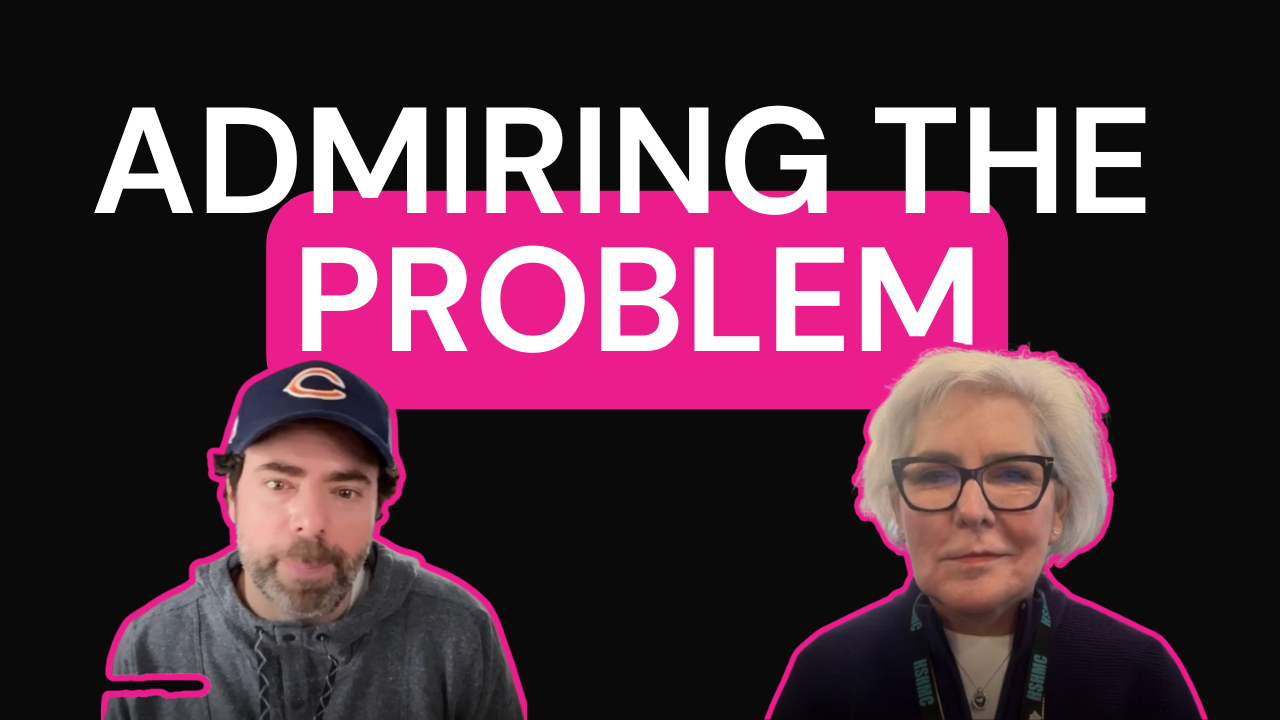
"It's not problem solving, it's admiring the problem.”
– Nancy Frey
"85% of the time, one of four approaches was used when data were shared — and none of them were about what to do differently instructionally."
– Nancy Frey
"The plus is us. There's a collective responsibility and a collective efficacy to what it is that we do."
– Nancy Frey
"When teams don't understand their collective wherewithal to be able to impact in a positive way, and they're left with going, I don't know what else to do — you can either say it's on me or it's on them. And it honestly is kind of easier to say it's on them."
– Nancy Frey
"They are your top, your advanced students. They already knew it and they did not benefit from what it was that you taught. Because your pre and your post information looks exactly the same. Those students are also hiding in plain sight."
– Nancy Frey
"Nothing is lonelier than feeling like you are the only person taking on all of these challenges."
– Nancy Frey
🧩 Your Do School Different Challenge
Ready to implement these ideas? Start here:
- Tomorrow: Pull your next PLC agenda and replace any open-ended "how do we raise scores" question with a specific, scoped challenge statement your team can investigate and act on.
- This Month: Audit your current PLC structure — identify which teachers have no natural collaborative home and design one cross-content team organized around a shared common challenge.
- This Semester: Implement the PLC+ "who is benefiting and who is not" question as a standing agenda item for every data conversation, and document what instructional changes result.
⏳ Episode Timestamp
00:00 - Teachers wildly underestimate their students
01:55 - Why PLCs became a compliance checkbox
05:04 - What teachers predicted vs. what students actually scored
07:46 - Old PLC models schools are still running
10:06 - Collaboration isn't just Wednesday mornings
11:11 - Why standards debates still waste PLC time
13:39 - Organizing PLCs around common challenges instead of grade level
14:57 - How PLCs drive deficit thinking — the research
20:01 - The wrong question most schools ask
22:53 - What strength-based PLC conversations sound like
24:34 - What the "plus" means in PLC+
30:20 - Building student internship partnerships with healthcare
33:05 - Advice for Ruckus Makers who want to start internship programs
00:04
Speaker 1
So here's something that'll mess with your head. A group of teachers predicted how their students would perform on an assessment. And what they found was that they wildly underestimated what the kids were capable of. Their kids actually scored off the charts. The teachers really thought that they would do poorly, but the kids, again, they crushed it. And the teachers never expected this. So what's going on there? This wasn't about the kids at all. Right? It was about the invisible ceiling that educators at times put on their students. The low expectations we don't even realize we're carrying for our kids. And those low expectations, they show up everywhere, especially in Wednesday morning PLCs. Most schools treat professional learning communities like a sacred ritual passed down through the ages. This is how we do PLCs. Here.
01:00
Speaker 1
PLC has become a checkbox, like an exercise where most of the conversation is spent blaming students, blaming the assessment, coming up with all the reasons that students didn't do so great. Right? We don't have this, we don't have that. Da, da, da. All the reasons why people fail. Very few educators actually talk about what can be done, how to solve the problem, what changes need to be moved in the instruction. It's not problem solving, it's admiring the problem. And the stakes to this are huge. When we don't build collective efficacy, when teachers feel like they're carrying the entire weight of student achievement on their shoulders alone, that's where we get burnout. We get isolation. We get social media posts crying for help because locally, teachers feel like there's no support.
01:55
Speaker 1
But what if instead of asking, how do we raise reading scores, which is the wrong question, by the way, what if we asked, what's the specific challenge here we can actually solve together? What if we stopped focusing on deficits and started focusing on strengths? Who's benefiting from the instruction and who's not? Today, my guest is Nancy Fry, and she's about to show us how to transform PLCs. Talking about a model that she calls PLC Plus. And this is transforming from compliance theater to actual engines of collective efficacy. You're going to love this show. She's breaking down why collaboration can't just be Wednesday mornings around a table. And why the most powerful partnerships might be happening outside your classroom walls entirely. Hey, I'm Danny, and this is Better Leaders, Better Schools. The original ruckus cast for innovative school leaders who want to do school different.
02:54
Speaker 1
Reimagine the project of education. Yes, Within a traditional system, so that we create campus experiences worth showing up for. And because Ruckus makers. Just like you decide to press play and engage with this content, this show ranks in the top 1% of nearly 4 million worldwide pods in the world. It's like crazy. I can't believe I said that, you know. Thank you, thank you. Thank you so much. Hey, we're going to get to the main content in just a second, but first let's hear some messages from our show sponsors. Still scrambling for supplies like it's 1999, ODP Business Solutions streamlines everything from pencils to projectors so you can focus on what matters making an impact. Visit ODP business.comeducation to learn more. That's ODPbusiness.com education as districts look ahead to the coming school year, the groundwork starts earlier than you might think.
03:59
Speaker 1
The way professional learning is designed can shape culture, collaboration and stability long before students arrive. Frontline Education's 2026 K12 lens report takes a closer look at how districts are connecting professional growth to stronger staffing stability. Download the full [email protected] leaders to learn more. That's frontline education.com leaders. IXL is a go to support for classroom teachers because its adaptive platform makes differentiated instruction easy. See for yourself. Get started [email protected] leaders. That's ixl.com leaders. All right. Well, Nancy, welcome back to the show. I'm so excited to host you again.
04:59
Speaker 2
Oh, Daniel, thank you so much. This is just a delightful experience every time I'm here.
05:04
Speaker 1
Thank you. Thank you. Can you tell us about the moment when teachers predicted assessment results and discovered their students could do far more than they expected?
05:16
Speaker 2
Yes. And isn't that always quite a surprise as well? So we're working with a group of teachers and they're the results, the district had the results that students had done on these assessments regarding phonics and so on. These were with the primary age students. And before revealing what the students had done, how they had performed, we asked, well, how do you think they did? You know, you know, your kids, how do you think that they did? And what was really worrisome and I mean that in terms of people carrying burdens on themselves and they well under predicted how it was that their students did.
06:02
Speaker 2
Their kids were off the chart on these assessments and the teachers were surprised and it really opened up an interesting conversation about what expectations are and how we communicate those expectations to our students, how we manifest those expectations for students.
06:25
Speaker 1
Yeah, I like to tell, you know, leaders that I support students and your teachers and your Staff have the nasty habit of meeting your expectations, whether they're high or if they're low.
06:36
Speaker 2
There's research on that.
06:38
Speaker 1
You, you'd be the expert. I, I just say stuff that I think is in line with my intuition, but I bet there is. So, and what does that story reveal, you know, about how we perceive our students abilities and capabilities as well?
06:52
Speaker 2
Well, I, and I wouldn't necessarily make this solely about this particular group, but I think that for all of us, hey, I'm a teacher too. And for all of us, we can sort of get lost in the weeds of delivering instruction and perhaps not quite enough time spent in hanging out with how it is that students are doing. How are we assessing. How are we monitoring that learning so that we get a better feel for where we can speed up, where it is that we need to slow down. In other words, that the curriculum itself and the delivery of that can take the foreground and we sort of forget, oh yeah, we need to check in with kids, we need to find out how it is that they're doing so that we can make those decisions about where we can speed up.
07:46
Speaker 1
I'd love to ask you a bit about PLC plus and some core concepts there. And I know that you say that PLCs are on a continual journey of improvement. What old models are schools still using that need to be updated these days?
08:02
Speaker 2
Well, I think the interesting thing is that in many cases they aren't using models. And Daniel, have you ever played that game, you know, maybe at summer camp or something like that, where everybody would sit in a circle and the first person would whisper a message into their neighbor's ear, the person sitting next to them, and it would go all the way around the circle, whispering, whispering, until it got back to the original person. And everybody would laugh because the message was so very different. I think that's what happens sometimes with professional learning communities that whatever your first teaching job is, somebody says to you, hey, we do PLCs on Wednesday mornings. And you're like, what's a PLC? Don't worry, I'll show you. That becomes your model and it becomes like the whisper game, right? Like, well, this is what I know.
09:00
Speaker 2
And because this is what I have experienced. And so I replicate that going forward. And I really do believe there isn't enough attention at the teacher preparation level to helping adults learn how to collaborate with one another. And there's very little attention that is ever given at the in service level. It's just, we've got a schedule. It's Wednesday mornings. That's when it is that we do PLCs. Go forth and do those PLCs.
09:37
Speaker 1
Yeah, I don't know. It's so long ago to remember my teacher training days, but I'm not sure that collaboration piece was a part of it. The other shocker, too, is like, you know, getting in a classroom and you're not prepared. When you say, okay, Nancy, we're going to be doing this today in class, and you say, no, Mr. Bauer, no, we're not. It's like, wait, what? Like we're going off scripts 30 seconds in. How do I respond in the moment? So it's those practical things that get missed at times.
10:06
Speaker 2
Well, and Danielle, I think you hit on a really important point there too, because when we're talking about professional learning communities, we are not talking solely about what happens on Wednesday mornings when it is a late start for the children. And now we're all sitting around a red round table in someone's classroom. And that's what counts for collaboration. Collaboration happens all through or should happen all throughout the day. And that includes being in and out of each other's classrooms and being able to collaborate that way. So that, Mr. Bauer, when you do have that kid who says, nope, not going to do it, you have professional relationships with your colleagues to be able to collaborate. How do I solve this? How do I address this?
10:55
Speaker 1
Yeah, and I wasn't speaking from experience. That was just a thought experiment, you know, to be clear. But I've heard some teachers struggle with that at times.
11:03
Speaker 2
Fair enough.
11:04
Speaker 1
You know, we've had standards for decades and yet we're still debating what students should learn. What's going on there?
11:11
Speaker 2
Well, I, it's a. Wondering that I have because I know that it is not uncommon in some professional learning communities. For kind of the first question, if you will, to be what is it that we want students to learn? And, and that certainly was a question that had a lot of relevance in the pre standards days. Standards really came onto the scene, you know, 1999 or so. By then everybody had standards that were headed out there. We actually know what it is that we want students to learn. Can't we move forward from that? So I think that's a place that consumes time and attention that perhaps could better spent in really engaging inquiry.
12:02
Speaker 1
Right.
12:03
Speaker 2
What do we want to solve?
12:05
Speaker 1
Curiosity, huh? Again, asking those questions.
12:11
Speaker 2
Exactly.
12:11
Speaker 1
I, I appreciate, like how you mentioned collaboration. It doesn't necessarily have to be Wednesday mornings with a late start. Right. And it's in the hallway and throughout the day. Right. As often as possible. I'm guessing many educators get introduced to the concept of PLCs, and they're probably told that it happens by department or grade level, but it could be organized, probably, I'm guessing, in many other ways. And how, if you agree, like, how else can we organize.
12:40
Speaker 2
I do agree. And there are lots of times where it totally makes sense for a grade level or a grade band, so, you know, third through fifth grade, working together or a department. There are times it makes sense to be able to do that. But that also can lock out so many other possibilities. So, as an example, most schools, there's one art teacher, there's one PE teacher. Right. There's one music teacher. Where do they go? As one example, if we're only at the elementary level, arranged by grade levels, at the school where. Where Doug and I teach, we're at a high school, and we are a school of singletons. We have. We have one biology teacher, we have one chemistry teacher, and so on. And the way that we have always organized is around figuring out what your common challenge is.
13:39
Speaker 2
And through a process that we utilize with teams of teachers, they come up with their common challenge. What's something that is really perplexing them right now. And then people choose which common challenge they want to be able to join. And so what that means is that you get a lot more mixing of staff members. You're not stuck with the same people for years and years, but you get to be able to see each other's practices, understand each other's content, understand each other's challenges. It just is a more. I think it's a more vivid kind of a way to be able to experience school as a professional.
14:27
Speaker 1
I love that description. The vivid way. Right. Who would. Who wouldn't want that? So we sort of started off and talked about, like, how people meet our expectations, staff and students, if they're low or high. And, yeah, stinking thinking can definitely be a part of school communities. We've seen that before. How might PLCs at times contribute to deficit thinking? And can you give any examples of what that looks like or sounds like?
14:57
Speaker 2
Well, I'll share with you a really interesting study that was done a couple of years ago. And I will kind of fast forward through the methodology. But this. This study in particular took place over the course of a year. It involved a number of different professional learning community teams in a number of different schools. And what the researchers were interested in was finding out what it was that Teachers talked about whenever data were shared in a professional learning community team. And much of that data, not surprisingly, was also teacher generated data. So, for example, how did the kids do on the last science assessment that we did? Not the state data. And the researchers analyzed these transcripts that were gathered over the course of a year to see what it was that people talked about whenever data were shared.
15:50
Speaker 2
And it really came down to these four particular areas. They found that 85% of the time in their study that one of four approaches was used when the data were shared. One was a discussion about the mismatch between the assessment and the student. In other words, things like, well, you know, multilingual learners, they never do good on this assessment. Right. In other cases, it had to do with the student's behavior. Things like, well, you know, he never pays attention. That's why he had this low test score. A third reason was discussion of the student's home life. Well, we shouldn't be surprised that those students didn't do well on this reading assessment because nobody reads to them at home. And the fourth reason was speculating on a possible disability.
16:56
Speaker 2
Things like, well, you know, I think he did really badly because I think he has dyslexia 85% of the time. That's what the teachers, the teams in these studies talked about. Only 15% of the time did they ever talk about things like what could be done instructionally, what did you have success with, what I might do differently. And when you think about what the purpose of a professional learning community team is, it's to problem solve. It's not admire the problem. And I think it's really important to say, too, that the teachers that were involved in this study are not uncaring teachers in any way. They are not uncaring teachers, but they might be teachers who lack a sense of collective efficacy.
17:49
Speaker 2
And because of that, in the face of not knowing what to do, they turn to the only thing that they know, which is, well, it must be the kids, because I'm working really hard. It must be.
18:04
Speaker 1
Sounds a little bit like blame. I don't, I don't want to put those words in your mouth, but to me, it sounds like a lack of ownership too. Right. Like, you know, I. I have worked hard. I've done everything I can as a teacher. So now if there's a poor score. Right, it's got to be the kid's fault.
18:20
Speaker 2
Exactly. And, and I, I in no way question that we are so lucky that education is filled with all of these caring educators. People care about what it is that they do. People. People don't wake up in the morning and go, I think I'm going to ruin that kid's day today. Right. I mean, it just doesn't happen. Right, right. Exactly. Exactly. But when teams don't understand their collective wherewithal to be able to impact in a positive way, and they're left with going, I don't know what else to do. You can either say, well, it's on me or it's on them. And it honestly is kind of easier to say it's on them.
19:07
Speaker 1
It is easier. And it takes. Because it. I think it takes a degree of humility. There's something going on with ego. You gotta be. I don't know if the word confident is the right word, but, you know, some students aren't achieving where you want them to be right now. What does that say about me as a teacher? Right. And my ability and so that, you know, there's a lot going on there with identity. But in the same breath, you know, my job's going to be easier. I'm going to be more effective if I can be humble and say, well, Nancy, I see some of your kids, like, have really scored super well on this. Like, tell me what you did. Can I learn? Like, exactly. There's, you know, different than how I approached it. So. But that's hard.
19:51
Speaker 2
Exactly. And so I think that what is fundamentally at the center of all of it is we're asking the wrong question.
20:00
Speaker 1
What's the right question?
20:01
Speaker 2
Well, two, I'd like to talk about the wrong question first. The wrong question is how are we going to raise kids reading scores? How are we going to raise math scores? That's the wrong question. What we do need to do is to be able to figure out what's something that we have together that we would call a challenge. And then let's investigate what it is that looks like. Let's make some plans for what it is that, what actions we're going to take to be able to affect that. And then let's stand back and say, where is it that we are seeing impact? When you ask a kind of question, and I'll give an example where Doug and I work, we have lots of multilingual learners, Right.
20:51
Speaker 2
And one of the one group's common challenge during this quarter is, and I'm going to read it because it's right there on my screen, our multilingual learners struggle to answer questions about the details from an audio presentation of an academic topic. In that statement, in that common challenge, they're not yet solving the problem. The first step is you've got to figure out what's the problem you're trying to solve. Because when you know what the problem is that you're trying to solve, now you can start to take action toward that as well. The problem we're trying to solve is not we have to get more kids requalified who are students, who are multilingual learners. We have to get them. That's not the right question. Let's drill down on that and let's have it be at a scope that we can actually affect a change.
21:52
Speaker 1
I like that. And, you know, it's all about, I guess what you're saying too, is optimizing for the right thing, solving the right problem. You know, like, we could find solutions all day. I had a coach who told me, like, a piece of paper will take anything, right? And what he, what he was saying is like, you know, it's great, have big dreams and visions and all this kind of stuff. But let's pull back a bit, slow down. Is the strategy correct? You know, are we working on the right thing here? Because the paper will take anything.
22:22
Speaker 2
So I, and I love that. And your coach, I think, is saying the same thing. What's the problem we're trying to solve? Before we move into taking action, we need to allow ourselves, give ourselves time to be able to figure out what is it we're actually trying to address.
22:41
Speaker 1
Yeah, we talked a bit about mindsets and sort of deficit thinking and that kind of thing. Can you, can you give some examples of what, you know, strength based PLC conversations sound like?
22:53
Speaker 2
I love that. I, you know, there. I think we've talked already about the idea of without guardrails that we could kind of go into very quickly listing out all of the things that are wrong with kids. One of the questions that we have, five questions that we utilize in that PLC+ framework. And I would argue that one of the most powerful questions is the question who is benefiting and who is not. We've identified what our common challenge is. We've made some decisions about some actions that we want to take. We're making sure that we're spending time in being able to understand each other's context. Let's take a look at what students seem to benefiting from our actions because, boy, we can sure learn a lot. And let's make sure that we're also noting who are the kids who are hiding in plain sight.
23:54
Speaker 2
And by that, what I mean is not only the kids that are not yet at expected levels for their skills. I'm also talking about the students who already knew what it was that you were going to teach and were just along for the ride. And they are your top, your advanced students. They already knew it and they did not benefit from what it was that you taught. Because your pre and your post information looks exactly the same. Those students are also hiding in plain sight.
24:34
Speaker 1
You mentioned the plus. Can you describe what that is in the PLC plus system?
24:40
Speaker 2
Well, we like to say that the plus is us. That in particular, that understanding that we are a collective, we are not independent operators, but rather that there's a collective responsibility and there's a collective efficacy to what it is that we do sure helps to be able to reduce teacher isolation. Nothing is a lonelier, nothing is layer than feeling like you are the only person who's taking on all of these challenges and you have these great social relationships with the people that you work with, but at the end of the day, you're the only one that's sitting with all of this. And my gosh, that's exhausting. My gosh, that's burdensome. And no wonder that there are so many teachers who feel burnt out because they feel like they're carrying all of it alone.
25:36
Speaker 2
And so how do we create structures for teachers for educators to be able to share that burden, to create some interdependence and to make sure that we are not leaving only teacher behind in the work that we do collectively as a school organization?
25:57
Speaker 1
Yeah, that's so true. You see, you see it a lot on social media. Teachers are raising their hand, asking for help because they do feel like they're doing it. It's all on their shoulders and they don't feel the support, at least locally. So, and I think that's something that we should applaud.
26:14
Speaker 2
People raising their hand and saying I need help, that is. There's an act of courage to that. And lucky for all of us at the organizational level that we do have people who say and are willing to say I need help. And to understand that is not a sign of weakness, that is a sign of strength. Let's capitalize on that 100%.
26:43
Speaker 1
ODP Business Solutions, formerly Office Depot Business Solutions Division, has been a trusted partner for schools for 30 years. At ODP Business Solutions, we're by your side to meet your evolving education needs. Let's talk about what keeps Ruckus Makers up at night creating engaging learning spaces while juggling budget safety protocols and those endless supply lists. Here's the game changer ODP Business Solutions helps you tackle it all. We're not just another vendor, we're your strategic partner in transformation. Want to turn a tired computer lab into a steam innovation center? Will help design it. Need to keep eight schools stocked and spotless? We've got sustainable solutions that scale. Looking to upgrade from whiteboards to interactive displays will guide you through the entire process. And the best part?
27:38
Speaker 1
You can get it all from a single supplier that helps you simplify ordering and streamline budgeting while staying compliant with easy access to cooperative contracts. However you want to advance, ODP Business Solutions has 30 years of experience helping districts like yours get ahead. Visit ODPbusiness.comeducation to learn more. That's ODPbusiness.com education summer sets the tone. When the professional learning is intentional and built for collaboration, it can strengthen culture before the year even begins. Frontline Education's 2026 K12 Lens survey report found staffing pressure has eased overall, but gaps still remain. Districts reporting easier hiring are more likely to have professional growth that's structured and targeted to individual goals, so learning carries well beyond onboarding and supports ongoing improvement. Nearly half of districts that use software to manage and provide professional growth say hiring has gotten easier compared to 30% that don't use software.
28:56
Speaker 1
Download the full K12 lens report at frontlineducation.com leaders to see the data and the practices behind stronger culture and retention. You can get that [email protected] leaders teachers love the support that IXL provides in the classroom, and Ruckus Makers love it all as well because IXL also gives school leaders meaningful insights on every level. Put your finger on the pulse of student performance with IXL and its dashboard to drill down to see progress and growth for individual students. You can even customize reports to hone in on the information that matters most to you. IXL helps ruckus makers make data informed decisions that will benefit their students Growth goals. Get started [email protected] leadership. That's ixl.com leaders. I'd love to talk a bit about this student internship work that you're doing, and I know that I think it's in healthcare. Some fascinating work there with student internships.
30:15
Speaker 1
And can you just kind of break down the partnership and tell us how it came together?
30:20
Speaker 2
I sure will. And you know that has been such an area of growth, especially at the high school level around career and technical education in particular. We we're fortunate enough we're here In San Diego, we're fortunate enough 18 years ago that we partnered with large health care organization. Health care, by the way, is predicted to be one of the really growing areas in terms of careers over the next couple of decades. And so we've kind of a unique program, but I think that it's one that so many schools around the country are really taking to and refining in their own way. So what we do at our school is that we partner with large healthcare organization Sharp Healthcare and the students begin doing internships in their ninth grade year.
31:12
Speaker 2
Now for us, internships are part and parcel of every student's experience beginning in ninth grade. They are not hand selected. We don't say, well, you know, the kids who have disabilities, we're not going to count them. Right. Everybody has an internship. And so four days a week, students in our school have their core courses, their academic courses. The fifth day of the week, they are at any one of a number of healthcare facilities doing a variety of experiences, lots of direct patient care. But the nice thing is with healthcare in particular, it's like partnering with a small city. So we've got kids who are interested in security and they're partnering with the securities folks at the hospital. We have kids who are interested in construction. They are partnering with the facilities folks.
32:10
Speaker 2
But what it really allows students to do, and anybody who's involved in CTE can say this as well, it allows students to be able to see themselves, envision themselves in different kinds of roles and really importantly, to be able to figure out when you're 14 or you're 15 or you're 16 years old, not just what you want to do, but what you don't want to do. And I think that's incredibly important. Valuable.
32:37
Speaker 1
Oh yeah, definitely those non examples or. Yeah, what the avoid at all costs, I guess kind of list is exactly why go through the pain, you know, and don't spend years figuring it out. Yeah, the internship, that's a great way too. So what advice would you have to a ruckus maker who's watching or listening to this show and they hear about this cool internship that you're doing with the healthcare and you know, they want to start something similar at their campus.
33:05
Speaker 2
Well, I love that. And ruckus makers go out there and make a ruckus. Right. Take a look at your community. What are those community needs? What are those business opportunities, areas of expertise? I think what you'll find surprisingly is that there are lots of employers who would love to be able to Build a pipeline. But they don't yet know that high schools can help to be that pipeline for them, that they can have those opportunities over time to essentially build their own future employees as well. So I want to say beat the bushes, Talk with people that are in your community, talk with industries and areas and so on, because they often are not aware that high schools actually do stuff like this.
34:00
Speaker 2
They've got in their heads what high school was like for them when they went to school in the 80s or 90s, and they're not familiar with that at all. So, yeah, absolutely, start the conversation and.
34:12
Speaker 1
Just double clicking on that. You know, there was a school I worked with for ages. Well, two principals there too, ACE Charter, which is in Ventura. But that's what their cte, you know, program architecture and construction engineering. And the cool thing is outside of the foundation, in the original building, the kids have built everything else on campus, number one. And then number two, you know, they're out there like yours in the field doing neat stuff with professionals. And they leave high school if college isn't their next step. They're leaving high school with jobs at a great salary, doing work that they're thrilled to be doing. Right, like right out of high school. It's amazing to me. And they're, you know, they're just, they're so happy and just. Yeah, it's incredible work.
34:59
Speaker 1
So shout out to them, Shout out to you for that impact that you're. You're making. I think my last school, or excuse me, my last question for you, Nancy, is just the school marquee question, right? So if you could put one message on all school marquees around the world for a single day, what would your message be?
35:17
Speaker 2
Today you belong. I promise you belong. Whether you are a family member, whether you are a community member, whether you are a student, you belong in this school organization and we are the better for it. And our job is to be able to figure out how to make sure that you belong. That would be my message. You belong, we promise.
35:43
Speaker 1
Well, we covered a lot of ground today. It was a thrill again to connect with you. Of everything we discussed, what's the one thing you want a Ruckus Maker to remember?
35:51
Speaker 2
There are possibilities for our students down the street, around the corner and being able to build education where there are caring professionals inside of schools and there are opportunities outside that classroom walls, that is such a powerful combination.
36:13
Speaker 1
Hey, Ruckus Maker, thanks again for being pressing play. I hope you enjoyed today's episode as much as I enjoyed creating it for you. And before you go, if today's show shifted something in your mind or sparked an idea about how you could do school different, then I think you'd be a great fit for what we call the Ruckus Maker Mastermind. The Mastermind's a private community of innovative school leaders who meet weekly to grow, reflect and disrupt the status of quote. You can create the campus experience your staff and students deserve. Applications are now open and go to betterleaders. Better Schools.com apply to put your application in.
Transcribed by https://fireflies.ai/
🔗 Connect With Nancy Frey
👩🏻💻Website: Fisher & Frey
🎧 Listen & Subscribe
Listen to Better Leaders Better Schools on Apple Podcasts, Spotify, Youtube or wherever you get your podcasts. If today's episode moved you, leave a review — it helps more Ruckus Makers find the show.
🧔🏻♂️ Your Self-Mentorship Guide
Meet Digital Danny — your self-mentorship guide. Always available, never forgets, and evolves with you. Think through your next leadership move at myprincipalcoach.com.
🤝 Today's Ruckus-Cast Partners
ODP Business Solutions®
ODP Business Solutions has been a strategic partner for schools for 30 years — from designing STEAM innovation centers to keeping eight campuses stocked from a single supplier with cooperative contract compliance built in. Whether you're upgrading from whiteboards to interactive displays or building out a new learning space from scratch, they handle the full process.
🔍 Visit odpbusiness.com/education to learn more
Frontline Education
Frontline Education's 2026 K–12 Lens Report makes the staffing case for structured professional learning: districts with targeted, individualized PD report easier hiring at nearly twice the rate of those without it. The data shows that summer is when the culture work starts — and this report shows exactly how.
🔍 Download it at frontlineeducation.com/leaders
IXL
IXL gives classroom teachers an adaptive platform that makes differentiated instruction genuinely manageable — and gives you dashboards that show growth at the individual student level so you're never guessing. Customize your reports to surface the data that actually drives your decisions.
🔍 Get started today at ixl.com/leaders.
Twelve Practices LLC © 2026 | If Education Ain't a Bit Disruptive, Then What Are Your Students Learning?


