📋 The Ruckus Report
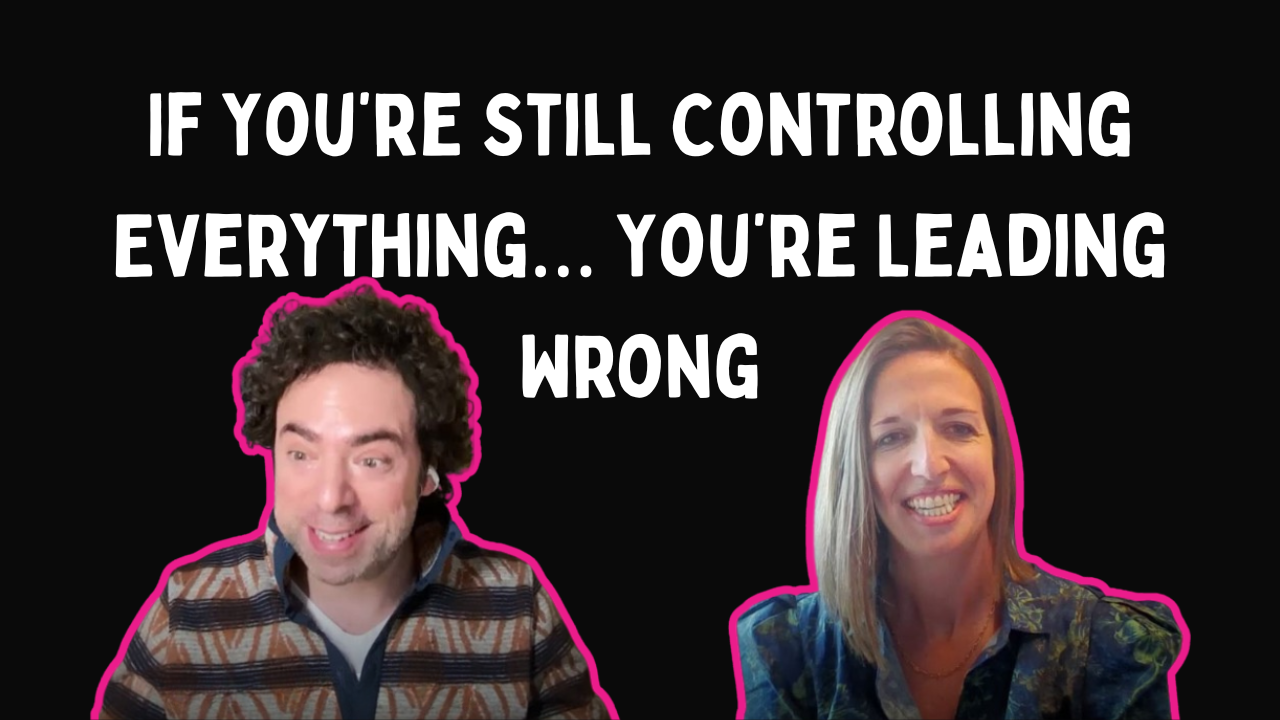
Quick take: Most systems are designed to control people, not empower them.This episode shows what happens when a leader flips that script — and trusts the people closest to students to lead.
🙋♂️ Meet Your Fellow Ruckus Maker
Dr. Lindsay Whorton is president of The Holdsworth Center, a nonprofit building stronger leaders for public schools. She’s the author of A New School Leadership Architecture, a bold blueprint for redesigning leadership roles so educators are supported, developed, and able to help students thrive.
In this episode, Dr. Lindsay Whorton challenges traditional education paradigms:
🧩 Key Insight #1: Stop Hoarding Power at the Top
- What’s broken: Central office controls decisions, budgets, and strategy.
- The shift: Push power, money, and responsibility to campuses.
- Impact: Faster decisions, stronger ownership, and leadership at every level.
🧩 Key Insight #2: Collaboration Isn’t a Meeting
- What's broken: PLCs and meetings that waste time and kill momentum.
- The shift: Create space for real-time, problem-solving collaboration between educators.
- Impact: Teachers stop retreating and start growing together.
🧩 Key Insight #3: Scarcity Is a Leadership Trap
- What's broken: Leaders fixate on what they don’t have (budget, staff, time)
- The shift: Reframe constraints into creative opportunities using available resources.
- Impact: Innovation increases, victim thinking decreases, and results improve.
💬Quotable Ruckus
"You’re not punishing anyone but your students if you stay stuck in scarcity."
– Dr. Lindsay Whorton
🧗♂️ Your Do School Different Challenge
Ready to implement these ideas? Start here:
- Tomorrow: Ask your team: “What decisions are we holding at the top that should live closer to students?”
- This Month: Redesign one meeting into real collaboration — focused on solving a live student problem
- This Semester: Pilot a shared leadership model that gives teachers real authority, time, and responsibility
🔗 Connect & Continue
🎯 Get the full episode transcript here
👩🏻💻Follow Dr. Lindsay Whorton:
- Website: https://holdsworthcenter.org/
- LinkedIn: https://www.linkedin.com/in/lindsay-whorton-9685aa26/
- Holdsworth Center on X: https://x.com/HoldsworthCentr
- Holdsworth Center on Facebook: https://www.facebook.com/HoldsworthCenter/
- Holdsworth Center on Instagram: https://www.instagram.com/holdsworthcenter/
00:03
Speaker 1
The future of school leadership belongs to the superintendents who are brave enough to give power away, money, decisions and responsibility not hoarded at the central office. Most systems are built on a factory era assumption. The people furthest from kids make the biggest decisions, while the people closest to students are expected to quietly execute the plan. That model might keep things under control, but it also keeps teachers, small campuses stuck, and superintendents trapped in a never ending game of political whack a mole. Meanwhile, the Ruckus makers listening to this show are trying to do school different inside those very same systems you're trying to create. Schools we're showing up for on navigating budget cuts, talent shortages, and collaboration that too often looks like another meeting that could have been an email.
00:59
Speaker 1
This moment of scarcity, less money, fewer people, more pressure can either harden leaders into fear, complaint and control, or it can become the catalyst to redesign how leadership works in your district. The choice literally shapes whether your best people stay, whether teachers see a future in your system or and whether kids experience school as a I don't want to miss this kind of experience or just another stop on the compliance conveyor belt. In today's conversation, you'll hear how one Texas superintendent is doing something most people only talk about releasing money, power and decision making to campuses, creating real leadership roles for teachers, and betting on the people closest to the students.
01:45
Speaker 1
We get into what shared leadership actually looks like, beyond buzzwords, how to spot future superintendents earlier in their careers, and how to shift yourself and the system from a scarcity mindset to one of abundance without ignoring the real constraints you're facing. If you've ever wondered how do we stop producing managers and start developing leaders at every level of the system? This episode is going to give you language, stories and questions you can use tomorrow. That's what Ruckus Makers do. We challenge the old way and reimagine what school leadership can be even inside traditional systems. I'm Danny Bauer and this is Better Leaders, Better Schools, the original Ruckus cast for visionary leaders who want to do school different within a traditional system. And that's because we want to create campus experiences worth showing up for.
02:38
Speaker 1
Thanks to Ruckus makers just like you, this show ranks in the top 1% of nearly 4 million worldwide podcasts today. My guest is Dr. Lindsay Wharton, President of the Holdsworth Center, a nonprofit dedicated to building stronger leaders for public schools and author of a book you should check out called A New School Leadership Architecture, a bold blueprint for redesigning school leadership roles so they're sustainable and give teachers the coaching and support they need so that students thrive. So once again, thanks for listening and we'll be right back after a message from our sponsors. Want to know how top schools create collaborative learning environments that actually work? ODP Business Solutions has equipped innovative educators for over three decades. Visit ODP business.com education and let's make a ruckus together. That's ODP business.com education this episode is sponsored by Play Piper.
03:49
Speaker 1
Every student starts with curiosity and Piper we keep it alive. Our hands on STEM kits turn gaming passion into real engineering skills. Spark confidence in your [email protected] Ruckus that's playpiper.com Ruckus Today's episode is brought to you by Play Piper. The innovators of tomorrow are sitting in classrooms today, but only if we give them the right tools. Piper's STEM kits connect kids love of gaming with real world coding and engineering. Turning curiosity into career ready skills. Keep your students engaged and inspired. Learn [email protected] Ruckus that's playpiper.com Ruckus. And Lindsay, welcome to the show.
04:51
Speaker 2
Thanks so much for having me. Glad to be here.
04:53
Speaker 1
Yeah, I'm excited about your work. I'm glad you reached out and I think there's a lot of alignment here. Where I want to start is if you could tell us a story about a superintendent that you're working with who wants to do school different and is thinking about. And this is wild. Releasing money, releasing power, and releasing responsibility to campus leaders. Right. So can you talk to us about that?
05:17
Speaker 2
Yeah. So I'm based in Austin, Texas and there's a school district right down the road from us called Lockhart isd, the famous barbecue capital of Texas. And this, the school district there is led by a really incredible educator named Mark Estrada. And Mark has been leading the district for a number of years. And I started working with Mark almost six years ago now. And when we met him, the district had a really clear goal of every student growing by 1.5 grade levels in math and reading every year. And Mark knew that the way that he was going to achieve that was by ensuring that teachers wanted to be in the district, stayed in the district, grew and became excellent expert educators in the classroom.
06:05
Speaker 2
And he knew he needed to figure out how to pay them more, give them greater development, and also give them opportunities to lead. And so over the last six years, Mark has just been an incredible role model of kind of the superintendent that you described. He said, what would it really take to do that and to fund changes at the school level to give teachers more leadership. It wasn't just about kind of adding dollars or adding positions. He and his team, another deputy superintendent named Stephanie Camarillo, really just rethought kind of the entire system and said, how do we really give the people closest to the students maximum power, influence, and decision making on how we can serve those students well?
06:53
Speaker 2
And they have changed positions, pushed decisions that used to be made at the central office down into campuses, and really tried to build. I mean, they call it a shared leadership model for advancing student learning. And I think it's just a really incredible example of how to lead with, like, a spirit of teamwork and service and to really elevate the incredible leaders that we have in our classrooms and in our schools.
07:16
Speaker 1
Brilliant. There's a Japanese term for that, too, where it's sort of that decentralized leadership. And I think it came out of, like, manufacturing and specifically cars. Like, does that ring a bell? Do you know the term?
07:31
Speaker 2
I don't know the term, but it's funny because I think that this goes back to, like, the Fordist model of management and the alternative model that was developed in Japan, led by Tokyo, and continuous improvement and just like this different leadership culture. So I can't remember the term, but that all connects with kind of those competing models we have about how organizations get better.
07:54
Speaker 1
Right. And I think the. The big idea there was just, like, empower people closest to the problems to solve them. Right. So that we don't slow things down. And I feel like there was an American involved with that, Edward Deming, but I don't want to take us down, like, this crazy road. But that's cool. I mean, you're seeing that. You're seeing that happen right? In the barbecue capital of Texas there.
08:17
Speaker 2
That's right.
08:18
Speaker 1
It sounds like you worked with the team to help them sort of figure that out. So was that sort of. Was there a framework or how did you help them, you know, in terms of making those really big decisions?
08:32
Speaker 2
Yeah. So when we worked with LOCKHART Back in 2019, one of the things that we did, I mean, our big philosophy as an organization is one you're not prescribing how to drive change. I mean, in a district as big as Texas, 1200 school districts, there's just no way that there's a one size fits all answer to what should happen. So we kind of operate with a lot of humility. And we also. One of our core values is believe in people. We believe that there are incredible Educators in our districts and our schools who are best positioned to solve the problems that they face and realize the opportunities that they face. So what we try to do is how do we help people see different ways that school can happen?
09:12
Speaker 2
Not that you're ever going to take exactly what you see and replicate it, but to spark your curiosity and increase your sense of possibility. And then once we've done that, how do we work with the district to help them name their own kind of vision and path for change, and then we come alongside them and help it get it done. So for Mark and for Lockhart, one of the places that went 2019 was to Singapore, which is a very unique system, tiny compared to the state of Texas. So no one's saying you should just pick that up and put it down. But Mark noticed some really different things about how the roles of teachers are built, how the roles of principals are built.
09:49
Speaker 2
And by happenstance, when were there, Boasberg, who was previously the superintendent in Denver, had just left the Denver system and was leading a school in Singapore. And so he came and talked to the group about the way Denver had tried to evolve leadership roles. And so Mark was the one who said, I see something here about how I can think differently about leadership in the schools. And eventually that opened up to include the district. And so he was the one. He said, like, this is the vision. You know, I want to create these elevated leadership roles for teachers. I want to give them real time. I want to try to pay teachers in my district as much as $100,000. I want those teachers to have authority and to be trusted to coach and develop and to lead grade level teams.
10:36
Speaker 2
And I want that to be a part of a new way of thinking about how leadership at our schools happen. So he had that vision, and then we really helped him kind of map it out, pilot it one campus. And then his team over the last several years has learned to grow and expand it. But it really started with looking at different ways that people operate and getting that kind of spark of inspiration. And then a leader having the courage to say, I'm going to set the direction and we're going to figure out together how we get there. Love it.
11:06
Speaker 1
And when we started this conversation, you were talking about also creating these spaces that educators want to be a part of. And so I wanted to ask, like, are there prerequisites or, you know, what are the components that you think about when it comes to making schools a great place where educators, ruckus makers want to be a part of it.
11:27
Speaker 2
When I think about. I think making schools places where talented, passionate people can sustain careers is, like, one of the most important challenges facing us in the next five to 10 years. And I think we should ask a lot of teachers that question. But I'll give, like, my version of it, which is one. I think anybody in any job, including teachers, wants to feel like they have the resources that they need to succeed like they want to. They want to feel like the skills and capabilities and time that they have is, like, enough to really knock the job that they've been given out of the park, you know, And I think so. I think for teachers, that's. How do we.
12:09
Speaker 2
How do we give them training and development and support that makes them feel really confident and equipped in their jobs, and how do we make sure that they have enough time to do the things that they're being asked to do well? So I think that's, like, foundational from there. I mean, I think. I think teachers, just like anyone, want to have opportunities to show their creativity, to demonstrate initiatives, have ideas that shape what happens in their classroom and happens in their schools. I actually don't know if this is true today in all of our schools, but I do believe. I think, that there are too many schools where collaboration is a loaded concept because it. Too often it's not helpful.
12:52
Speaker 2
But I think if we had true, productive, meaningful collaboration between colleagues where people feel connected to others and feel like they're not alone in the work that they do, I mean, I think that's a big part of it. And then, of course, I mean, I do believe that is the heart of it. And of course, we have to be paying our educators what they deserve and enough to focus on this really hard and important job that they have and feel like they can pay for the things that they need for themselves and their families. And like, we know from the. From the research that, like, all of those things tend to happen when you have a good leader who you respect in place in school. But I think those are the conditions that make schools places people want to be. Yeah. Can we.
13:35
Speaker 1
Can we double click on that collaboration piece? I had some opinions, too.
13:39
Speaker 2
Yeah, please.
13:40
Speaker 1
I'm just curious, like, you know, what.
13:42
Speaker 2
What.
13:42
Speaker 1
What you've seen and just like, kind of. Yeah. Where. Where your mind is around that cl.
13:48
Speaker 2
I'm eager to hear your opinions. Here's my sense. My sense is that there, you know, there is this common refrain in the teaching profession of, I'm gonna close. I'm gonna close the door to my classroom and do what I need to do.
14:01
Speaker 1
Okay.
14:01
Speaker 2
Yeah. That has its roots in two places. One is a certain vision of what it means to be a trusted authority, you know, having autonomy to teach, and teachers as professionals, you know, who don't. Who don't need advice, direction and management from others. And I think there's some that is, like, healthy, you know, and appropriate about needing teachers to have that respect. I think the other part of it comes from this mindset that you've got to, like, hunker down and like, shield yourself and others from other things that are happening that you think are not good for your classroom. And I think, I worry that if. And I think it makes sense. I understand why there are a lot of teachers who think. Think that way about their teaching of, like, I just want to close.
14:50
Speaker 2
Close the door to my room and do this. But I think we're reaching a point in the teaching profession where I'm not sure that mantra is going to serve us very well and it's going to get us where we ultimately want to be. And like, my reframe on it would be, what if instead we said, teaching is like one of the most complicated jobs that you could have. You know, that requires, like, vast and deep knowledge of content and really sophisticated skills interacting with other small humans individually and as a group, and figuring out how to motivate them, connect with them, understand what's shaping how they're, how they are interacting as a learner. And I mean, countless other things we can do. And we said, so this is one of the most complicated jobs that you could have.
15:37
Speaker 2
And so surely we should expect that all of us are going to need to count on advisors and other experts to help us diagnose and identify how we can be excellent at this thing that we've been tasked to do. And yeah, a lot of collaboration, a lot of the support we get right now may not be what we want, but for teaching to be a sustainable job, for us to be able to come excellent at teaching, it's going to require us to actually lock arms together and figure out how to benefit from the knowledge and wisdom, you know, that other folks have. So that's like my kind of narrative. But I'm curious what your opinions are.
16:14
Speaker 1
Yeah, no, I appreciate so much, you know, that perspective, and I really respect it. And I think I was curious what you might say, because when I think of collaboration and I think the word you used was like a look, it could be a loaded term. Right. And this kind of thing in Education, but it's. It's one of those. It's one of those concepts that might not be like, people know what the definition is, but don't know what it means at the same time. Right.
16:42
Speaker 1
And I think because it's not like, clearly defined at the local level, often what a successful collaborative team looks like, you know, and what those outcomes are and like, what sort of gets produced with the time and just maybe probably like lived experience and working with clients and just seeing meetings that are just so boring, you know, and. Or PLC time where we should be talking about how do we change instruction and in real time based on the kids in front of us and give the students, you know, what they need instead of just continuing to crank through the curriculum despite how kids are getting it or not getting it. And I, I just think there's just so much poorly run collaborative moments within schools that higher performers do retreat to their classroom because it's like, I'm. I'm getting stuff done.
17:37
Speaker 1
You know what I mean? Why am I going to work with these knuckleheads? And, yeah, that it's a complex thing going on there, and I don't want to turn the whole episode into that, but. But yeah, it's just done so poorly. So often I think people are like, no more collaboration at all.
17:53
Speaker 2
Well, and you're drawing out, I think, a really important nuance in this, which is when we hear collaboration, what we think is PLC or what we think is a meeting. And ultimately, I mean, I think that can be. That can be a site of productive collaboration. But ultimately, I'm not convinced that all the collaboration that I'm talking about is a structure or a meeting. And, you know, if were to follow the sparks of, like, things that we can see, like in other places, I mean, you in the US we are unique, you know, for the amount of minutes that we have teachers delivering instruction during the day and the limited number of minutes that. That are available for planning and other forms of, like, unstructured time.
18:35
Speaker 2
And I just, I think of other systems that I've been in where teachers have a lot more flexibility and autonomy to decide how to use the rest of that time. And what they're doing is not always is necessarily having a plc. It's pulling that colleague and saying, hey, here's this challenge that I have. What's your idea about this? And there's very limited space, you know, for that in our schools. So I think it's. It's notable that when we say collaboration, we think PLC or we think of Meeting or we think of structure. And I think that says a lot about what's available to a lot of folks right now.
19:06
Speaker 1
Interesting. That's great. Thank you for pointing that out. So were talking about, like, sort of what makes a great campus that. That educators might want to be a part of. But you're obviously doing a lot of work with superintendents, and so, you know, in your view, what makes a great super. And how. How can we identify them early in their career?
19:27
Speaker 2
Well, I. I think this is a. A question we have some ideas about, but it's also something we're trying to learn a lot about. And I'll speak about the early in our career part first, because I think I. We are. We are convinced, we are operating under the hypothesis that there are a lot of people with great talent who are getting discouraged, actively or passively, from becoming superintendents. And, like, one of the things we're trying to figure out as an organization is how do we. Instead of just, like, passively sitting around and waiting, you know, for folks to, like, get the degrees, earn the certificates, move through the jobs to become a superintendent. How might we more actively be looking for people earlier in their careers and finding folks, we'll talk more about this.
20:12
Speaker 2
Who have, like, great potential, and then more actively encouraging them and developing them and supporting them to get ready to do that extremely hard, complex job, but one that can be so important for kids. So that's the way that we're trying to tackle that problem. And I think the way we think about it is we talk about six big skills, you know, that superintendents need to have, and then we kind of work back from that for potential. I mean, one is you've got to be a person with, like, real vision for where your school district can go. And I think we need more superintendents who, like, I think of it as, like, you've got a GPS and there's a destination on the map. Like, one form of leadership is like driving the car safely to the destination that's already in the map.
20:58
Speaker 2
I think another form of leadership is, like, really trying to change and improve the destination. And we need more people who have that energy and that vision and then have the skills to break that down into the moves that you need to make things different for kids. So I think that's a big one. If you're a superintendent, you've got to. You've got to be able to communicate. I mean, it is a big part of the job that you do and how you get things done. Increasingly, you have to be able to navigate. We call it small P politics, which isn't about Democrats or Republicans, but it's about understanding that there are different people in your community who have different ideas about what you're trying to get done and how to do it.
21:38
Speaker 2
And you have to figure out how to listen to them, understand them, and bring people together to move your. Your vision forward from there. It gets a little bit less interesting when we talk about potential, because you got to figure out how to work with the school board, how to lead, you know, a senior team of experts with really different kind of technical backgrounds and skills. And then the other piece we talk a lot about is, like, you've got to be comfortable being a public person, you know, having a lot of eyes on you, being scrutinized, being criticized. Like, how do you deal with that?
22:09
Speaker 2
But so to me, like, when we think about potential, like, we should be looking at principals and assistant principals and folks in classrooms who demonstrate that kind of, like, vision and drive and ability to mobilize people to get things done. And I think we've got to be looking for those skills and capabilities much earlier so that we can be cultivating, like, more. More people who are change folks to move into the superintendent role and get things done for kids. Yeah.
22:39
Speaker 1
When you say earlier, like, is there. I don't know that there's a blanket answer, but, you know, what would. What does earlier mean to you?
22:46
Speaker 2
I think for us and in our work right now, and this is probably important to clarify, so In Texas, there's 1200 school districts, and about 300 of them are larger than 6000 students, and then the other 900 are smaller than 6000 students. And we're specifically focused on how do you develop folks to be superintendents in those larger districts. And when you're talking about larger districts, there tends to be, like, a lot of steps on the career path before you get there. And so early is looking at principals and assistant principals and trying to find them at that point in smaller systems, it certainly isn't uncommon that you might move, you know, from principal straight in to the superintendent.
23:27
Speaker 2
But I think we're really trying to understand and kind of solve that problem of how do you identify folks who have the potential to lead those big systems earlier in their career?
23:37
Speaker 1
Right on. Yeah, I think my middle school in Texas had 1800, you know, on there, on that campus. Pretty. Pretty good size for a middle school.
23:46
Speaker 2
So that's right.
23:47
Speaker 1
Fun group. And were already talking, you know, this release, and it'll be warmer, but we're recording. It's cold in December and I remember I got a lot of upset parent calls. I'm coming. Listen, I'm coming from Chicago, right? And I've lived in the cold and you see the crazy Bears fans with like no shirt on in the middle of winter. And I think I put the kids out at like 50 degrees, right, with their coats, you know, before school. And it was like, are you trying to murder our children? No, they're gonna be okay. It's like 50. Why are we upset? But different contexts.
24:22
Speaker 2
That's right. That's right. Navigating politics.
24:24
Speaker 1
Yeah, definitely. ODP Business Solutions, formerly Office Depot Business Solutions Division, has been a trusted partner for schools for 30 years. At ODP Business Solutions, we're by your side to meet your evolving education needs. Remember that feeling when you wanted to upgrade your learning spaces, but the budget said maybe next year? Here's what most people don't know. ODP Business Solutions doesn't just offer competitive pricing. We give you access to negotiated cooperative contracts that maximize every dollar. Want proof? We help the Baldwin school district transform their entire campus while staying under budget. How? By combining smart design with smarter purchasing. From essential supplies to cutting edge tech, from sustainable cleaning solutions to flexible furniture, we're your one stop shop to do school different. And the best part?
25:25
Speaker 1
You can get it all from a single supplier that helps you simplify ordering and streamlining budgeting while staying compliant with easy access to cooperative contracts. However you want to advance. ODP Business Solutions has 30 years of experience helping districts like yours get ahead of. Visit odpbusiness.comeducation to learn more. That's odpbusiness.com education Too often kids who love gaming don't see themselves as scientists or engineers. But what if play could open the door? That's what Play Piper is all about. Their hands on STEM kits turn curiosity into confidence. By connecting gaming and tinkering with real coding and engineering, suddenly students realize they are capable of discovery and innovation. For educators searching for ways to spark excitement and keep kids engaged in STEM, Piper is the bridge. You can learn more at playpiper.com Ruckus check them out at playpiper.com RUCKUS what makes an assessment effective?
26:45
Speaker 1
I would argue giving teachers access to quick, reliable and useful results that inform the next best steps for teaching. And that's where IXL really stands out. Teachers get powerful insights into student performance on a daily basis so they can address issues the moment they arise. Imagine that adjusting instruction in real time before it's too late. Your teachers Have a tool that helps them be even more effective. And your students, they grow. And they grow. Check it out for [email protected] leaders. That's ixl.com leaders. Talk to us a bit about mindset because, you know, I know the job is complex and difficult, and it's very easy to point at what we don't have, especially if you're playing some sort of comparison game to other organizations, maybe an industry. But there can be significant challenges around, like human capital and financial resources.
27:51
Speaker 1
And you could see that as a threat, and maybe it is at some level, but it also could be an opportunity. And I really like thinking about, like, how do we flip those obstacles into the opportunity. But. Yeah, how do you. How do you consider that stuff?
28:05
Speaker 2
Yeah, redirect me. If this isn't speaking to your underlying question. I. So I was reading Sana Marin's new biography. She was the prime minister in Finland for a long time, and she had this little section where she. She made a joke about how they had a run on toilet paper during COVID which is really hilarious because, I mean, one of their major industries is, I don't know, the name of the industry that, like, chopping down trees and like, maybe making paper products. And she's so. So we tr. Truly have like, warehouses full of toilet paper, but we could not convince people to not have like, a run on toilet paper. And I've been thinking about it lately because I think it's such an interesting, concrete example around human psychology of, like, when we decide that things are scarce, it.
28:50
Speaker 2
It just like sets off this chain reaction in our behavior. You know, that leads us to a lot of, like, what are fundamentally irrational behaviors and. Or unproductive behaviors that move us towards a bad outcome and versus if we believe that there is enough, the way in which that opens up an entirely different set of thinking and it produces entirely different human behavior. And so I mean, to your point, I mean, in this moment, I mean, in Texas, across the country, a lot of districts are experiencing fewer financial resources than they had and are also facing a number of kind of talent challenges in terms of availability features. And so if you compare it to the past, there's certainly less and you can start going down that scarcity mindset. But I think what.
29:40
Speaker 2
What stands out to me is that there are district leaders and there are campus leaders who are not denying the fact that they have maybe fewer dollars than they had last year, you know, adjusted by inflation, or they have fewer people, but who are saying, where is There an opportunity to think differently about the resources that we have in an environment where there's more pressure on them. And I think in particular like change oriented people, like they've had a list of things they want to change but that are too popular touch. But when you're in these situations where you're facing real pressure, it's an opportunity to bring people together and say, yeah, there's all these things that we love and don't want to change, but we don't actually have alternatives in this environment.
30:18
Speaker 2
And so you can reframe it, you know, not just as a response to scarcity, but like a new pressure, a new challenge that can lead you to creative thinking that opens up like new possibilities of how you can accomplish what you want to accomplish.
30:34
Speaker 1
Do you have a question, tool or prompt to help a leader move from a place of scarcity to one of abundance?
30:44
Speaker 2
I don't have one built in, but I think what comes to mind, I don't have anything preformed that I've used before, but what comes to mind is to just notice that like one question you can ask is to focus on like, what do I not have? And like what am I worried about or what am I losing? And there's probably just like a reframe to just try to reframe it on like what do I have available to me and how could I use, you know, what I have to solve this problem? I don't, I don't know if it's a good enough prompt, but that's the first thing that comes to mind.
31:21
Speaker 1
I think it's great. I mean, the base level of noticing is really important, you know, because sometimes folks might be stuck in that sort of scarcity, what we don't have cycle and just don't even realize that's how they're operating. Right? So to be able to pause, slow down and take sort of an inventory of where you're at in the moment is really helpful because then you can choose, do I want to stay there, throw a pity party and like play the victim and everybody, oh, you got so tough, Lindsay. I feel so bad. Or do you want to make a change and then now we can sort of, you know, think about how to do that. I don't know if it sounds silly or not. I think often like gratitude, right?
32:04
Speaker 1
Like people say, you know, like if you focus on what, to your point you said like what we do have in the gratitude piece, then there's not as much space for scarcity mindset. But the one resource I guess I would offer, one of my favorite books is called A Beautiful Constraint. And the whole. The whole book is about legendary people like Dr. Seuss or legendary sort of companies. I think the hotel is called Citizen M. Is that a ring bell? Have you ever stayed at one? It's Europe, but they scaled back. They. They just, they rethought like, what is. What is a travel and hotel experience, you know, need to be. Supposed to be. Like, how do we. How do we pare down sort of our expenses but still have a. An amazing experience? And, you know, that helps with profit.
32:57
Speaker 1
But I. I stayed in a few. They're over in Europe. But, like, there's. You don't. Nobody checks you in, right? You check yourself in. It's like all very tech and automated. The rooms are small. It's like staying in New York City there. So there's like really, like no frills at all. But then that savings gets passed on to you in terms of what you pay to stay at it. But at the same time, it doesn't feel like you're staying somewhere cheap. It feels like an elevated experience. But there's just, I think, like, there's no. No, like little mini fridges, just, you know, different stuff like that. And so anyways, yeah, the Beautiful Constraint tells story after story of that. And it also introduced, I think you would really dig something they call the can if model.
33:40
Speaker 1
So we can do this really hard thing that we want to achieve if. And then they have different question stems, like seven or nine of them to have you think about, like, what you could do. So, yeah, that's where my mind went.
33:54
Speaker 2
Can I share one other reflection that made me think of.
33:57
Speaker 1
You can share a million. This is your show, Lindsay. You're the star, so whatever you want to do.
34:01
Speaker 2
Something you said. There's this book I love called Dialogue, and it distinguishes from thinking and thoughts. So thoughts are basically all of the ideas that we have already thought of that we're waiting in a conversation to repeat to the person that we're talking about. And thinking is actually like a new realization that we had. So this is a thinking that. That produced somewhere along the way.
34:24
Speaker 1
Okay, so you didn't have this one queued up in the chat?
34:27
Speaker 2
No, I think, I wonder if another reason why we get anchored in scarcity. And so this is less like a reflection prompt, but more I wonder if we get anchored there because I think when school and district leaders, for example, you know, don't receive the budgets that they think that they need or deserve from a policymaker. You know, that's uphill. I think that feels deeply unfair. And I think that we, in our human psychology sometimes think that if we hold on and just focus on how unfair that thing is that's happened to us, that we're somehow, like, punishing the people who did it. And that. And that if we. And that if we moved on and just said, well, where do we go from here?
35:11
Speaker 2
That we're almost, like, letting people off the hook for the thing that we think they should have done differently. And I think we have to go through a process of putting those in two different buckets. You know, like, you may believe that your school deserves or needs more funding or deserves or needs more people. And I think you need to go through a process of deciding, is there something for you to take action about to change that, you know, either now and in the future? And if so, what action are you going to take? You need to put that in a bucket.
35:37
Speaker 2
And then you almost need to say, well, but in the world that I live in, this is where I am, and I'm not actually punishing anyone other than myself, my school, my students, if I just stay here in my grievance and don't move forward into figuring out how I do the best with what I have. And I do wonder if it's easy to kind of get trapped in. In. In that sense, and if we've got to kind of tease that apart in two categories to be able to deal with them separately 100%.
36:07
Speaker 1
And what I'd add is, you know, if. If you're happy to stay in that scarcity mode, Lindsay, I think that you let yourself off the hook because if everything's unfair, the game is rigged, then you don't. You're not responsible for results. Right. But now if. If you're gonna start taking action and start looking and be. Be grateful and have an abundant mindset, like, oh, you got. You actually got to do something. You got to produce something out, too. And that's harder. You know, it's certainly. But it's also more rewarding. So it's harder and more rewarding. Right. So that's. That's what I would add to it.
36:41
Speaker 2
Yeah.
36:41
Speaker 1
Thank you. This has been fun. Let me ask you one more question around your work before we kind of get to the questions I ask all my guests. But how can we disrupt the cycle from producing managers, which makes me sick to my stomach, but, you know, produce leaders, you know, instead of managers?
36:59
Speaker 2
Well, I. I always think it's Important to define what I mean with when I say leadership. So I think I use leadership in two energy, two ways, distinct. One is the action of mobilizing, positively influencing other people towards a goal. And ultimately, I think anybody can do that in any position, in any seat. And then I think in schools and in organizations, then we do end up with leadership positions. People who are given time, money, authority, and responsibility to accomplish certain results through developing, encouraging, equipping, mobilizing other people. So I do think those are two overlapping and adjacent things. So probably the answer to your question is one, there is leadership in organizations, and we should probably do a better job of, like, celebrating and encouraging it, regardless of which seat in the bus you know you're sitting in.
37:57
Speaker 2
That's probably one step, you know, that we can take. And, you know, I just wrote a book about rethinking our leadership structures and, like, rethinking what seaton to bust you're in. And the thing I worry the most about is that people interpret that as, like, being only about the structure. And I think Lockhart's a really good example of, like, you can improve the structure, you can add more leadership roles, and you can do it in the spirit of sharing leadership with more people, not concentrating power in the hand of, like, some sort of hierarchy. So I do think that's like, one really important piece. And then I think when it comes to the, like, the positions side of it, of, like, how do we cultivate leadership and the people who we've appointed to those positions as opposed to management?
38:37
Speaker 2
I mean, one, I do think it's partly about how we design those positions. Like, are we actually giving people meaningful goals to work towards with time and empowerment and authority to move towards those goals? And then the second is how do we identify and develop people, you know, for them? And, like, what are we looking for? And I think what we should be looking for, like, in general is people who, like, really bring out the best in other people. And there are. There are a lot of folks who are really good at their jobs but don't bring out the best in the people around them. And those aren't. Those aren't the people we should be moving into those positions, you know, of leadership, or we should. Or we should be encouraging and helping them develop new skills before we do.
39:19
Speaker 2
So I think there's a lot we can think more about. And I get into this in the book about, like, what we look for in people and really valuing those attributes, you know, that are predictive of bringing out the best in other People and getting results, getting things done, having a vision for change and having the skills to drive it.
39:36
Speaker 1
Right on. And the book is a new school leadership architecture. You know, it's been out, well, by the time this release has been out, you know, for months. What's. What's. What's something you didn't expect now that the book's out in the wild? Right. And you've done the work of putting the labor in and all the sweat and tears and everything, and now it's there.
39:57
Speaker 2
So. Yeah, well, at this moment, hopefully by April, you know, I'll have even more to say. But at this moment, it's still. It's still kind of early, but I've been. I mean, I wrote this thing with, like, the spirit of, like, wanting to spark thinking, give people a new way, give educators a new way of thinking about problems that they face and knowing that they would then take it and figure out new solutions. Like, I know I don't have all the answers. And it's been encouraging to hear people in different parts of the country, you know, describe the way that they've started. Started to use the book, and principals in schools come forward and say, you know, yeah, it would better if the school district took the lead on this, but I can find ways to use my people differently.
40:44
Speaker 2
So those are encouraging kind of early signs. It's what I hoped for, you know, but you never know exactly what to expect.
40:53
Speaker 1
Yeah. Right on. Well, it's certainly aligned, you know, with the ruckus maker point of view. So we encourage everybody to check out our new school leadership architecture as we sort of close up the pod. I love to ask guests, you know, same three questions. So one would be if you could put one message on all school marquees around the world for a single day, what would your message be? Lindsay?
41:18
Speaker 2
This was the hardest of the three questions for me. And was it so you may. You may not like my answer? I couldn't come up with the. The same words I'd want to put on all the. All the signs. I was like, the whole world, you know, so here's what I. Here's what I came up with. I would make each school put its values on the marquee board for the purpose of, like, does anyone know them? Like, it would be a reflection exercise. Does anyone know them? Are these meaningful? Like, are you proud to have them on your. On. On your marquee board? Does it reflect who you really are? And if not, you've got a bunch of work to do.
41:53
Speaker 1
That's a nice way of saying it. And if you were building your dream school in this thought experiment, you're not constrained by any resources. Your only limitation is your ability to imagine what would be the three guiding principles building Lindsay's dream school.
42:10
Speaker 2
Principle one, believe in and listen to your students. Principle number two, partner with caregivers. And principle number three, equip, support, and empower educators.
42:22
Speaker 1
Awesome. And we covered a lot of ground today, Lindsay. So, of everything we've discussed, what's the one thing you want a Ruckus Maker to remember?
42:30
Speaker 2
I think the discussion we had around abundance and scarcity is what I would lift up. I mean, I think in this moment, really being disciplined about finding opportunities may be one of the most important things I think we can all be doing to move our schools forward in a positive way.
42:51
Speaker 1
Hey, Ruckus Maker, thanks again for pressing play. I hope you enjoyed today's episode as much as I enjoyed creating it for you. And before you go, if today's show shifted something in your mind or sparked an idea about how you could do school different, then I think you'd be a great fit for what we call the Ruckus Maker Mastermind. The Mastermind is a private community of innovative school leaders who meet weekly to grow, reflect, and disrupt the status quo. You can create the campus experience your staff and students deserve. Applications are now open and go to betterleaders, better schools.com apply to put your application in.
Transcribed by https://fireflies.ai/
🎧 Listen & Subscribe
Listen to Better Leaders Better Schools on Apple Podcasts, Spotify, Youtube or wherever you get your podcasts. If today's episode moved you, leave a review — it helps more Ruckus Makers find the show.
📌 Ruckus Makers Don't Just Listen — They Act
If education ain’t a bit disruptive, then what are your students really learning?
This show isn’t about doing school better.
It’s about Doing School Different — and joining a growing movement of bold, creative school leaders who reject legacy models and reimagine what’s possible.
🧠 Four Ways We Can Help You on Your Do School Different Journey
📬 Subscribe to the Free Newsletter
An opportunity to Do School Different 3x a week. Tools, mindset shifts, and strategies that actually work: ruckusmakers.news
🗞 Read Ruckus Makers
Exclusive content on Substack. Premium leadership insights, AI prompts and custom gpts, new books before the bookshelf: ruckusmakers.media
💥 Join The Ruckus Maker Club
Our private network + workshops, The Automatic School tools, AI Prompt Library, and more: ruckusmakers.club.
🧨 Apply to the Mastermind
Weekly coaching, peer mentorship, and our proven leadership system (The Ruckus Maker Flywheel) to help you transform your campus: Apply Now
Apply to the Mastermind — Weekly coaching, peer mentorship, and our proven leadership system (The Ruckus Maker Flywheel) to help you transform your campus: https://betterleadersbetterschools.com/mastermind
📌 Ruckus Makers Don't Just Listen — They Act
If you’re waiting for more resources, more clarity, or more permission… you’ll be waiting forever.
The leaders changing schools right now aren’t waiting.
They’re redistributing power, building leaders, and creating campuses worth showing up for.
🤝 Today’s RUCKUScast in Partnership with:
ODP Business Solutions®
Looking to create the kind of campus experience students never forget? ODP Business Solutions® transforms ordinary spaces into extraordinary learning environments.
🔍 Learn more odpbusiness.com/education
IXL
Over 1 million teachers rely on IXL because it is empowering, it helps them make better decisions with reliable data, and it adapts instruction based on student performance.
🔍 Learn more ixl.com/leaders
Frontline Education:
1,000+ school leaders just weighed in on staffing, absenteeism, AI, and funding shifts. The 2026 K-12 Lens Survey Report gives you a national view of where the pressure is — and where momentum is building.
🔍 Learn more: https://frontlineeducation.com/leaders
Twelve Practices LLC © 2026 | If Education Ain't a Bit Disruptive, Then What Are Your Students Learning?


