Jeff Meade spent 20 years building companies. Then a friend asked him one question on a hike near Mount Fuji — what makes you happy? — and he couldn't answer it. That four-hour conversation led him to Paul Quinn College in Dallas, where he now serves as Chief Innovation Officer and runs a program with one non-negotiable rule: every student, regardless of major, must start and operate a real business before they graduate. No simulations. No worksheets. Real ventures, real customers, real failure.
Every school says it wants future-ready students. Most are still teaching them how to pass tests. Jeff Meade decided that wasn't good enough — and built a venture-based learning model that turns a graduation requirement into the most practical education a student can get. If you're a school leader wondering whether entrepreneurship education belongs on your campus, this episode answers the question.
✅ What You'll Learn
- Why employers stopped wanting graduates who can pass tests — and what they're asking for instead
- How Paul Quinn structured a seed fund and advisor model so student ventures get real resources, not just pitch competitions
- Why this generation's biggest professional liability is their inability to talk to strangers — and what to do about it
- What a theoretical entrepreneurship curriculum gets wrong, and how venture-based learning fixes it
- How K–12 leaders can apply the same principles without a college-sized program
🎯 Key Insight #1: Entrepreneurship Curriculum That Stays Theoretical Is Useless
- What's broken: Most school entrepreneurship programs teach students about business through reading, multiple choice questions, and theoretical frameworks — producing students who can define entrepreneurship but have never done it.
- The shift: Venture-based learning requires students to actually start and operate a business — finding customers, managing limited resources, pricing, pitching, and iterating on failure in real time.
- Impact: Students graduate having already been an entrepreneur, not just having studied one — and employers notice the difference immediately.
🎯 Key Insight #2: Soft Skills Are the Real Curriculum Gap
- What's broken: Leaders building entrepreneurship programs focus on funding, advisors, and curriculum structure — the infrastructure — while assuming students already have the interpersonal skills to execute.
- The shift: This generation has built entire social identities through virtual success and can have 20,000 followers on TikTok without ever sitting across from an adult in a real conversation.
- Impact: When students are pushed to talk to real people — potential customers, community members, advisors — they build the human connection muscle that no app can replicate, and one student went out to practice cold outreach and came back with an internship.
🎯 Key Insight #3: Failing Fast Has to Be Built Into the Design
- What's broken: Twelve years of traditional schooling trains students to avoid failure at all costs — honor roll, dean's list, perfect SAT prep — and that fear of failure becomes a ceiling on their entrepreneurial potential.
- The shift: Jeff flips the frame on day one: the goal is to fail big and fast, then iterate — with a soft landing built in because the stakes are learning, not rent.
- Impact: Students who learn to process failure as data rather than identity become the exact kind of adaptive, resilient thinkers that employers say they can't find enough of.
💬 JEFF MEAD QUOTES FROM THE RUCKUSCAST
"Students don't just study entrepreneurship, they actually do it."
— Jeff Meade
"The marketplace was telling us that they wanted a different type of student. So when I show up with this idea that every student starts a business, it's like, oh my God, you were answering sort of the prayers that we had."
— Jeff Meade
"You want somebody who thinks like this and not somebody who is trying to pass a test. That doesn't do anything for anybody."
— Jeff Meade
"I want you to fail big and fast. And that's so hard because you just graduated high school, you just took your SATs, you want to be on the dean's list. And then you walk into my class and I'm like, oh, you are going to fail so quick."
— Jeff Meade
"Students are dream chasers. They have these dreams — sometimes they may be uncomfortable sharing them, but they have these really cool dreams. And so we have the power to help them dream bigger and actualize those dreams."
— Jeff Meade
"In order for you to take it to another level and actually grow a business, you have to sit across from somebody and share your dream."
— Jeff Meade
🤗 Your Do School Different Challenge
Ready to implement these ideas? Start here:
- Tomorrow: Audit your current entrepreneurship or career-readiness curriculum and identify one unit that is purely theoretical with no real-world interaction built in.
- This Month: Identify three local business owners or entrepreneurs who would come to your campus for a career-day-style conversation with students — make the ask.
- This Semester: Design one student-facing project where the deliverable is a real pitch to a real audience — parents, community leaders, local business owners — with a defined problem, a proposed solution, and a student-built case for why they're the right person to solve it.
⌚️ Episode Timestamps
- 00:00 - Schools teach compliance, not how to build anything real
- 01:09 - Jeff Meade and the Paul Quinn entrepreneur requirement
- 04:32 - The hike on Mount Fuji that changed Jeff's career
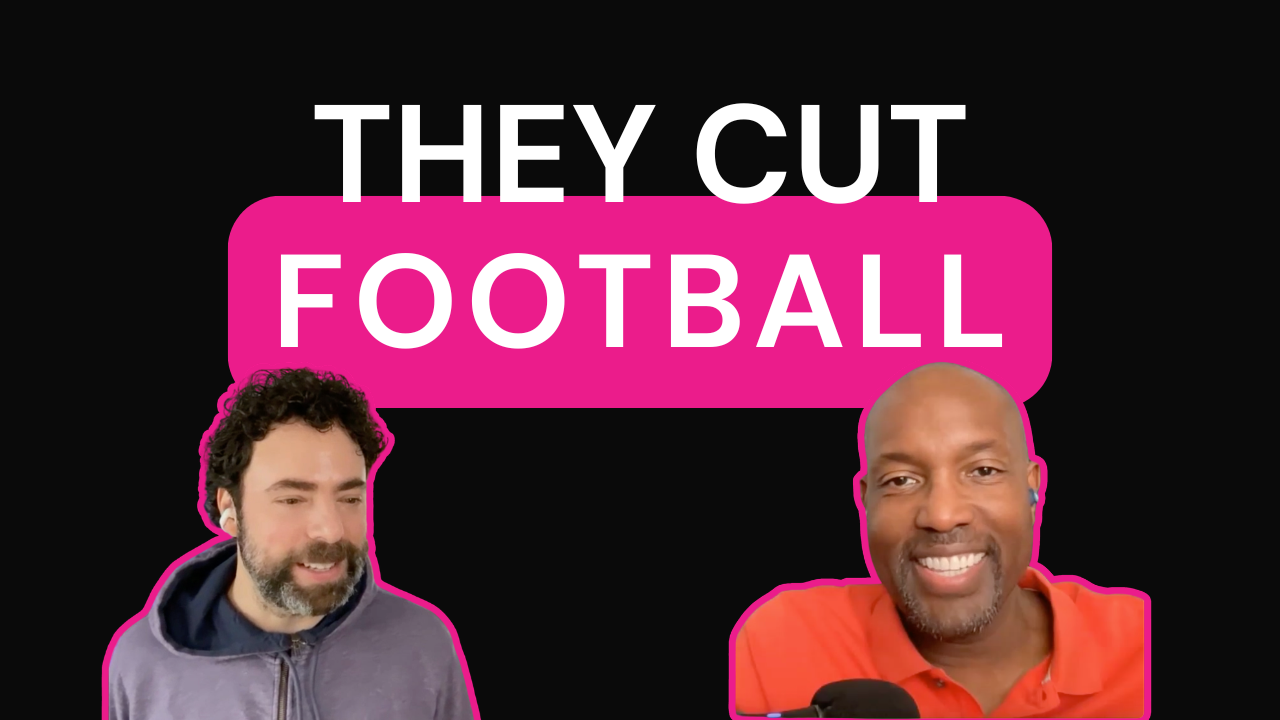
- 10:21 - How Paul Quinn cut football to fund its future
- 13:37 - What employers actually want from graduates
- 17:56 - The seed fund and advisor model supporting student ventures
- 20:34 - What venture-based learning actually means
- 24:05 - Why Gen Z struggles to talk to people in real life
- 32:31 - What Jeff tells K–12 leaders about student entrepreneurship
- 39:09 - The Babson model Jeff is rebuilding for HBCUs
- 43:10 - Jeff's three principles for his dream school
00:03
Speaker 1
Most schools say they want students to be future ready, but they're still teaching them how to pass tests, not how to build anything real. The result? Graduates who know the vocabulary of success but have never shipped, sold, failed or tried. And that's a problem because the future doesn't reward compliance. It rewards people who can spot problems, talk to humans, and create value. Today's episode cracks this wide open. You'll hear how one campus made a radical decision that every student, regardless of their major, must start a real business to graduate. It's not a simulation, it's not a worksheet, but a real venture with real customers, real failure, and real learning. And it all started with one deceptively question. Excuse me? And it all started with one deceptively hard question. What actually makes you happy?
01:09
Speaker 1
I'm Danny Bauer and this is Better Leaders, Better Schools, the original Ruckus cast for visionary leaders who want to do school different even within a traditional system so that we create campus experiences worth showing up for. Thanks to Ruckus makers just like you, this show ranks in the top 1% of nearly 4 million podcasts worldwide today. My guest is Jeff Mead, Chief Innovation Officer over at Paul Quinn College where he's leading a bold venture based learning model that requires 100% of students to launch a business before graduation and in the process refining what higher ed and k12 could look like if we stopped playing it safe. So once again, thanks for listening, thanks for tuning in and we'll be right back after a quick message from our show sponsors. Looking to create the kind of campus experience students never forget.
02:12
Speaker 1
ODP Business Solutions transforms ordinary spaces into extraordinary learning environments. Visit ODP business.com education and let's do school different. That's ODP business.com education school district challenges don't look the same everywhere right now. Some are seeing hiring improve, others are still navigating staffing gaps and increasing demand. Frontline Education's 2026 K12 lens report helps connect those dots with insights from more than 1,000 school leaders nationwide. You can get the full [email protected] leaders. Get the full [email protected] Leaders. If you could differentiate instruction in 20 minutes or less, would you do it for all your students? Well, you can with IXL. Over 1 million teachers use IXL because it empowers them to use effective data, informed instruction. And you can get started [email protected] leaders. That's ixl.com leaders. Corey talked to Digital Danny 910 times in just five months.
03:39
Speaker 1
And when I asked him about why he hired Digital Danny, he said, well, the first job was to communicate things, those high stake messages I needed to share, a non renewal of the teacher, a difficult parent situation and I needed those messages to land and Digital Danny helped. I had an idea of what I wanted to share. But Digital Danny gave me other ways of thinking about how to communicate based on the stakeholder. So if you have high stakes messages that you need to land as well, maybe you should hire Digital Danny for that job as well. Get started and try for yourself at myprincipalcoach.com Ruckus that's my principalcoach.com Ruckus. And Jeff, welcome to the show.
04:30
Speaker 2
Thank you. Great to be on. Appreciate it.
04:32
Speaker 1
So we're going to start with the topic of happiness and I'd love for you to tell me a story about what makes you specifically happy.
04:41
Speaker 2
That is a good question. I have a great story about it too. So I've been at Paul Quinn by the time this year is, it'd be, I'd be coming up on two years. And prior to that, you know, I was running my own firm. I was a marketing consultant firm and you know, I was thinking about what I wanted to do, you know, for the next year. I was like, you know, maybe I'll chase revenues, grow the business. And funny enough, I was on a hike with a friend. We're, we're in Japan, Mount Fuji in the background. Beautiful hike. And, and he says to me, just, you know, what makes you happy? I couldn't answer the question. I, I struggled and it was frustrating.
05:23
Speaker 2
But I, but what was fascinating is four hours later, you know, we're going back and forth and I really struggle with articulating what made me happy. And essentially the place I got to after the flight back home, the 14 hour flight back home and a couple weeks of journaling was, I really loved when I was helping students. And what I meant was when I was an adjunct at ucla, I really loved teaching. And part of the reason I stopped was after I had my third kid, I just said, I just need more money, right? Like I just had to figure out a way to make more money. But, but truly I really loved that space. And so I said, man, I got to figure out some way to kind of give back in this way.
06:08
Speaker 2
And you know, I'd been an entrepreneur my whole life and I thought to myself, what if there was some way I can combine it? And I came up with this crazy idea to build an entrepreneurship program. And I was taking some ideas from my alma mater, perhaps in college, and I said, what if I could create an entrepreneurship program where every student had to start a business, Right? Just really bold, really crazy. And I started shopping the idea and I met the president of Paul Quinn and he had a similar idea. And you know, like I said, that was about two years ago now, and we just made it happen. And so what truly makes me happy is working with young people and helping them dream really big. And, and for me, those big dreams are accomplished through the power of entrepreneurship.
06:52
Speaker 1
Why do you think that was such a difficult question for you to answer? Mount Fuji in the background, out on a hike with a friend, and it's like you got stumped, you had to take the air, the, you know, the flight back too, and do some soul searching there. But why? Yeah, why was that so hard for you?
07:08
Speaker 2
Yeah, it's a lot of soul searching. You know, it was really. Because I, I was really focused on two big things in my life. And, and really still am. And, and that was my business. I was thinking about ways to grow it. And, and by all measures, the business was successful. You know, I was happy, say, well paid a mortgage, we can save. I really loved what I was doing for the business and my family spend tons of time with them. And so I think what my buddy did as he asked that question was he took those two elements out of it and he said, you know, of course, you know, you love spending time with your kids, your wife. He said, but what makes you happy? And I struggle with it because I hadn't really thought of that question before.
07:48
Speaker 2
You know, my happiness was really my ability to make other people safe and comfortable. And, and I hadn't thought about me personally, you know, once all those conditions are met, what makes me happy? And someone finally asked me the question and I couldn't answer it.
08:04
Speaker 1
Yeah, I'm thinking about that question a lot this year. And you know, behind me you can see those, that grid back there. That's the Harada method. I don't know if you saw that on social media, but I guess that's the sort of goal setting approach that Shohei Atani took, you know, in terms of being the number one pick. And it's like the super goal in the middle, all the pillars around it that support that big goal and then what supports the pillars. But for me, you know, I'm, I'm doing some stuff these days that are a stretch, right, with improv comedy. I Haven't yet done an open mic for stand up, but I'm going to in 20, 26 and multiple times.
08:43
Speaker 1
And yeah, just thinking about some of that stuff because it's so easy to chase business goals, revenue, all this kind of stuff that at the end of the day is that, you know, is that really right what makes you happy and that kind of thing. So. Oh, yeah. And I'm reconnecting with guitar and taking guitar lessons again, so that's a lot of. I love that. Fun for me.
09:04
Speaker 2
I love that.
09:05
Speaker 1
Yeah, yeah.
09:06
Speaker 2
And when you do the stand up, you get. Definitely got to let me know when it's when, where I can see it.
09:10
Speaker 1
Right. Yeah. Well, I'm sure it's going to be terrible in the beginning and I hope to craft it right to make it make it good. But I have been able to make people laugh throughout my life. And last thing I'll say about me, I want to make this about you. A huge professional milestone was doing a kickoff to school event at the Kennedy center of the Performing Arts. This was years ago. And afterward, multiple teachers came up to me and said, you know, when are you a standup comedian? When do you perform? And that kind of thing. And I was just like, what are you talking? You know what I mean? I was just riffing with the crowd and being me. And it was interesting that they thought that.
09:49
Speaker 1
So it was just a bit of a signal and I want to try to see if I can lean into it and maybe, you know, nurture that a little bit more. But I love it.
09:57
Speaker 2
I think you should pursue it.
09:58
Speaker 1
Yeah, me too. Thank you. I appreciate that. So you mentioned, you know, when this releases, you'll be about two years at Paul Quinn. And why don't you tell the ruckus maker who's listening or watching this a little bit, you know, about that campus and more importantly, the vision for entrepreneurship. I heard you say like 100% of the students are gonna start a business, which is amazing.
10:21
Speaker 2
Yeah, yeah. Bwin is Paul Quinn is an amazing school. We are, we're about 153 years old, founded by the AME Church. Originally founded in Austin, Texas. Then we moved to Waco and we've been at our Dallas locations since the early 90s and we're sub 1000 students. So small campus. And so part of my vision is a little easier to accomplish. I know, because we have a smaller campus. But what I find fascinating is just the entrepreneurship nature of the school. Right. Like what I Find fascinating is if you were trying to build a school from the ground up, and this was something the president and the board thought about a few years ago. You know, I said, if were just starting from zero, what would we do to help our students achieve their dreams?
11:11
Speaker 2
I think one of the most fascinating things that they did was they looked at the Cost center and said, all right, where are we losing money? What's not adding value? And I'm going to remind the listeners that we're located in Dallas, Texas. And as they looked at the school and said, all right, what do we need to cut so we can accomplish our big goals? The first thing they cut was our.
11:32
Speaker 1
Football program in Dallas, Texas.
11:35
Speaker 2
You don't cut football in Texas.
11:40
Speaker 1
Wow.
11:41
Speaker 2
You know, yeah. Really bold. And, and part of the reason was weren't that good, unfortunately. And to run a football program is really expensive. Right. And so it was, it wasn't allowing us to accomplish some of the other dreams we had. And, and what's fascinating today is that the same place, the football field, we have now turned that into a garden, an urban garden. And one of our claims to fame is that the Dallas Cowboys on game day through our urban garden. Right. So it's a fascinating school. We, we do things really differently. Another thing I'll add about the school, then I'll go into an entrepreneurship program, is that we have a corporate work program. And, and so we really looked at the data. The Data says that 70% of all students work while they're in college.
12:35
Speaker 2
But most of these jobs don't provide much value.
12:37
Speaker 1
Right.
12:38
Speaker 2
You know, they're working part time at the 7:11. Not to call out a 7:11, but they're working in jobs that really. Right. I was delivering pizza. Right. So these aren't jobs that really help you think about or related to your major.
12:54
Speaker 1
Right.
12:54
Speaker 2
And so we started saying, well, how could we do that better? And so we started reaching out to different corporate partners in and around Dallas, and we started building internships for our students so that they could have real work experience related to their major. Right. And then the next thing they did is said, well, now we have students in these really amazing companies, right? The. The AT and ts the Southwest, like really, you know, Dallas, Texas is like home of the Fortune 500 companies. So we have some amazing internships. But then we looked and said, this is great. Now students have a job. What if we could help students create jobs? And so that opened up a whole new world for us.
13:37
Speaker 2
And, and in addition, we had Employers saying to us, what we really want is we want students who could think and act entrepreneurially.
13:46
Speaker 1
Right?
13:46
Speaker 2
So when they're presented with a problem, how do they go about approaching that problem? How do they come up with creative solutions? So the marketplace was telling us that they wanted a different type of student. And so when I show up with this idea of I want to create something where every student starts a business, it's like, oh my God, you were answering sort of the prayers that we had. And so that's what we're doing now. We're building this curriculum through our entrepreneurship department, where it's every student, regardless of major, has to start and operate a business. And we don't do that. There aren't solo businesses. In fact, every business that starts has to have at least a co founder. And that's just to make sure that we're not creating kind of these mom and pop shops.
14:31
Speaker 2
My big idea is to have students dream really big. But we are having every student that enters Paul Quinn as a graduation requirement, they have to start and operate a business.
14:42
Speaker 1
What are some of the businesses that have been started?
14:45
Speaker 2
Yeah, we just, we're second semester into the program now and so the way it works is they show up on campus for the first summer. This is all in real time. So last summer they showed up and were kind of just pressure testing ideas. The incoming class was about 150, 160 students, right? So small incoming class. And so they join up in groups, they start thinking through ideas. We pressure test and you know, we'll say, oh, that's maybe an inkling of an idea. And so we go back and forth on the ideas and the ones that are really good that we think we can generate some momentum within the next year. Those rise to the top. And then we say, okay, for the fall semester, we're going to build these out.
15:31
Speaker 2
We're going to start going to the marketplace, doing research and seeing if there's actually something there. And so where we are now is there are a couple ideas that have risen to the top. Two that have really risen, that have really big groups behind them is one is a beauty brand. The young ladies who's running this is called Glosscon. And, and she had this fascinating concept and it's really around, you know, she said lip gloss often stains your clothes when it's in your purse. And I told her, I said, what's fascinating about that is I've never had that problem. So I would not know that was an issue.
16:09
Speaker 1
Yeah, for sure.
16:10
Speaker 2
But it's really good. Research is going great, but. So it's fantastic how they just kind of find problems.
16:17
Speaker 1
Yeah. Yeah. That's what I love about business. You know, I mean, leadership, too, but it's just like, solving people's problems. Right. If you can understand their pain points and struggles, challenges that they're facing.
16:27
Speaker 2
And.
16:27
Speaker 1
Hey, would you like some support with that? Right? That's. That's the invitation. So, yeah, that is cool. My problem is I have a salt and pepper beard. Right. I'm getting targeted by Instagram daily on. On hair stuff, beard stuff. Right. All sorts of, you know, and that's okay. I'm fitting some kind of demographic, so they think, okay, if we hit him a few more times, he's gonna buy at some point. So. But.
16:52
Speaker 2
Right. Right. I'm right there with you.
16:54
Speaker 1
I think what they don't realize about me, I will.
16:55
Speaker 2
I'll. I'll.
16:57
Speaker 1
No, I was just gonna say I'm. I'm embracing aging. Right. Like, you can't hold on to youth forever. So it's. It's fine. That degree is there. Right. I'm gonna embrace that.
17:06
Speaker 2
Now, one of my students said the other day, they said, professor Mead, are you. Are you old? Old?
17:14
Speaker 1
What is old?
17:14
Speaker 2
What's old? I said, what's.
17:16
Speaker 1
Yeah, yeah.
17:17
Speaker 2
I said, what's old? Old. They're like, you know, like, are you over 40? And I said, okay, well, then, yes, I'm old. Old.
17:25
Speaker 1
Yeah. Yeah. Unbelievable. I don't know how I feel about that. We'll keep it. We'll keep it moving. So, you know, I understand the idea of, like, building the business. And what I heard you say, too, is, you know, they might be a different major, but they're still required and expected to start a business. So I'm a little bit curious about maybe, like, what does support look like and any other components of the program that you think would make sense to describe.
17:55
Speaker 2
Yeah, yeah.
17:56
Speaker 1
So.
17:56
Speaker 2
So the biggest one, you know, when I came in the first couple of months, I got to Paul Quinn, I said, hey, I have this really good idea. And. And I started talking to other schools who have done something similar. And, you know, one approach that I saw a lot of other schools do was they would put their students in pitch competitions, you know, and that. And that was a way to get financial resources. And I was like, oh, that's good. That's really good. And then I said, I think that's fine. But I actually wanted our students to have resources. I didn't want to keep going out whenever a student had an idea and kind of jump through those hoops. And so what we did was we created a seed fund.
18:34
Speaker 2
And so went out to the marketplace and just started raising funds and we had some corporate partners jump in and help us out. And so now we have a seed fund. So as ideas kind of bubble to the top, we support those ideas in house. So financial resources is a big one. And then in addition to that, we have advisors that we have come on campus and it's based on the type of businesses we have. And so one other business that we're looking at is another young lady wants to start a podcast.
19:06
Speaker 1
Hey.
19:06
Speaker 2
And her thing is how does she create a podcast network? And, and so we're having people come in who've launched podcasts to talk to her about what that looks like. And, and so we bring the community into the school. So, so they get not only financial resources, but people who've gone down that road. And, and those folks love coming back to the campus to talk to people. I think that has been one of the biggest things that I found is how excited people are to come and talk to young people about what they're doing. It reminds me of career days when I was a kid. Everybody, it's people are excited to come back to campus.
19:45
Speaker 1
I think that's something that's really important for ruckus makers to consider is because often it just takes that invite, creating the space for folks that are out there in the marketplace doing really cool stuff to give back to younger people, whether it's college campus, high school campus, whatever. But the career days that we used to run in high school were huge hits as well. Students love to see like, what's possible.
20:10
Speaker 2
Right.
20:10
Speaker 1
And people from the neighborhood and that kind of thing and what they were doing. And yeah, it's such a great support. So appreciate you sharing that. I, I, I know with the program too. I think you're like talking about venture based learning. Like, that's a language that you all are using. Can you describe a bit, you know, what that means to you? And yeah, how that shows up.
20:34
Speaker 2
Yeah, you know, venture based learning is simple. It really is for us.
20:39
Speaker 1
It's.
20:40
Speaker 2
Students don't just study entrepreneurship, they actually do it. There are, there are tons of books about entrepreneurship and you know, I could have students run on ChatGPT or Claude and kind of search up what is entrepreneurship. But for us it's, I need you to roll up your sleeves and actually do it. So venture based learning, in many ways is a form of experiential learning. You know, they have to go out, they have to launch, operate a business, and then I start bringing in all of the different components you would have under a typical business major. So whether it's marketing, finance, accounting, and we start integrating all of that into the curriculum. Right. And so instead of for the marketing courses, as I talk to my marketing professors, you know, I want students to learn like the four P's, the three C's, all that stuff.
21:31
Speaker 2
But then it's, how do we take this even further? And so talking with the marketing professors about how do we make sure, how do we show a student how to actually get a customer, right? Like take it that much further. And you know, what's fascinating is how nervous this generation is about taking that next step, because every time we've done it, they're always saying, you mean go talk to somebody? I'm like, yes, that's what you have to do, that you have this idea. Go talk to people. And you know, I think this generation is. They're definitely a product of kind of COVID But going out and talking to people is just not something that comes natural to them.
22:13
Speaker 2
And, and so that has been like a aha moment for me and for other folks, it's just we got to get them out talking to people. And every time they've done it's been amazing. You know, the last time I did it as an exercise, one kid came back with an internship.
22:31
Speaker 1
Yes. Imagine that.
22:33
Speaker 2
Yes. Yeah. So it's been really powerful. But, but yeah, venture based learning, as a definition, it's. It's a form of experiential learning. It really is students not just studying entrepreneurship, but actually doing it right.
22:46
Speaker 1
So it's tough to talk to people, which is interesting as a podcaster and coach, because that's like literally all I do all the time. And if it's hard for them, I mean, I think some of it is just pushing them to do it right. Put the reps in and get experience. What am I missing? Is there anything else you're doing to. To almost like it's wild to me that we're having this conversation that we have to talk about, like, how do you upskill just what seems so basic, you know what I mean? Going out there. And I, and I consider myself introverted too. Right. I don't, I don't. You know, which is wild because I'm on stages all the time. But yeah, out in public. I still.
23:21
Speaker 2
Yeah, I'm right there with you. Yeah, no, I'm right there with you. What I think what's fascinating is there is so much this generation that you imagine somebody who's 20 years old, right? You know, they've grown up, and you've been able to accomplish so much virtually, right? Like, you can meet people. You have an. You know, I have students that have like, 10, 20,000 followers on TikTok or Instagram, right? And so they have met, they have seen success in a world where they haven't had to have real connections outside of school or, you know, if they play a sport. And so their whole world, kind of like ours, has been dictated by virtual success.
24:05
Speaker 2
And so now when I say, that's great, but in order for you to take it to another level and actually grow a business, you have to sit across from somebody and share your dream, right? And. And so it's similar to a skill where we say, hey, you know, you got to go get a job. So I need you to sit across the table, share your vision, share why you are the best person for this company. What I'm saying is you have an idea for a business that solves a problem, now go out and talk to some people. And this shouldn't even be rocket science. And it's not. It's just a skill that they don't have, and it's just a muscle that they haven't worked. And so it's just fascinating seeing that muscle develop. And so there's just apprehension for our students.
24:50
Speaker 2
And the apprehension is I'm 20 years old, and I've never really done this. I've never really act interacted with an adult outside of, say, maybe I talked to the admissions counselor before I came to Pauloquin, but I've had success for two decades without interacting with adults, and so I just have to figure this out. And so it really is just a simple stuff that we're working on. You know, we have guardrails, and, you know, there's a whole curriculum around entrepreneurship. But. But what I'm finding surprising is how important the soft skills are. Because I gotta tell you, in my mind, as I built out the plan, it wasn't a focus on the soft skills. I was really thinking about, okay, I gotta raise this much money for the seed fund. I gotta bring in this many advisors that have these skills.
25:39
Speaker 2
And you're talking with corporations. It was all of the structure around it. And as I started interacting with the students, I realized, oh, my goodness, you're Nervous to go talk to them. All right, I gotta figure this part out.
25:53
Speaker 1
Yeah, that's so interesting. It always comes back to soft skills, you know, for me, yeah, you mentioned Covid, which obviously was a big disruption in society and so is AI. And so I'm just curious like how you're like incorporating or how you're like thinking about it. Right. At Paul Quinn, especially with this venture based learning and what you're trying to do with entrepreneurship.
26:16
Speaker 2
Yeah, yeah, I, I have thoroughly embraced AI and so much so that I, I bring in guest speakers all the time to talk to my students about how to better leverage AI. I'll give assignments and I'll tell them you guys do a horrible job as leveraging AI. And so in many ways, when we do have assignments and they're putting together their ideas, you know, we'll have group sessions where I'm saying, all right, let's talk through this. Brainstorm. Pitch the idea to me. Pitch it to your classmates. And so there's some stuff AI can't do.
26:51
Speaker 1
Right.
26:52
Speaker 2
But as they start thinking about building out the plan, I always say, well, let's leverage the tools we have because if it's just putting together a one page review or overview of your idea, AI can do that for you real easy. And so then we get back to what I was saying before. Then it goes back to how do we train and build these soft skills.
27:11
Speaker 1
Right.
27:12
Speaker 2
And so AI is definitely a tool. I continue to bring in guest speakers to help our students think about AI as we develop businesses. In the course, there's always a layer where I say, first I want you to make sure that this idea solves a problem. And then can we layer on any digital tools, AI or something else that'll make this easier for you or your customers? So there's always a layer where I want them to think about that.
27:44
Speaker 1
ODP Business Solutions, formerly Office Depot Business Solutions Division, has been a trusted partner for schools for 30 years. At ODP Business Solutions, we're by your side to meet your evolving education needs. Picture this. A learning environment so engaging students forget to check their phones. Sounds impossible. That's exactly what we helped Belago Academy create. Their secret, working with ODP Business Solutions to build collaborative spaces that actually work. We didn't just deliver furniture. We delivered a completely new way of learning. From tech integration that makes lessons come alive, to flexible spaces that adapt to any teaching style, to sustainable solutions that reduce your carbon footprint. We're here to help you do school different. And the best part, you get it all from a single supplier, all to help you simplify ordering and streamline budgeting while staying compliant with easy access to cooperative contracts.
28:48
Speaker 1
However you want to advance, ODP Business Solutions has 30 years of experience helping districts like yours get ahead. Visit ODPbusiness.comeducation to learn more. That's ODPbusiness.com education staffing student support Operations Technology these challenges are often discussed separately, but they're deeply connected. Frontline Education's 2026 K12 lens report helps bring those connections into focus, showing how districts are navigating multiple pressures at once. With insights from over 1,000 school leaders. Frontline Education's K12 Lens report offers a clearer view of what's changing and how leaders are adapting their strategies. Explore these insights by visiting FrontlineEducation.com leaders Get the insights of over 1,000 school leaders at FrontlineEducation.com leaders as a school leader, time is your greatest resource and there is a real sense of urgency when it comes to getting students what they need right now. That's why I love IXL's universal screener.
30:11
Speaker 1
In 20 minutes or less, you can identify students in need of intervention, and IXL's Learning Adaptive Platform makes differentiating instruction easy. As students learn, IXL adjusts to the right level of difficulty for each individual student. Get started [email protected] leaders. That's ixl.com leadership of all the principals who use Digital Dandy, the one who uses him the most lost a teacher in the first week of school. It was an abrupt resignation and students and staff thought about quitting or leaving the school. In response, this principal had to address his staff Monday morning. The wrong tone in any direction would have made the situation worse. Too soft and it sounds like nothing happened. Too hot and it sounds like you're blaming the teacher who left. What he needed wasn't a rider.
31:17
Speaker 1
He needed someone who'd sat in that same exact seat for hundreds of reps to help him land the right move. Teaching as a calling connection over compliance and then crafting the right words. The principal followed up with a speech and a memo to the staff that week, and it worked. If you also have high stakes messages that you need to land Digital, Danny can help. He was built for this and you can get started with him at myprincipalcoach.com ruckus that's my principalcoach.com ruckus so you're doing this at the post secondary level and I'm wondering, you know, what you might say to a high school middle school Maybe even elementary school principal. Right. That's listening. And they're thinking about education, entrepreneurship, and how to give, like, students opportunities, right. To do these. These practical. Develop these practical skills. Right. That'll serve them in life.
32:31
Speaker 1
Because, yeah, it's fun. Like, I love running my own thing and being my own boss, but I've grown as a human, right, in terms of resilience and creativity and, you know, grit and all this kind of stuff. And so it would have been cool to be pushed in this way younger. But I'm, you know, no regrets. I'm glad things have turned out how they help. But. Yeah, what would you say to sort of like local school, public school leaders?
32:58
Speaker 2
Yeah, the. The good thing is I'm actually working with some local high schools. Okay. And middle schools. And so we are integrating them into our every quinite is an entrepreneur program. And, and so what's fascinating is I as. I helped out this one district that we work with in Fort Worth. We're helping them build out their entrepreneurship curriculum. What was interesting is before we spoke, you know, they had this. It was laid out, students will do this. And, And I said, well, this is great, theoretically, but I said, none of this works in the real world. Right. I've been an entrepreneur for 20 years. This. This isn't going to work. So I said, I'm just going to give it to you straight. This. They will understand entrepreneurship, but you're not creating entrepreneurs. And I said, what do you want to do? And.
33:49
Speaker 2
And I, I applaud them. They were bold enough to say, no, we. We actually would love our students to really think and act like entrepreneurs. And so I said, okay, perfect. And so what we're doing with them is for this school district, Crowley, in. In Fort Worth, we're they. Their entrepreneurship program where at the end of the year, so right around when this show airs, they're going to have a really big pitch competition for their students. And so they're going to invite the parents out, they're going to invite community leaders, and you will have middle school and high school students pitching their business ideas. And so it doesn't get more real than that. Right. Like, this is going to be exciting. Right. The business.
34:36
Speaker 2
Businesses are obviously going to be a different scale, but they're going through a similar curriculum where they're trying to find problems in their community, problems that they have experienced through life experiences and figure out a solution to those problems and figure out why they are the perfect one to bring that solution to life. And then they will pitch this idea. So I think it's going to be exciting. So that's what I would say. I think students are ready. We just got to push them. Right. When I, when I look at high school students, college students, middle schools, they're like these dream chasers. They have these crazy ideas and they want to chase them.
35:14
Speaker 2
And I think it's on us to figure out how do we help them not only chase these dreams, but make these dreams a whole lot bigger, make it to a place where they are scared of the idea. And when we get them there, then we give them the tools to accomplish that. And so that's what's really exciting about this pitch competition. I'm going to be in the front row, but I can't wait to see the ideas they come up. Love it. And this will be middle school students at first that will be pitching these ideas. So it's going to be exciting.
35:41
Speaker 1
Yeah. What did you see in the program that you told them this will never work? So hopefully people enjoying this show can avoid that.
35:50
Speaker 2
Yeah, it was. If you've ever read a book on like how to swim, right. You'd be like, all right, I get it. This, this kind of makes sense. Until you get in the pool and you're like, oh, this is real, you know, like, perfect. I really gotta practice this.
36:05
Speaker 1
Yeah.
36:06
Speaker 2
And so essentially their curriculum was, it was theoretical and so it was, read this, answer these multiple choice questions. And so at a cursory level, they understood what an entrepreneur was. But if I threw them in the pool, it would have been all new to them. And so I said, there is no, there's no experience here. Right. There's no experiential learning taking place at all. And so that's when I really hit them to theory that I have, and that's all venture based learning. And I think the way for students to actually learn is to put them in a place where they actually feel the real pressure of operating a business where there's limited resources. How do you find a customer? How do you actually sell to that customer? Everything you go through as an entrepreneur, let's put them in that situation.
36:57
Speaker 2
The real difference is that if they fail, then they're not worried about, oh my God, I don't know how I'm going to pay rent. Right. You fail, we give you a really soft landing, but that's the big difference. So I said, we just got to make it real for them. We can't be afraid to have these students try. And so if they go through this entrepreneurship program, for all intents and purposes, they are an entrepreneur. They've done it. You know, they've. They figured out how to, you know, pitch an idea. They figured out who their customer is that they want to go after. They figured out pricing, how to sell it, how they're going to get the product to a customer. They are. They are an entrepreneur. And that's what I said. You're trying to create.
37:38
Speaker 2
You want somebody who thinks like this and not somebody who is trying to pass a test.
37:44
Speaker 1
Yeah, right.
37:45
Speaker 2
That doesn't do anything for anybody.
37:47
Speaker 1
Makes sense. It's the, yeah, like the. The challenge of ideas versus, like, action and doing it for real. Right. You know, I mean, obviously, I support school leaders, and you think about how you're prepared to be a school leader, and then there's actually being the leader. Right. And realizing that adults can be very difficult to work with, probably more difficult than kids. Right. And you got people on your staff. Right. That are like, do you even. Do you like kids? Like, do you like being here? And how am I supposed to work with. You know?
38:18
Speaker 2
Right.
38:18
Speaker 1
That's a real thing.
38:19
Speaker 2
Right.
38:19
Speaker 1
Or back when I was a teacher, you know, you learn culturally responsive teaching. You learn how to develop rigorous lessons, how, you know, children learn. And then you get in a class and you say, you know, Jeff, we're going to do this lesson today. And you're like, no. How do I respond to that? Right. Like, that's the real teaching. You know, Jeff just said no.
38:42
Speaker 2
Right.
38:42
Speaker 1
And he's 11 years old. Right. Right. And I'm an adult. What do I do with that? Like, that's, I think, what you're talking about. So, yeah, there's nothing. There's no better teacher than life. Right. You can't make it up.
38:55
Speaker 2
So nothing. Nothing at all.
38:57
Speaker 1
Before, Before Jeff, I get to the last few questions I ask all my guests. Is there anything about the program that I might have missed asking you about or anything else you want to make sure? You know, the ruckus maker engaging with this nose.
39:09
Speaker 2
Yeah. I think what's. What's fascinating about the program is really that it is the program. And in many ways, I'm building a program that I would want to. I would have wanted to go to. Right. And I had the fortune of going to Babson College, which is an entrepreneurship school. It's known as one of the top entrepreneurship schools in the country, in the world. But I often say, and I remember when I went there, Babson is so resource heavy. And it's a small school, and not everybody gets to experience it. And, and what I was really thinking is, how do, how can you create a Babson in other parts of the country? You know, when I was there, like, a third of our students were international. And so you had a third of people who just paid full freight to go to the school.
39:55
Speaker 2
And all my classmates were New England prep school kids. Right. And so there was no lack of resources, which was great to be around. But, you know, there were so many schools who aren't in that position, so many students that couldn't relate to that. And I wanted to bring that to. I really want to bring it to an hbcu, that sort of thinking. And so that's the beauty of Paul Quinn. You know, you would create this place where we are developing entrepreneurs, kids who can think and act like entrepreneurs and are building businesses that solve problems that they have experienced. And we have the resources internally to make that happen. I think it's fascinating and it's amazing to see. The first couple of weeks you're working with students, they are really scared at. They're scared of failure.
40:45
Speaker 2
I think through the first 12 years of school, failing is a bad thing. You don't want to get a F, obviously, you don't want to get seizure Ds. And then when they come here, I flip that on its head and I'm like, I want you to fail big and fast. And that's so hard because, you know, you just graduated high school. You just take your SATs, you want to be on honor roll, right? Dean's list, all that good stuff. And then you walk into my class and I'm like, oh, you are going to fail so quick. But that's okay. We're going to iterate and turn that around. And it's just like, what? How do I not fail? Professor Mead?
41:28
Speaker 2
And, and so it's really exciting to see students kind of just getting used to that, like, okay, failing isn't bad as long as I learn. And it's easy to say, but it's hard to process. And seeing that take place is. It's beautiful to see it in real time.
41:45
Speaker 1
I love to say that there's no such thing as failure as long as you're learning something, right? But if you're not learning the lesson from whatever happened, why it didn't work then I guess did fail. So, yeah, cool. Appreciate you sharing that. And maybe in a couple years, you know, it'd be cool to have you back just to Hear how the program's changed. And then, you know, you'll have case. More case studies and success stories, you know, to. To.
42:07
Speaker 2
I would love that.
42:08
Speaker 1
Cool. Well, we could do that. So I'd love to ask you, if you could put one message on all school marquees around the world for a single day, what would Jeff's message be?
42:19
Speaker 2
Mine would be dream bigger. Dream bigger and think and act like an entrepreneur.
42:25
Speaker 1
And you kind of already do.
42:26
Speaker 2
And.
42:27
Speaker 1
Oh, sorry, go ahead.
42:27
Speaker 2
Yeah, so I was gonna say. So it really is. What I found is that students have dreams and my big challenge to them is always like, oh, that's good, but stop being scared and dream just a little bigger. Then when they get to that place, I'm like, dream a whole lot bigger. And then when I could see the panic on that face, I'm like, that's where I want you to be. Let's figure out a plan to get there.
42:53
Speaker 1
You're kind of already doing this, but this is the thought experiment, right? If you were building your dream school and you didn't have any constraints in terms of resources, your only limitation was your ability to dream big and imagine what would be the three guiding principles of building your dream school.
43:10
Speaker 2
Perfect. The first one I'd say, and I'd say one of them would be start before you're ready. Right? There's this. I have this bias towards action and just working with young people. Anybody who works with young people know that they're perfectionists, right? The, the really good students are perfectionists. They don't want anything to go wrong. And so like I was saying before, I want students to build something. I want them to fail. Iterate. Build again, like this process of it's okay to fail. And like you said, you're learning so much in the process. The process of building something and seeing it work or not work, you don't get, you can't get that anywhere else, right? Life. Life is such a great teacher. So that'd be the first one. Start before you're ready. The second one I'd actually take from Paul Quinn.
43:55
Speaker 2
And our ethos is we over me. I love this one. The needs of a community always supersede the needs of an individual. So that one is self explanatory. But I think it's great because we don't want people to be selfish. You know, we want the needs of the community to always come before your. Your wants. And seeing students embrace that where like, this is bigger than me, right? This is helping me. My family, my community, get ahead. And I think that's a beautiful thing. And when you can remove the selfishness from it and really have students think bigger, like, okay, I see why we're doing this. It's, it's a beautiful thing. The last place, last thing I'd say is, and I actually took this one. We have at Paul Quinn, we have the four Ls of Quinite leadership.
44:47
Speaker 2
And so one of our Ls is leave places better than you found them. So my three, like I said it would be, start before you're ready. We over me and leave places better than you found them.
45:00
Speaker 1
Jeff, we covered a lot of ground today in the conversation of everything we talked about. What's the one thing you want a Ruckus maker to remember?
45:09
Speaker 2
I said this one. But so I'll, I'll reiterate because it probably may have gotten lost as folks listen to it, but our students are dream chases. You know, my students, anyone who's working with students, they're dream chasers. They have, they have these dreams. Sometimes they may be uncomfortable sharing them, but they have these really cool dreams. And so we have the power to help them dream bigger and actualize those dreams. And I think as Ruckus makers, we have to remember that as we have dreams that we have for the students, but they have these really cool dreams. And I just love that we are actually put in a place where we can help them actualize those dreams. That is truly a blessing.
45:53
Speaker 1
Hey, Ruckus maker, thanks again for pressing play. I hope you enjoyed this show as much as I enjoyed recording it. And before you go, if today's episode shifted something for you where you want to do school different or you have a new idea about education, then I want to invite you to subscribe to Ruckusmakers News. That's our newsletter. And you get three new opportunities to do school different every week sent to your inbox. It's trusted by over 5,000 school leaders. And if you want to reimagine education within a traditional setting so that you could create a campus experience, we're showing up for subscribe for free at Ruckusmakers News.
Transcribed by https://fireflies.ai/
🔗 Connect With Jeff Mead
- Website: jeff-meade.com
- LinkedIn: linkedin.com/in/jeffmeade
🎧 Listen & Subscribe
Listen to Better Leaders Better Schools on Apple Podcasts, Spotify, Youtube or wherever you get your podcasts. If today's episode moved you, leave a review — it helps more Ruckus Makers find the show.
🧔🏻♂️ Your Self-Mentorship Guide
Meet Digital Danny — your self-mentorship guide. Always available, never forgets, and evolves with you. Think through your next leadership move at myprincipalcoach.com.
🤝 Today's Ruckuscast Partners
ODP Business Solutions®
ODP Business Solutions has spent 30 years helping school districts build environments where students actually want to show up. From flexible learning spaces to tech integration to sustainable solutions, they deliver it all from a single supplier — simplifying ordering and keeping you compliant with cooperative contracts. One school, Belago Academy, worked with ODP to create collaborative spaces so engaging that students forgot to check their phones.
🔍 Visit odpbusiness.com/education to see what's possible.
Frontline Education
Frontline Education's 2026 K–12 Lens Report cuts through the noise with insights from over 1,000 school leaders navigating staffing, student support, operations, and technology — all at once, all interconnected. If your district is managing multiple pressures simultaneously (and whose isn't?), this report shows how other leaders are adapting their strategies in real time.
🔍 Get the full picture at frontlineeducation.com/leaders
IXL
IXL's universal screener identifies every student who needs intervention in 20 minutes or less — and then its adaptive learning platform automatically adjusts difficulty for each individual student as they work. Over 1 million teachers use IXL because it makes differentiated instruction something you can actually execute, not just aspire to.
🔍 Get started today at ixl.com/leaders.
Twelve Practices LLC © 2026 | If Education Ain't a Bit Disruptive, Then What Are Your Students Learning?


